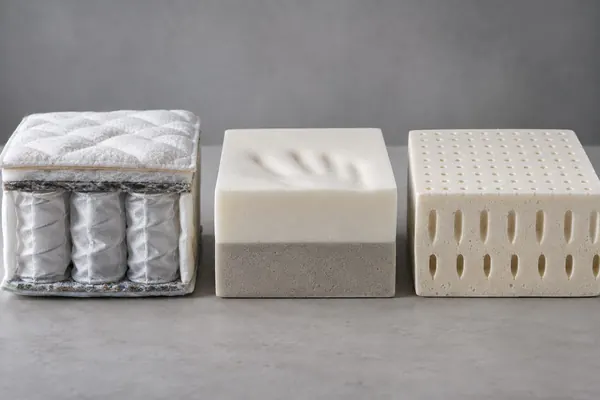
Choose a mattress according to the complete product
Spring mattress, memory foam or latex are names that help to understand the structure, but do not tell by themselves if you will be comfortable. A mattress includes a support base, upper layers, a cover and sometimes a combination of several materials. Two models of the same type can feel very different, and two models of different types can offer a similar feel. That's why you should start with the use of the bed and the problem you want to solve.
The guide is intended for adult beds and for a practical comparison before buying. It is not a rating based on MyViro laboratory tests, is not a brand recommendation and is not a back pain treatment. A crib requires a suitable product and separate safety instructions; Do not use considerations of softness and comfort of an adult to choose a sleeping surface for a baby.
Before looking at special offers, write down what is bothering you about the current mattress: sagging, difficulty turning, movement of your partner, heat or inappropriate size. Add what is convenient for you and want to keep. This way you don't replace a product just because it's out of date in your eyes, and you don't lose a good feature on the way to solving another problem.
Springs: the structure that hides under the upholstery
In an innerspring mattress, metal springs form part of the support system, but you do not usually lie directly on them. The cushioning above the springs affects the initial feel, how far you sink in and the surface comfort. Do not assume that a mattress will feel firm or bouncy simply because it contains springs. Ask what lies above them and how much of the total height each layer accounts for.
Connected springs and individually pocketed springs have different structures. Separate pockets may affect how the mattress responds locally to movement, but do not guarantee that you will not feel your partner move. Continuous layers above the springs, the frame and the base also transfer motion. Trying the particular model together is more useful than assuming that more springs are always better.
When trying, roll over, sit on the edge and get out of bed the normal way. Check if it is easy for you to perform the movement and if the edge feels as stable as you need. No need to jump on the mattress to check it. The purpose of the trial is to imitate normal use and understand if the response is suitable for your preference and mobility.
For more information on the subject: How to choose bedding that feels right for you.
Comparing mattress structures for adults
| Construction | What characterizes the comparison? | What is actually being checked? |
|---|---|---|
| springs | A support system with padding layers on top | Type of springs, layers, edge and movement |
| Memory foam | Foam with a gradual reaction in many products | Ease of turning over and the height of the comfort layer |
| Latex | The composition is natural, synthetic or combined according to the product | Flexibility, weight and full composition |
| Hybrid | Combining springs and other materials | Don't settle for a name; read cross section |
| Two mattresses | A different adjustment option on each side | Frame, connection in the middle and sheets |
| a mattress topper | Another layer to change touch in an adult bed | Not a repair to a damaged base or mattress |
memory foam: feeling of fit and compression
Viscoelastic foam is commonly called memory foam. Many products respond to pressure and recover gradually, but speed and feel vary by model. The name does not mean the entire mattress uses that material; memory foam may form a comfort layer over another foam or a spring system.
Those who like a wrap feel may want to check out memory foam, while those who prefer free and fast movement should pay attention to the ease of rolling over. These are preferences to be tested, not an absolute division between types of people. Try to lie down for a sufficient time to feel the product and not settle for a short press with the palm of your hand, which is a very different load from the whole body.
Do not assume that all memory foam is hot or that any gel model is cool. Heat and humidity also depend on the cover, the layers of the bed and the room. If the seller presents a quantitative claim, ask to know what was tested and under what conditions. A description of an initial cooling sensation is not necessarily a measurement of an entire night, and does not contain a promise of improvement of the sweating problem.
Latex: check the composition, not just the name
Latex mattresses may use natural, synthetic or a mixture of latex, and sometimes only one layer. It is important to read the composition of the model and not to conclude from the word natural about the entire product. Even a mattress that contains latex can include other foams, adhesives and a different type of cover fabric. The breakdown of the layers helps to understand what is being paid for.
Latex may feel flexible and have a relatively quick recovery compared to some memory foam products, but you should try the mattress itself. The degree of stiffness, thickness and structure of the layers change the result. If there is a known allergy to latex, do not rely on a trade name or a general promise to isolate the substance; Medical guidance and clear information must be obtained from the manufacturer.
Also check the weight of the mattress and the lifting or turning instructions. A product that is comfortable to sleep on may be cumbersome to maintain in a small room. If you change the sheets yourself or have difficulty lifting corners, try to understand in advance how much effort will be required. The handles, if any, are not necessarily intended for carrying the full weight; Follow the manufacturer's instructions.
Hybrid mattresses: understand the component layers
Hybrid is a description of a combination, usually springs with layers of foam or latex, rather than a uniform type of feel. The name may sound like a solution that gets the benefits of everything, but you still need to check the thickness of the layers, how they are arranged and how the product reacts. There is no automatic advantage to the mere combination.
Ask for a clear cut or specification of the model. If there is a very thin comfort layer over a particular base, the feel of the base can still be significant. If the top layer is thick, it can greatly change the character of the mattress. A comparison between two hybrids should be based on components and usage, not just the number of tech words in the name.
Use the comparison table to note what you liked about each option, such as ease of turning over, edge support and movement between partners. You do not need to score every theoretical feature in a specification if you cannot feel a difference. Specifications help you ask questions; trying the mattress helps you decide which features matter to you.
What should you remember?

- structure and layers
- Try turning and moving
- Adjustment to the base
firmness is not the same as support
Firmness describes the feeling of resistance to contact and sinking, while support relates to how the mattress supports the body. A mattress can feel soft on the top layer and yet have a firm base. On the other hand, a very firm sleep surface is not necessarily suitable for every body or every position. There is no uniform hardness scale that guarantees that the same number will be the same between manufacturers.
During a trial, lie in your usual sleep positions and check for uncomfortable pressure, sinking that makes movement difficult or a feeling of sliding toward the center. If you have a medical condition or persistent pain, use the individual advice you have received rather than relying on an “orthopedic mattress” label. That term does not replace individual assessment or provide evidence of treatment.
Don't choose the hardest mattress just thinking that hard equals healthy. Nor should you choose the softest just because the first touch is pampering. Take time for each option and pay attention to the feeling after changing position. Convenience in the store does not guarantee comfort at home, but an orderly inspection is better than a decision by pressing the hand.
The size, base and height of the bed
Measure the inside of your bed frame and your current mattress, then check that the size you are ordering will fit. Names such as double, Queen and King vary between markets, so compare the actual dimensions. Our guides to Israeli and US sizes explain the differences. Do not order by the size name alone, especially when buying the frame and mattress from different stores.
Check the manufacturer’s bed-base requirements, including support type, spacing between slats and compatibility with an adjustable base. A damaged or unsuitable base can make a new mattress feel different from the model you tried. A sound base need not be replaced without reason, but it must meet the new mattress’s requirements.
The height of the mattress affects getting into the bed, getting off it and the adjustment of the sheet. Also think about the mattress protector and mattress topper, if it is allowed and required. A sheet with a shallow pocket may come loose from a high mattress. If there is difficulty in mobility, check the actual sitting and standing height and not just the appearance of a high bed in the picture.
Testing in pairs: movement, space and different preferences
If two people sleep in the bed, they should both try it together. One rolls over or gets up and the other stays in a normal position and describes what he felt. This is not a lab test, but it can reveal movement that is bothering you. Also check if the width allows you to change position without narrowing at the edge or interfering with each other.
When there are different preferences, you can ask about two separate mattresses in a suitable frame or about a model with a different adjustment on each side. Each arrangement has implications for sheets, joining in the middle and maintenance. There is no need to choose a complex solution if one model is convenient for both of you, but it is good to know that a different preference does not require one to give up permanently.
Disruptions when sharing a bed are not always caused by the mattress. Light, alarms, a shared duvet and different schedules can disturb sleep even on an expensive model. Identify the source using our guide to sleeping as a couple before buying. A new mattress cannot be expected to fix noise or routines unrelated to its construction.
Watch: An introduction to foam, latex and hybrid mattresses
Sleep Doctor explains the differences between memory foam, latex and hybrid mattresses. This commercial source illustrates construction rather than recommending a model or guaranteeing comfort; individual fit requires separate assessment.
By Sleep Doctor · Video language: English
On this article, the player loads when the page opens, without autoplay, unless you chose to block external content. Player privacy information
Open the video on YouTube (in a new tab)
You can read the information in English without watching the video. This article is not a transcript of the external video.
Heat, bedding and mattress protectors
Consider all bedding layers when comparing warmth: a waterproof protector, sheet, duvet cover and thick duvet can affect the feel. List what is on the bed and what you plan to keep. Replacing the mattress alone may leave the main source of discomfort unchanged.
Words like ventilation, gel or cooling fibers require context. Ask for details if the manufacturer claims a measurable difference, and check if the figure refers to the fabric of the cover or the entire mattress. When there is no comparative test, it is possible to refer to touch and preference, but not to state that a certain mattress is always colder than any other model in the same category.
Bedding fit is part of the trial. A very tight sheet or additional layers may change the feel. Use correctly sized products as instructed and keep them consistent where possible. Changing the duvet, pillow and sheet at the same time makes it harder to know what helped or introduced new discomfort.
Trial period, delivery and return
Before ordering, read what the trial period means at the particular store. Is it a refund or an exchange, is there a shipping cost and what is required to keep the product? Don't settle for a title of several nights. The details of the transaction may affect the possibility of inspecting the home and the total cost, so you should keep them in writing.
Check the delivery route into your home. Narrow stairs, a small lift or an upstairs room can affect delivery. For a compressed mattress, follow unpacking instructions and any waiting time before use. Keep packaging away from children and do not cut an inner cover to speed expansion or alter the construction.
When there is a new smell, follow the manufacturer's ventilation instructions. Do not conclude from the smell alone about safety or the absence of risk. If there is a physical reaction or sensitivity, discontinue use as needed and contact product advice and service. There is no need to keep sleeping on a product that feels unsuitable just because the advertising promises that everything will work out later.
Maintenance and deciding when to replace
Check if the mattress needs to be rotated, if it is allowed to turn it over and how to clean the cover. A one-sided mattress is not necessarily intended for sleeping on the underside. A cover with a zipper is not necessarily a cover designed to be removed by the user. The model instructions are more important than general advice you found on mattresses of a similar type.
Pay attention to permanent subsidence, change in sensation, tear or problem in the base. There is no uniform age at which every mattress should leave the house, and there is no long warranty that guarantees comfort throughout the period. Document a problem and specify the model and terms of use if contacting the service. If the pain persists even after changing the sleeping environment, do not assume that the product is the only cause.
Before making the final decision, go back to the initial list of needs. Which model answers them, what remains unclear and what is its total cost? You can prefer a simple product with clear specifications and suitable conditions of use over a complex product that does not solve your problem. The choice should be based on fit, testing and information, and not on the promise that one mattress will change the entire quality of life.
Frequently asked questions
Which is better, springs or memory foam?
There is no permanent winner. Check the layers, the feeling of support, the ease of turning over and the movement between the couple. A spring mattress can include memory foam in the top layer, so the names are not always separate alternatives. Try the particular model, read the specifications and define what you want to change compared to the current bed before deciding.
Is a firm mattress healthier for the back?
Not as a general rule. Firmness and support are different, and comfort varies with the person and sleep position. If you have pain, seek professional advice and assess comfort accordingly. “Orthopedic” is not a diagnosis or proof of treatment. Do not keep tolerating an uncomfortable mattress simply because someone says you must get used to its firmness.
Is a hybrid always better quality?
No. Hybrid describes a combination of components, not a uniform quality level. You need to know what is combined, at what thickness and how the product feels when used. More layers are not necessarily an advantage if they do not meet your need. Compare practical features and test conditions, and not just the number of technologies that the manufacturer indicates in the model name.
Should the bed base be replaced as well?
Only if it is not working properly or does not fit the instructions of the new mattress. Check the type of support, spacing and the ability to use an adjustable base if applicable. A new mattress on a problematic base may continue to feel uncomfortable. There is no need to replace a normal foundation without reason, but it is important not to assume that every foundation is suitable for every product.
How do you check a partner's movement?
Try the mattress together: one turns over or stands up and the other lies as usual and describes what is felt. This is a personal test, not a laboratory measurement, but it is more relevant than hand pressure. Also check the foundation and blanket, because interference can come from other components. A number of springs or a motion isolation header do not guarantee a result for you.
Does a new mattress require new bedding?
not necessarily. You need to check the length, width and especially the depth of a sheet in relation to the height of the mattress and the allowed layers. If the existing bedding fits and stays comfortably taut, there is no reason to replace it. Size names vary between countries, so compare numbers. Do not rely on the word double only when combining products from different stores.
What is checked during the trial period?
Read in advance whether it is a return or an exchange, what conditions apply and what the transport costs are. During use, check the need you defined, such as ease of getting up or feeling of sinking, and keep other layers as constant as possible. There is no obligation to continue using a product that creates obvious discomfort just to complete a period that appears in the advertisement.
Can you use a mattress topper to fix everything?
A mattress topper changes the top layer, but does not repair a damaged base or necessarily solves sagging in the mattress. It adds height and affects the sheets and the feel, so you need to check fit and instructions. Do not add a mattress topper to a crib. Before purchasing, understand if the problem is a contact, structure or medical condition that requires investigation.
Sources and scope
Source check: September 15, 2026. The information was checked against the sources listed here. The selection tips help you compare options; they are not based on hands-on product tests by MyViro.
By MyViro.
General information about the subject; not a diagnosis or medical treatment. How we prepare our guides
Illustrative photos on this page were created with AI.