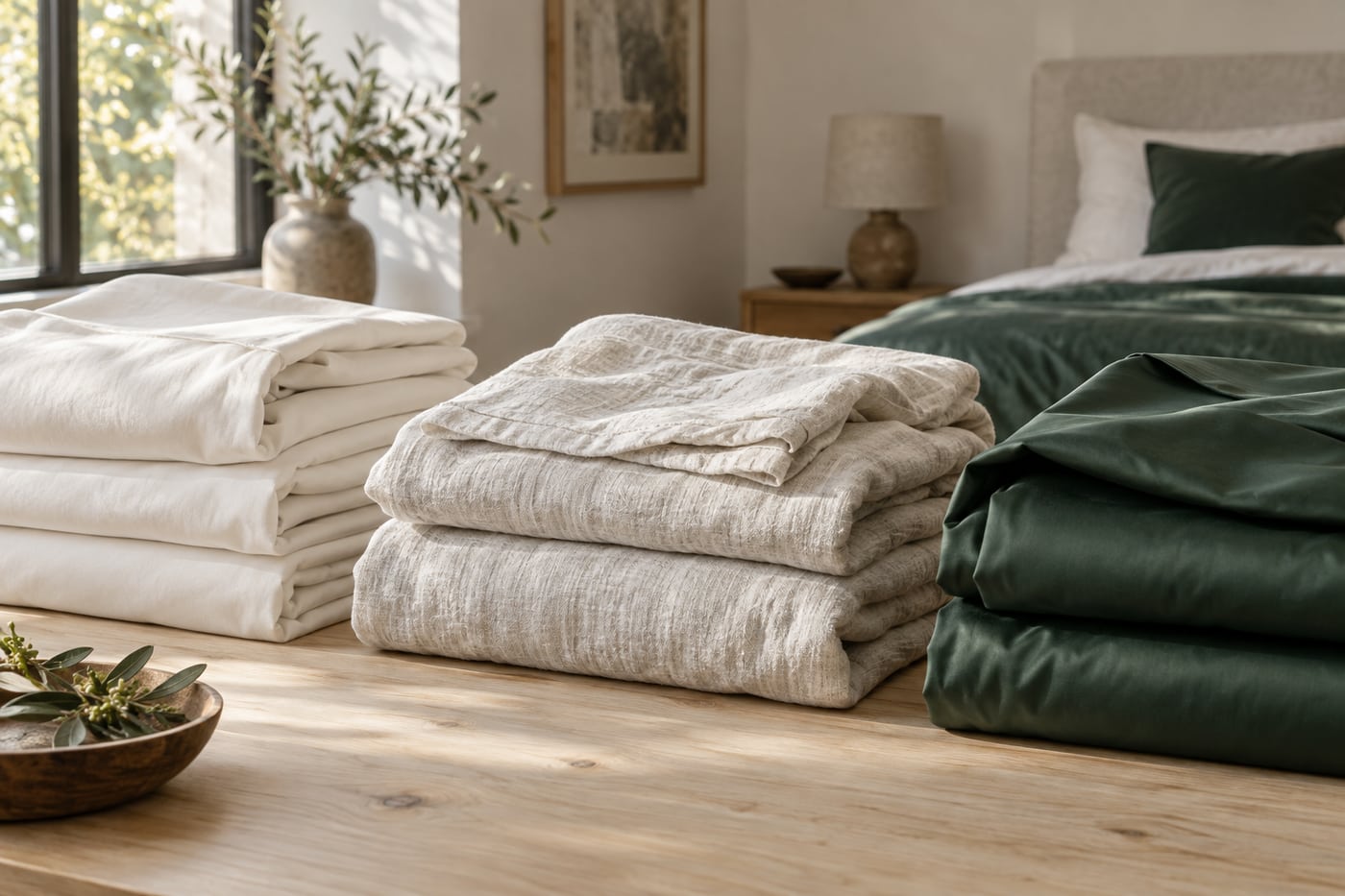
Start from the need, not from the number on the package
Before comparing sets, think about the bedding you already have. Are they pleasant at the beginning of the night but feel warm later? Does the sheet come loose at the corners? Has the frequent washing made the fabric rough? Each answer is aimed at a different characteristic: the structure of the fabric, the depth of the sheet or the quality of the finish.
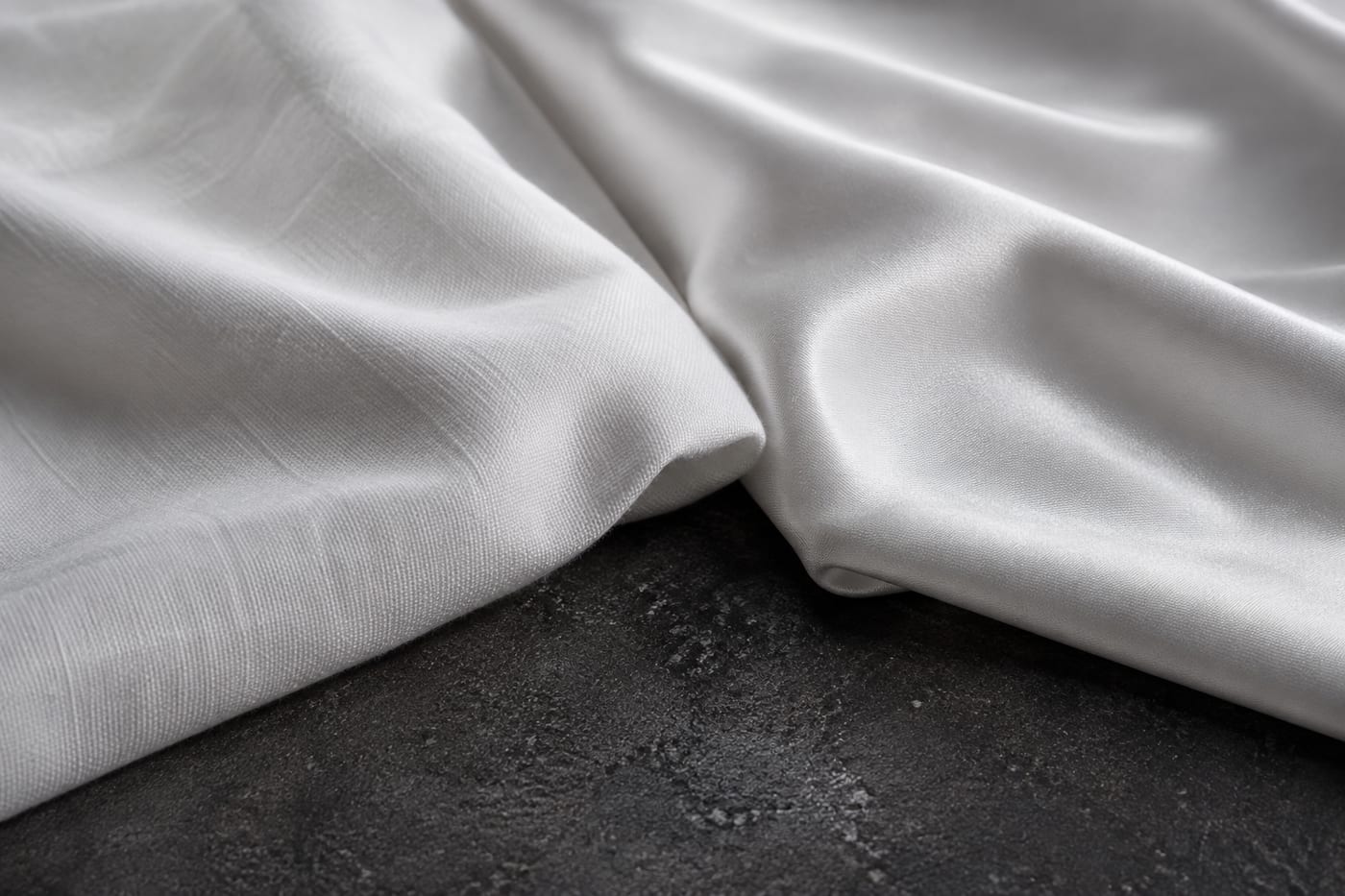
Personal preference is important: those who like a dry and slightly stiff touch may prefer percale; Those who prefer smoothness and a soft fabric that sheds easily may prefer cotton sateen. It is better to treat the feeling as a personal preference and not as a single measure of quality.
Separate material from weaving
Cotton, linen and polyester are materials. Percale and sateen are weaves. Asking “cotton or sateen?” mixes two categories: sateen bedding can be made from cotton. Fiber content influences how the fabric behaves, while the weave adds structure and appearance.
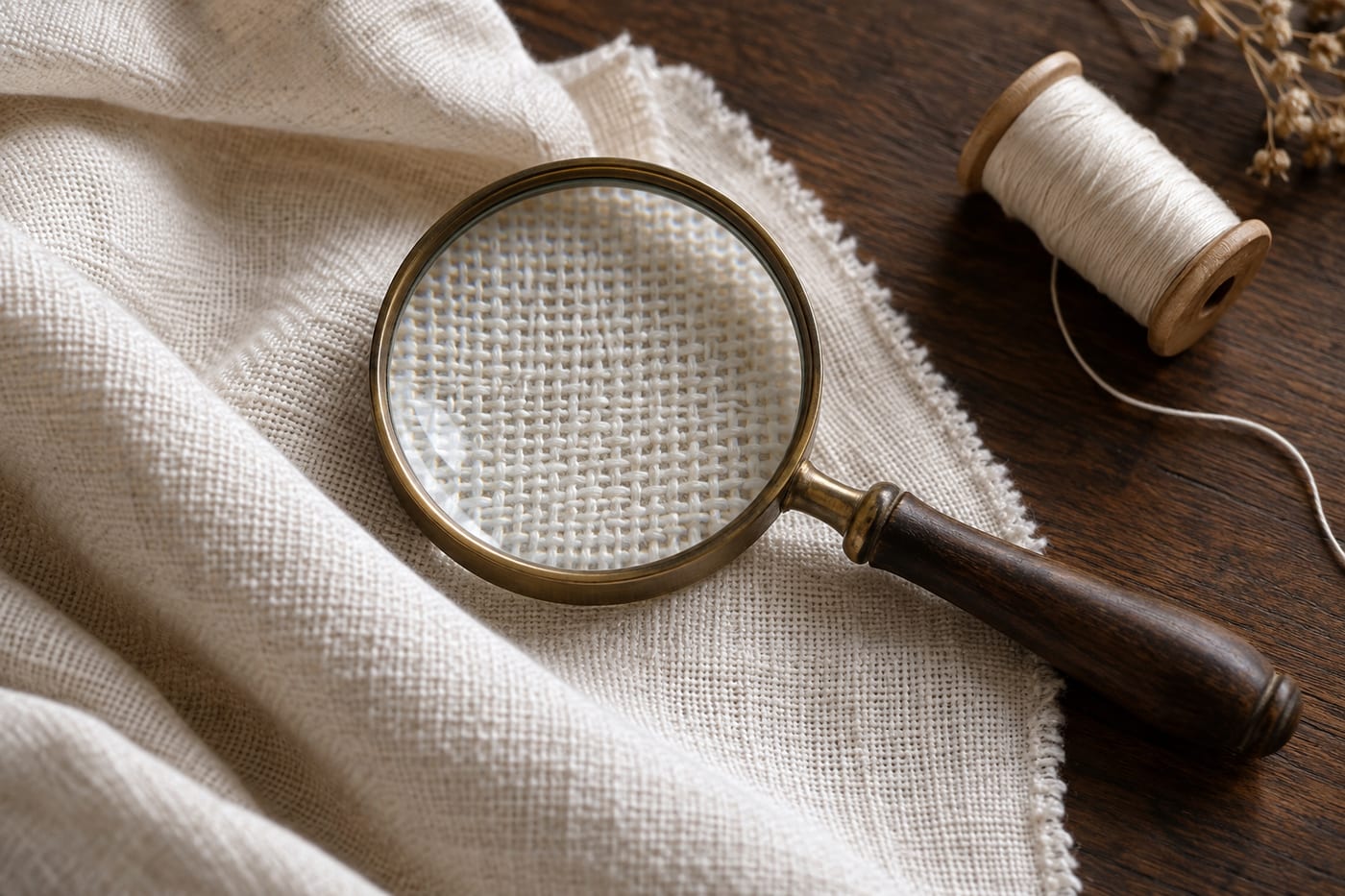
Start with the complete list of components, continue to the type of weaving and only then check the thread count. A description like "touch of cotton" does not replace a statement about the percentage of cotton.
For more information on the subject: Percale vs. cotton sateen: the same fiber, a different feel.
Checking compatibility with each part of the bed
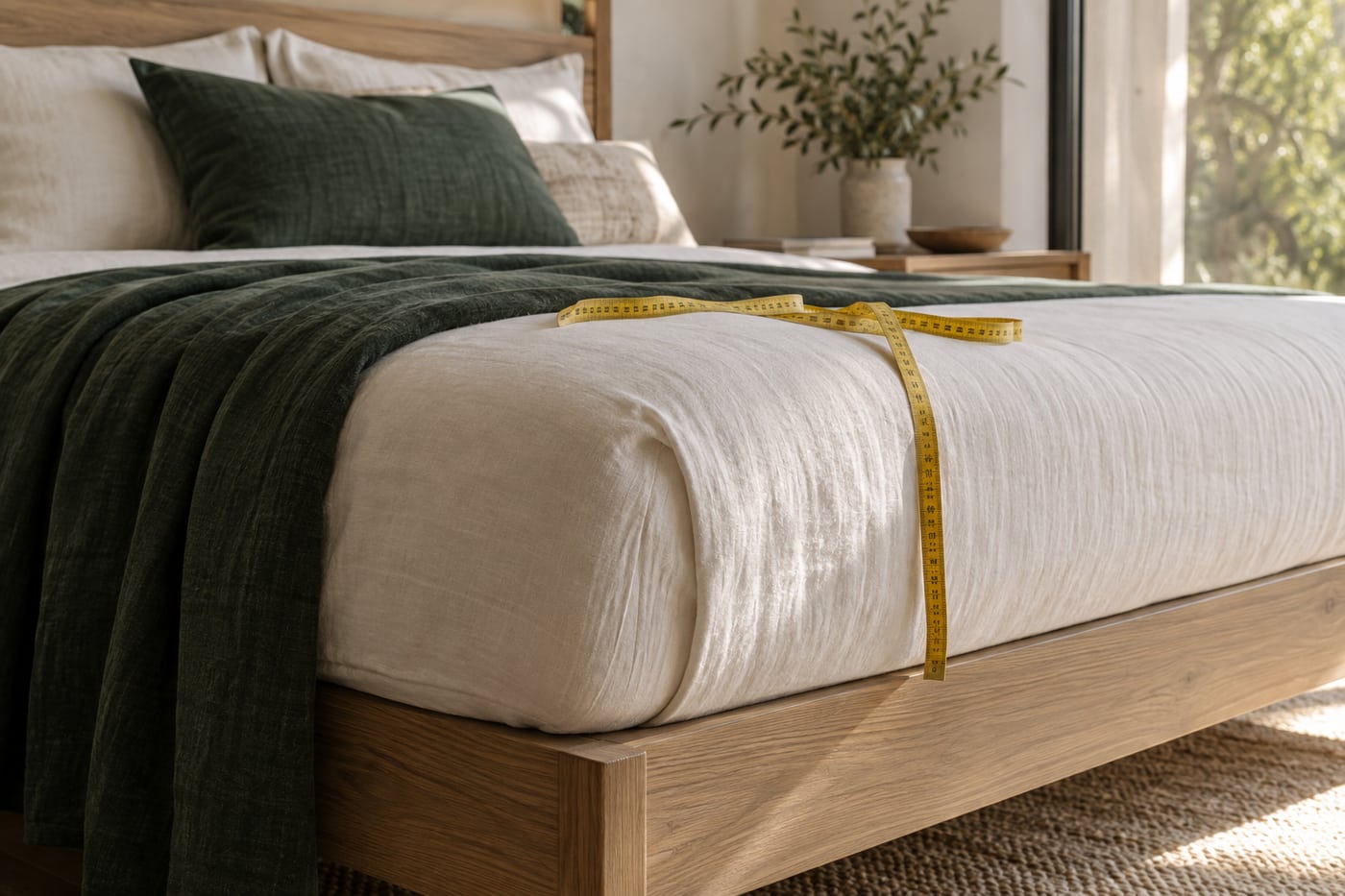
Measure the length, width and height of the mattress, including an extra comfort layer. Compare the height of the mattress to the depth of the pocket of the sheet, and not just to the width listed on the set. Measure the duvet and pillows separately: a double set does not guarantee that the duvet cover fits your duvet.
Also check the closure and the seams. A comfortable opening in the duvet cover, reinforced buttons and continuous elastic in the sheet may affect daily use more than a high number in the product title.
before deciding
Read the washing and drying instructions before choosing. A fabric that requires gentle care is not suitable for every household routine. If possible, use a sample and also check the back of the fabric and the seams. Ask about changing sizes in the wash and exchange policy, especially if you can't feel the linens in advance.
Start with three requirements you do not want to compromise on: the right size, a feel you like and care requirements you can manage. Then compare products that meet all three.
Small details worth checking in the store
The weight of the fabric, the closure of the duvet cover and the type of sheet affect the daily use. Check whether the duvet cover is comfortable to wear, whether the elastic fits the height of the mattress and whether the care instructions are applicable at home.
There is no need to assume that a two-layer fabric is better, that a high number of threads is always better or that a high price guarantees durability. Ask for a specification that describes the product you have chosen and compare seams and measurements to the contact side.
Example: choosing a thick mattress and a busy laundry routine
Let's say your mattress is thick, you wash often and don't have time for delicate care. In that case, start with the depth of the pocket and the drying instructions, and only then choose between the sensations. There's no point in falling in love with a fabric whose sheet comes loose every night or that doesn't fit the way you wash.
Now let's assume that the measurements and handling match in several sets. Try percale and satin that have a similar composition, and see what you like: a dry touch and the feeling of a fabric that keeps its shape or a smoother surface. If you tend to get hot, also consider weight and density and the extra layers on the bed.
The result is not a general ranking of the "best bedding", but a short list that suits you. You can return to the same method even when the budget or the season changes.
Which part covers what?


The size of the mattress does not determine the size of the blanket or pillow. Each part of the set is chosen according to the item it wraps.
Sources and scope
Source check: September 14, 2026. The information was checked against the sources listed here. The selection tips are designed to help you compare; They are not based on product tests we conducted ourselves.
Comparison according to your preference
| what is important to you | What should you check? | What not to conclude |
|---|---|---|
| Crisp touch and matte appearance | Cotton percale, fabric weight and finish | All percale feels the same |
| Smooth feel with subtle shine | Sateen and the exact fiber content | Satin means silk |
| Natural texture and loose look | Linen or linen blend | A wrinkle is necessarily a defect |
| Simple maintenance | Blends or microfiber with clear instructions | Every synthetic fabric is the same |
| A warm and enveloping touch | Flannel, brush and bed layers | Warmer fabric is of better quality |
By MyViro.
The content explains textile characteristics and is not the result of a product test in a laboratory. How we prepare our guides