Body pillow or decorative cushion: start with the use
A body pillow is an elongated or shaped pillow for placement beside the body, hugging or supporting an area according to the model. It is not necessarily your normal head pillow, and a long decorative cushion placed before a bedding set may be a different item. Retail descriptions can overlap, so start with the intended use: resting an arm, positioning a longer surface beside the legs or sitting to read. One photograph cannot establish suitability for all three.
Record what is missing from your arrangement and what already feels comfortable. A suitable head pillow need not be replaced because a body pillow has a raised end. Decorative choices may follow fabric and appearance, but do not establish sleeping suitability. This guide concerns adult products, specifications, sizing and care. It makes no pain-treatment or postoperative promise; medical situations also require the guidance you have received.
Straight, curved or bolster: shape is not a ranking
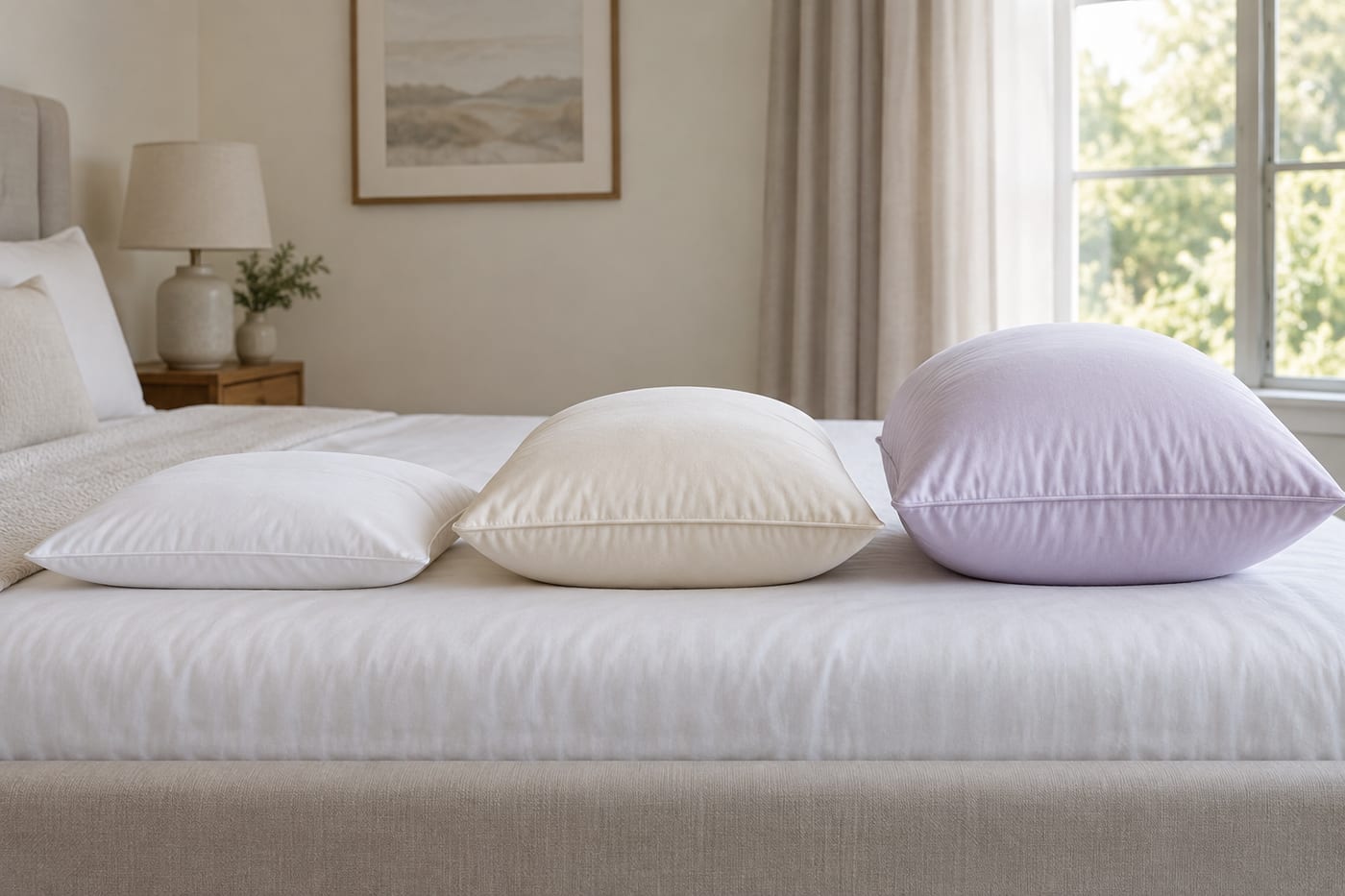
A straight pillow is an elongated rectangle or bolster placed along one side. A curved item may surround more areas and occupy greater width. Decorative cushions are often selected for appearance, and their coverings may not suit frequent changes. No shape is higher quality in every setting. Ask where filling sits, what can move and how much bed space remains. A photograph grouping several shapes does not explain their internal differences.
Look for the item fully spread out and a dimension diagram. Check whether its curve is fixed, bending is permitted and an end is designed for the head. Do not force a firm core into a different letter shape. A design along both sides can be cumbersome in a shared bed, while a straight item may need moving when you change sides. These are practical differences, not evidence that every product of one shape suits the same position or person.
For more information on the subject: How to choose a pillow: height, filling and sleep position.
Body pillows: fit questions by construction
| Construction or need | Compare | Check before purchase |
|---|---|---|
| Straight pillow | Length, width and loaded height | Space beside the body and side relocation |
| Curved pillow | External footprint and space within curve | Getting out of bed and movement |
| Long decorative cushion | Stated use and covering | Sleeping or appearance according to model |
| Fill adjustment | Permitted opening and changes | Adding/removing directions |
| Case and protector | Dimensions, shape and opening | No compression; replacement cover |
| Care | Separate labels and volume | Compatible appliances and drying |
Body-pillow dimensions: length, width and volume
Read dimensions in centimetres and establish what they describe. A curved item may be measured by unfolded length or its occupied footprint. Length does not reveal height beneath an arm or leg, and packaging dimensions are not product dimensions. Photographs beside people are unreliable measurements because proportions and placement differ. Request clarification without a diagram, rather than rounding dimensions from long or large wording.
For example, IKEA lists VÅRKORSÖRT at 40×140 cm and Coop lists Original Body at 20×54 inches, approximately 51×137 cm. These illustrate similar lengths but different widths, not recommended body dimensions or Israeli availability. Check available space and intended use, then separately assess the case and laundry equipment. An item that fits the bed’s length may still be too wide for the arrangement or too bulky for a domestic washer.
Check space on the bed and in the room
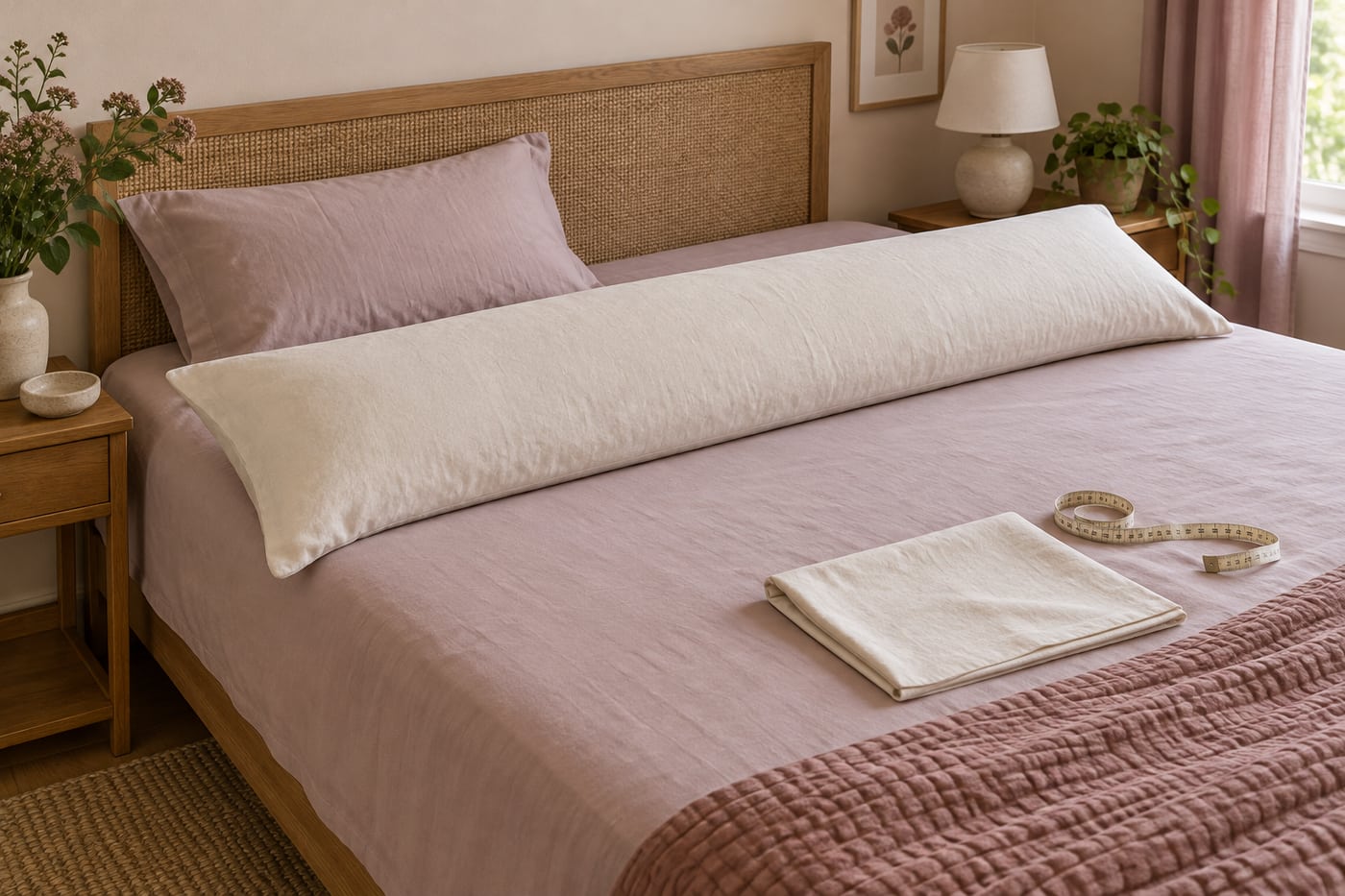
Represent the external footprint with a tape or folded sheet to understand the space it may occupy. This cannot reproduce filling and feel, but may reveal limited remaining room. Check the duvet, bedside-table access and getting out of bed. Consider both users of a shared bed rather than a photograph in a spacious room. Its length need not fill the entire mattress side.
Consider moving it across the bed and lifting it when changing sheets too. A large item can feel comfortable while lying down yet be difficult to remove, particularly without somewhere to place it during bed-making. Plan clean, dry storage when unused. A movement restriction or medical instruction requires more than a rectangle demonstration; obtain advice where needed. Useful dimensions connect the contact area with routine tasks you can manage.
Filling and construction work together
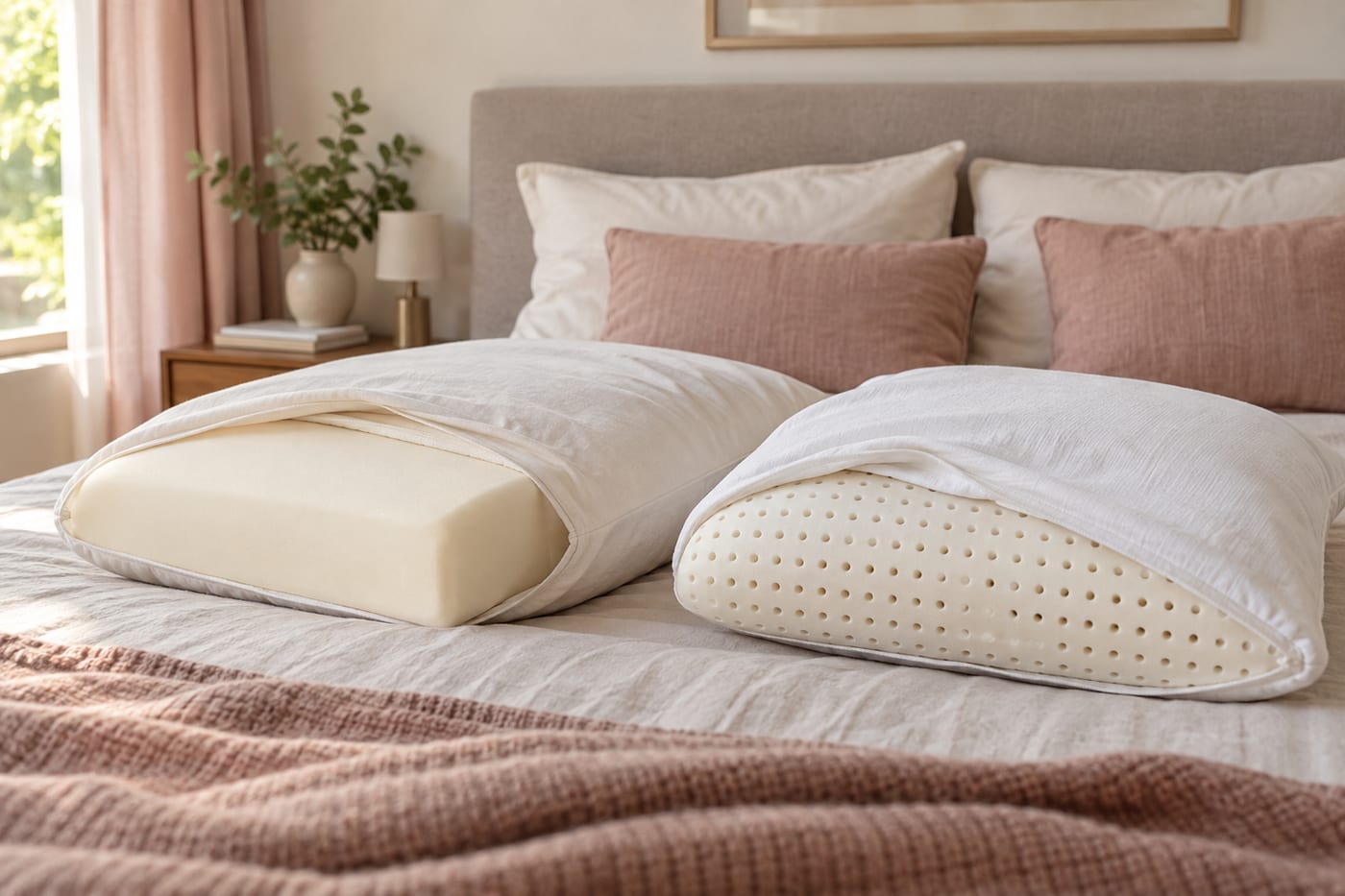
Body pillows may contain fibres, foam pieces, a blend or a continuous core. Construction affects response to weight and movement, with quantity and casing contributing too. Pieces can move within a casing, while a continuous core can maintain a more defined structure. These are general descriptions, not firmness or durability guarantees. Bamboo wording sometimes describes the cover, so request each component’s composition rather than one headline material.
Ask whether the item should retain one shape and whether redistribution is permitted. Enjoying memory foam in a head pillow does not establish the same feel in a body pillow: dimensions, volume and the area carrying weight differ. Our memory-foam versus latex guide explains response and recovery. Then return to the large model’s own specification, assessing height and distribution instead of assuming every product in the material family is identical.
Loaded height and filling adjustment
A full-looking pillow on a table may compress substantially in use, while a soft item can still occupy considerable width. Check whether height lifts a body area uncomfortably and whether filling moves away from the intended location. A brief hand press suggests response but cannot reproduce position or duration. No single height suits every contact area and construction.
Adjustment is allowed only in a model designed for it. An outer zip does not authorise opening the inner component. Coop Original Body illustrates adjustable filling rather than a rule for every shredded item. Make permitted changes gradually as directed and store surplus cleanly in a closed container. Do not add another pillow’s material without permission or compress it using a small case. Reassess after each change because distribution, as well as height, may change.
Cases and protectors must fit the opening too
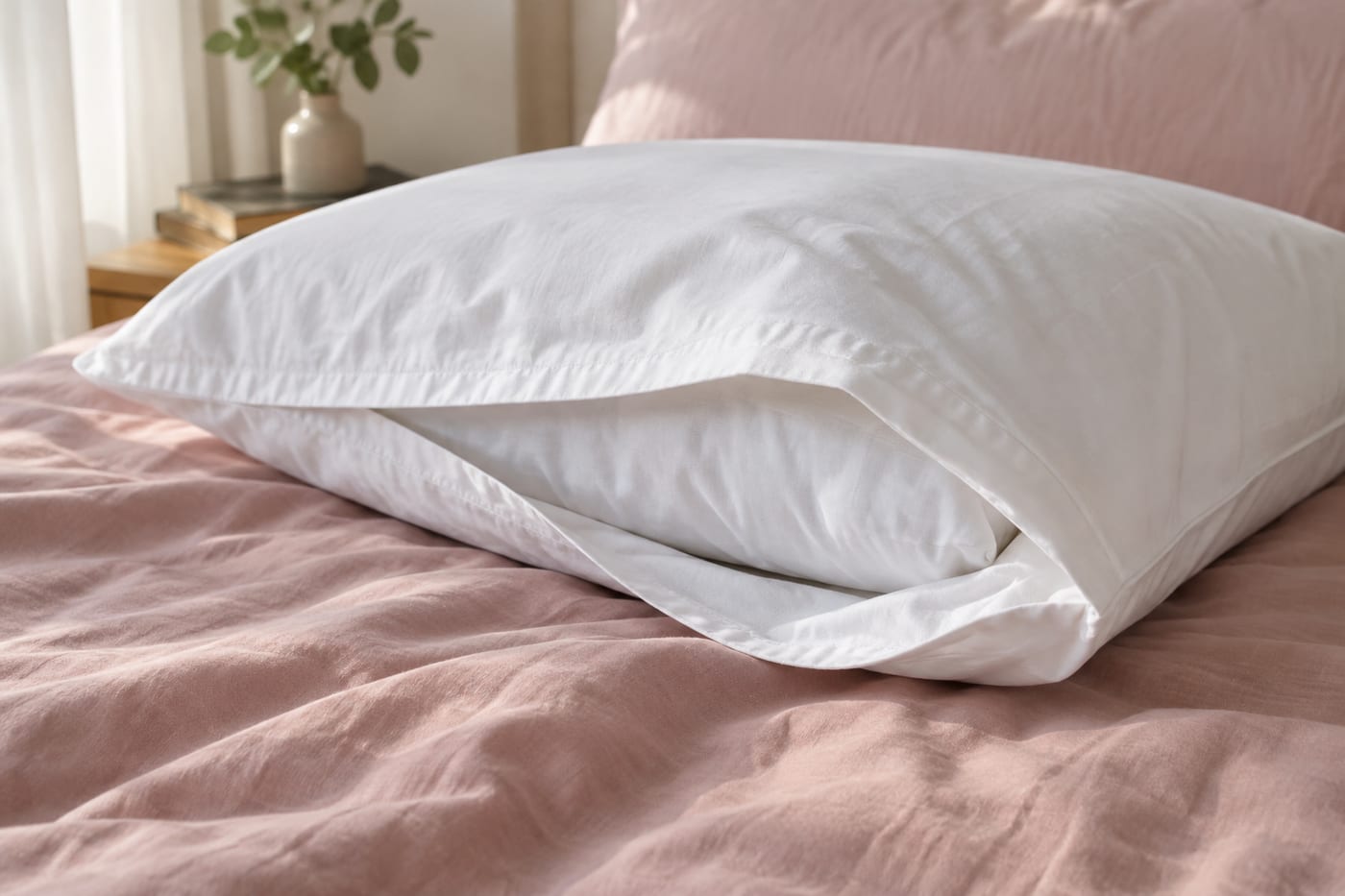
A case should accommodate length, width and volume without forceful packing. Check rectangular, bolster or model-specific curved shapes. A small opening or short zip can obstruct fitting even where dimensions look close. A tight cover may change casing response, while an oversized one can create folds. A normal head case does not automatically fit a long item, and a shared shape name does not guarantee compatibility between brands.
Look for a spare cover and protector if wanted. Distinguish an inner casing from the covering intended for routine washing. The cited IKEA model lists a matching case separately, but local stock is not promised here. Read fitting directions and retain labels. With similar items at home, a size marked on the storage bag helps locate the right case without pulling experiments. Suitable fit permits replacement without changing filling structure.
Try transitions between positions too
Position the item as instructed and try the intended use. Hugging, arm support and placement beside the legs need not occur simultaneously. Notice any movement of the head pillow and whether the arrangement remains comfortable. A body pillow is not a restraint and need not be packed so tightly that movement is prevented. Inspect folds, edges and zips at the contact area instead of only the made bed’s appearance.
If you change sides, try moving the item while awake and notice the duvet’s position. You need not continue a trial that increases discomfort merely to become accustomed to it. For persistent pain, injury or restrictions, seek suitable advice rather than treating photographs as therapy. Describe ordinary comfort difficulties precisely: too wide, too high or hard to move? Do not resolve them by unauthorised cutting or tying.
Washing: check volume as well as weight
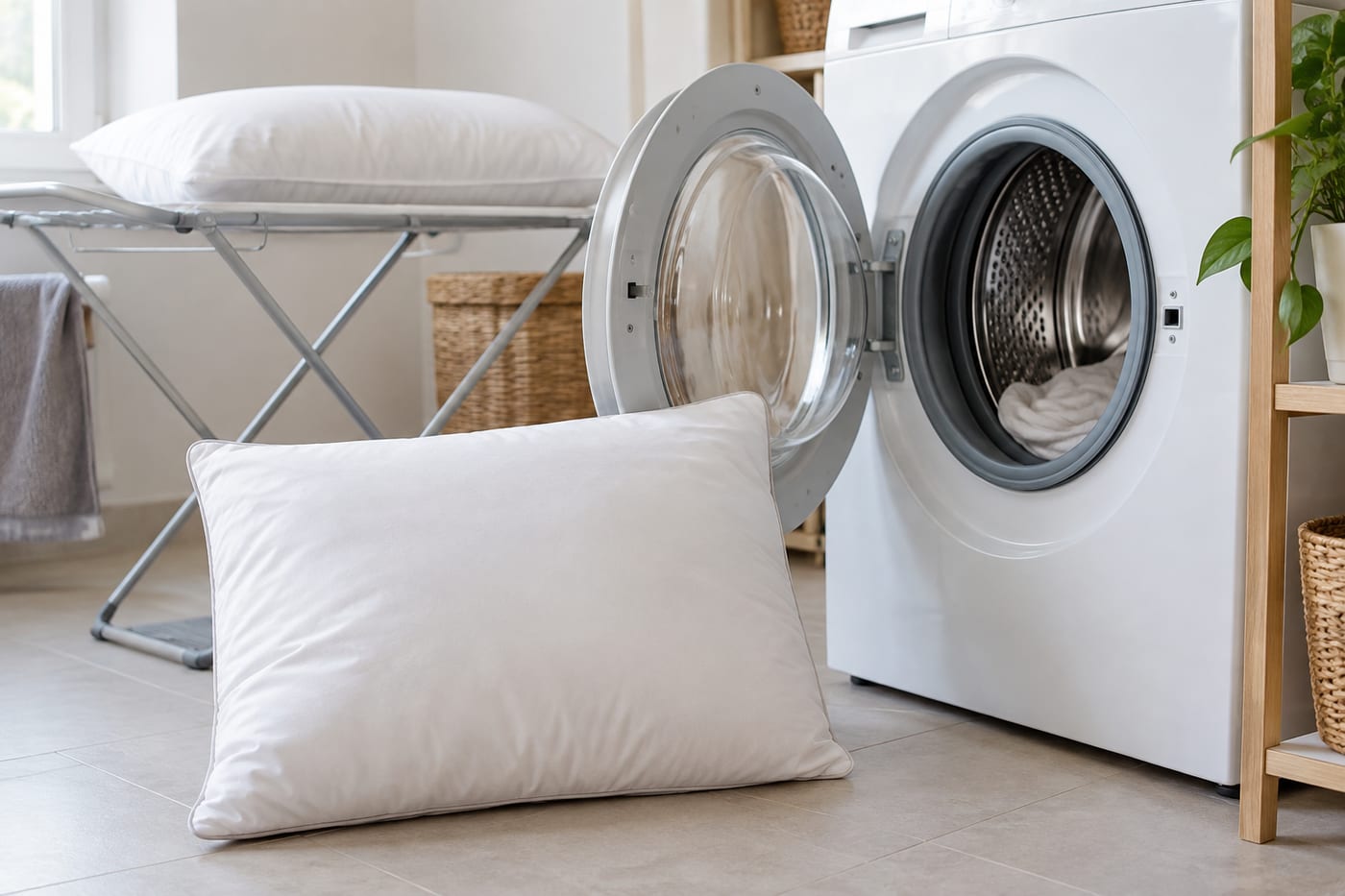
Read cover labels and filling instructions separately. Washable wording does not mean a domestic machine accommodates the complete pillow. Volume and programme load matter even below the capacity displayed on the front. Coop notes that its large body and maternity pillows may require commercial equipment. IKEA publishes separate pillow and cover directions for its cited model. These are examples rather than universal cycles or temperatures.
Plan drying before washing. An end or thick area may remain damp although the casing feels dry. Do not replace a clean cover over damp filling or wring and open parts by an unapproved method. Show the complete-item label to a laundry service. Removable cases and protectors can simplify routine care but cannot make a core washable where wetting is prohibited. Establish an alternative before wetting an item that cannot be dried as instructed.
Warmth, odour and promises to users
A large pillow adds contact area and fabric, while warmth also depends on case, duvet and room. Breathable, cooling and hypoallergenic wording is insufficient. Ask whether specifications describe fibre, filling structure, a covering feature or a defined test. A material name cannot guarantee sweating prevention or comfort for everyone. Compare with your intended cover where permitted, distinguishing initial coolness from extended-use feel.
Follow unpacking and airing directions for any new-product odour. Do not conceal it with fragrance or moisture without permission. For known sensitivity, establish each layer’s composition and seek appropriate advice. Stop using the item and obtain assessment if irritation or a reaction occurs. Enjoying a fabric’s touch differs from compatibility with individual sensitivity, and a material certificate cannot guarantee absence of reactions. Specific model information is more useful than unexplained reassurance.
Body pillows and pregnancy: adult uses
A straight item may also appear in a pregnancy category, while pregnancy pillows can be elongated or have several arms. A category name does not establish a need in every pregnancy. Combine pregnancy selection with positioning guidance and individual circumstances. Our pregnancy-pillow guide separates comfort from medical information. Shapes should not become a treatment ranking or imply that local support suits every condition.
Later use for sitting or adult feeding support needs to be explicit in the product directions. A body pillow is not an infant sleep surface and does not belong in a cot; marketing images do not authorise that use. NHS guidance keeps pillows outside infants’ sleeping spaces. Preserve these boundaries after birth. Several potential uses may be practical, but each requires its own model-specific assessment instead of automatic approval because the pillow remains at home.
Record requirements before paying
Record use, shape, dimensions, covering and care, adding bed space and side-changing routine. Check whether each model’s specification answers these points or simply promises comfort. The longest or fullest item is not compulsory. Suitable size and clear directions may fit daily use better than a large product that is awkward to cover and remove. Consider where it goes when off the bed as well.
Read return and trial conditions before unpacking, washing or changing filling. Warranty terms do not necessarily promise a personally suitable feel; obtain applicable Israeli conditions from the actual seller. Keep specification and label photographs and start as directed. Describe poor fit in terms of width, loaded height, movement or maintenance. This supports comparisons without assuming all body pillows are identical. A useful candidate has an understandable role in your bed and routine rather than merely a recognisable name.
Three checks before choosing a body pillow

- Define use and shape
- Compare space and dimensions in use
- Check case fit and complete-item care
Frequently asked questions
Which body-pillow length should I choose?
Match the intended area and bed space. Check width and loaded height too; no single length suits every adult.
Is a body pillow a long decorative cushion?
Not necessarily. Stated use, construction and care matter rather than length or appearance alone.
Is every shredded pillow adjustable?
No. Only a model designed for adjustment with opening and fill-change directions. A cover zip is not necessarily fill access.
Can I use an ordinary pillowcase?
Only if dimensions, shape and opening fit without compression; a head case is not automatically suitable.
Can I use a domestic washer?
Follow the label, programme and volume limits with compatible drying. Some large models need commercial equipment.
Does a body pillow treat pain?
No treatment is promised here. Seek suitable professional advice for persistent pain, injury or restriction.
Can a body pillow go in a cot?
No. Adult equipment is not an item for an infant sleeping space, where guidance keeps pillows out.
Sources and scope
Sources checked on 12 October 2026. Manufacturer sources describe their own products and instructions; they do not establish one universal rule for all bedding and mattresses.
- IKEA: VÅRKORSÖRT body pillow
Manufacturer example of 40×140 cm size and separate pillow/cover instructions; not a recommendation or Israeli availability promise.
- Coop: Original Body Pillow
Example of 20×54 inch size and adjustable filling; promotional treatment claims are not adopted.
- Coop: product care
Separate outer/inner care; volume limits and commercial equipment for this manufacturer’s large body and maternity pillows.
- NHS: safer infant sleep
Use boundary: an adult pillow is not an item for an infant sleeping space.
By MyViro.
The content explains textile characteristics and is not the result of a product test in a laboratory. How we prepare our guides