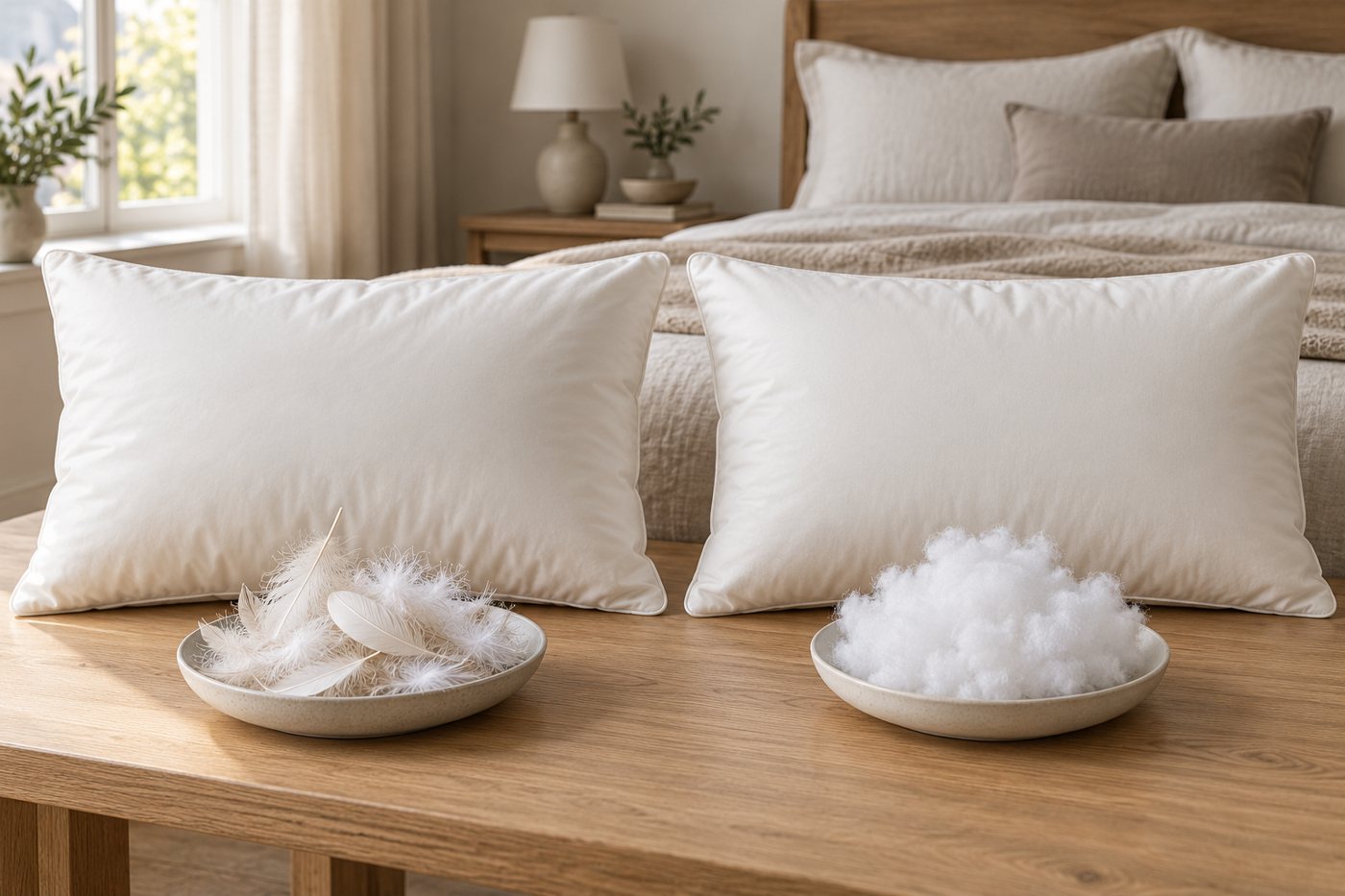
Natural or synthetic pillow filling: a short introduction
A pillow retailer introduces feather/down and synthetic filling families. This is a short commercial overview, not an independent test or evidence of medical suitability; care must be checked for each model.
By Duvet and Pillow Store · Video language: English
On this article, the player loads when the page opens, without autoplay, unless you chose to block external content. Player privacy information
Open the video on YouTube (in a new tab)
The video illustrates this topic. The full article remains available without watching; captions and transcripts depend on the publisher and YouTube.
Feather, down and synthetic fibre are different materials
A feather has a central quill, whereas down forms soft clusters without that same stiff shaft. A product called a feather pillow may blend the two, so read its percentages rather than relying on the commercial name. Synthetic filling is another broad family, commonly polyester fibres in different arrangements and finishes. A phrase such as down touch may describe a synthetic material rather than animal-derived filling.
Start with the filling declaration and distinguish it from the shell-fabric composition. Retail terms do not always describe materials precisely, and a photograph cannot establish what is inside. When the seller does not state the material and proportions, request clarification before comparing price, apparent softness or a promise of comfort. A transparent specification is more useful than an attractive family name.
Read percentages, weight and internal construction
Down percentage, filling weight and total pillow weight are separate figures. A higher down proportion does not by itself make a pillow taller or firmer. Filling quantity, shell dimensions and distribution also influence the result. In a multi-chamber design, the centre and outer layer may have different compositions, so one figure does not necessarily describe the entire item.
Record composition, filling weight and declared construction beside each candidate. Confirm that percentages do not actually refer to the cover fabric. If a weight is listed without explanation, ask whether it includes the shell or packaging. Otherwise you may compare a fabric figure for one product with a filling figure for another. More material is not automatically higher quality: it can change volume and feel in ways that do not suit you.
For more information on the subject: How to choose a pillow: height, filling and sleep position.
Compare height under the head
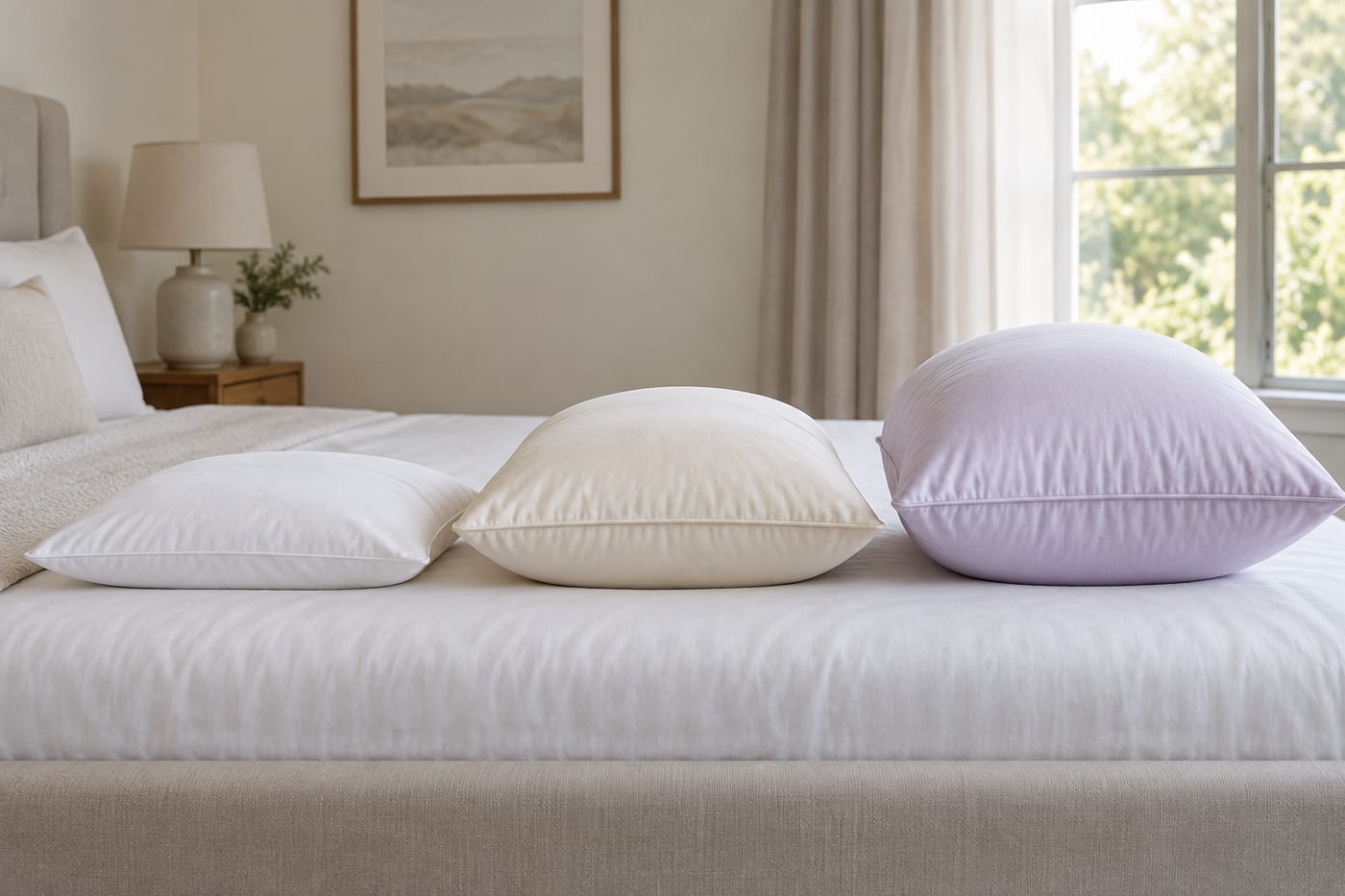
A sales photograph usually shows a plumped pillow without any load. In use, the head compresses its contents, making the remaining height more relevant than the photographed mound. Manufacturers describe down as soft and mouldable and feather quills as more springy, but substantial variation exists within each group. Do not conclude that every feather pillow sits high or that all synthetic pillows retain shape in the same way.
Where a trial is available, use your usual position on a surface as similar as practical to your own mattress. Notice whether you need to fold the pillow or add another to feel comfortable. For remote purchases, ask how the maker defines firmness and what the trial permits. Soft and high are not standard scales shared by every brand. Pillow suitability does not guarantee treatment of pain or a sleep disorder.
What a synthetic fibre pillow actually means
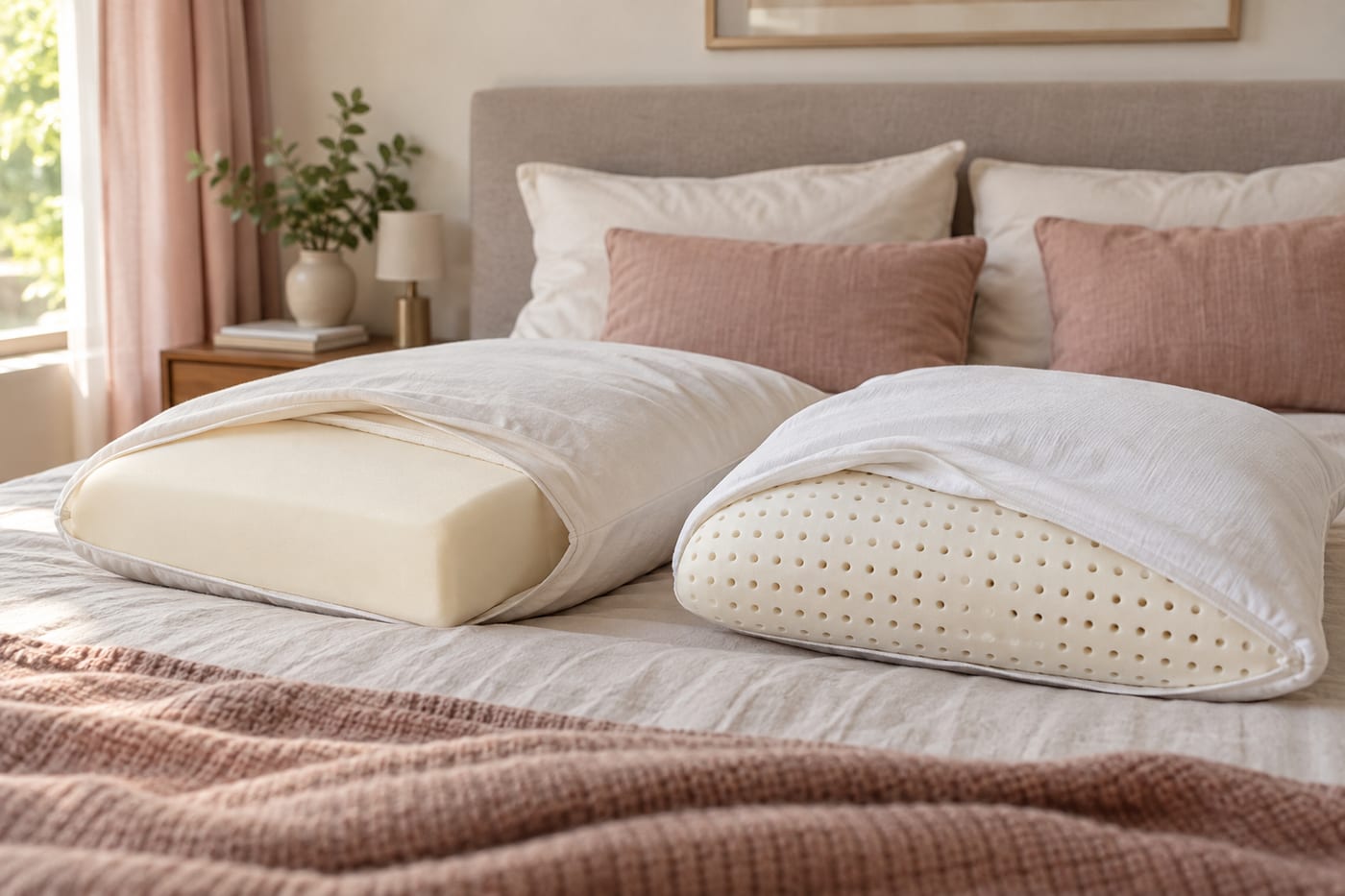
This comparison mainly concerns loose fibre filling, such as microfibre or hollowfibre, rather than a memory-foam or latex core. Two polyester products can feel different because of fibre thickness, processing, density and quantity. The word synthetic alone cannot tell you whether a pillow is springy, flat, light or suitable for frequent washing. Check the description of the actual model.
If filling can be removed through a purpose-made opening, establish the method and how surplus material should be stored. Without an opening, do not cut a seam to alter height; that can damage the product and affect its warranty. Anyone avoiding animal-derived filling should verify the full composition rather than relying on down alternative as a complete material declaration. Also check whether cleaning instructions cover the whole pillow or only its cover.
Shell, seams and protectors influence feel
The shell contains the filling and influences texture and sound through the pillowcase. With a feather pillow, look for information about fabric intended to limit filling leakage and inspect seam quality. A quill felt through the fabric may be uncomfortable even when the feather-to-down ratio sounds suitable. Thicker fabric is not automatically more pleasant for every person, so treat the shell as part of the pillow.
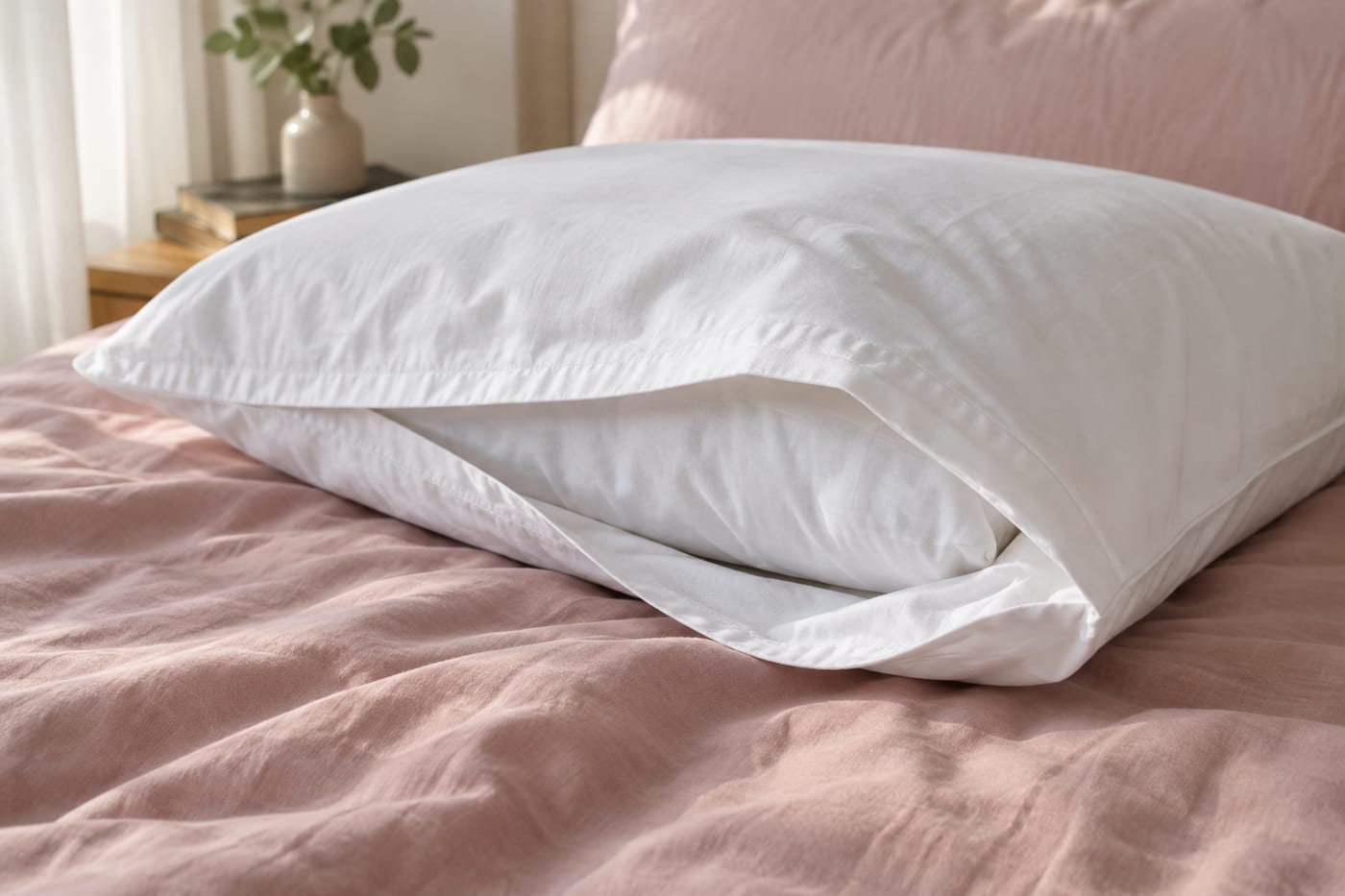
Check the same details on a synthetic pillow: fabric composition, finishing and a removable cover if present. Distinguish the fixed shell from a protector and a pillowcase. Compare candidates in similar cases, because a tight or rough covering can change apparent feel without changing the filling. A suitable protector may simplify care, but its dimensions and instructions also need checking rather than adding an unsuitable layer.
Use actual pillow and pillowcase dimensions
Read length and width in centimetres and establish whether they describe the pillow or its packaging. Names such as standard, queen and king vary between markets and cannot replace measurement. Even nominally matching pillow and case dimensions may feel different depending on filling volume and closure design. A case that is too small can compress a plump pillow and change its firmness.
Before ordering, measure existing cases and record the dimensions you need. Check whether the specification applies to one pillow and what is included in a pack. Changing filling does not require replacing the entire bedding set, but case and protector fit still matter. Where information is unclear, request actual measurements rather than accepting a general assurance that the item fits any double bed or every bedding set.
Laundry: the model label comes first
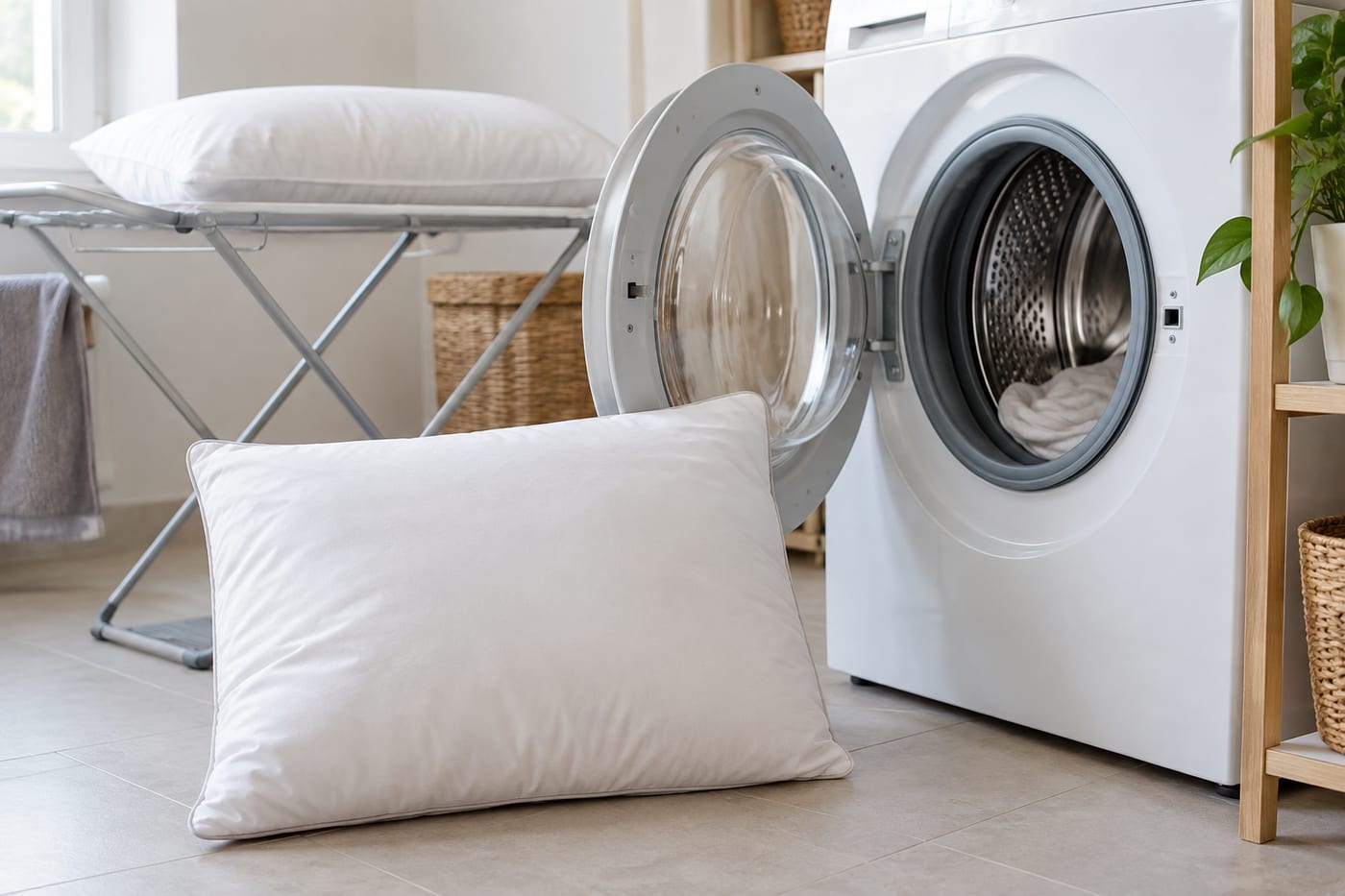
No single washing programme applies to every feather pillow or every synthetic pillow. The consulted sources give different instructions for their own products: some allow home care under specified conditions, while others recommend professional cleaning of natural filling. Shell fabric and internal construction also matter. If washing at home is essential, inspect the symbols before buying rather than waiting until a stain appears.
Check washer capacity and the permitted drying method. An item that appears dry outside can retain moisture within, so do not put it back in a case or into storage while dampness remains. Never copy a temperature, timing or detergent instruction from another model because its filling name sounds similar. If the label is missing, obtain directions from the manufacturer. Dryers and drying aids must likewise follow the exact guidance rather than a general online tip.
Routine maintenance and signs of wear
Keep cases clean and follow the maker's advice about a suitable protector. Shaking and reshaping can redistribute filling in some pillows, but cannot repair a torn shell or damaged contents. Do not soak or spray an item simply to restore volume. Store it only when clean and dry, in conditions consistent with its instructions and without prolonged compression that the maker prohibits.
Assess function rather than age alone: persistent lumps, empty patches, escaping filling and a lasting change in feel justify inspection. No fixed number of years guarantees comfort from every pillow in a category. Keep the model name and directions to clarify normal wear and warranty coverage. An arbitrary anniversary is not an automatic replacement rule, and a broad durability claim is not a reason to keep using a damaged or uncomfortable item.
Sensitivity is not decided by a marketing name
Natural, synthetic and hypoallergenic are not medical diagnoses and do not guarantee the absence of a reaction. Check the exact material, shell and any additional treatment declared by the maker. For a diagnosed allergy or recurring symptoms, follow appropriate professional advice rather than assuming all synthetic pillows are suitable or all natural fillings are problematic. This article does not medically rank the two materials.
Washability does not replace checking care directions and the wider sleeping environment. If you require a particular cleaning routine, confirm that the model supports it without relying on the filling-family name. Separate a marketing promise from a technical specification and from a property tested for a particular item. Ask what an allergy-prevention claim covers and which document supports it. Comfort language cannot answer an individual medical question.
Budget, material origin and returns
Compare price per pillow rather than only the pack price, and check whether a case or protector is included. Paying more does not prove that the height will suit you. Consider required professional cleaning, suitable laundry equipment and replacement-cover availability. This is not a price list or stock guarantee; model details need checking at the time of purchase.
If material origin matters to you, request verifiable filling details and any stated certification. Recycled fibre, animal-derived filling and a responsible-sourcing assurance are different facts; none alone proves comfort or complete environmental impact. Read trial conditions separately, especially after opening and use. That reduces the gap between an appealing description and a product you can actually return when it does not suit your needs.
A short decision checklist before ordering
Prepare a record for each candidate: filling composition, weight, dimensions, stated firmness, shell, cleaning and returns. Mark which details are documented and which remain missing. Begin with your non-negotiable requirements, such as avoiding animal-derived material or needing home care, then compare feel. A universally winning filling is unnecessary for choosing something that suits your routine.
If your current pillow's dimensions and working height are comfortable, use them as a reference rather than starting only with a filling name. Quantity and construction may matter more than a different headline on the packaging. This is an adult buying comparison, not a laboratory test or an invented first-hand review. Allow for adjustment within the trial terms without dismissing persistent discomfort. Purchase links on MyViro currently lead to retailers in Israel only.
Comparison: feather and synthetic fibre pillows
| Compare | Feather and down | Synthetic fibre filling |
|---|---|---|
| Filling composition | Feather/down percentages, core and chambers | Fibre type and filling arrangement |
| Working height | Test under weight, not from a photograph | Test under weight and check filling quantity |
| Shell | Weave, seams and quill sensation | Fabric, seams and removable cover if present |
| Care | Follow label; professional cleaning may be required | Follow label; no universal programme |
| Individual suitability | No comfort or allergy guarantee | No comfort or allergy guarantee |
Frequently asked questions
Are feather and down pillows the same?
No. Feathers have quills; down forms soft clusters. Many pillows blend them, so check composition and percentages.
Is a synthetic pillow a memory-foam pillow?
Not necessarily. This guide compares fibre filling, commonly polyester. A memory-foam or latex core has a different structure.
Which type is easier to wash?
It depends on the label, shell and drying equipment. Do not assume every pillow in a family permits the same care.
Does more down mean more support?
No. Down percentage alone does not establish working height; quantity, construction and dimensions also matter.
Is synthetic always suitable for an allergy?
No. A filling name or hypoallergenic claim is not a medical guarantee. For a diagnosed condition, check materials and professional guidance.
Can I keep the same pillowcase?
If dimensions and volume fit. A case that is too small can compress the pillow and change its feel.
Sources and scope
Sources checked on 28 October 2026. This adult guide compares filling and care characteristics without an independent product test or medical recommendation. Model instructions take precedence over general guidance.
- John Lewis: Buying duvets and pillows
A retailer guide to filling families and care, not an independent comparison study.
- American Down and Feather Council: For consumers
An industry body explaining terminology, density and care; commercial superiority claims are not MyViro rankings.
- Canadian Down & Feather Company: FAQ
Manufacturer explanations of feather, down and microfibre and directions for its own products only.
- IDFL: Care labels for down and feather products
Technical guidance on shells, care labels and complete drying; it does not replace model-specific instructions.
By MyViro.
The content explains textile characteristics and is not the result of a product test in a laboratory. How we prepare our guides
Illustrative photos on this page were created with AI.