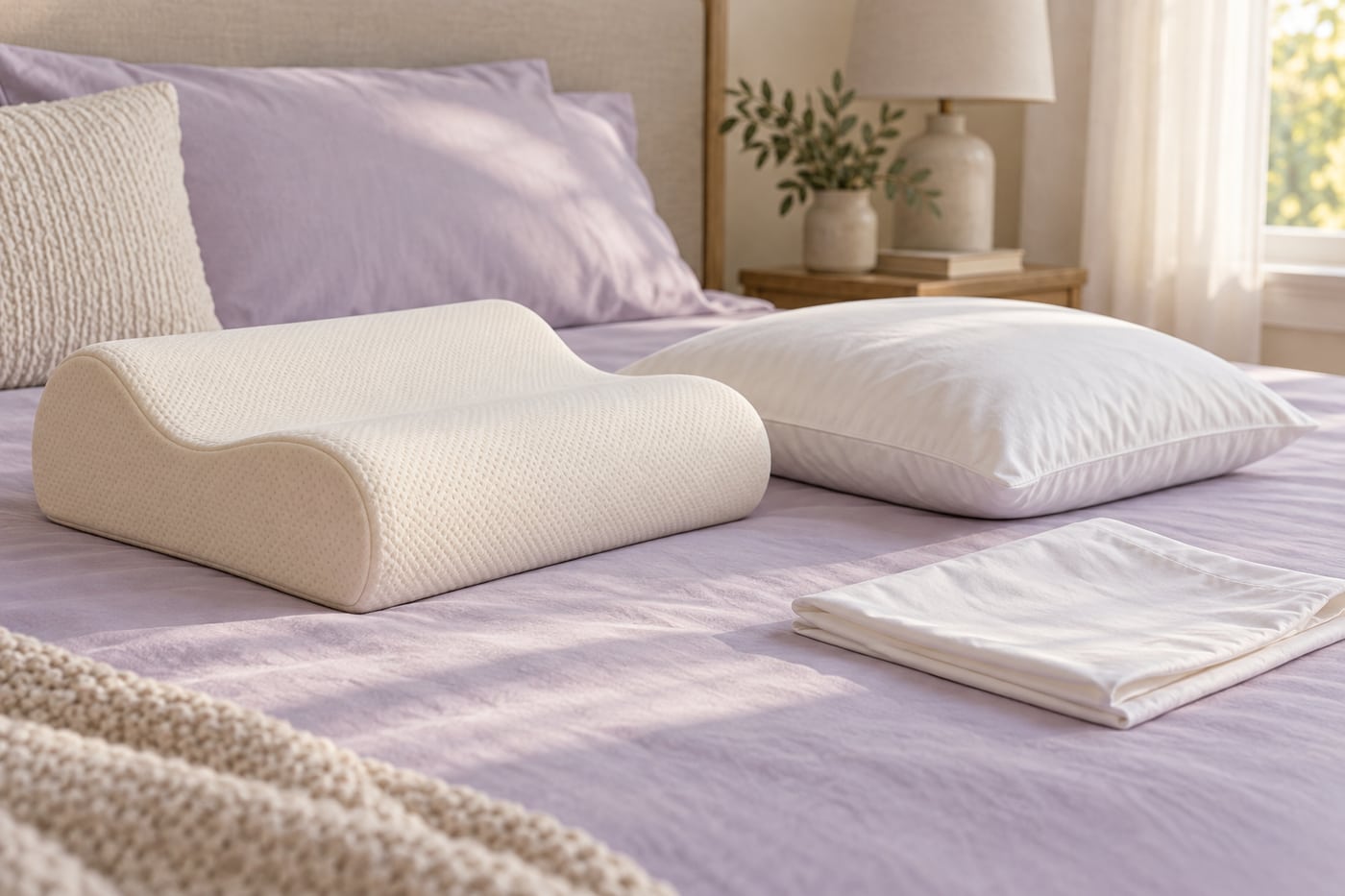
Orthopaedic is a heading, not a treatment guarantee
An orthopaedic pillow may feature a contour, foam core, several heights or adjustable filling. Its label does not identify the feature that suits you or demonstrate a solution to neck pain. Assess dimensions, construction, height and care rather than supportive promises alone. Pain can have different causes, and the pillow present in the morning or a brief shop hand press cannot establish the cause.
This guide explains product checks and information for professional discussion. It does not diagnose, guarantee prevention or provide injury or postoperative treatment instructions. Follow known-condition or individual guidance before changing equipment. Separate medical assessment from choosing a comfortable, appropriately specified pillow. Both concern daily life, but are different decisions: a product heading cannot replace assessment, and a clear specification is not proof of medical treatment.
Persistent pain and additional symptoms
NHS recommends contacting a doctor for pain or stiffness lasting a few weeks, concern about the pain or additional symptoms such as tingling or a cold arm. A series of purchases need not come first. Describe onset, changes and affected areas. This is more useful than calling the pillow insufficiently orthopaedic because it concerns the condition. Explicitly mention effects on movement or sleep rather than only the model name.
NHS inform identifies urgent assessment for worsening weakness or altered sensation in hands or arms, new walking or balance problems, or neck pain with a severe headache. Following injury, severe pain, difficulty moving the head or new limb symptoms require urgent assessment as appropriate. Use suitable Israeli medical services; British reference numbers are not local. These signs are not exhaustive, and a product trial should not delay needed care.
For more information on the subject: How to choose a pillow: height, filling and sleep position.
Assessing a pillow beyond a medical heading
| Feature | What needs to be clear | What it does not establish |
|---|---|---|
| Height | What is measured and remains when lying | One number for everyone |
| Contour | Orientation and intended areas | Treatment because of shape |
| Material | Composition and construction | A cure promised by its name |
| Adjustment | Permitted changes and parts | Fit for every position |
| Cover and cleaning | Labels and care method | Permission to wet every core |
| Trial and warranty | Actual seller conditions | A guaranteed medical outcome |
What is a low, firm pillow?
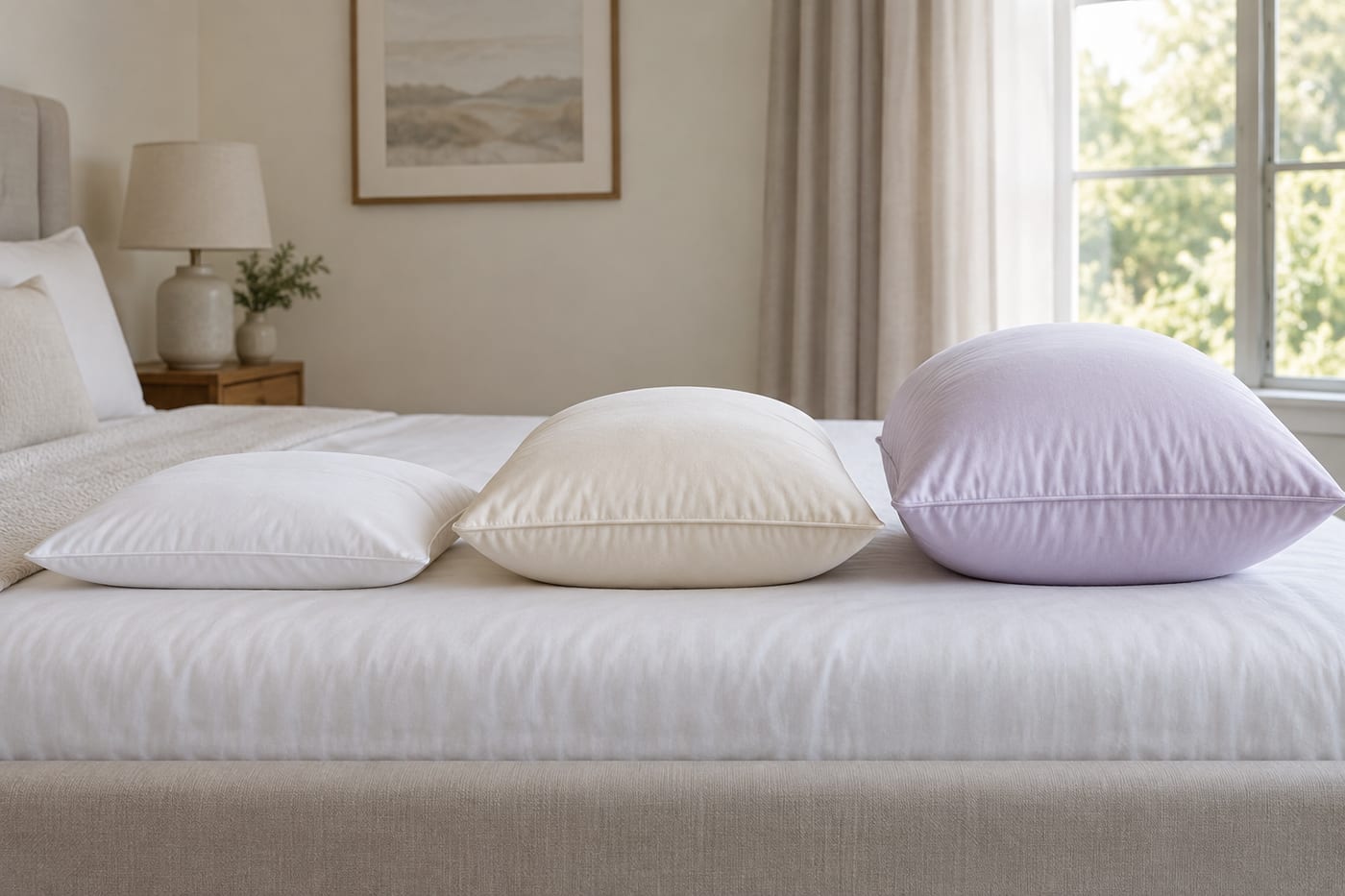
General NHS advice mentions a low, firm pillow without one centimetre value or a material and brand selection. Assess low against position and remaining height beneath the head rather than on a table alone. Several thin pillows can create substantial combined height. Do not turn guidance into buying the thinnest item or lowering the head without considering comfort and individual advice. Support and firmness are not one shared retail measurement.
Gloucestershire Hospitals illustrates side-lying pillow thickness and keeping the head in line with the body, including excessive or insufficient thickness. This is positioning guidance rather than treatment evidence for a commercial model. Ask how individual recommendations should be checked on your bed. Shoulder width cannot give one correct height for all mattresses because settlement and construction vary. Position information helps interpret specifications without approving every product showing a similar alignment image.
Package height versus lying-down height
A specification may describe unloaded height, a high edge or two sides. Establish what was measured. Identical numbers can accompany different compression, and loose filling can move and alter height. A table is not a mattress; age and condition matter where shape has changed. Confirm the chosen version rather than only a series name. Price and weight cannot reliably establish remaining height during use.
During an authorised trial, use the intended mattress, topper and case. Notice uncomfortable lifting or a constant need to fold. Home angle measurements or photographs are not diagnoses. A plain description of feel can help professional assessment. Recheck after mattress or topper changes because body settlement may differ despite an unchanged pillow. An extra pillow is not compulsory to correct poor fit; establish whether the item’s own height and construction suit you first.
Contours and orientation: using two heights
A shaped pillow may have a recess, raised edge or different sides. Check intended head and neck areas and orientation. The high edge is not correct for everyone, and the photographed side need not suit you. Contouring is construction rather than treatment approval. Request the exact version’s heights. A lying-down direction also does not establish the same edge for seated reading.
Try normal position changes where compatible with your advice. Does the edge feel comfortable or obstruct movement? Do not bend cores or reverse components contrary to instructions to form another shape. Clarify missing directions before alteration. Where a professional recommends particular support, confirm that the model and orientation match rather than merely resemble an image. A case should accommodate contours without tension or contact-area folds. Compare the complete item used at home, not only an uncovered core.
Material is not a medical answer
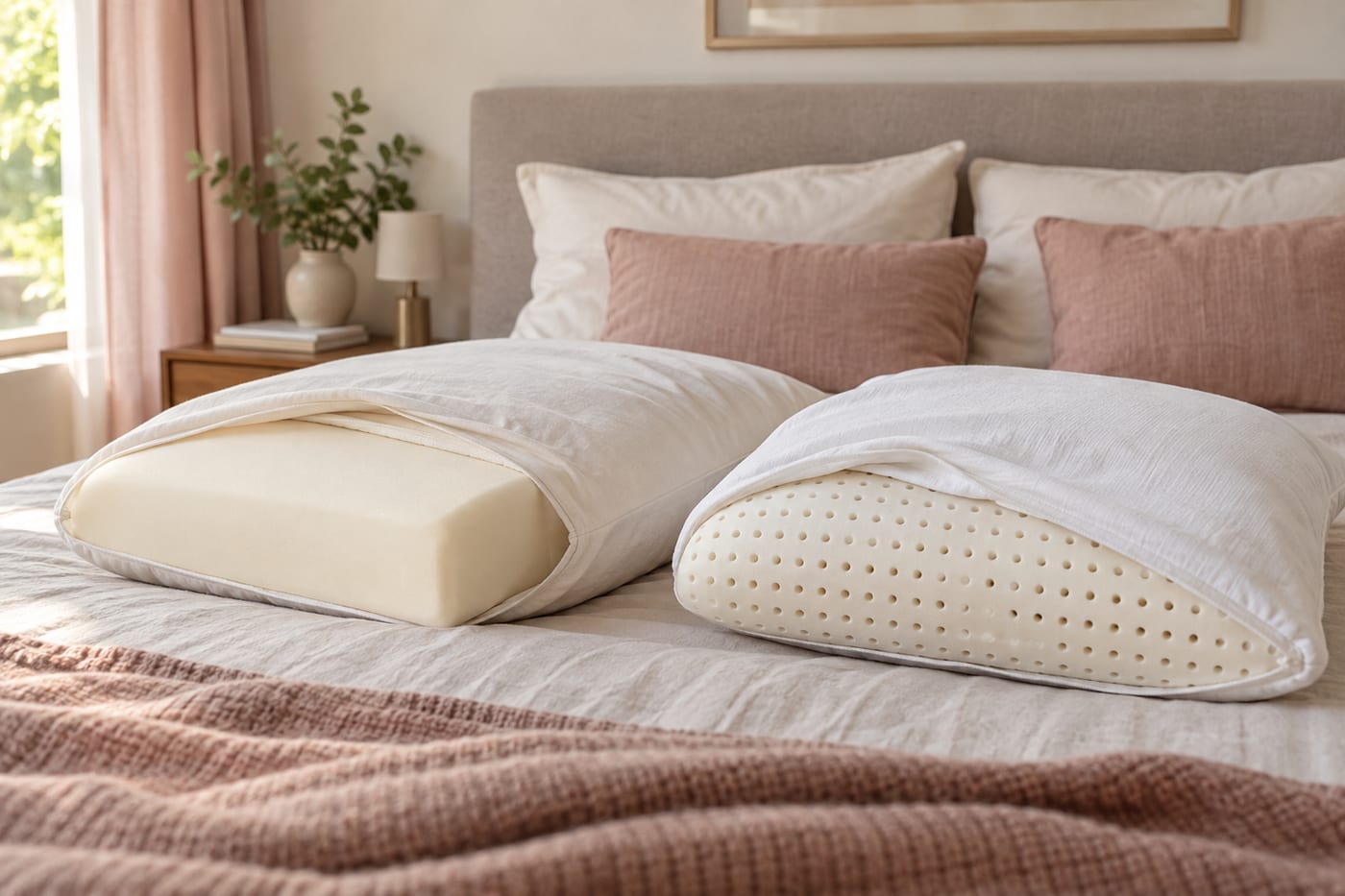
Memory foam tends to recover more slowly, latex generally responds elastically faster, and fibres or pieces may move in a casing. Each family includes height, construction and firmness differences. Do not select a claim that the material corrects the neck, or assume soft contact suits pain. Request complete structure: continuous core or filling, quantity and adjustment. A material hand press cannot replace assessment of the model while lying down.
If one model is uncomfortable, compare another height or structure without rejecting the entire family. Our memory-foam versus latex guide covers response and care; here fit and limits of medical promises matter. Request composition for known sensitivity and the meaning of any certificate. Natural wording is not individual clearance, while material or emissions testing is not a pain study. Separate component information from medical outcomes even when both appear in one description.
Fit with your mattress and normal position
Mattress and topper affect shoulder and body settlement, while side-lying differs from back-lying. General NHS guidance also addresses neck twisting and front sleeping. Individual instructions do not change to accommodate a purchase. A photograph cannot assess your actual position. Do not choose solely because a shop model looked suitable on a mattress with different firmness and thickness from your own.
Record changes preceding poor fit: mattress, topper, pillow count or reading arrangement. Do not assume each change caused pain, but documentation helps. Clear trial conditions permit assessment within the home setup. They do not authorise delaying assessment or continuing worsening symptoms until the trial expires. The mattress may require a separate enquiry if the problem appears related to the bed; replacing a pillow cannot be assumed to correct every change in settlement or surface.
Adjust filling and layers as instructed
An adjustable item may allow removal of filling or a layer according to the model. This helps compare heights rather than treating pain. Read where to open, what to remove and how to store parts. A cover zip is not always interior access. Do not cut foam to lower it or add another product’s material without permission. A removable layer also does not authorise standalone use elsewhere unless described.
Make gradual, recorded changes so the arrangement can be restored or explained. Check distribution and edges as well as height. Do not accumulate layers until the head sits uncomfortably high. Stop for discomfort and review specifications and guidance. Adjustment reduces guesswork without automatic fit for every condition. If each use requires substantial change, compare another structure. Numerous options do not oblige you to retain an item where no permitted configuration feels comfortable.
A personal trial is not diagnosis
Record positions, arrangement, folding needs and cover fit during an authorised trial. Do not attribute every morning’s change solely to the pillow: sleep and overall condition have other influences. No medical score is needed, and a comfortable night is not treatment proof. The record supports comfort decisions and descriptions, not diagnosis. Another user’s report of resolved pain cannot diagnose the next person using that product.
An item increasing discomfort or accompanying new symptoms does not require continued use for a minimum number of nights. Act according to the situation and appropriate advice. Read return, washing and adjustment restrictions before trying. Distinguish defect warranty from return for poor fit. Applicable Israeli terms come from the seller, not a foreign website. Describe a return decision without treating it as a medical finding about all models or an entire material family.
Cover and cleaning: can you follow the directions?
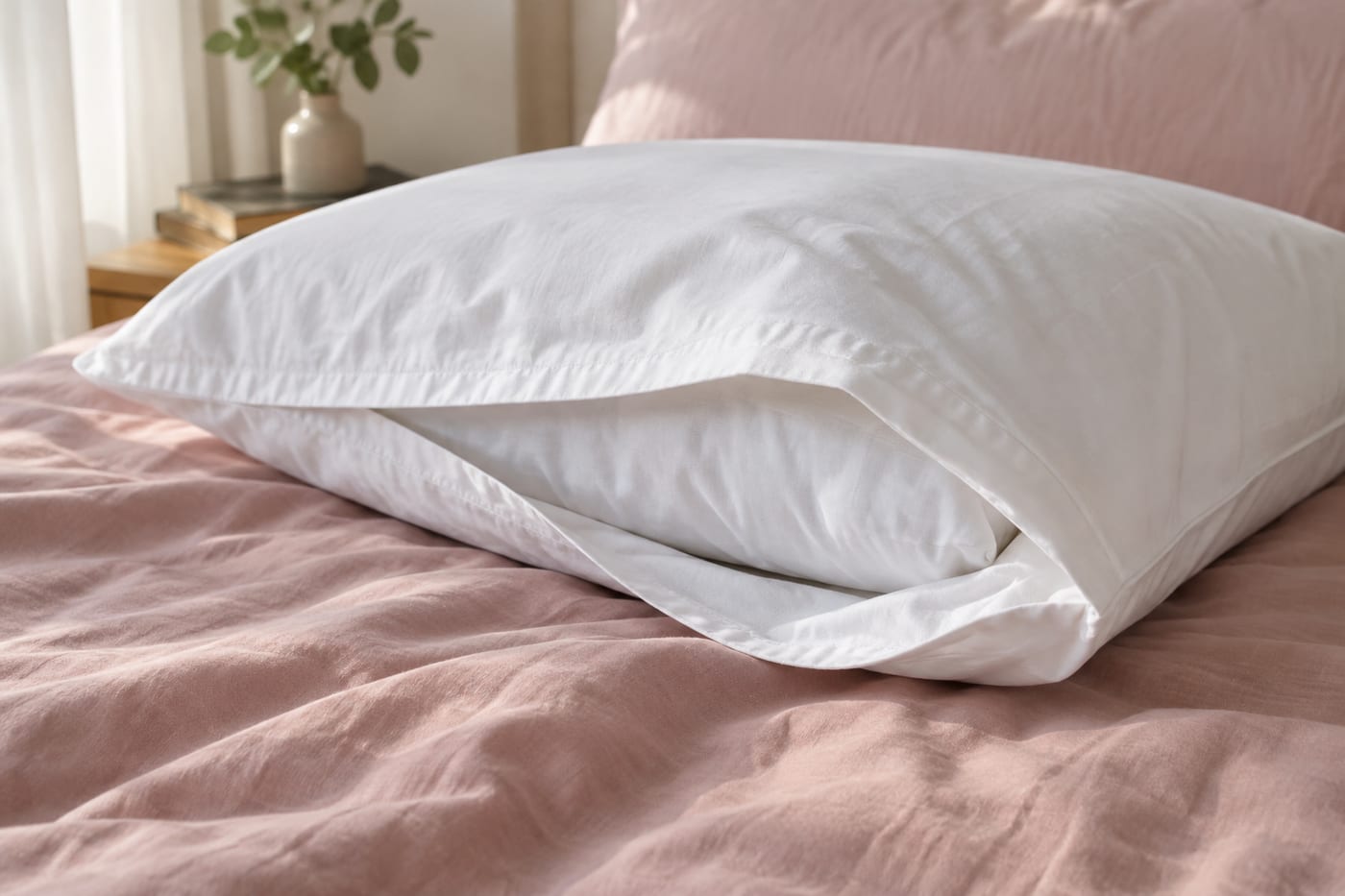
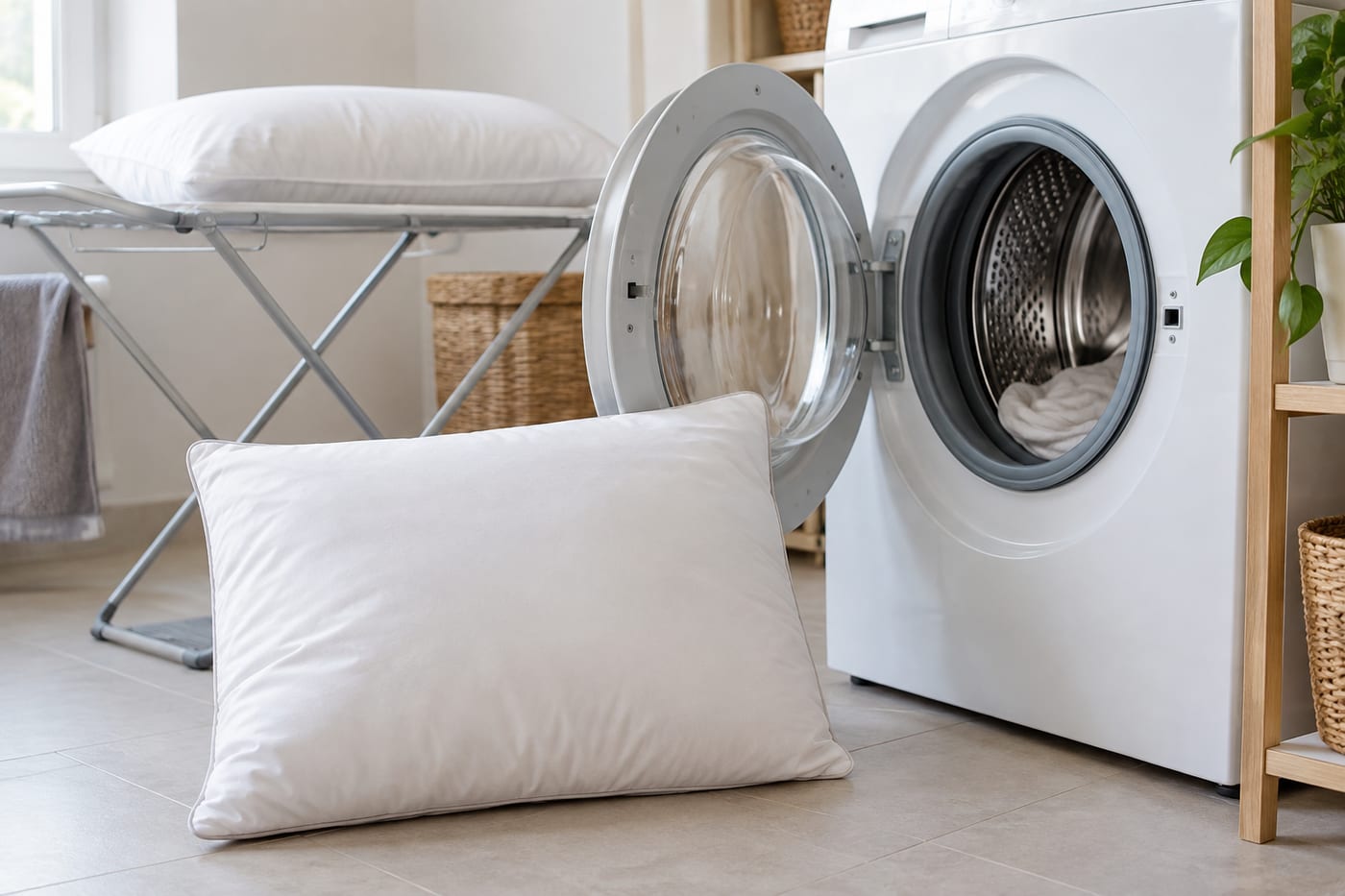
Check removable covering, case compatibility and core cleaning. Some foam cores must not be wetted even where covers are washable. TEMPUR distinguishes core material from model-specific cover care. Do not transfer pillowcase or fibre-pillow washing to another foam or add steam and sprays without permission. A comfortable item with difficult routine care still requires a maintenance decision, particularly without a correctly sized spare cover.
No universal age makes every orthopaedic pillow unsuitable. Check tears, shape changes, filling that cannot be redistributed or instructions you cannot fulfil. A long warranty does not promise unchanged personal comfort. Distinguish a worn cover from a changed core. Our pillow-washing guide explains labels and complete drying. Cleaning neither establishes medical efficacy nor restores damaged support. Retain labels to discuss changes with the manufacturer instead of adding unnecessary wash cycles.
Certificates and endorsements: ask what was assessed
For expert endorsements, ask who recommended what use and which model. General positioning advice is not a product recommendation, and a fabric-testing logo is not a pain study. Correction, prevention and universal-fit claims need relevant information rather than satisfied customers alone. A contour need not be promoted as treatment technology to explain its construction. A medically worded heading is unnecessary where another item supplies the practical specification.
Request composition, height, version and certificate meaning. Check cover versus complete-item claims. Return to verifiable features where information is missing: dimensions, orientation, covering and care. Do not select promises replacing assessment. A clearly specified pillow can be a comfort candidate without an orthopaedic label, which cannot supply missing details. For a professional model recommendation, understand the reasoning so the actual version, size and delivered instructions can also be checked.
Complete the choice while keeping the information boundaries clear
Record usual positions, mattress and requirements: loaded height, shape, adjustment and cover. Add individual guidance where present. Compare two specifications instead of treatment headings, including care and trial conditions. Serious selection does not require the tallest or firmest item. Ask about missing details before paying. Product information may support a professional discussion, but cannot establish the pain’s cause or an already-made medical decision.
After purchase, follow instructions and keep the label. Persistent, worsening or accompanied pain needs assessment even when the item feels pleasant. Returning an uncomfortable product differs from obtaining pain care. A pillow may fit a personally suitable sleeping environment, but is neither diagnosis nor a cure guarantee. Useful recommendations combine information, permitted experience and individual advice where necessary. Comfort and maintenance matter without permitting medical contact to be skipped when the situation warrants it.
Beyond the orthopaedic label

- Seek symptom assessment where needed
- Check height, shape and orientation
- Compare care and trial conditions
Frequently asked questions
Does an orthopaedic pillow resolve neck pain?
The label supplies no guarantee. Comfort is not diagnosis; persistent pain or additional symptoms warrant assessment.
Which height should I choose?
Consider loaded height, position, mattress and individual guidance. NHS advice is not one universal centimetre value.
Is memory foam better than latex for pain?
This is not a medical material ranking. Compare construction, height and feel; a name is not treatment.
Is the high edge always correct?
No. Read orientation and version and match needs and individual advice.
Must I continue if discomfort worsens?
You need not complete arbitrary trial nights with worsening discomfort or new symptoms. Act according to the situation.
When should I contact a doctor?
For pain lasting a few weeks, concern or additional symptoms. Worsening weakness, walking or balance problems and severe headache with neck pain require urgent assessment as appropriate.
Does a material certificate prove treatment?
No. Material or emissions testing is not a neck-pain treatment study.
Can an orthopaedic pillow be washed?
Follow the model and separate cover/core directions. A washable cover does not authorise wetting foam.
Sources and scope
Sources checked on 12 October 2026. Manufacturer sources describe their own products and instructions; they do not establish one universal rule for all bedding and mattresses.
- NHS: neck pain
Low, firm pillow advice and assessment of persistent pain or additional symptoms; no commercial-model approval.
- NHS inform: neck problems
Professional information updated July 2026; signs including worsening weakness, walking problems and severe headache warrant urgent assessment.
- NHS inform: neck injury
Post-injury guidance updated August 2026; British services and phone numbers are not the Israeli care pathway.
- Gloucestershire Hospitals: neck pain and sleeping position
Illustrates pillow thickness and head alignment in side lying; no product ranking or cure promise.
- TEMPUR: care and cleaning
Manufacturer example of separate cover/core treatment and product-specific restrictions on wetting.
By MyViro.
General information to familiarize yourself with the subject, which is not diagnosis or medical treatment. How we prepare our guides