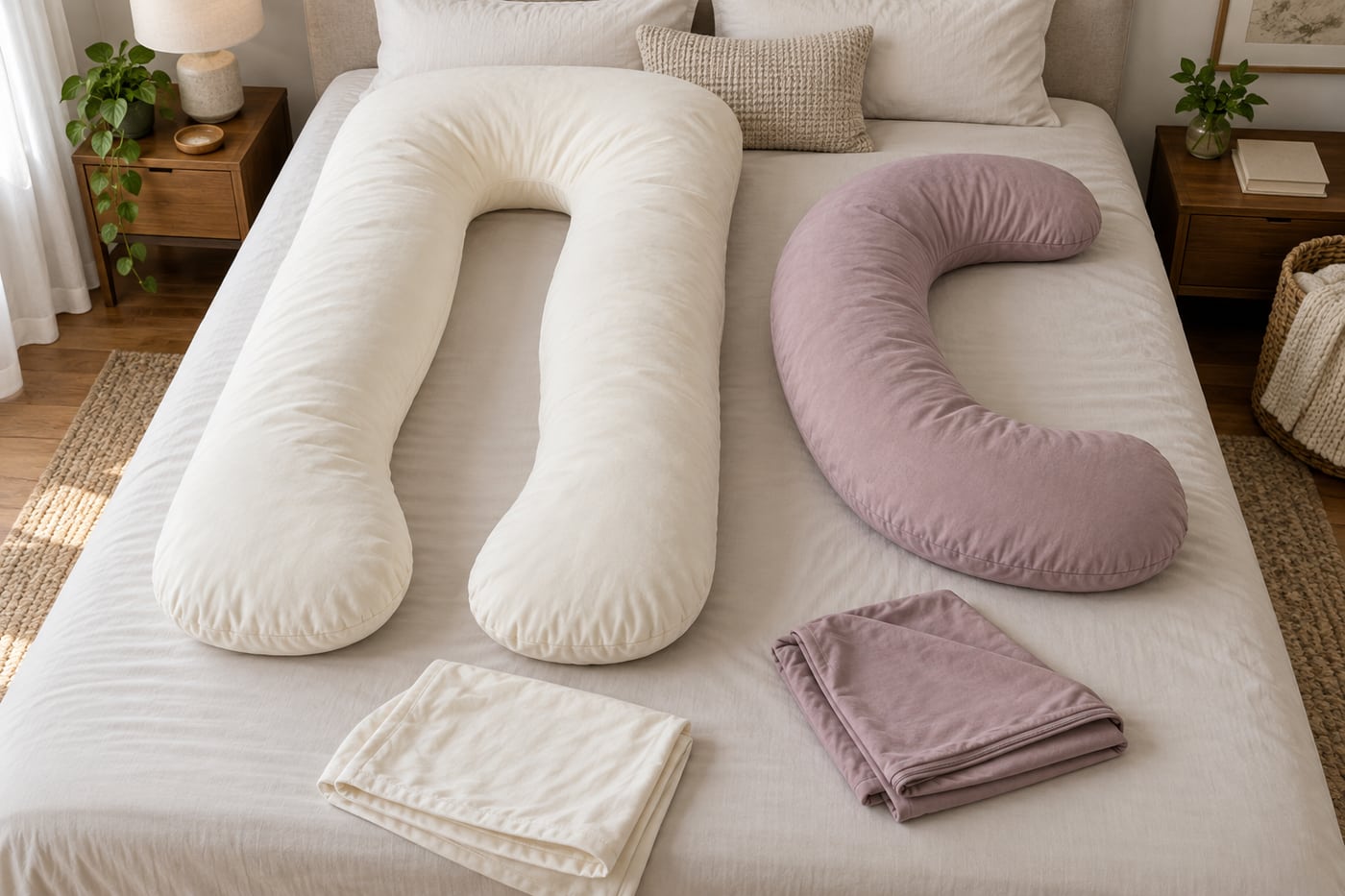
A useful recommendation starts with your needs
A search for a recommended pregnancy pillow need not end with a top-ranked brand. Begin with what is difficult: finding somewhere for an arm, support near the bump, leg placement or changing sides. Identify the need before comparing shapes and sizes. A larger or more expensive item is not necessarily better for your bed or pregnancy stage. Another person’s review cannot measure your fit, and a product name is not a specification.
This guide does not claim hands-on product testing or promise pain treatment or improved pregnancy outcomes. It offers a process for comparing shape, footprint, loaded height, covering and care. Professional going-to-sleep and assessment guidance is addressed separately. Individual instructions from the maternity team belong in the decision rather than being replaced by retail wording. The aim is manageable daily use without attributing a medical role that has not been established.
Side sleeping: guidance separate from product shape
NHS and Tommy’s advise going to sleep on your side in the third trimester, from 28 weeks; either side is acceptable. This includes naps. If you wake on your back, turn onto your side and return to sleep rather than interpreting it as pillow failure. Guidance does not require tracking every movement, and a pillow cannot guarantee position. Discuss condition-specific instructions with your team rather than changing them because of advertising.
NHS describes pillows beneath the bump or between knees as possible comfort support in side lying. A specially named purchase is not compulsory: Tommy’s also identifies ordinary pillows as an option. Shape selection addresses practical arrangement, while position guidance comes from medical evidence. Do not substitute promotion of back-lying for professional advice or restrain the body with ties or improvised barriers. Specifications and medical guidance remain separate checks to consider together.
For more information on the subject: How to choose a pillow: height, filling and sleep position.
Pregnancy-pillow shapes: what to check
| Shape or feature | What changes in use | Check |
|---|---|---|
| Straight | One-sided support | Length and relocation on side changes |
| U | Arms on both sides by model | External footprint and internal width |
| C or J | Different curve and orientation | Ends and position changes |
| Small or wedge | Local support | Intended area and height |
| Fill adjustment | Volume and distribution | Manufacturer-permitted changes |
| Removable cover | Separate replacement and washing | Shape, opening and spare |
Straight pillows: check relocation to the other side
A straight pillow can create a surface beside the body for hugging or placement near the legs according to the model. It may be easier to move than a design surrounding both sides, but changing sides can require relocation. Check reach without displacing the head pillow. Body or pregnancy wording does not alter the assessment: dimensions, filling and positioning directions still matter even with a suitable-sounding heading.
Try an arrangement with ordinary pillows already at home, without expecting it to reproduce every construction. Small local support may be sufficient without filling the entire bed side. If several pillows move and complicate matters, an elongated item is worth comparing. This is practical rather than medical decision-making. Describe the desired change: less relocation, different contact feel or easier cover replacement. Such details guide specifications more usefully than recommended wording and avoid added volume that misses the original need.
U, C and J are not sizing standards
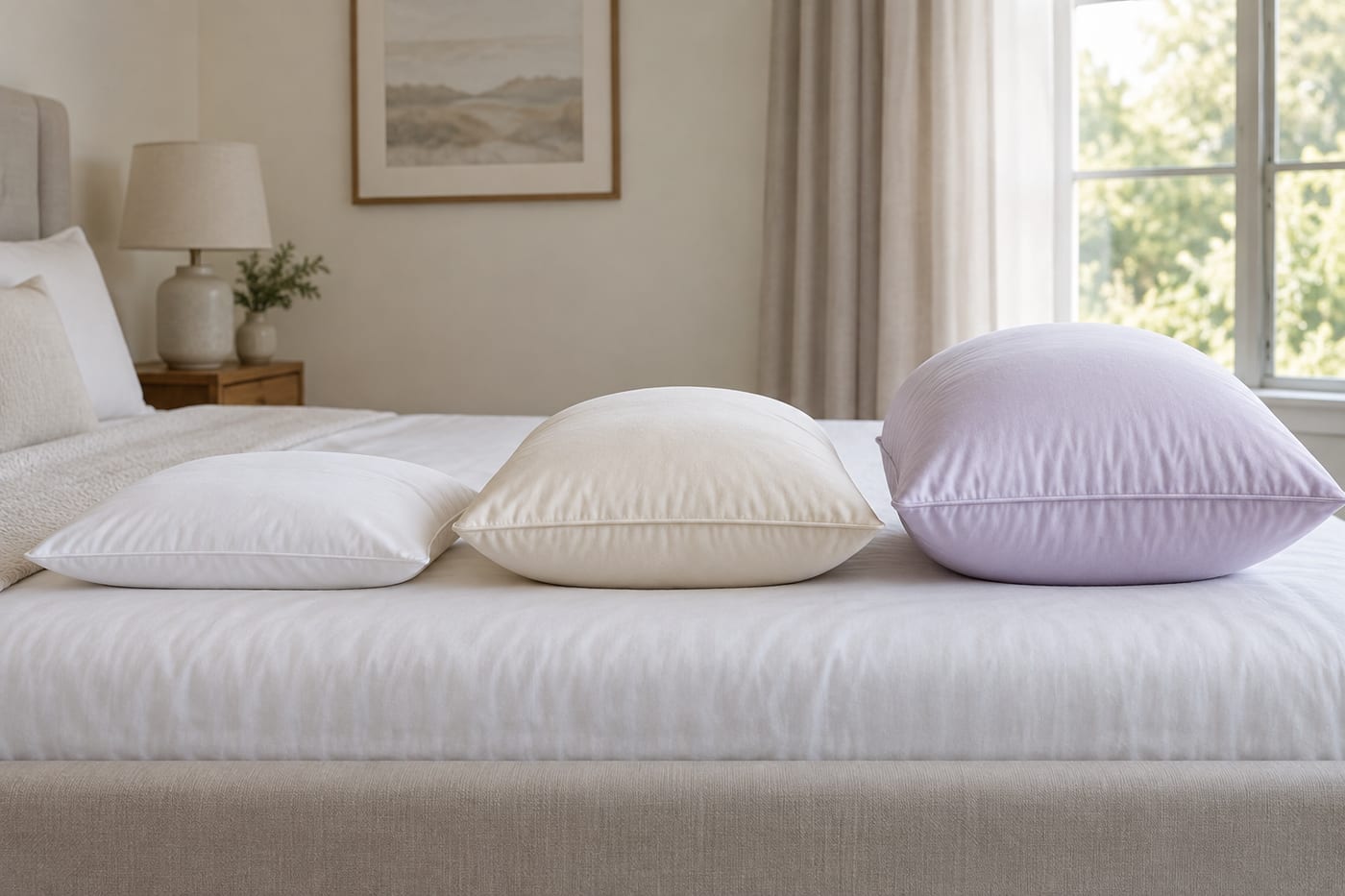
Letters usually describe curved structures rather than standard dimensions. U may create two arms, while C and J curve differently by model. Products sharing a letter can differ in internal width, length and end height. Two arms do not demonstrate better support for everyone. Check remaining space for the body, duvet and another user instead of simply counting supported-looking areas.
Find a fully spread-out photograph and clear measurements. Ask whether an end separates, orientation changes or parts move before planning extra uses. A head section need not displace a comfortable existing pillow where another arrangement is allowed. Check getting out of bed and changing sides too. The goal is not to reproduce an image with a different body and mattress, but to find a structure you can manage. Request clarification before purchasing or altering an item with unclear directions.
Small pillows and wedges: local fitting
A small pillow or wedge occupies less room than a surrounding design, but height and contact still need assessment. Small does not always mean gentler, and a firm wedge does not suit every area. Find directions defining location and use. Do not select angles from photographs or transfer instructions between supported areas. Compact storage is useful but cannot establish medical compatibility or a particular positioning permission.
Sometimes the question is whether local support is needed and where, rather than which large item to buy. Discuss discomfort or pain with a midwife or physiotherapist. Do not use a wedge to justify a position contrary to your guidance. Request material, dimensions and removable-cover details to understand maintenance too. A small pregnancy item is not an infant sleep surface and does not belong in a cot after birth. Assess each use against the actual model rather than its resemblance to another product.
External dimensions and room inside the curve
For curved items, establish external footprint and space within the curve. Unfolded fabric length need not equal length on the bed. Request a diagram and measurement explanation, distinguishing product from packaging. A photograph beside a person is insufficient, and user height alone cannot determine fit for every shape. Check adjustable parts and whether the dimensions describe your intended arrangement rather than another configuration.
Represent the footprint with a tape or folded sheet, then consider duvet and getting out of bed. This evaluates space, not feel. Allow room for both users of a shared bed. Consider weight and lifting during washing or sheet removal. Size need not increase automatically as pregnancy progresses; reassess changing needs against actual construction and comfort. Dimensions should support a decision for your room without relying on extra-large wording or photographs lacking a scale.
Filling and firmness under load
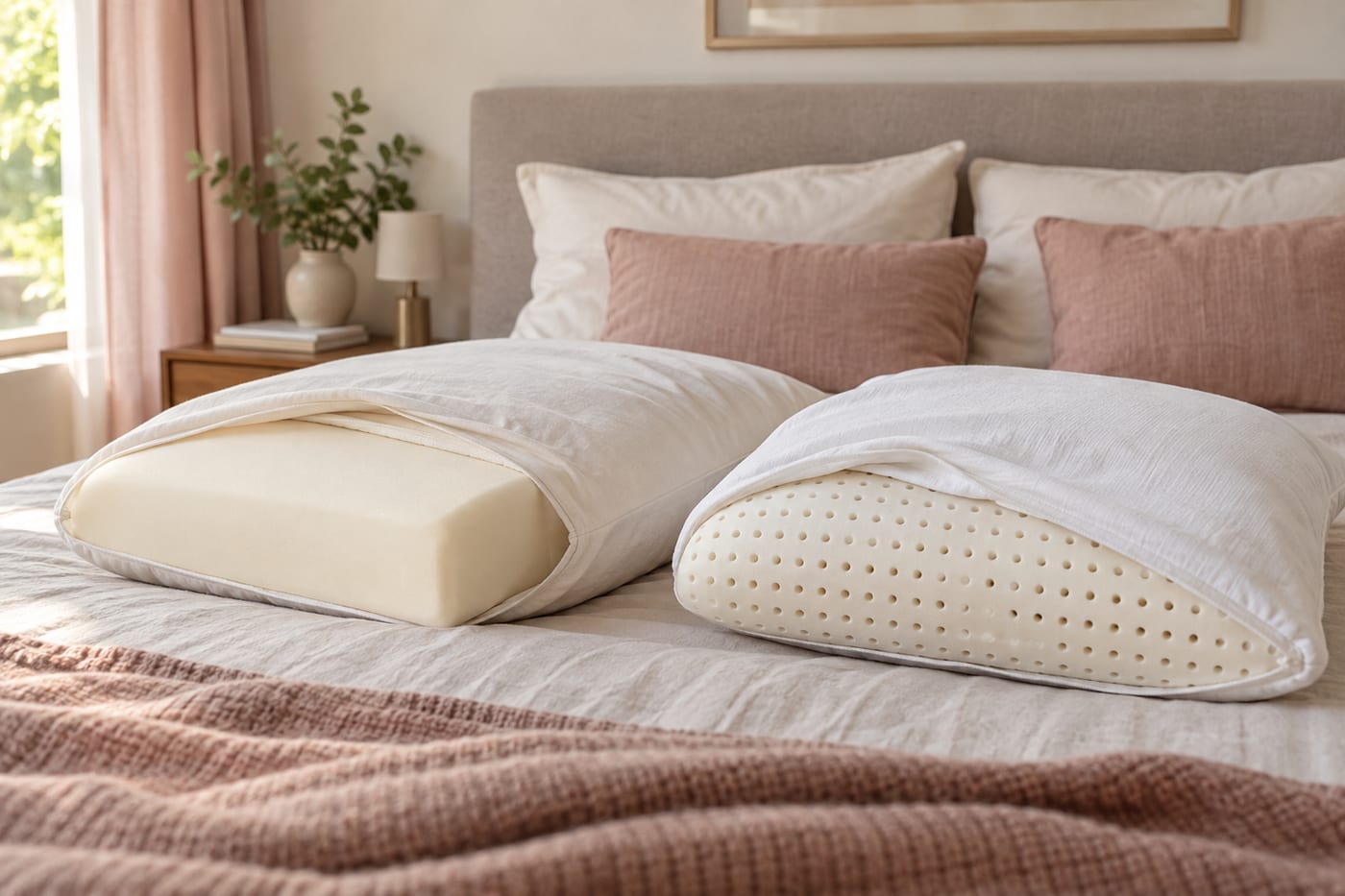
Fibres, foam pieces, beads or another structure may be used. A filling name does not establish movement, compression or adjustment. Request core and cover compositions separately. Soft-labelled material can collect in one area and change height. Check permitted redistribution or quantity changes. An external zip does not authorise opening the fill, and whole-body-fit promises do not specify manufacturer-permitted options.
Make approved adjustments gradually and store surplus cleanly in a closed container. Adding more does not necessarily improve comfort: extra volume lifts an area, while removal changes distribution. No firmness is correct for every pregnancy. Mattress and head-pillow interaction contribute, so compare under similar conditions during an authorised trial. Do not replace material or add another pillow’s filling without permission. Briefly recording changes helps restore an arrangement or explain poor fit without presenting adjustment as medical treatment.
Covering, warmth and routine replacement
A large pillow adds fabric, while warmth depends on case, duvet and room. Cotton, bamboo and gel do not guarantee a cool night. Establish actual fibre and the meaning of cooling claims. Brief contact cannot reproduce a night, making covering details and trial terms more useful than slogans. No material needs to be declared best for every pregnancy stage without explaining its role in the complete item.
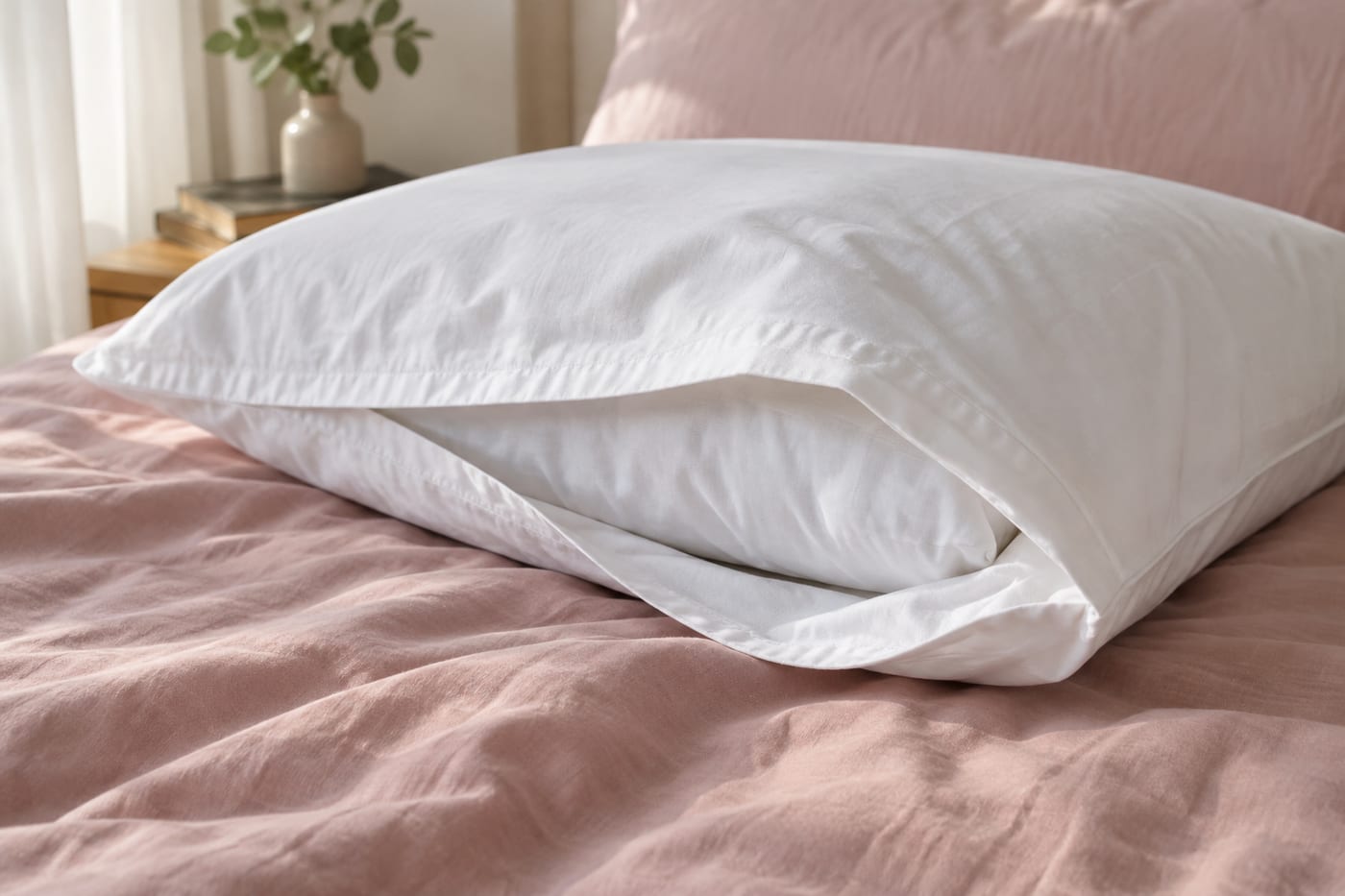
Removal and refitting are part of use. Check adequate opening width, accessible fastening and an exact-shape replacement cover. One U cover does not fit every U item. For known sensitivity, request all component compositions and appropriate advice; hypoallergenic wording is not individual clearance. Retain labels and avoid stretching a small case to compress filling. Establish whether you can change a large cover alone and have space to spread it out. Manageable maintenance influences choice alongside lying-down comfort.
Check washing and drying before purchase
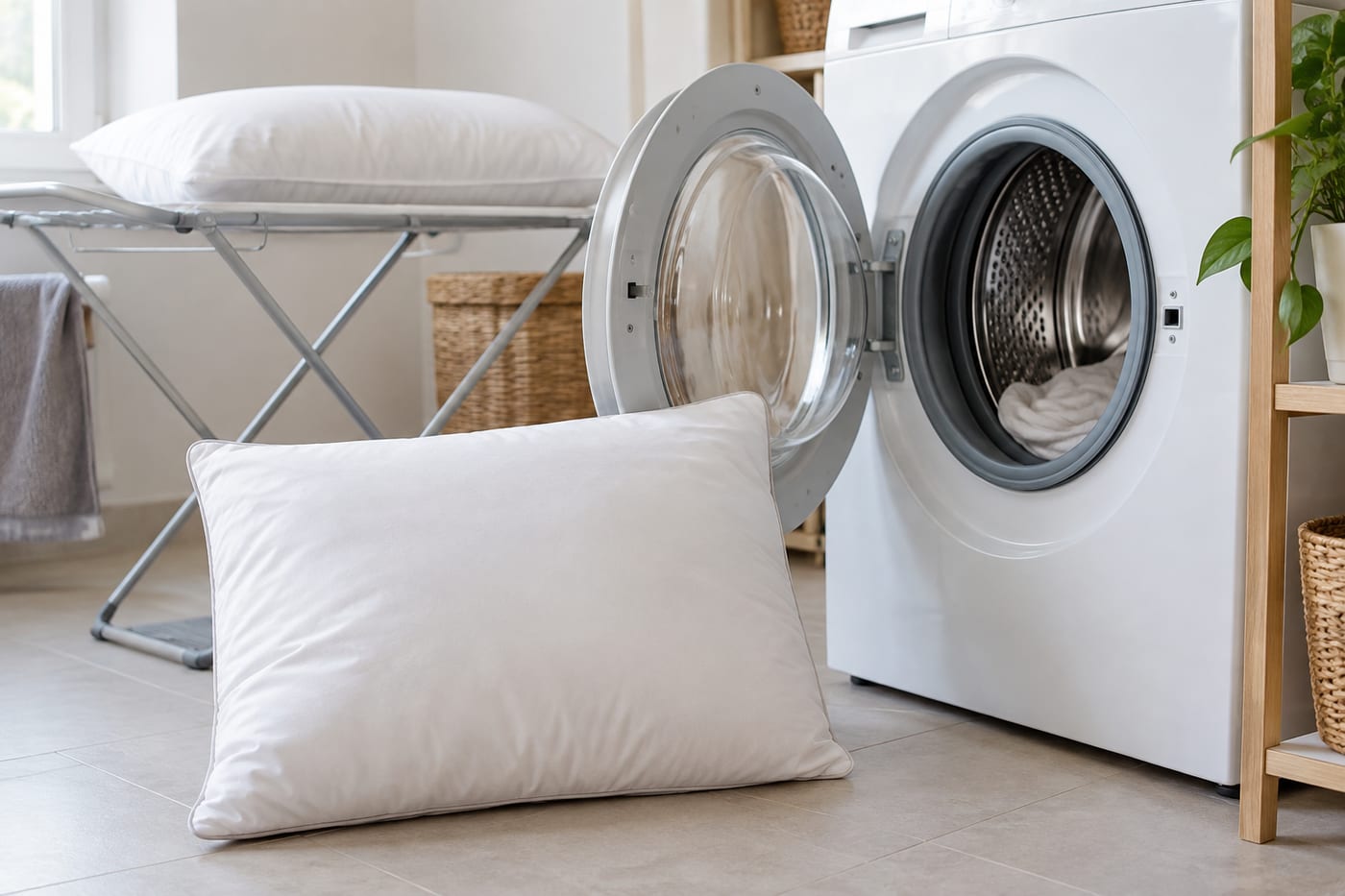
A washable pillow need not fit a home appliance. Volume, programme load and drying require checks separately from weight. Coop specifies commercial equipment for its large body and maternity pillows and separates outer from inner treatment. This illustrates volume rather than giving universal instructions. Item label and appliance manual govern, and cover directions do not apply to the core. A washable covering does not automatically resolve a stain reaching the filling.
A spare cover can help, but the complete item still needs planning. An arm or thick area may remain damp when fabric feels dry. Do not refit a damp product or close it in storage. Show a laundry service the composition and label and ask how approved drying will be achieved. Establish a service or different model before wetting an item you cannot maintain. Useful recommendations connect comfortable shapes with manageable care instead of postponing maintenance questions until the first spill.
Pain and sleep disruption: when to contact the team
Pain making turning in bed, getting out of a car or movement difficult warrants contacting a midwife or doctor, as NHS pregnancy pelvic-pain information describes. A pillow is not diagnosis, and further shape purchases are unnecessary as tests of whether pain resolves. Your team can assess and arrange relevant physiotherapy. A commercial video featuring a pregnancy pillow does not know your individual condition and should not supply treatment exercises by itself.
Also share sleep disruption affecting daily life or worrying new symptoms. This guide does not triage every pregnancy warning sign or replace urgent-care instructions already received. A change requiring contact under those instructions should not await another pillow trial. For ordinary discomfort, bring a position and product description to the discussion. This supports individual advice rather than turning product choice into a medical test or evidence of the cause.
After birth, adult use remains separate
Some manufacturers describe later sitting or adult feeding-support uses. Check the model’s instructions; multipurpose wording does not authorise every configuration. A pregnancy pillow is not an infant sleep surface, cot bumper or restraint. NHS describes infant spaces without pillows. Do not transfer baby-related promotional images to unattended sleep or a cot, and do not assume a renamed postpartum use changes those boundaries.
After pregnancy, assess whether adult use remains comfortable; otherwise store cleanly and completely dry as labelled. For buying now, record shape, dimensions, replacement cover and manageable care. Read return terms before unpacking or washing. A useful recommendation needs neither a high price nor a treatment promise, but clear information matching the bed and need. Request missing details. This grounds the decision in specifications and appropriate guidance instead of relying solely on other people’s experiences.
Prepare two specifications to compare
Once the need is clear, choose two options with comparable information. Record shape, dimensions, footprint, loaded height, cover fit and care for each. Distinguish comfort claims from defined specifications. Where medical instructions exist, establish that the product can fit them. Several similar purchases are unnecessary simply to discover after unpacking that all occupy too much room or require impractical washing.
Ask the actual seller about trial, warranty and return conditions. A foreign website’s terms may not apply in Israel, and warranty does not guarantee personal fit. Keep specifications and labels and follow directions initially. Describe poor comfort specifically: short arm, excessive volume, difficult opening or obstructed side changes. These observations guide alternatives without an obligation to continue merely to get used to the product. A clear decision combines practical information, comfort and individual guidance where required.
From pregnancy-pillow needs to specifications

- Separate sleep guidance from product shape
- Compare construction and bed space
- Check cover and manageable maintenance
Video: sleep position in the third trimester
Tommy’s updated official 2023 video explains going to sleep on either side in the third trimester and returning to a side if you wake on your back. It does not rank pillows or replace individual medical advice; the article also uses sources checked in October 2026.
By Tommy's · Video language: English
The player loads only after a click, subject to your external-content preferences. Player privacy information.
The article can be read without watching. Captions depend on the options available on YouTube; the explanation is not a transcript.
Frequently asked questions
Which pregnancy pillow is most recommended?
No model suits everyone. Compare needs, space, shape, height and care; this guide does not rank products we tested.
Must I buy a dedicated pregnancy pillow?
Not necessarily. Ordinary pillows can provide support according to comfort and individual guidance.
Which side should I go to sleep on?
NHS and Tommy’s advise either side from 28 weeks, including naps. Discuss individual instructions with your team.
What if I wake on my back?
Turn onto your side and return to sleep as advised. Do not regard it as failure or restrain the body.
Is U always better than C?
No. Dimensions, internal space, ends and side changes matter more than the letter.
Can I wash the complete pillow?
Follow the model and appliance volume with approved drying. A washable cover does not permit washing the core.
When should pain be assessed?
Pain making movement, getting out of a car or turning difficult warrants contacting the team. Product searching is not a substitute.
Is it suitable for infant sleep?
No. Do not place it in a cot or use it as an infant sleep surface. Additional adult uses must be allowed for the model.
Sources and scope
Sources checked on 12 October 2026. Manufacturer sources describe their own products and instructions; they do not establish one universal rule for all bedding and mattresses.
- NHS: tiredness and sleep in pregnancy
Going-to-sleep position, either side and pillow support; medical information rather than product ranking.
- Tommy’s: sleep-position questions
Clinically reviewed June 2026: side going-to-sleep position from 28 weeks, including naps, and ordinary pillows as support options.
- NHS: pelvic pain in pregnancy
Assessment when pain makes movement or turning difficult; appropriate physiotherapy guidance.
- Coop: large-pillow care
Example of separate layers, volume limits and commercial equipment; not universal pregnancy-pillow laundry instructions.
- NHS: safer infant sleep
Use boundary: an adult pillow is not an item for an infant sleeping space.
By MyViro.
General information to familiarize yourself with the subject, which is not diagnosis or medical treatment. How we prepare our guides