Screens and sleep: more than the color of light
Using a screen before going to bed can have an effect in several ways: it may delay the shutdown time, stimulate thoughts and feelings, and add exposure to light at a time when you intended to relax. Therefore the question is not only whether the screen is blue or yellow. Even an exciting conversation on a dim screen or another episode on TV can extend the evening without you noticing.
In the guide you will find ways to reduce late use of screens, in adults, children and teenagers. Not every use of the screen harms sleep, and turning off the phone alone is not always enough to solve difficulties falling asleep. If there is persistent difficulty, significant fatigue or distress, you should get appropriate help and check other factors.
Start by identifying the activity that makes it difficult for you to finish. Is it work, play, news or chatting with friends? Each use has a different stopping point. A solution that works for watching an episode is not necessarily suitable for a parent who must be available to a child outside the home. The more the rule relates to the real need, the easier it is to keep it without feeling like the phone was arbitrarily taken from you.
How the screen consumes time without a conscious decision
Many digital activities do not offer a natural end: the next video plays by itself, a message leads to a conversation and a game invites another round. If you plan to go to bed when you're done, but there's no clear ending, it's easy to keep watching or playing well past your planned time. It is possible to change the state by selecting a defined content and a stop point that is set before starting.
Try to compare the intention with what actually happened. Write down in the evening when you wanted to finish and in the morning estimate when you finished. There is no need to check your phone throughout the night or judge yourself for any abnormality. If the gap returns, ask what kept you connected: fear of missing out, an unfinished task, or a need for personal time after a busy day.
If the screen is your only way to rest in the evening, completely giving it up can be a difficult plan to live with. You can devote an earlier time to watching, choose a short episode or replace only the last scroll with another activity. The goal is to leave room for both leisure and sleep, and not to declare that one of them is unimportant.
For more information on the subject: How to choose bedding that feels right for you.
Adjusting the limit to the type of screen use
| use | possible stopping point | What should be prepared? |
|---|---|---|
| Watching the series | Ending a pre-selected chapter | Turn off automatic activation |
| game | Completion of an agreed stage or round | Early explanation of the next activity |
| social messages | Closing notice for the evening | Coordination of pillowcases and urgent inquiries |
| work | Closing a defined task | Availability and backup agreement |
| A phone as a watch | Out of reach discount | Wake up check and alert exceptions |
| a young boy | A well-known transition to organization | A book or a familiar calm activity |
Light, arousal and timing
The light helps the body distinguish between day and night and affects sleep and wake times. In the NIH guidelines it is recommended to reduce bright artificial light close to sleep, and in children's sources it is emphasized to stop watching screens in the hour before sleep. However, the light intensity, distance, duration of exposure and the person using it differ from case to case. The effect varies from person to person; There is no exact time when a screen starts to bother everyone.
In addition to the light, the content is important. An argument, stressful news or a competitive game can keep you busy even after the screen is off. You can choose to finish such content earlier, and leave for the last time an activity that is easy to stop. There is no need to define a list of prohibited contents for everyone; Check what actually affects you and explain to the children the logic of the choice.
Night mode or a light filter may change the appearance of the screen, but do not restore time that has already passed and do not silence notifications. Therefore they should not be presented as a complete solution. If they are used, combine them with a decision on an end time and with settings that reduce disruption. Even a dim screen is not a reason to continue beyond the free time for sleep that you wanted to keep.
A simple rule that you can follow in the evening
A useful rule could be that the phone is charged outside the bed, that the work is finished before getting ready or that the viewing stops at the end of an episode. Choose an action that you can tell if it's been done, instead of a vague goal of fewer screens. The simpler the rule, the easier it is to keep it even at the end of a tiring day.
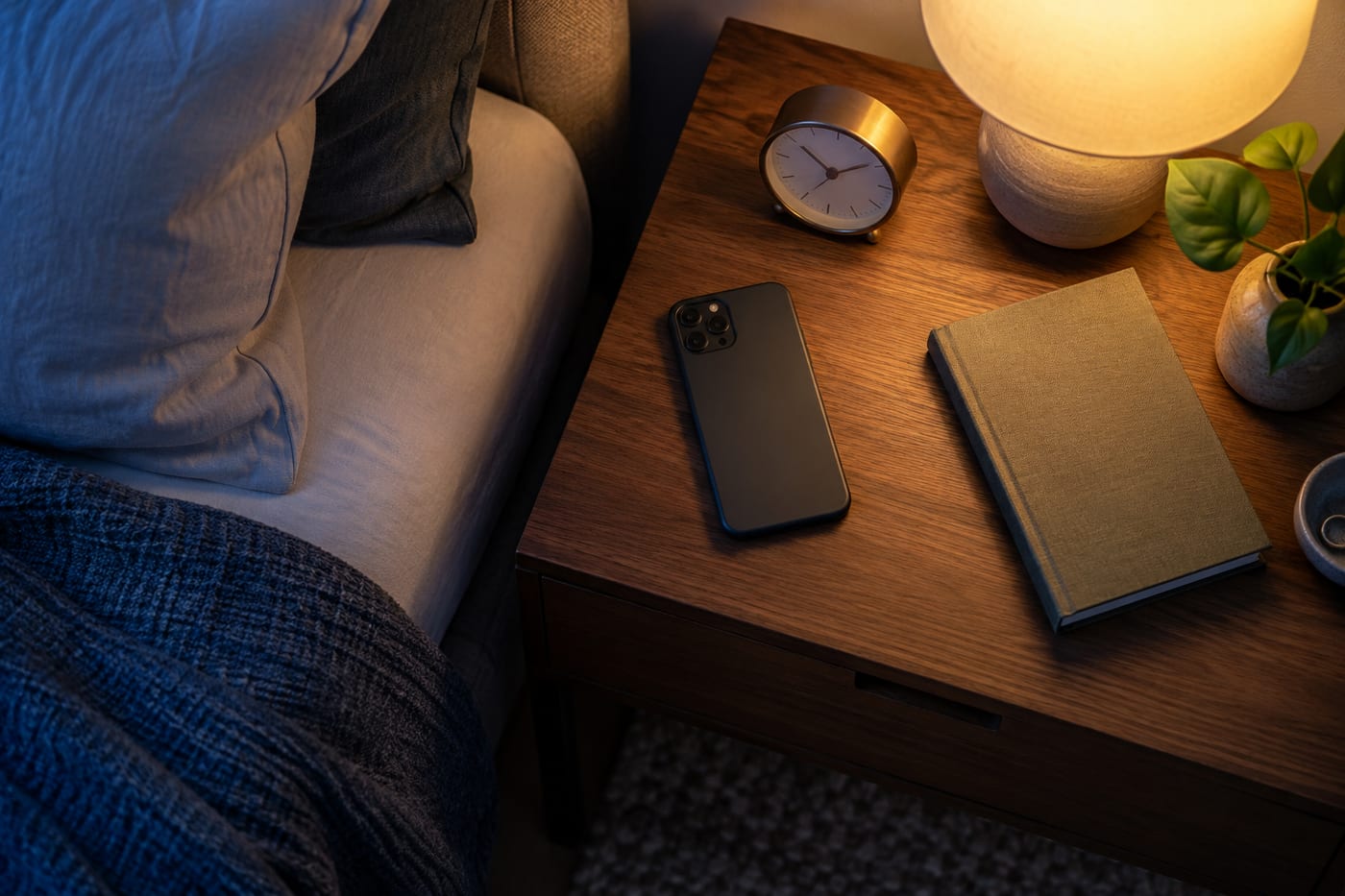
If you use your phone as an alarm clock, see if you can put it away from your hand and still hear it. There is no obligation to buy a separate watch. You can set essential notifications and leave the rest silent, depending on the device's options and needs. Check the setting before the night so that you don't miss an important contact or discover that the clock is not working as expected.
Explain to the people who are waiting for an answer what the new limit is. An advance notice that you are done for the day can be easier than disappearing in the middle of a conversation. In the case of work, the response times sometimes require coordination with the team and not just personal willpower. Do not promise yourself that you will ignore every message if the position requires a response; A practical arrangement is needed.
Young children: prepare the transition in advance
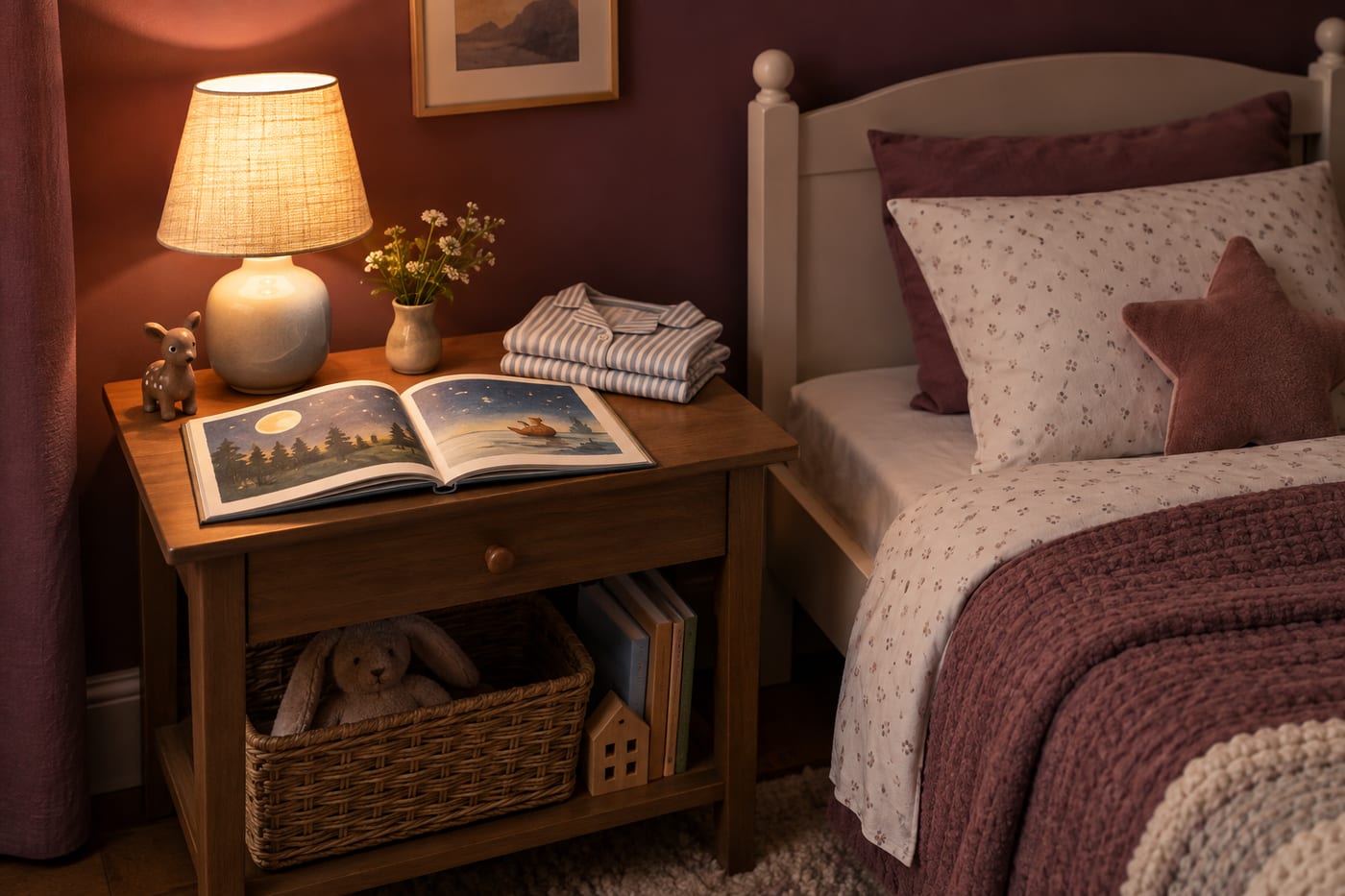
It is sometimes difficult for a young child to stop an activity he enjoys, especially if the ending is surprising. Define in advance what you see or play and what happens next. You can say that after the chapter you organize and read a book, and show the sequence in a simple way. Thus, the shutdown is a known transition and not a new decision that comes at the most interesting moment.
The American Academy of Pediatrics (AAP) recommends removing screens from children's bedrooms and stopping using them at least an hour before bedtime. To implement this at home, prepare a reasonable alternative: a quiet game outside the bed, a drawing or a story. The alternative does not have to be a special educational activity. It should suit the age, time and ability of the parent to be present.
Don't use an instructional video about sleep as a must-watch activity in bed. The videos in the articles are mainly intended for learning while awake, and in children's subjects it is possible for the parent to watch alone and then adjust the actions. An explanation of turning off screens does not require the child to stay in front of a screen to understand it.
What should you remember?

- Decide when to finish
- An alternative is being prepared
- Leave time for sleep
Teenagers: building an agreement that can be respected
For teenagers, the screen is also a social connection, studies and personal space. That's why a good conversation starts with understanding the use and not assuming that all digital time is unnecessary. Ask what is hard to stop and when the important conversations happen. Then find a way to protect sleep time in a way that also allows them to talk with friends and finish school.
You can set a time when certain activities end, charge devices in an agreed area and plan exceptions such as an event or academic work in advance. The agreement should also include the adults as much as possible. If the parent continues to send assignments late, it is difficult to require the teenager to be unavailable. Clear family coordination is better than constantly checking who broke a rule.
When there is emotional difficulty, fear of missing out or social pressure, technical blocking is not enough. Discuss the need to feel connected and other ways to keep in touch. If the use is accompanied by significant distress or functional impairment, seek appropriate help. Not every difficulty in a teenager's sleep is a discipline problem, and not every excessive use of the screen is the only reason.
TV in common room
In a double bed, one person's viewing can disturb the other even if he is not looking at the screen. The light, sound and movement in the room remain. Talk about the end date and the possibility of watching somewhere else, without assuming that headphones solve the whole problem. If the room is small and there is no convenient alternative, you can choose an earlier viewing time or short content with a clear ending.
There is no need to turn a common habit into an accusation. Describe what happens: I have a hard time falling asleep when there is light from the TV, or I wake up when the next episode starts. Such a description makes it possible to test a certain solution. Saying that the other always ruins the sleep moves the conversation from the environment to the relationship and makes it difficult to find a change that both of you are willing to try.
You can keep time together without falling asleep in front of a screen. Watching in the living room and then crossing the room, a short conversation or reading separately are some ways to keep a pleasant time together. If the bedtimes are different, the light, door and alarm clock should also be adjusted. The guide to sleeping as a couple expands on arrangements that do not depend only on the phone or television.
Work, studies and urgent messages
Sometimes the late use starts because there is no other time left. Preparing lessons, responding to work or handling documents are postponed until the evening, and then it is difficult to stop. Instead of being satisfied with the recommendation to turn off, check if it is possible to transfer a small part earlier: opening a task, preparing files or formulating an answer. That way the evening doesn't start from scratch every time.
If the work requires availability, define what is considered urgent and who is replacing you. A silent state with exceptions can only help if it is compatible with the employment agreement. Check that the relevant notifications are indeed heard, and that the rest do not trigger a chain of opening applications. A general sleep recommendation should not be used to ignore safety or medical responsibilities.
Studying for a test requires planning content, not just blocking a site. Define what must be completed today and what can wait until morning. If every evening ends with the feeling that we owe another hour, the busyness itself may require a change. Sleep is not empty time that can be taken from endlessly, but the plan should be possible within your life.
For viewing: screens and light as part of sleeping habits
General explanation about reducing exposure to light and media before bed. The instructions for children in the article have also been tested against AAP and NHS, and the video is not a substitute for them.
By Mayo Clinic · Video language: English

You can read the information in English without watching the video. This article is not a transcript of the external video.
What do you do while you are free?
When you stop scrolling, sometimes a space is created where it is not clear what to do with it. Prepare a simple option before turning off: a ready book, clothes for tomorrow, a shower or a quiet activity that is pleasant to you. There is no obligation to meditate, write a journal or perform a certain practice. If the new activity feels like an extra task, it can make the transition more difficult rather than helpful.
Audio content may be suitable for those who prefer it, but it is worth checking whether it continues to arouse interest or disturb others. Choose an option that allows you to stop and does not require you to hold a screen in front of your face. In children's rooms, the safe location of devices and cables is ensured, and audio equipment or telephones are not placed in a baby's bed.
Don't measure the success of the evening just by how fast you fall asleep. Stopping work messages or ending a game without a fight is also a useful change. If you didn't fall asleep right away, there's no need to go back to the screen to check if something's wrong. When difficulty falling asleep repeats and disturbs the day, seek clarification instead of adding more rituals and applications.
How do you check if the change helps?
Choose one change for a few regular evenings: for example, no rolling in bed. Write down in the morning if you were able to keep the limit, approximately when you fell asleep and how you felt during the day. No need to start a new app to measure the change, and certainly no need to check data in the middle of the night. A simple assessment can be enough to identify a direction.
If you had difficulty, try to understand the point of failure. Maybe the charger was left by the pillow, maybe you chose a long movie or the messages came from a person who needs you. Change the condition and not just the promise to yourself. A plan that takes into account the reason for use will be more durable than a rigid rule unrelated to what is happening at home.
If usage has decreased and sleep hasn't changed, the screen may not have been the main cause. Also check sleep time, caffeine, room and health status, without starting all the changes together. The goal is to learn something useful, not to prove in advance that the phone is at fault. If it is not clear what has changed, you can use a short diary and talk to a professional about the routine and the remaining difficulty.
When should you ask for help?
Difficulty sleeping that persists, impairs function or is accompanied by strong sleepiness warrants a conversation with a professional. The same goes for screen use that is accompanied by distress, withdrawal or significant difficulty managing the day. You can give a short description of the routine and the change you tried, without coming with a self-diagnosis or a list of culprits.
For children, listen to what screen use provides: connection, reassurance or a way to cope with difficulties. Set boundaries while also addressing the underlying need. If there is snoring with pauses in breathing, pain or other symptoms, do not delay medical assessment until the child manages to switch off their phone on time. Sleep and digital habits are connected, but are separate issues.
Frequently asked questions
How long before bed should you turn off screens?
For children, the AAP recommends stopping using screens at least an hour before bedtime, and for adults it is recommended to reduce light and stimulating activity before nighttime. There is no exact personal threshold for everyone. Choose a practical limit that suits your bedtime and need, prepare an alternative and check if it reduces the postponement of the evening. Prolonged difficulty requires testing beyond all screens.
Is night mode on the phone enough?
not necessarily. It changes the appearance of the light, but does not shorten the use, stop a conversation or cancel stimulating content. You can use it as part of the device preferences, but you still have to decide when to end and what to do with notifications. Don't present a filter as a way that allows you to continue without a limit and still get the free time for sleep that you planned.
What do you do if the phone is the alarm clock?
You can place it far from your hand but where you can hear it, and check in advance that the alarm is working. Define essential requests and silence the rest as needed. There is no obligation to buy another device. The goal is to reduce the automatic opening of applications in bed, without compromising the availability that is important to you or the responsibility you have at night.
Is reading on the phone the same as playing?
Not every use is the same in terms of content and arousal, but both can increase screen time. Check if the reading is calm and easy to stop or leads to more links and messages. If she refuses to sleep, you can choose a printed book or a clear ending point. It is not necessary to determine that all content is the same to protect the time you wanted for sleep.
How do you cut back without fighting with a teenager?
They start from understanding the social or educational need and summarize a clear rule and reasonable exceptions. Parents should also maintain some of the boundaries and avoid sending late assignments. A technical solution alone does not answer fear of missing out or social pressure. Daytime conversation and a plan that can be implemented takes precedence over confiscating a device in the middle of a nighttime argument.
Are sleep videos for children a substitute for a story?
You don't have to use a screen to build an evening routine. An instructional video can be intended for a parent and early viewing, while a story or conversation is suitable for shared time without a screen. Choose an activity that the child is familiar with and consider finishing. There is no need to add digital content just because it is labeled as relaxing or a sleep aid.
What if I have to be available for work?
Define what is urgent, which notifications remain enabled and who can cover for you. Boundaries need to fit your professional responsibilities rather than rely on ignoring essential requests. Check the settings in advance and agree on expectations with your team. If being available prevents enough sleep, discuss workload and cover arrangements, not only the screen settings.
Will turning off screens solve insomnia?
There is no such promise. It may help keep time and reduce disruption, but difficulty sleeping can be related to other factors. If the problem persists or affects the day, contact for clarification. Don't blame yourself if one change didn't solve everything, and don't add more and more rules without understanding what you are trying to change.
Sources and scope
Source check: September 15, 2026. The information was checked against the sources listed here. The selection tips are designed to help you compare; They are not based on product tests we conducted ourselves.
By MyViro.
General information to familiarize yourself with the subject, which is not diagnosis or medical treatment. How we prepare our guides