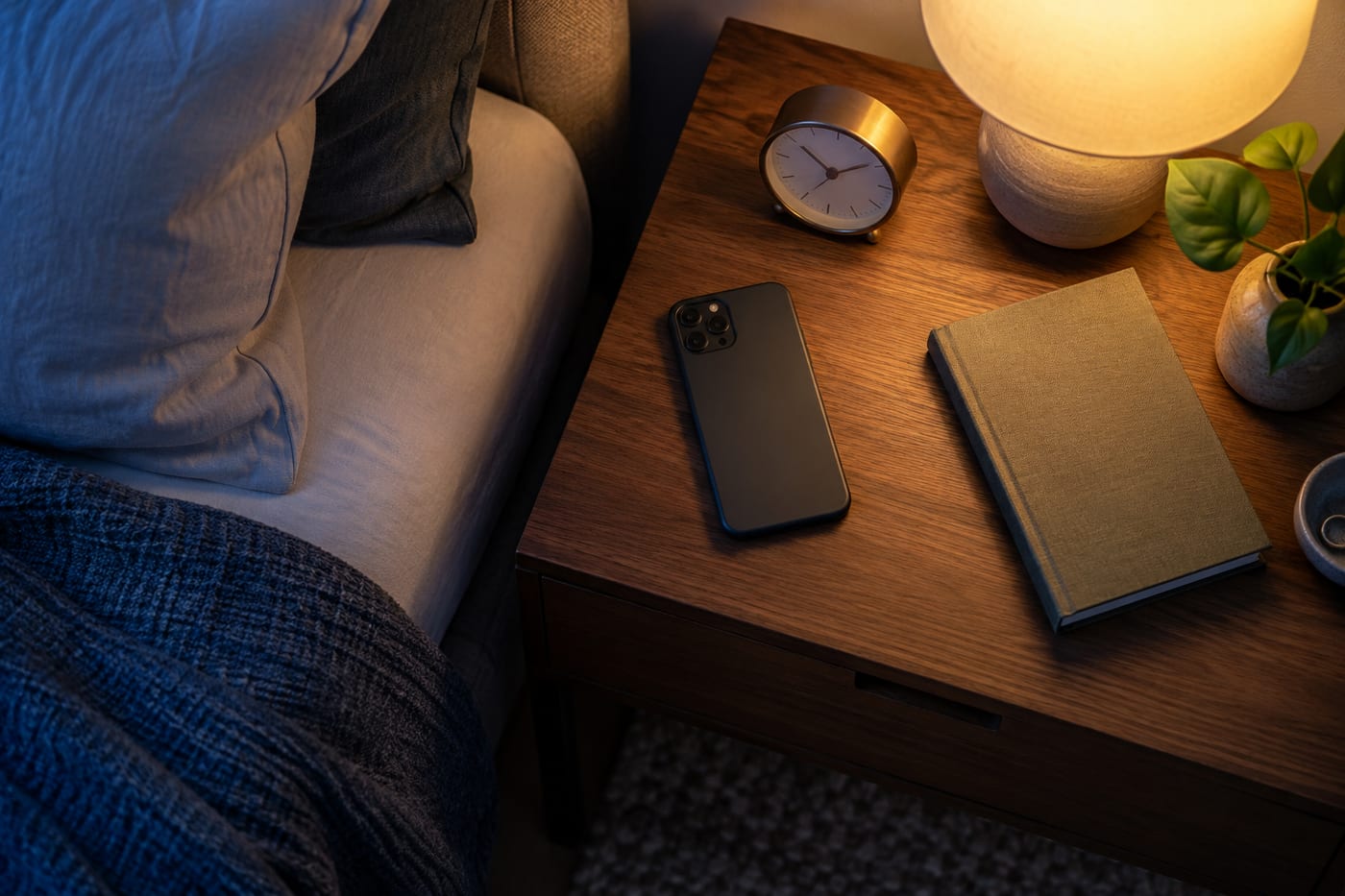
A cozy bedroom starts with what actually bothers you
A bedroom doesn't have to look like a hotel to be comfortable. Before buying a new curtain, lamp or cooling system, you should pay attention to what happens when you sleep: light from the street, noise from the door, a heavy blanket or a crowded passage next to the bed. A change that targets a defined disorder is easier to test than a general overhaul that promises a sense of calm without explaining what will change overnight.
The NIH guidelines list darkness, quiet, and a cool, comfortable temperature as part of healthy sleep habits. These are general principles, not a prescription for the same room for every person. Those who get up at night also need to watch where they are going, a child who is afraid of the dark may need a soft light, and a baby needs separate safety and heating instructions. You should adjust the room to the person who sleeps in it and to the habits of the house.
The guide offers a practical way to check the room, choose priorities and gradually improve it. It is not a treatment for insomnia, snoring or night sweats. If the problem persists or is accompanied by other symptoms, you should seek medical attention. You can improve the environment at the same time, but don't assume that every difficulty is due to the color of the wall or the type of bedding.
Take a short tour at bedtime
Enter the room when the lighting in the house and outside is similar to that of a normal night. Sit and then lie where you sleep, and check what you see and hear. A small light that seems negligible when standing may be right in front of the eyes when lying down. The noise of a device can change when a door is closed or when it is placed on furniture that increases the vibration.
Write three things that interfere and separate them according to source: inside the bed, inside the room and outside the room. A crease in a sheet is a different matter from noise from neighbors, so there is no reason to deal with both in the same purchase. First choose a simple action that can be tested, such as changing the direction of a lamp or moving a charger, before moving on to an expensive or permanent solution.
If the room is shared, each person can make their own short list. One may feel hot and the other cold, or the reading light only bothers one side. Don't try to decide who is right by feeling. Look for an arrangement that allows customization, such as focused lighting or different blankets, and save the conversation for a time when you are both awake.
For more information on the subject: How to choose bedding colors for your bedroom.
Interference map and solutions for testing
| what bothers | First test | Another consideration |
|---|---|---|
| light in the room | Lamp angle and indicator lights | Leave safe passage lighting |
| light from the window | The light source and gaps in the curtain sides | Easy opening during the day and safe cables |
| noise | door, vibration or nearby device | Hearing important alerts |
| Fever in bed | Blanket, clothing and mattress protector | Infants require separate instructions |
| crowded passage | Cables, bags and furniture corners | Bed access and ability to get up |
| Bedside work | Closing equipment and stopping notifications | Real availability coordination |
Lighting: separates organizing, reading and sleeping
One strong lighting for all activities makes it difficult to adapt the room to different situations. You can create three simple options: a light for getting organized, a focused light for reading and a weak light for moving at night if needed. You don't need a smart system or a new lighting fixture; Sometimes changing the position of an existing lamp and avoiding turning on the central light is enough for a more convenient use.
When reading in bed, aim the light at the book and not at the face of the person sleeping next to you. Check that the lamp is stable, that the cable is not in the way and that the switch is accessible. There is no need to read in too weak a light that makes it difficult to see. The idea is to reduce lighting that is not necessary, without harming the comfort and safety of the operation you are doing.
Indicator lights, a clock screen and a lighted phone can be felt in a dark room. Check if it is possible to dim according to the instructions of the device or change its position. Do not cover ventilation openings or stick material on a heating device. If a clock makes you check the time again and again, you can put it out of sight without giving up a much-needed wake-up call.
Light from the window: a solution that is also suitable for the day
A curtain or blind can help reduce light from outside, but you should check what the source of the light is and at what time it interferes. A steady street light is not the same as early morning sun. Before buying, measure the window and check if the light comes in through the sides. Sometimes the gap between the curtain and the wall is more important than the thickness of the fabric itself.
Maintain the possibility of opening the room to daylight while awake, according to routine and needs. A solution that darkens well but is cumbersome to open may remain closed all day. Also think about cleaning, ventilation and window access. In a children's room, make sure that cords and strips of curtains are out of reach, and that a bed will not allow you to reach them.
An eye mask can be a personal option for an adult who prefers it, but is not mandatory and is not a solution for a baby or small child. Check fit and comfort without unpleasant pressure. If it disturbs or causes difficulty, there is no reason to insist. The goal is to reduce disruption, not add equipment that makes getting ready for sleep more complicated.
Noise: handle the source before adding sound
Start with noises you can control: a creaking closet door, a vibrating phone on a dresser, a nearby washing machine or a TV in the living room. Sometimes coordinating hours or a simple correction helps more than a device that tries to cover everything with a constant sound. Check if noise comes from vibration on the surface, because moving the device to a stable location can change the way you hear it.
When there is external noise, you can consider closing a window or changing the position of the bed, while maintaining ventilation and safety. Earplugs for adults are an option according to comfort and need, but hearing alarms, children's calls or important notifications should be considered. Total isolation should not be recommended without thinking about who is in charge at night and what he needs to hear.
White noise is not essential for a bedroom and does not treat a medical condition. If you use it, keep the volume moderate and the device at a distance, especially around children, and follow guidance for the device and age group. Never place a speaker or cable in a crib. If you sleep comfortably without extra sound, there is no need to add it simply because it appears on an equipment list.
What should you remember?

- Focused light
- less interruptions
- Comfortable bed and transition
Temperature: Comfort is not an even number
There is no single temperature that feels the same to every person in every season. Clothing, blanket, humidity, air flow and personal situation affect the feeling. Therefore it is better to start from the question of whether it is too hot or cold in the bed, and then check the layers of the cover and the room. The number on the air conditioner is one figure, and not a full measurement of what the body experiences under the blanket.
Try one small change: a lighter blanket, changing the position of the air flow or adjusting the sleepwear. Do not aim a strong current directly at the face if it interferes, and do not cover a heating device to reduce light or noise. Any use of the device is made according to its safety instructions, with a distance from flammable materials and without tampering with the cables.
For babies and small children, read the age guidelines, and do not copy an adult's arrangement. Do not add a weighted blanket, pillow or mattress topper because the parent feels cold. If there are repeated night sweats or a fever, changing the sheets is not enough. Check the health status and receive guidance when necessary.
ventilation, humidity and odors
A room can feel stuffy even when it's cool, so you should pay attention to the ventilation options and the condition of the windows and doors. Act according to the conditions of the house and safety, especially on high floors and in children's rooms. Do not leave a dangerous opening to get air, and do not block the ventilation openings of an appliance or the room with new furniture.
A pleasant smell is not proof of clean air. Perfumes, candles and essential oils are not a condition for good sleep, and may disturb sensitive people. If a disturbing smell comes from moisture, from laundry that has not dried or from another source, treat the source and do not cover it. Especially in a baby's room, do not add materials or devices without checking compatibility and instructions.
A humidifier or air purifier requires a clear need and maintenance according to the instructions. There is no reason to automatically add them to every room. Ask what you want to change, whether the device is suitable and what needs to be cleaned or replaced. If there is a diagnosed allergy or respiratory problem, choose a solution according to professional guidance and not according to a general promise of healthy air.
Bed layers: change what touches the body
Check the sheet, the mattress protector, the duvet cover and the blanket as a group. A new set can feel different because of weave or finish, even if the fiber composition is familiar. If the problem is pleats, you may need an appropriate size rather than a more expensive fabric. If the problem is weight, the blanket may be the relevant component and not the pillowcase.
Start with what you have at home: stretch a suitable sheet, check that there is no double layer that you did not intend to leave and remove decorative pillows before the adults sleep. Keep the accessories in a place that does not block the floor. In a shared room, everyone can use a different cover even if the duvet covers look similar, and there is no need to choose the same heat level for two people.
When choosing a fabric, rely on the composition, weaving and care instructions. Cotton, linen and other fibers offer a variety of sensations, but there is no material that guarantees a solution to every sweat or allergy. The guides in the bedding section detail the differences. You should read them alongside the room inspection, so as not to assign a role that belongs to the lighting, the air conditioner, or the evening routine.
To watch: sleeping habits and the bedroom environment
A brief explanation of the evening routine, light and silence. The suggestions are general; The article details how to check the room and also maintain safe passage and personalization.
By Mayo Clinic · Video language: English

You can read the information in English without watching the video. This article is not a transcript of the external video.
Order and accessibility: it is easy to find your way around the room even at night
Useful order does not mean that every object must disappear. He says that the necessary things are accessible and that the walking path is clear. Place glasses, water or necessary equipment in a permanent place, without piling them on the edge of the dresser. A charging cable should reach the device safely and not cross the passage from the bed to the door.
If the room is small, choose first what must be next to the bed and what can be moved to another place. A laundry basket, shoes and a work bag do not have to meet the set-up route. A beautiful piece of furniture that is difficult to open or a table with a prominent corner may disturb more than they add. Measure the range of motion before adding a new item.
For those who get up often or use a mobility aid, adjusting the transition and lighting is especially important. Do not reduce light to a level that endangers walking. If an adjustment is necessary due to a limitation, it is advisable to get professional guidance. A design that supports sleep should also take into account getting up, changing sheets and daily use, and not just the image of a tidy bed.
Work in the bedroom and a limit at the end of the day
Not every house has a separate study. If there is a desk in the bedroom, you can create a clear sign of the end of work: close the computer, collect documents and switch the phone to a mode that does not display unnecessary notifications. There is no need to present this as a binding ritual; The goal is to stop an activity that continues to attract attention when you were already going to rest.
Check if the work screen or the computer light stays in front of the bed. You can change the angle or turn off a device as needed, without adding a large partition that reduces the room. If you must be available, define in advance which inquiries are really urgent and how they arrive. Otherwise every little sound might bring you back to the tasks of the day.
Even in a home with children, it is possible to explain that the room is used at a certain time for rest. A simple agreement on quiet hours can also help. Prepare in advance what you need for tomorrow and reduce the late search for luggage or clothes. A change in home organization can be more beneficial than another product that promises to make a busy room relaxing.
Improvement plan according to budget
Without purchase, you can change the position of a lamp, move a vibrating phone away, clear an aisle and adjust existing layers. With a small budget, you can check a spot solution like a pillowcase in the right size or a repair for a noisy door. Only after you understand the source of the disturbance should you consider a new curtain, mattress or appliance. This way you will know what is worth spending money on and what can be solved without buying anything.
Examine one change over a few regular nights, and note if the disorder you wanted to reduce did decrease. There is no need to obsessively measure sleep or guarantee a quick result. If moving the lamp solved glare, it is a point success even if there is still another difficulty. Separate the comfort of the room from the overall sleep quality, which is affected by other factors.
If the room is already comfortable and the difficulty continues, you don't have to keep buying. Snoring with pauses in breathing, significant sleepiness, pain or prolonged difficulty falling asleep warrant investigation. Prepare a short description of the disturbances and what you tried. A cozy room makes it easier to rest. If it's still hard to sleep, you should also check other factors and not continue to change the room.
Frequently asked questions
What is the best temperature for a bedroom?
There is no one number that fits every person and every situation. Start from a comfortable room that is not too hot or cold and also check clothes and a blanket. Infant guidelines are separate from adult preferences. If there is sweating or an unusual feeling of cold that persists, don't be satisfied with changing the air conditioner; Check the health status and the need for appropriate guidance.
Do we need total darkness?
It is possible to reduce disturbing light, but it is important to maintain safety and comfort. A child who is afraid of the dark or an adult who gets up at night may need a soft light. Check that it does not dazzle and that it allows you to see the road. The goal is not to comply with a design rule at any cost, but to create an environment that is suitable for those who use the room even during construction.
Is white noise necessary for sleep?
No. If the room is comfortable without it, there is no need to add sound. First consider whether you can reduce the source of the noise. If using a device, choose an appropriate volume and location and follow safety instructions, especially around children. Do not place a device or cable in a crib. White noise does not treat a sleep disorder or medical condition.
How do you improve a bedroom without buying anything?
Start by clearing the passage, changing the direction of a lamp, removing a vibrating phone and adjusting layers that already exist. Choose one disorder and check if it has decreased. There is no need to change normal bedding or paint a wall to check light and noise. A simple action with a clear goal can teach what is really required before spending money on a new product.
Will new bedding solve the feeling of heat?
They may change contact, but a blanket, mattress protector, clothing and room should also be examined. A fiber name is not a guarantee of cooling throughout the night. If switching, keep the other conditions as constant as possible and test the product you have chosen. Abnormal or persistent sweating needs investigation, not a series of purchases that tries to hide the symptom.
Can I work in the bedroom?
Sometimes there is no other place, and it is possible to organize a clear boundary between work and rest. Close computer, collect documents and reduce notifications when finished, according to your responsibility. Check that the screen and equipment do not remain in front of the bed and continue to attract attention. There is no need to add a large partition if a simple operation finishes the job in a clear and convenient way.
Are candles and essential oils recommended?
They are not a condition for good sleep, and certain smells or substances can disturb sensitive people. Do not present them as a treatment or as a solution to unpleasant air. Treat the source of odor and moisture and maintain fire and equipment safety. In babies' rooms and in medical situations, substances should not be added without checking compatibility and guidelines, even if they are marketed as natural.
How do you know the problem is not in the room?
If the environment is comfortable but the difficulty continues and impairs function, or there is snoring with pauses in breathing, pain or significant sleepiness, you should seek clarification. You can bring a description of what is disturbing and what you have already changed. There is no point in continuing to renovate without knowing what is interfering; Habits, health and routine are other parts that require attention.
Sources and scope
Source check: September 15, 2026. The information was checked against the sources listed here. The selection tips are designed to help you compare; They are not based on product tests we conducted ourselves.
By MyViro.
General information to familiarize yourself with the subject, which is not diagnosis or medical treatment. How we prepare our guides