Separate comfort from skin care
A smooth and clean pillowcase can be pleasant, but do not conclude that it treats acne, removes wrinkles or prevents any allergic reaction. Even a description like "antibacterial" is not proof of medical benefit in home use.
If there is itching, rash or irritation that persists, you should contact a dermatologist and not try to solve the problem just by changing the fabric.
Check the item that touches the face
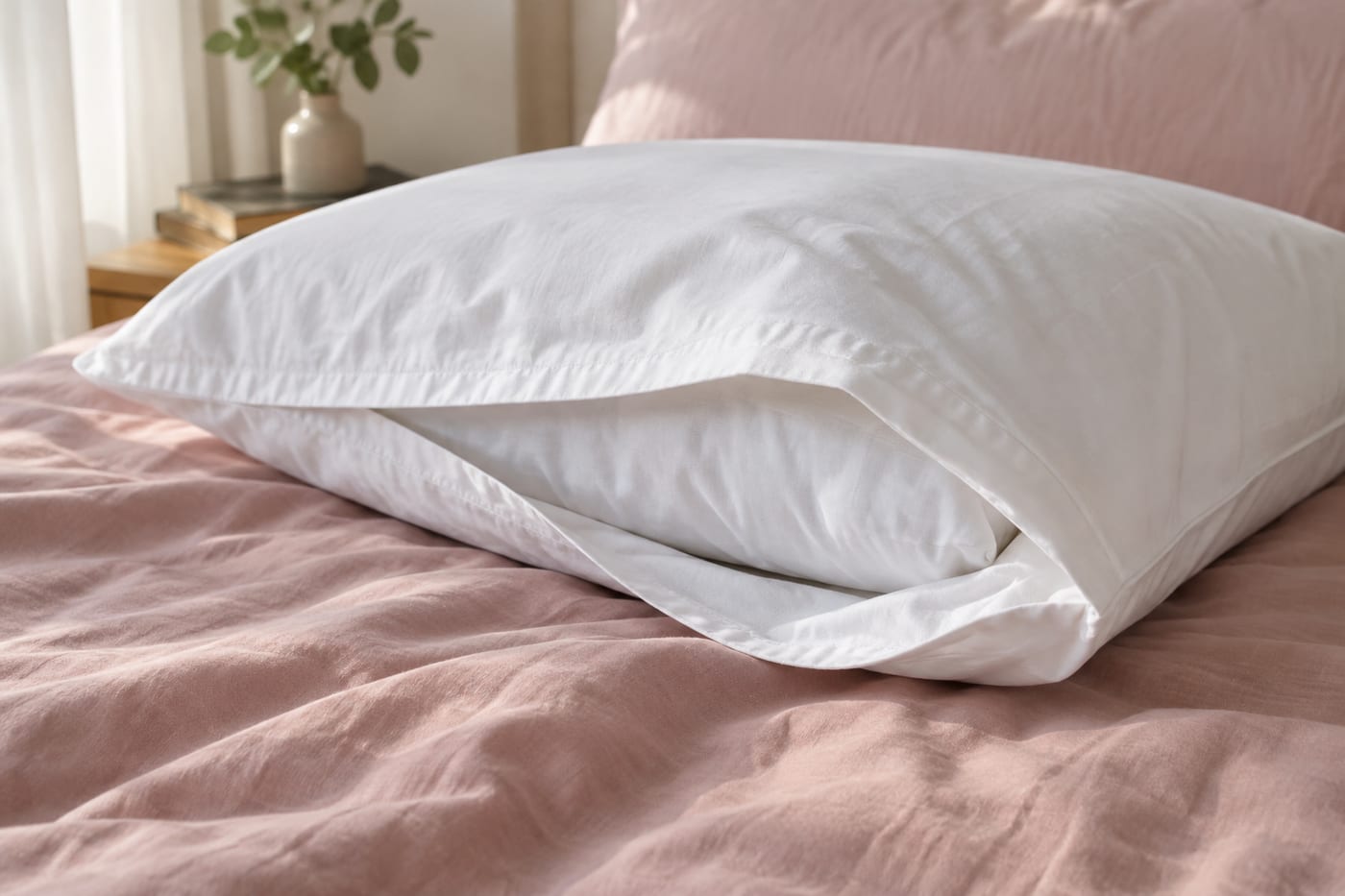
Run a hand over the seam, the hem of the closure and the face of the fabric. Even a material that is considered pleasant may include a prominent seam or a finish that is not comfortable for you. Read the exact fiber composition, not just the series name.
Start with one pillowcase instead of replacing all your bedding immediately. Keep the label so you can compare fiber content and care instructions if you buy another item.
For more information on the subject: How to choose a pillowcase: size, fastening and feel.
Choose a simple laundry routine
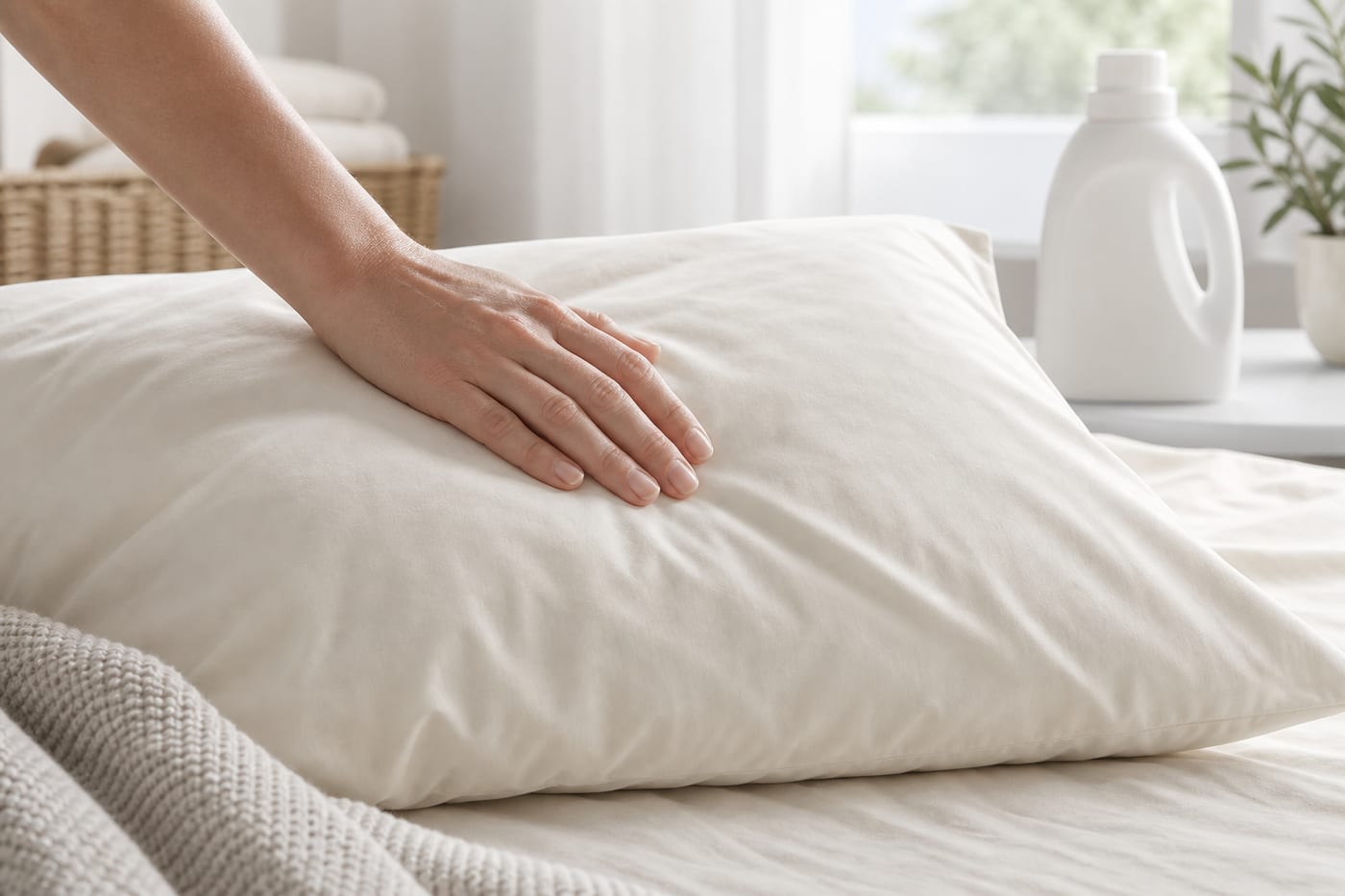
In the AAD guidelines for people with eczema, there is an emphasis on detergent without perfume and without dye. "Natural" or "herbal" alone is not information about suitability for sensitive skin. The treatment must be adapted to the individual situation and the instructions of the fabric.
Measure detergent according to product and load instructions. Change a soiled pillowcase, and don't use perfume to hide the smell. Changing several products at once may make it difficult to identify what pleases you and what bothers you.
What does the label really say?
OEKO-TEX STANDARD 100 indicates testing for harmful substances according to the requirements of the standard. It does not guarantee that allergy is not possible, is not a skin care certification, and is not the same as organic certification.
Check which product the certificate refers to and if it is possible to verify its number. If a detail is missing, you can ask for it from the seller before the purchase. An impressive name does not replace information about the fabric itself.
Separate between a texture that disturbs and a response that requires clarification
A thick seam that rubs against the cheek, a label on the edge of the pillowcase and fabric that has become rough are things that can be identified by a simple inspection of the item. Start in the area that touches the skin and check if the closure or decoration is exactly where it interferes. You can turn the pillow over or choose a pillowcase with a simple surface, without inferring from this the origin of any skin irritation.
On the other hand, a rash or itching does not allow to identify the cause only by the type of bedding. When there is a persistent problem, repeatedly changing fabrics and detergents can make it difficult to understand what has changed. You should write down when the response appeared, which products were replaced and which instructions you have already received, and present this to a professional as needed.
How do you choose a treatment routine that you can stick to?
For eczema, the AAD recommends fragrance-free, dye-free laundry detergent. This is a consideration when choosing detergent, not a guarantee that every fabric or product will suit everyone. Read the detergent label and use the dose recommended for your machine and load. Adding fragrance is not necessary to clean bedding.
If a product already feels comfortable, you do not need to replace it simply because another range is labeled hypoallergenic. For a new purchase, look for clearly stated fiber content, comfortable seams and manageable care instructions. Keep a suitable spare pillowcase so you do not have to use a damp or dirty one while the other dries. A textile certification provides specific information but cannot guarantee individual suitability.
A practical comparison before choosing
| What are you checking? | how to check | What not to conclude |
|---|---|---|
| Touchpad | Seams, decorations and closure | Any irritation comes from the fabric |
| detergent | Perfume, color and dosage instructions | More cleaner is better |
| qualification | Name and certificate number | which is skin care |
| Continuous response | Appropriate documentation and referral | Buying an expensive set will solve it |
Frequently asked questions
Is natural fabric always suitable for sensitive skin?
No. The finish, the wash, the friction and the personal response are also important. Natural is not the name of a medical test.
Should you choose a pillowcase without embroidery?
If the embroidery touches an area that bothers you, a simple surface can be more comfortable. This is a contact adjustment and not a promise to prevent skin disease.
What do you do if the bedding is comfortable but the itching continues?
Do not assume that the problem will be solved by another change of fabric. Get an appropriate investigation, especially if it's a recurring or worsening problem.
Sources and scope
Source check: September 15, 2026. The information was checked against the sources listed here. The selection tips are designed to help you compare; They are not based on product tests we conducted ourselves.
By MyViro.
The content explains textile characteristics and is not the result of a product test in a laboratory. How we prepare our guides
Based on content from the MyViro archive, edited and revised in September 2026.