The label precedes any general advice
The composition of the fabric, the color and the finish determine which programs are allowed. Do not copy instructions from one cotton set to another. Even a mixture that looks similar may require a different temperature or drying method.
Read the care instructions before the first wash. If the label is missing, ask the manufacturer for instructions before using high heat or strong material.
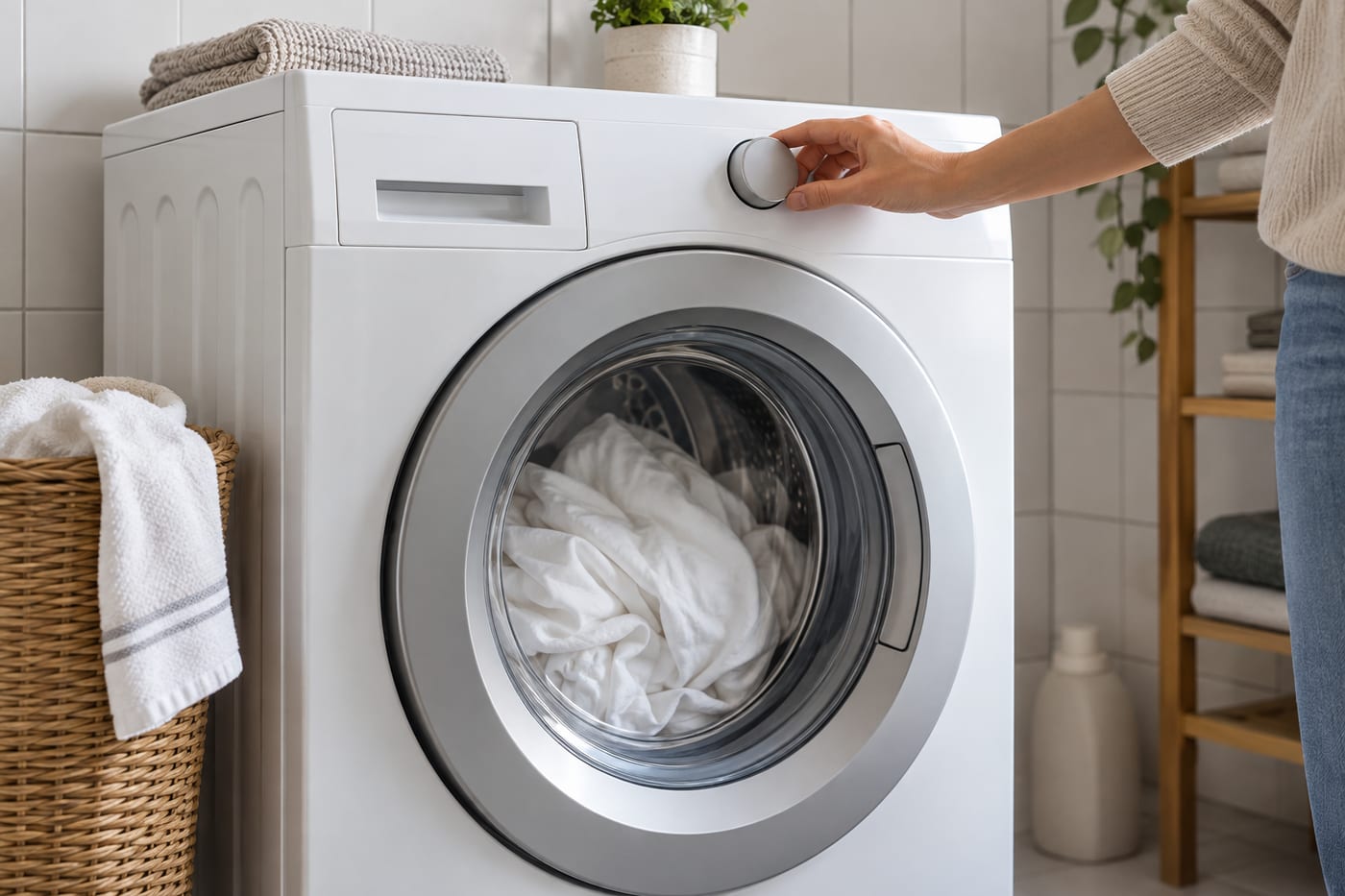
Sorting and preparing the machine
Separate colors according to the instructions, close zippers and buttons and avoid washing with rough items. Treat the stain in a way that suits you and test a new material in a hidden area.
Leave room for the bedding to move in the drum. Overloading can impair cleaning and washing and create wrinkles. Use the amount of detergent that is suitable for the load, the dirt and the hardness of the water according to the product instructions.
For more information on the subject: Cotton bedding: from plant fiber to finished sheets.
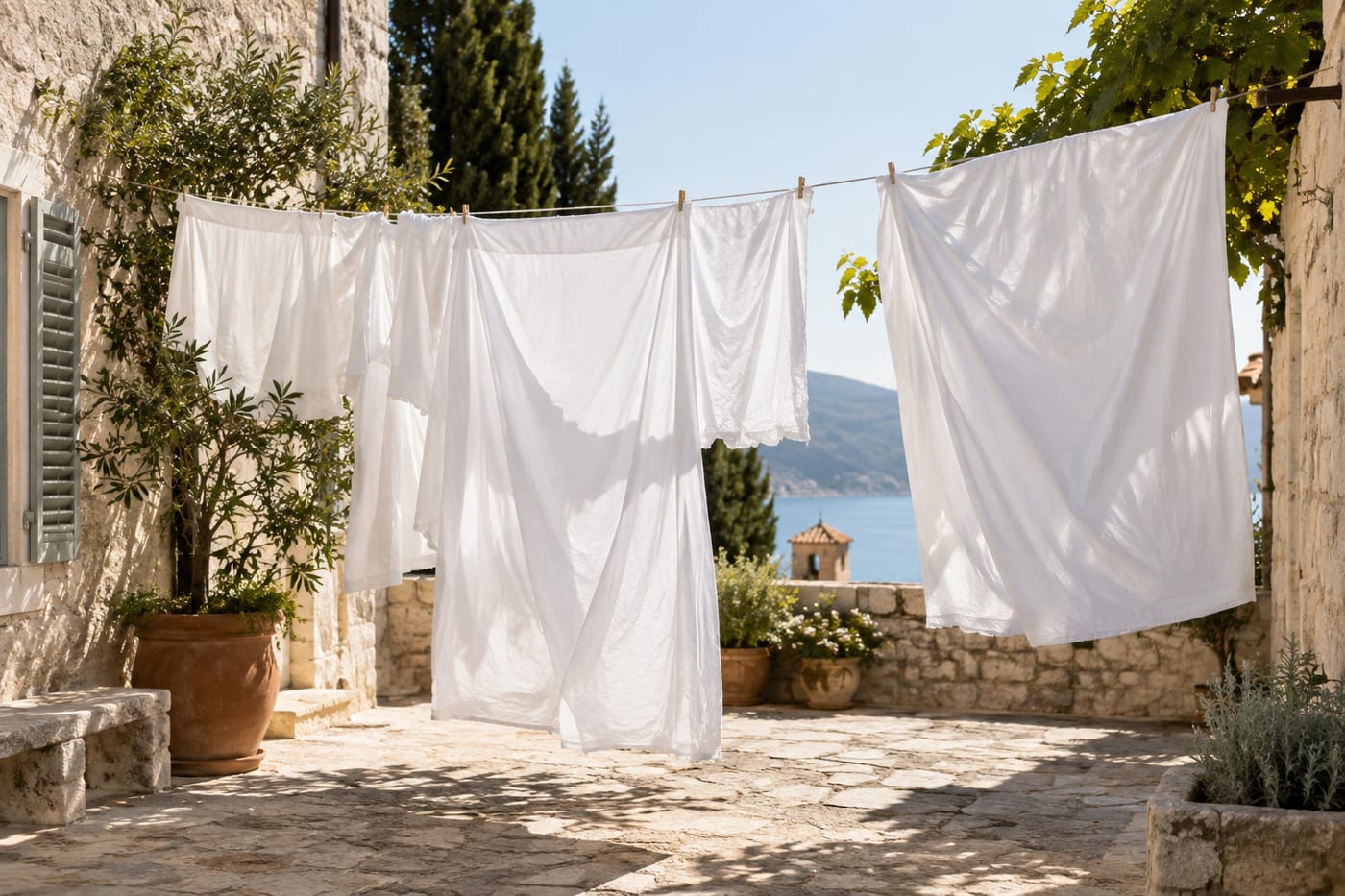
Drying without unnecessary heat
Remove the linens after the program ends, shake gently and dry according to the label. In the dryer, choose a permitted heat level and avoid overdrying. When hanging, consider the color's sensitivity to prolonged exposure to the sun.
The fabric should be completely dry before folding and storing. If it feels damp in the folds, keep drying instead of putting in the closet.
Every so often they change
The frequency of changing depends on perspiration, the weather, sleeping habits and visible dirt. Establish a routine that is easy to follow and do laundry early when the linens are damp, dirty or smelly.
When there is a personal medical instruction regarding hygiene, follow it and check that the fabric complies with the required care instructions. Do not assume that every fabric is automatically suitable for hot washing.
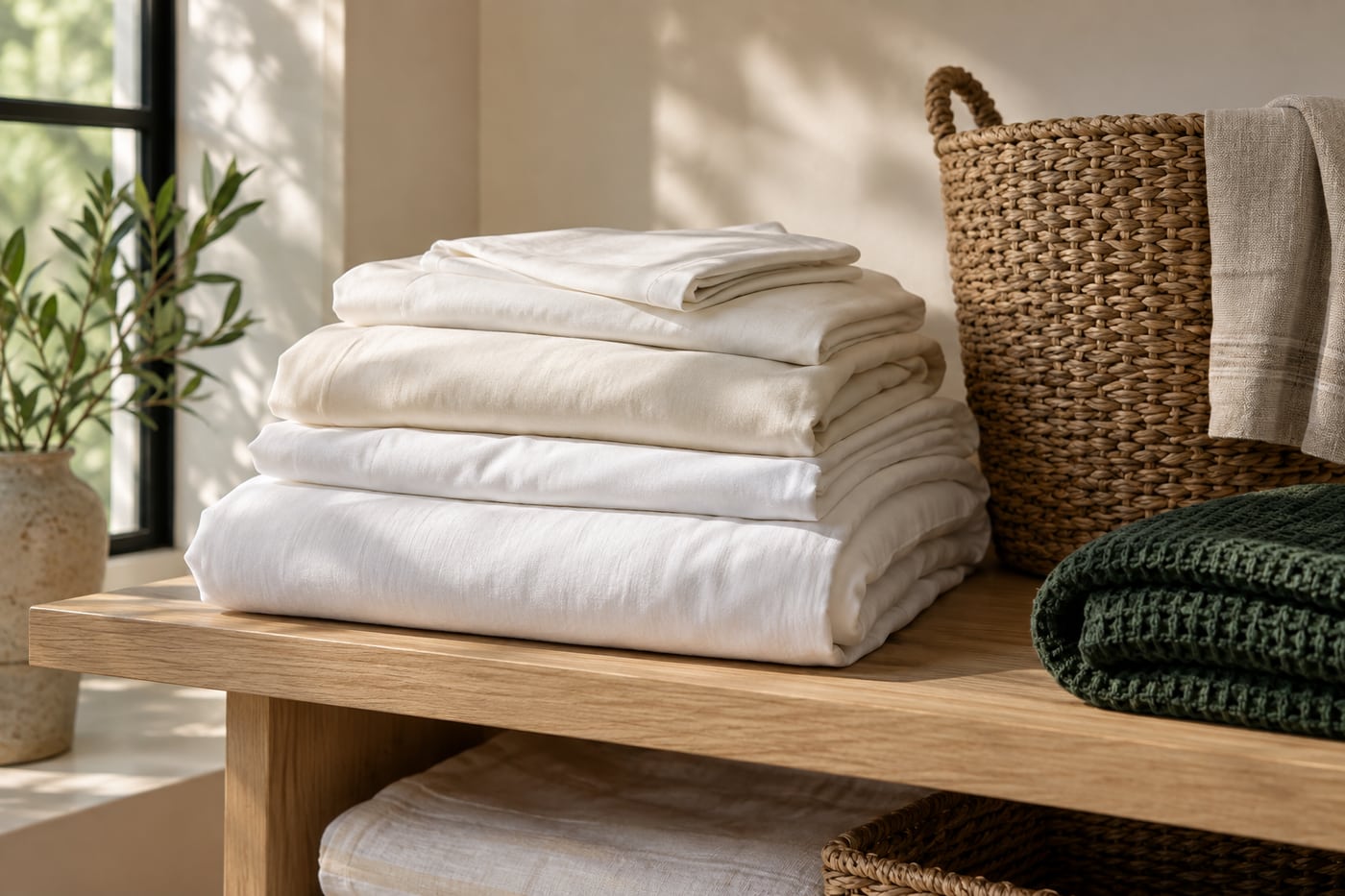
Storage that keeps order
Store in a dry and ventilated place. You can keep each set inside a matching pillowcase to find the pieces together. Do not compress bedding that is still warm and damp from the dryer.
Check elastic and seams from time to time. A small repair in time can extend the use, while a permanent stain is not always a reason to replace a fabric that is still in good condition.
Stains: first identify, then treat
A stain of fatty material is not the same as a stain of a colored drink. Start with the manufacturer's instructions and the type of stain, and avoid mixing cleaning agents. Using several materials together does not guarantee better cleaning and may be dangerous or damage the fabric.
Do not rub hard on a delicate surface and do not apply heat before checking the condition of the stain after treatment. When choosing a stain remover, make sure it matches both the composition and the color. A small check in a hidden area is especially helpful in dark or printed fabric.
If the stain has not been removed, do not repeatedly repeat an aggressive treatment without understanding its effect. Discoloration or weakening of the fiber may be permanent. Sometimes it is better to check with the manufacturer or a professional before trying again.
Work order that prevents repeated washing
Before starting the wash, check the labels on every item, separate those needing different care and treat stains only with a product suitable for both the stain and the fabric. Leave enough space for the bedding to move. A longer cycle does not automatically compensate for overloading the machine.
Prepare a place to dry even before the washing is finished. A large duvet cover that requires a spread can take up an entire facility. When you also plan this step, there is little chance that the sheets will remain damp and wrinkled in the machine because there is nowhere to move them.
When sheets come out with a smell or material marks
Check the dosage according to the instructions of the detergent and the machine, the size of the load and the maintenance of the machine. Do not immediately add more substance or perfume. Try to identify if the problem appears in the entire wash or only in a specific item, and if it is related to a long wait before drying.
Follow the manufacturer's machine cleaning instructions. If the fabric itself requires repeated treatment, match it to the label as well. A clean smell is not proof of disinfection, and an unpleasant smell is not a diagnosis for one cause. In the event of a medical need for disinfection, one must receive instructions that are suitable for the situation and the products.
A practical comparison before choosing
| stage | Helpful check | A common mistake |
|---|---|---|
| sorting | Labels and colors | Assume that all parts of the set are identical |
| dosage | Material and device instructions | Add material without measuring |
| a program | Adjustment to fabric and load | Automatic high heat selection |
| termination | Place and method of drying | Leave damp in the machine |
Frequently asked questions
Does laundry always have to be separate?
Check that the items, colors, textures and appliance instructions are compatible. Avoid combinations that create extra friction or require a wash cycle unsuitable for the bedding.
Is fabric softener a must?
No. Check if it fits the product and your needs. It is not a substitute for cleaning and is not required just for the linens to be suitable for use.
When do you switch to the temperature guide?
When you have to choose between programs or understand markings of 40 and 60 degrees. The decision starts with the label and machine manual, not just the color of the sheet.
Sources and scope
Source check: September 15, 2026. The information was checked against the sources listed here. The selection tips are designed to help you compare; They are not based on product tests we conducted ourselves.
By MyViro.
The content explains textile characteristics and is not the result of a product test in a laboratory. How we prepare our guides