A claim on fabric is not a guarantee of health
The term antibacterial can refer to a treatment or property tested under certain conditions. It does not necessarily mean that the linens prevent disease, are suitable for all sensitivities or replace laundry.
To understand the meaning, you need to know what was tested: which product, against which microorganisms, with which method and under which conditions. A single figure without context can be misleading.
What details to ask the seller
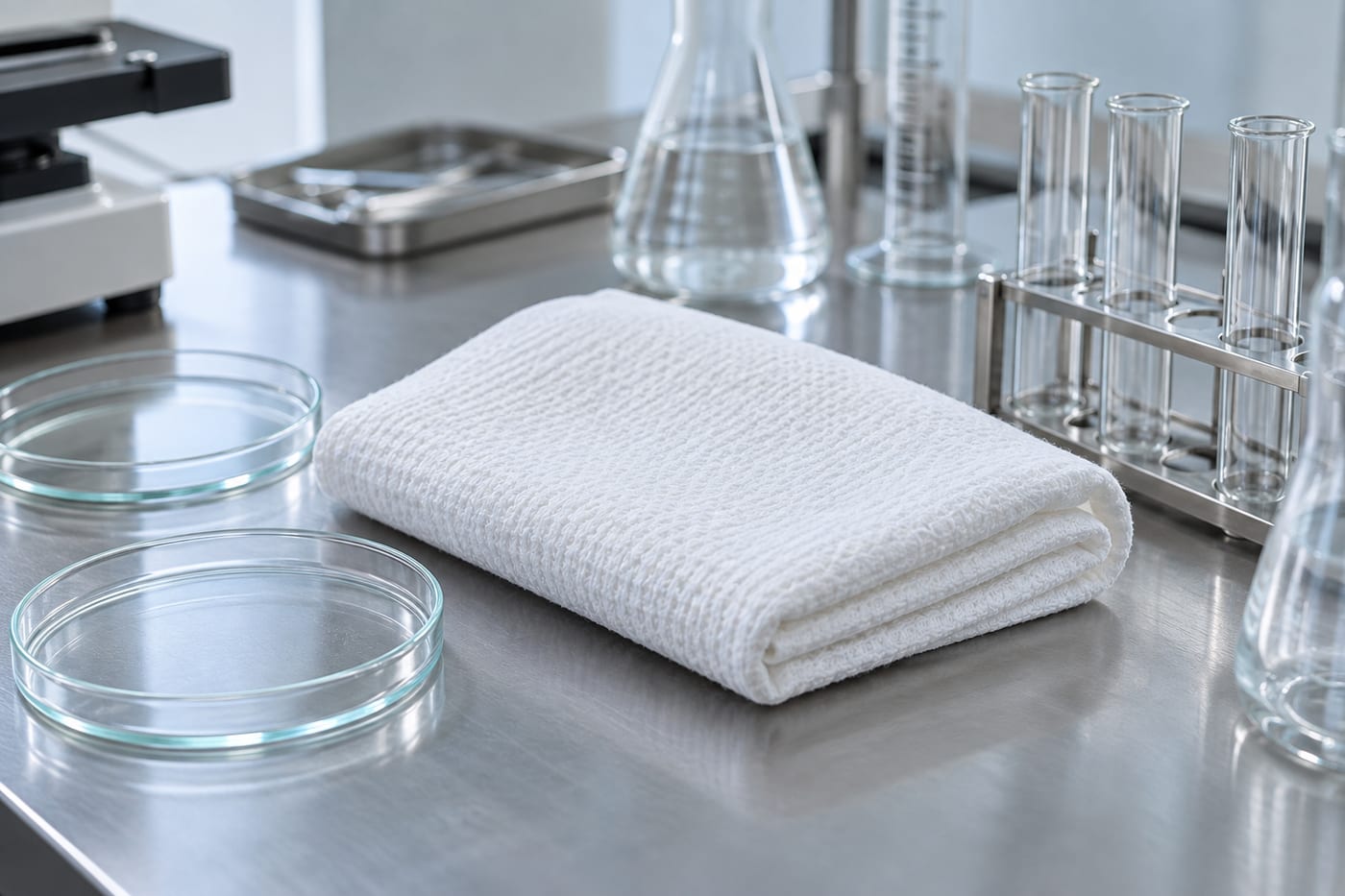
Ask for a report or test details that relate to the exact fabric. Check if the fabric was tested before washing only or also after several washes, and what is the factor that performed the test.
If it is an active finish, ask what the treatment is and what the maintenance instructions are. Do not conclude from a result on a new example how each set will behave after prolonged use.
For more information on the subject: Bamboo, viscose and lyocell: understanding fabric labels.
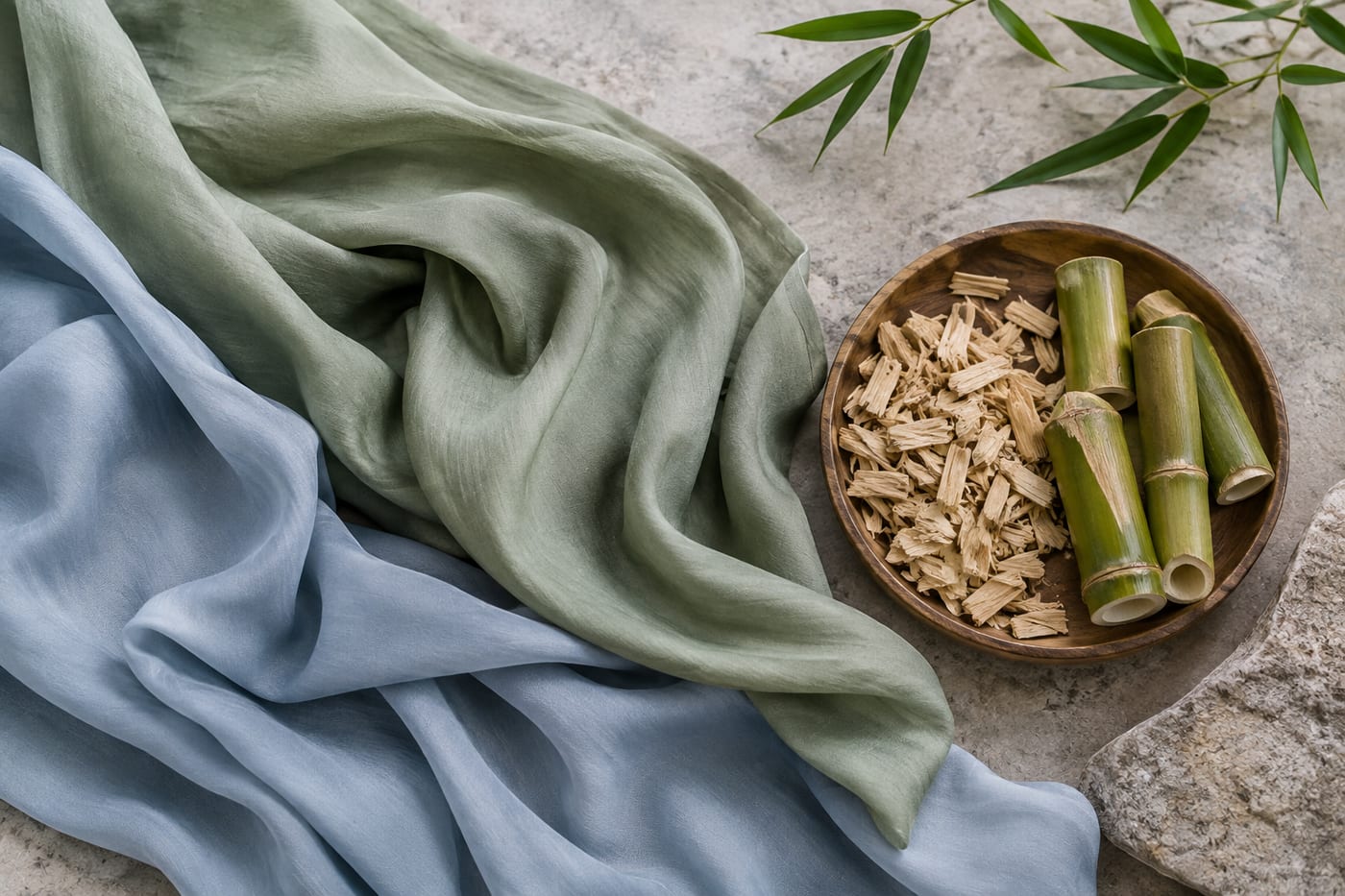
Bamboo is not proven to have antibacterial properties
A plant source of a raw material does not prove that the finished fabric retains the properties of the plant. The FTC warns against antibacterial claims in bamboo products that are not supported by reliable scientific evidence.
For cotton or any other material, examine the specific claim. Words such as “healthy” and “hypoallergenic” do not explain what was tested.
How to choose practically
Start with fit, comfort and washability. If the antibacterial claim is not clearly documented, you can choose the bedding according to the properties that can be tested and not pay just for the promise.
If you have a medical condition or a diagnosed sensitivity, seek individual professional advice. This site explains how to interpret textile claims; it does not diagnose conditions or recommend treatment.
Antibacterial is not anti-mite
Dust mites are not bacteria. The result of an activity test against bacteria does not in itself indicate the blocking of mites or allergens. "100% cotton" is also not a description of pest control.
Even fabric that is presented as antibacterial does not guarantee a bed without mites and is not a reason to wash less. The frequency of washing depends on the dirt, use and care instructions.
How do you call a lab result without turning it into a promise?
If the seller presents a test document, first look for the model name and description of the tested example. A document that refers to a raw material, thread or other fabric is not necessarily a test of the set you will receive. Also check the date of the document, the test method and what the lab actually measured. An impressive number in the title does not alone explain what happened in the conditions of use of the house.
A useful question is whether the fabric was tested before washing only or also after a certain number of treatment cycles. If a feature is attributed to the finish, it is important to know what instructions were given to maintain it. Even a positive result in a fabric test is not proof that those who sleep on it will get sick less, will develop fewer allergies or will not have to change sheets.
Separate three different reasons for buying
Those looking for bedding because of an unpleasant touch need a fabric and fit test. Those dealing with a diagnosed allergy need instructions that relate to the allergen and their condition. Anyone who wants to buy a product with antibacterial treatment needs information about the treatment and the evidence for it. These three goals are not interchangeable.
You can prepare a short list before ordering: what problem do you want to solve, what detail in the product is related to it, and what can be verified. If there is no clear answer, don't let the health claim decide the choice. You can still choose the same set due to size, touch or price, without attributing an unfounded result to it. Cleaning and maintenance continue to be conducted according to the use and label.
A practical comparison before choosing
| the claim | the necessary information | the limit |
|---|---|---|
| Tested in the lab | Model, method and result | Not necessarily research on humans |
| Preserved after washing | Number of cycles and treatment conditions | Not an indefinite promise |
| Suitable for allergy sufferers | What was tested and for what reason | Bacteria and mites are different things |
| Natural bamboo | The fiber composition and evidence for the claim | A plant source is not proof of activity |
Frequently asked questions
Do antibacterial bedding require less washing?
Do not infer this from the inscription. Dirt, moisture and use do not disappear because of a claim of antibacterial activity.
Is the name of a laboratory sufficient for verification?
No. You need to see which product, example and claim the document refers to. A general document does not verify each item of the brand.
Does the manual state that such products do not work?
No. It explains how to distinguish between a product-tested feature and broader promises that cannot be inferred from that testing.
Sources and scope
Source check: September 15, 2026. The information was checked against the sources listed here. The selection tips are designed to help you compare; They are not based on product tests we conducted ourselves.
By MyViro.
The content explains textile characteristics and is not the result of a product test in a laboratory. How we prepare our guides