Silk versus satin pillowcases: material comparison
The video compares the experience of using silk and satin pillowcases. It is an impression of particular products, not proof of medical effects or that every case made from either material is identical.
By PureWow · Video language: English
On this article, the player loads when the page opens, without autoplay, unless you chose to block external content. Player privacy information
Open the video on YouTube (in a new tab)
The video illustrates this topic. The full article remains available without watching; captions and transcripts depend on the publisher and YouTube.
The difference is on the fiber-content label
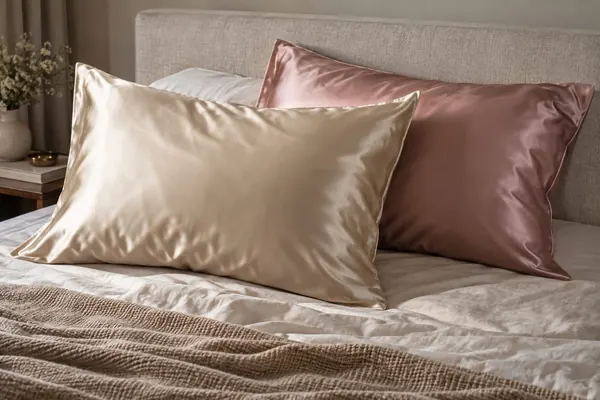
Glossy pillowcase can be silk, polyester or a mixture. The word "silky" describes a feeling and is not a statement that the product contains silk. Look for the composition in percentages and useful dimensions of the pillowcase, not including decorative edges if they are not part of the pocket.
Check whether both sides have the same fiber content. A photograph of the upper side does not describe the whole product. Embroidery or decorative trim may affect how the area touching your face feels.
What can be said about skin and hair?
A smooth surface can feel pleasant, but a description of its feel is not a clinical study. The sources reviewed for this guide do not support a promise that a particular pillowcase prevents hair loss, treats acne or removes wrinkles. Such claims need evidence relevant to the product and the specific claimed benefit.
In the context of eczema, the AAD emphasizes, among other things, choosing a detergent without fragrance and without dye. This is a different guideline than choosing a pillowcase according to brightness. Persistent sensitivity requires proper investigation, not drawing conclusions from a product image.
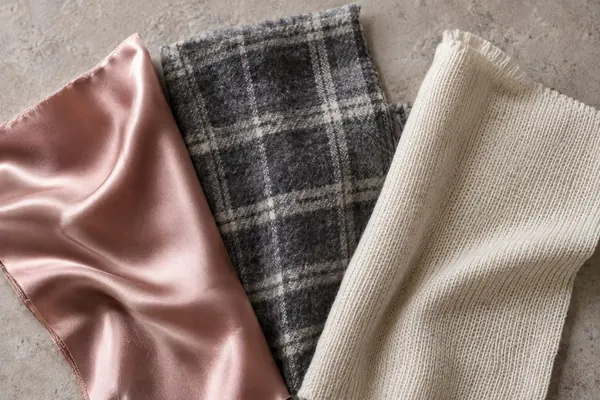
For more information on the subject: Silk, flannel and jersey: three different fabric terms.
Laundry is part of the equation
Each pillowcase has its own care instructions. Before buying, check whether it needs hand washing, a delicate cycle, drying flat or professional cleaning. No single care method applies to every silk or polyester-satin product.
If you change pillowcases often, check that there is a practical way to wash and dry them in time. A product that is easy for you to maintain may be more suitable than a product that is pleasant to the touch but remains in the laundry basket.
An example of choosing without paying for a promise
If you want a smooth feel, handle two pillowcases with clearly stated fiber content and compare their seams and fastenings too. If you specifically want genuine silk, check the silk percentage and supplier documentation; sheen alone cannot verify it.
Write down size, treatment and budget in advance. There is no reason to assume that the more expensive pillowcase will give a better medical result. Check separately what pleases you and what can be verified.
Do both sides of the pillowcase give the same information?
Some products are advertised mainly through their upper surface. Check whether both sides have the same fiber content and whether there is decorative trim or a lining. Know which surface touches your face when the pillow turns over, rather than relying only on the main product photo.
Also check the fastening area. A smooth pillowcase can still be uncomfortable if a zip or envelope fold rests beneath your cheek. With a thick pillow, make sure the case does not compress it. Feel and fit are separate considerations; an expensive material does not compensate for the wrong size.
Decide in advance what you want to get from the purchase
If comfort is the goal, focus on the fabric sample, fit and care requirements. If silk content matters to you, check the composition and documentation rather than a “silky feel” description. If you want to address a skin or hair condition, seek guidance on that condition separately rather than treating a pillowcase as a proven treatment.
You can keep another pillowcase of a type that you already like while you try a new one. That way there's no pressure to use an item that's uncomfortable just because it's the only one that stays clean. When checking the price, also include the cleaning requirements and the option to change the pillowcase as often as is suitable for your use.
A practical comparison before choosing
| what is written | what does that mean | What else should be checked? |
|---|---|---|
| 100% silk | Fiber composition statement | Verification, measurement and care instructions |
| Polyester satin | Synthetic fiber in satin weave | Touch, finish and closure |
| cotton sateen | Cotton sateen | Pillow fit and care requirements |
| Silky touch | Description of feeling | Check the full fiber content; the name does not prove that it is real silk |
Frequently asked questions
Is all satin made of polyester?
No. Satin describes a weave, and it can be made from different fibers.
Is it worth changing a pillowcase to treat acne?
There is no basis in the guide to recommend a pillowcase as an acne treatment. Skin care is chosen according to the problem and professional guidance.
Does high shine indicate quality?
not by itself. Compare the composition, stitching, measurements and handling next to the feel.
Sources and scope
Source check: September 15, 2026. The information was checked against the sources listed here. The selection tips help you compare options; they are not based on hands-on product tests by MyViro.
By MyViro.
The content explains textile characteristics and is not the result of a product test in a laboratory. How we prepare our guides
Illustrative photos on this page were created with AI.