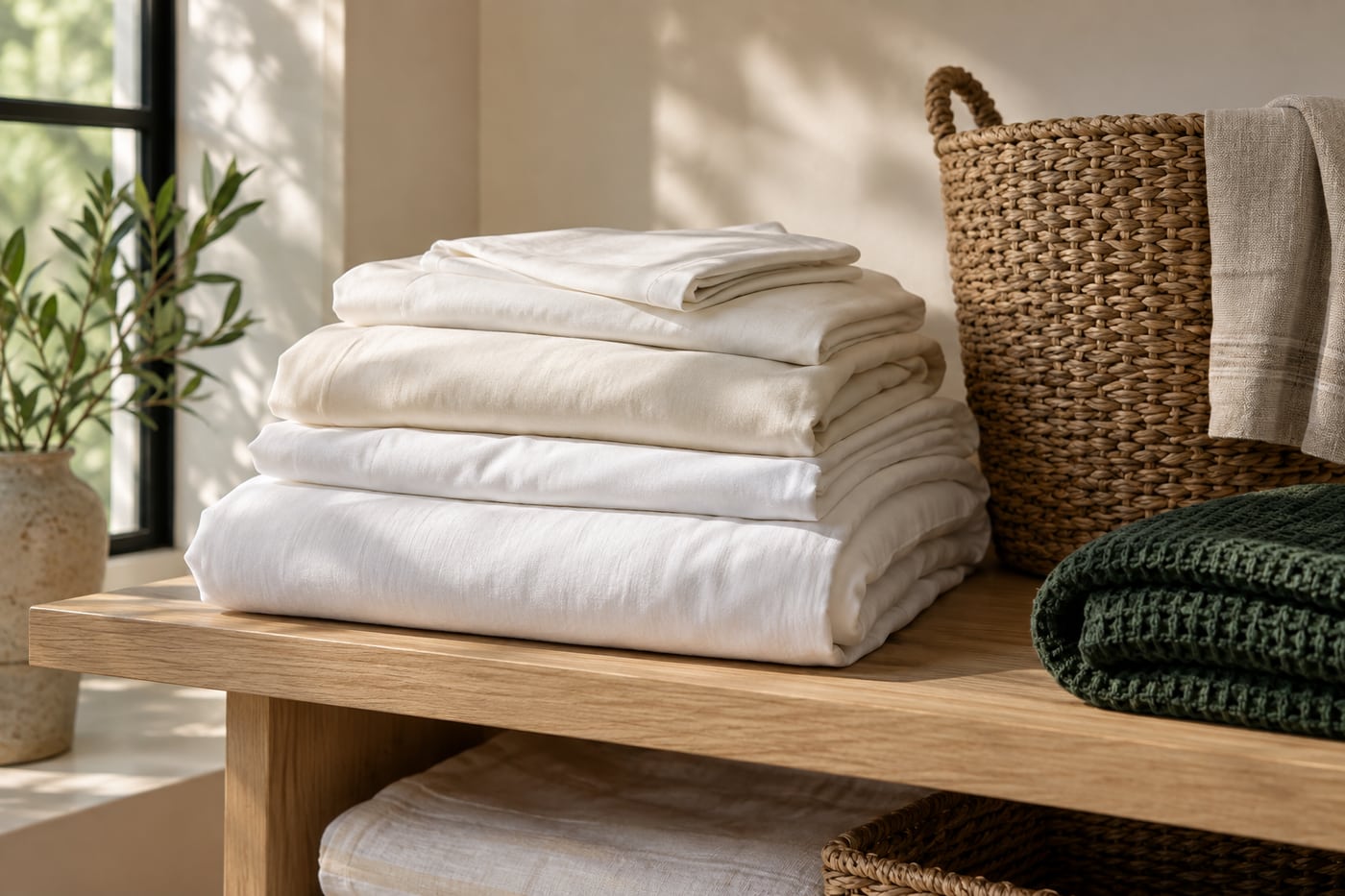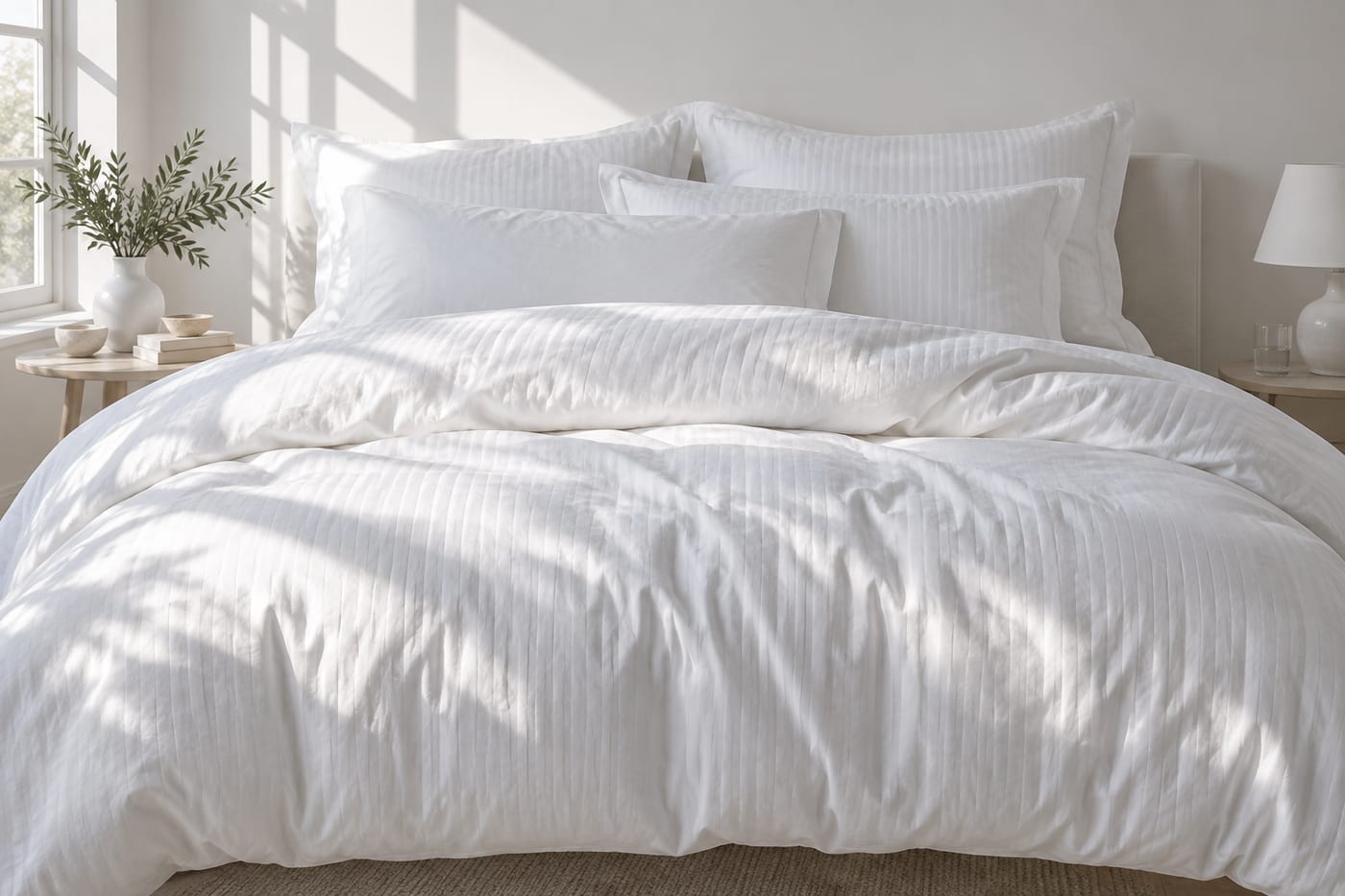
White as the basis for the design
White linens are easily combined with different colors and textures. You can add colorful pillowcases, a folded blanket or a bedspread and change the look without changing the whole set. Different shades of white are not always the same.
White also reveals stains and discoloration. This is a useful consideration if you use care products that may mark fabric or if you eat in bed. A white mirror is not alone a proof of cleanliness.
Start with labeling and sorting
Separate by color and according to care instructions. Do not fill the drum beyond the machine's instructions; The fabric needs room for movement and washing. Choose a suitable detergent and dosage for the load and the product.
White linens also require washing at a temperature that suits the fabric. Cotton, fiber blend, embroidery and finishing may require different treatment. The use of a bleaching agent should also comply with the bedding label and the instructions for the material.
For more information on the subject: How to wash bedding and care for the fabric.
Treat the stain without improvising a mixture
It is advisable to treat the stain as soon as possible according to its type and the instructions for the treatment material. Try in a hidden place first when the instructions call for it. Before drying in heat, check if the stain has been removed.
Do not mix bleach with vinegar, lemon, ammonia or other cleaning agents. Certain mixtures may release hazardous gases. For washing, use the material intended for this, in the dosage and composition that are suitable for the linen according to the manufacturer's instructions.
Dry and store neatly
Follow the drying label, and don't assume that prolonged exposure to the sun is suitable for every fabric. If folding after taking out of the dryer to reduce wrinkles, make sure the sheets are completely dry before storing.
If a yellowish tint remains, check the washing load, dosage, washing and storage conditions. Not all discoloration can be removed, and a good smell or light color is not proof of disinfection. It is better to check with the manufacturer than to repeat aggressive treatment again and again.
Solid white, cream or a deliberate combination?
White is not one shade. A cold-toned pillowcase may look different from a cream-toned sheet, especially when placed side by side. If a uniform look is important to you, compare the items in the same lighting and check if they are from the same series. If a match cannot be achieved, deliberately combining with another color can be more pleasing than trying to achieve an almost identical white.
Before choosing, think about how much of the sheet will be visible when the bed is made. If most of it is covered with a duvet cover, you can invest in a good fit and comfortable care even when the shade is not exactly the same. On the other hand, in pillowcases that are together in front of the eye, the difference may be more pronounced. There is no need to replace a normal set just because of a small difference that doesn't bother you.
How do you approach yellowing without destroying the fabric?
First check if the change appears in the entire item or in a specific area, and if it is also visible in daylight. Remember which detergents and treatments have been tried. Before using a bleaching agent, you should check that the product allows this type of bleaching, including seams and decorations. White fabric is not necessarily a fabric that can be treated like any other white.
Follow the label of the material you have chosen, and do not increase the concentration or the soaking time, thinking that this will make it whiter. Do not mix bleach with vinegar, ammonia or other cleaning agents. If there is no improvement, repeated and aggressive treatment may damage the fabric without restoring the shade. You should check with the manufacturer about the compatibility of the treatment before trying again.
A practical comparison before choosing
| What do you want to improve? | What are you checking? | what to avoid |
|---|---|---|
| Uniform white between parts | series and lighting | Relying on a single shot |
| A local stain | The type of stain and label | Strong handling throughout the set |
| Generalized yellowing | Treatment materials and bleaching instructions | Mixing detergents |
| A clean look in the closet | Complete drying and a clean shelf | Storage of damp cloth |
Frequently asked questions
Can all white linens be washed at high heat?
No. The allowed temperature is determined by the label of the item, not by the color. Trim, elastic and finish may also limit handling.
White looks clean so there is no need to change?
Appearance is not a complete measure of cleanliness. Establish a replacement routine according to use and do not necessarily wait for a visible stain.
Is bleach suitable for every white sheet?
No. Check if bleaching is allowed and with what type of material. Don't use it just because the fabric is white.
Sources and scope
Source check: September 15, 2026. The information was checked against the sources listed here. The selection tips are designed to help you compare; They are not based on product tests we conducted ourselves.
By MyViro.
The content explains textile characteristics and is not the result of a product test in a laboratory. How we prepare our guides
Based on content from the MyViro archive, edited and revised in September 2026.