Storing bedding: folding and organising
The video demonstrates folding and organising bedding pieces in a closet so a complete set is easier to find. Adapt the method to available space and the fabric's care instructions.
By Martha Stewart · Video language: English
On this article, the player loads when the page opens, without autoplay, unless you chose to block external content. Player privacy information
Open the video on YouTube (in a new tab)
The video illustrates this topic. The full article remains available without watching; captions and transcripts depend on the publisher and YouTube.
Sort before filling the cupboard
Lay out the bedding and group each sheet with its matching duvet cover and pillowcases. Label sets by bed or size, especially if several mattresses are similar. Set aside torn items and sheets that no longer fit, so you can decide what to do with them.
Keep the sets in use at an accessible height. Seasonal blankets can be moved to another shelf, but you should leave a way to get them out without unpacking a whole pile.
Store bedding only when completely dry
Wash soiled items according to the label and treat stains before storing. After drying, also check the corners, folds and filling of the blanket. The dry feeling of the shell does not always indicate that the filling is dry.
Choose a clean, dry storage area. If the cupboard is damp or smells musty, address the source of moisture; adding fragrance to the bedding will not solve it. There is no need to add powders or scents directly to the fabric.
For more information on the subject: How to wash bedding and care for the fabric.
Match the packaging to the item
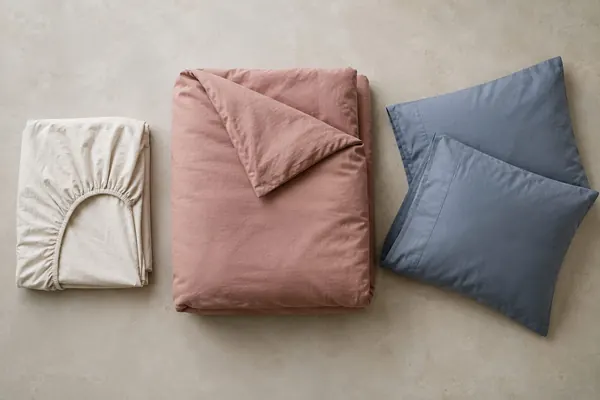
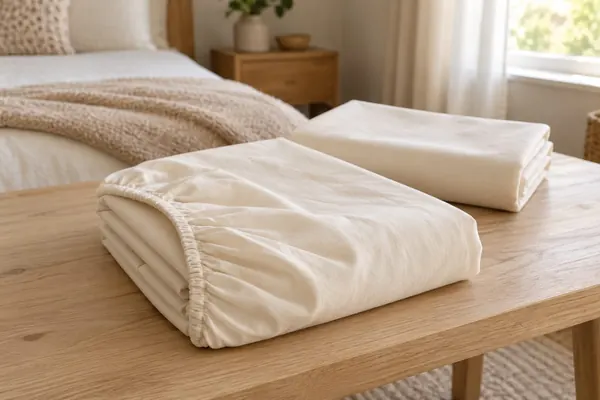
Thin sheets can be folded in a clean box or in a suitable fabric case. It is also possible to collect the parts of the set inside one of the pillowcases, provided that they are not compressed forcefully. Size label saves opening each set.
A vacuum bag saves space, but does not automatically fit every filling. Before prolonged compression of down, wool or foamed material, check the manufacturer's instructions. Sealed packaging does not correct moisture remaining inside the item.
Check when changing seasons
When taking bedding out of storage, check for odors, stains and damage to seams or elastic. Wash as needed according to the care label, and dry thoroughly before use. Do not mask an unfamiliar smell with softener or perfume.
Update storage labels when the seasons change: a set may now belong to a different bed, a duvet cover may have been given away or a pillow may have changed size. Organise the cupboard so the right item is easy to find.
Arrangement according to use, and not just according to color
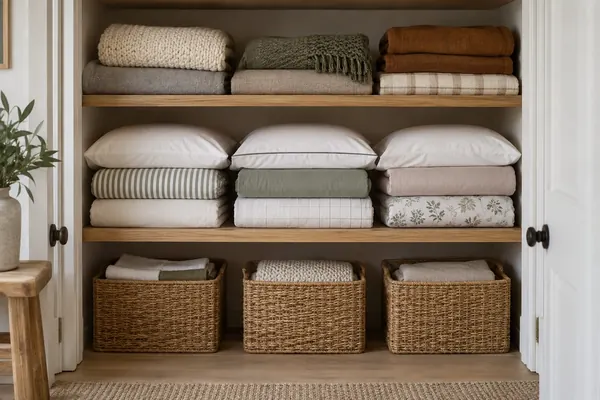
Divide the shelf into regularly used linens, guest bed linens and seasonal equipment. Within each group you can keep the parts of the set together or arrange sheets and duvet covers separately according to size. The best method is the one that will also allow someone else in the house to find a suitable set without spreading out the whole pile.
If different sizes look similar when folded, add a label to the shelf or box. Write down the size of the mattress or the name of the bed, not just a double. When you put in a clean set, you can put it under the next set in line so that the same linens are not always used and the others are left behind without being checked.
What do you do when you open a closet and feel an unpleasant smell?
Take the items out and check if the fabric is dry and if the shelf or wall behind it is damp. Adding perfume does not solve the source of moisture. If there is a sign of moisture in the closet, also treat the storage area before returning clean linens to it. An item that requires repeated washing is treated according to the label and is not put into the package while it is still damp.
In thick blankets and pillows, especially check areas that do not dry as quickly as the shell. Vacuum packaging does not automatically fit every filling, so check if the manufacturer allows compression. Keep the care instructions accessible even when the original packaging is no longer in use; A photo of them next to the name of the item can be enough.
A practical comparison before choosing
| Item | A useful arrangement | Inspection before storage |
|---|---|---|
| Regularly used set | All parts together or according to measurements | Complete drying |
| Guest bedding | A marked and accessible shelf | A size that fits the guest bed |
| Seasonal blanket | Packaging according to the filling instructions | No moisture inside |
| Item that does not fit | separate from the active sets | decide whether to repair, hand over or remove from use |
Frequently asked questions
Should you store a set in a pillowcase?
This is an option for arranging small parts, as long as everything is dry and there is room without compacting. It is not a solution to the problem of humidity or an unsuitable closet.
Does a vacuum always save space without damage?
Not every filling is allowed prolonged compression. Check the product instructions before such packaging.
Do you need to wash linens that have been kept in the closet?
Check their condition and storage conditions. Odor, dust, moisture or dirt warrant care; Merely folding in the cabinet does not guarantee that they are ready for use.
Sources and scope
Source check: September 15, 2026. The information was checked against the sources listed here. The selection tips help you compare options; they are not based on hands-on product tests by MyViro.
By MyViro.
The content explains textile characteristics and is not the result of a product test in a laboratory. How we prepare our guides
Based on content from the MyViro archive, edited and revised in September 2026.
Illustrative photos on this page were created with AI.