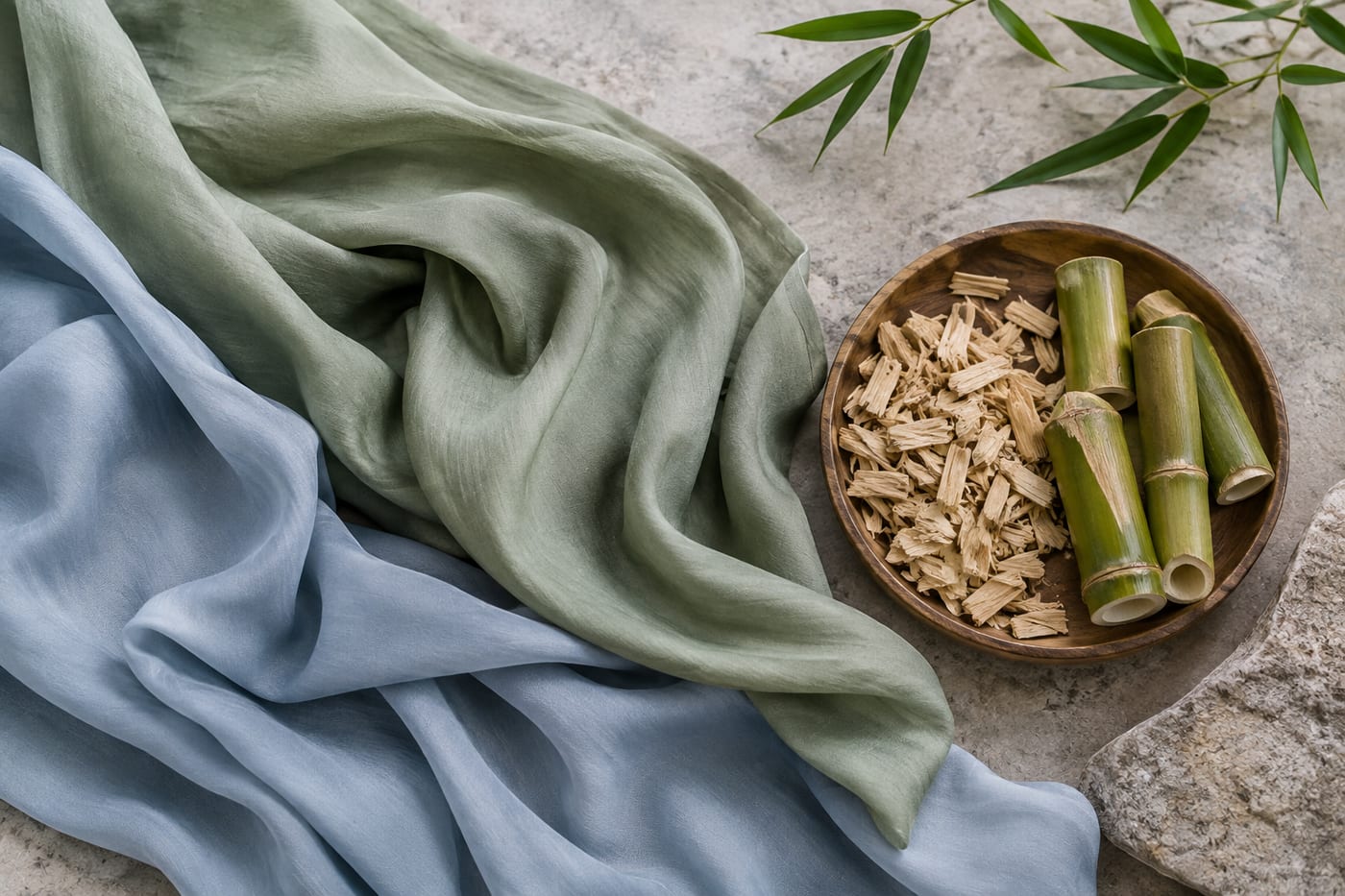
Plant origin and industrial process
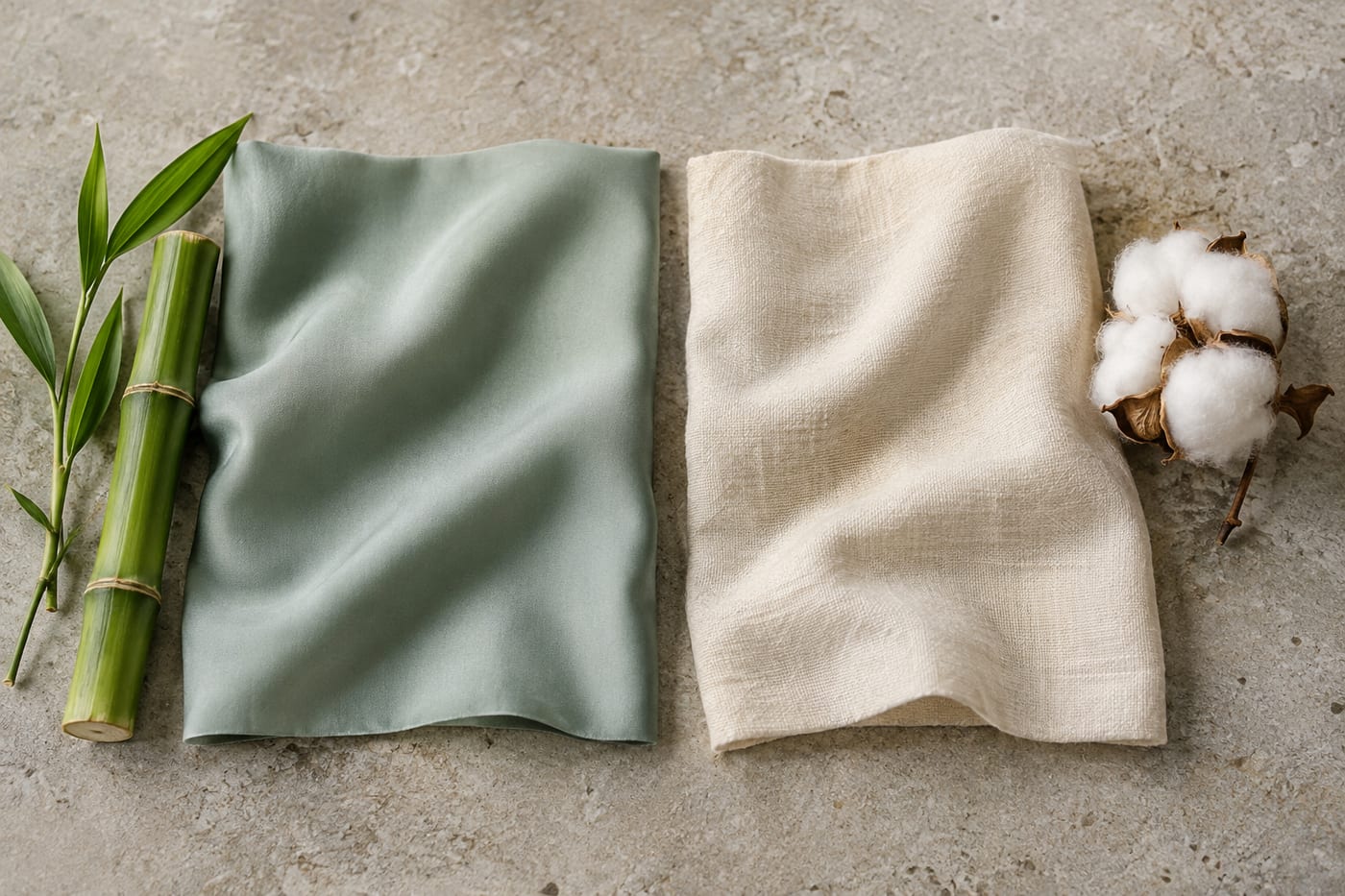
Viscose and lyocell belong to the family of fibers made from regenerated cellulose: they start with plant material, process the cellulose and re-create fibers from it. The source of the wood or bamboo does not eliminate the processing steps.
Products marketed as bamboo are sometimes viscose made from bamboo cellulose. This is different information from fabric that is made directly from the plant fibers, so you should look for the exact fiber name on the label.
lyocell is not synonymous with any bamboo
lyocell is a type of fiber produced by a specific process; TENCEL is a brand name for fibers from a particular manufacturer. To know what is in the set, look for lyocell, modal, viscose or a mixture.
Environmental statements should be related to a defined product and process. Plant origin alone does not prove a low environmental impact in all stages of production, dyeing and use.
For more information on the subject: Antibacterial bedding: which claims should you question?.
Touch and care
Fabrics from these fibers can be smooth, soft and flexible. The feeling varies according to the composition of the mixture and the weave. Don't be satisfied with the description "silky" to conclude what the durability or washing method will be.
Some products require gentle handling and attention to heat and squeezing. Check the drying instructions and measurements before choosing, especially if you use the dryer regularly.
Promises that require evidence
Do not conclude that the bedding has antibacterial properties just because the raw material came from bamboo. The FTC emphasizes that such claims require reliable scientific evidence.
Choose according to clear composition, feeling, care instructions and information that can be checked. Terms like "ecological" or "healthy" without detail are not a substitute for specification.
What to write down from a label full of names?
Separate the information into three lines: the name of the fiber and its content, brand name if any, and the source of the raw material if it is detailed. For example, an inscription on lyocell next to cotton describes a mixture whose percentages must be read. A brand name appearing in capitals does not mean that all the fabric is made from that brand of fiber, unless the specification makes that clear.
Also check if the description refers to the whole set or only to a specific item. A picture of a duvet cover is not a specification for a sheet, and a product with two sides may require further clarification. If the seller shows one description on the page and another on the label, ask for an explanation before ordering. A clear photograph of the composition line is more helpful than another title such as extra soft or luxury.
How do you examine environmental assurance in a practical way?
Ask what exactly the promise refers to: the growing of the raw material, the production of the fiber, the dyeing of the fabric, packaging or the complete product. Information on one step does not automatically describe the entire production chain. If a certification mark is displayed, check its name and scope; A green leaf on the packaging can be part of the design only.
The use of the house also enters into your decision. A product that you can take care of according to the instructions and actually use it is better in terms of usability than an item that was bought because of an environmental description and remains in the closet. The manual does not calculate the environmental impact of models, so it is not possible to rank every viscose, lyocell and cotton here from best to worst. Choose claims that can be tested alongside a real fit for the need.
A small dictionary for reading three sample labels
“100% viscose made from bamboo” identifies viscose whose raw material comes from bamboo. “100% lyocell” identifies a fiber type but does not, by itself, tell you which plant supplied the cellulose. “Luxurious natural bamboo” is marketing language, not an adequate fiber-content label. These descriptions are not interchangeable specifications.
When one of the formulations appears in the store, copy the composition line exactly as written and separate the brand name and product promises from it. If percentages appear, make sure they refer to the item you are buying. Questions about the manufacturing process, chemical use, or antibacterial property require additional information; It is impossible to deduce the answers from the picture of the plant or the color of the package.
A practical comparison before choosing
| The type of information | what to look for | An example of what is not enough |
|---|---|---|
| the car | Fiber names and percentages | The word bamboo only |
| fiber brand | The fiber and the relative part in the product | A prominent logo without fiber-content details |
| qualification | Name, number and scope | Unrecognized leaf symbol |
| Environmental claim | Defined step and process | General guarantee on the entire product |
Frequently asked questions
lyocell and modal are the same name?
No. These are different fiber names. If a brand appears that produces several types of fiber, you still need to check the exact fiber name.
Does every bamboo product require hand washing?
There is no single set of care instructions for every product sold under this description. Check the label of the specific item, including its finish and construction.
Does softness prove that the composition is correct?
No. You can achieve a soft touch in different materials and finishes. The composition is verified using appropriate information about the product, not by touch alone.
Sources and scope
Source check: September 15, 2026. The information was checked against the sources listed here. The selection tips are designed to help you compare; They are not based on product tests we conducted ourselves.
By MyViro.
The content explains textile characteristics and is not the result of a product test in a laboratory. How we prepare our guides