First check if it is allowed to use the dryer
Do not infer from a machine washing permit that a dryer is also permitted. According to GINETEX, the drying instructions are separate from the washing instructions. If there is no label, look for instructions for the model before applying heat.
Check each item separately: the sheet, duvet cover and mattress protector may need different care. An item with a waterproof layer does not automatically share the care instructions of the fabric above it.
Dryer: leave room for movement
Act according to the capacity of the dryer and according to the program suitable for the linens. Don't cram in a few sets just because they fit physically. Checking internal areas is important when the fabric folds into a ball and the outside feels dry.
If the linens are tangled, stop the machine and follow its instructions. Open folds and continue only when allowed. Do not put your hand into a moving drum or bypass a safety mechanism.
For more information on the subject: How to wash bedding and care for the fabric.
Rope or device: also check the instructions
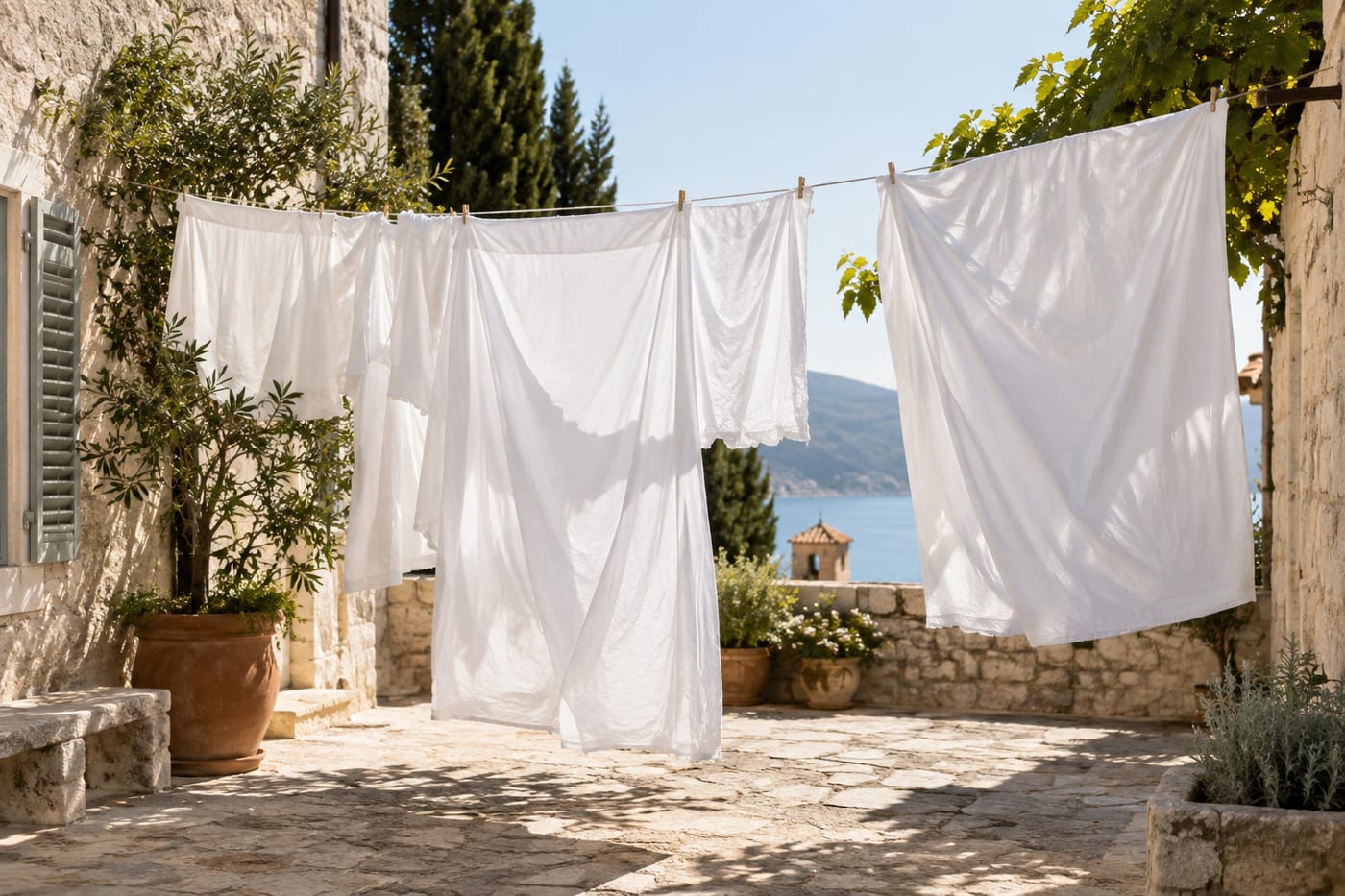
Spread the fabric so that thick areas do not remain adjacent to each other. Adjust hanging, shade or layout to product instructions; Long exposure to the sun is not automatically suitable for every color and finish.
Before folding, check seams, corners and sheet pockets. Moisture in a hidden area can remain even when the central part is already dry. If there is no room for a spread, plan a smaller load instead of storing a damp cloth.
What can be done against wrinkles and shrinkage?
Fold or unfold at the end of drying, and avoid additional heating that is not necessary or allowed. A wrinkle is not necessarily a defect, and it is not necessary to iron to use the bedding. Ironing, if chosen, should match the label.
If the measurement has changed, compare to the original measurement and the manufacturer's information. Do not guarantee that steaming, soaking or stretching will restore any set to its proper size. Write down what was done and check if the product can be handled before another attempt.
What do you do when the duvet cover comes out dry on the outside and damp on the inside?
Unfold the duvet cover and check if other items are trapped inside or if it has rolled into a ball. A dry outer area does not indicate that all the layers inside have dried. Separate the items and continue drying using the method and conditions allowed for them.
If the phenomenon recurs, check the load and the instructions of the dryer. It is not necessary to immediately select maximum heat; You may need fewer items or a different arrangement of the laundry. Also check the filter maintenance according to the device's instructions. Storing bedding with damp areas moves the problem to the closet instead of ending the process.
Planning drying in an apartment with little space
Before washing day, check which facility can hold a sheet and duvet cover without creating several very tight layers. You can divide the laundry into several times instead of filling the entire room with a wet cloth. If hanging indoors, choose a suitable place with the possibility of ventilation and not on a piece of furniture that may be damaged by moisture.
Do not place bedding on a heating device to shorten the time. Use only the drying method for which the product and device are designed. When buying an additional set, compatibility with your drying routine is a real consideration: a beautiful fabric that requires space that is not available at home can make any change a cumbersome task.
A practical comparison before choosing
| a method | Possible practical advantage | Condition for selection |
|---|---|---|
| dryer | Indoor use without a hanging device | Per-label, program and load are appropriate |
| Air drying | Option when the dryer is not used | Place, time and method of deployment permitted |
| combining methods | Flexibility in the home routine | Both methods should be allowed |
| Continue automatic heating | It is not a substitute for a moisture test | Avoid excess heat and guessing time |
Frequently asked questions
How many minutes do you need to dry bedding?
There is no uniform time. The type of fabric, the load, the spin and the device have an effect; Check the program and the dryness of the item.
Does a dryer always shrink cotton?
A uniform result cannot be guaranteed. The structure and finish of the fabric and the handling conditions affect the change in measurements.
Do you need to buy drying balls?
There is no obligation. Use accessories only if they are suitable for the product and device according to the instructions.
Sources and scope
Source check: September 15, 2026. The information was checked against the sources listed here. The selection tips are designed to help you compare; They are not based on product tests we conducted ourselves.
By MyViro.
The content explains textile characteristics and is not the result of a product test in a laboratory. How we prepare our guides