The base: on the back, in a separate surface that is suitable for a baby to sleep
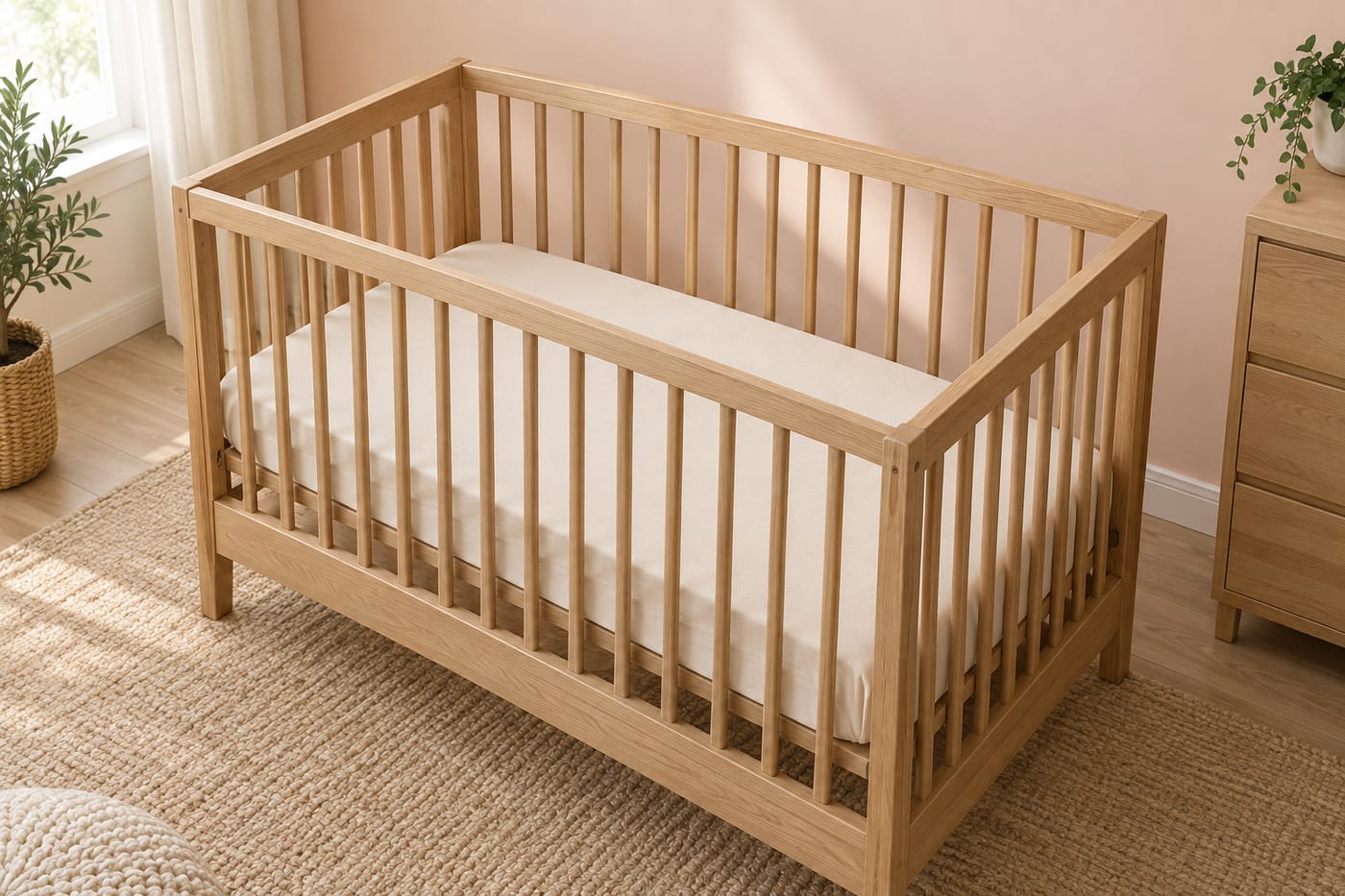
A baby's sleeping environment should be simple and adapted to his age. According to the guidelines of the Ministry of Health and the professional bodies detailed at the end of the article, a baby should be laid on his back every time he sleeps, on a firm mattress, flat and suitable inside a cot or a standard crib. Use a snug fitted sheet that fits the mattress, and leave the sleeping area free of soft objects. Proximity to the parent does not require sleeping on the same surface: the baby's bed can be placed in the parents' room.
The guide mainly deals with the first year of life and preparing the environment at home. It does not replace individual instruction for a baby with a medical condition, and does not guarantee absolute prevention of crib death. The goal is to reduce known risk factors, and turn the instructions into actions that are easy to follow even when the parents are tired. If a unique medical instruction has been received, find out with the staff exactly how to apply it and under what circumstances it applies.
Before adding a product to the bed, ask two questions: is it necessary for sleep, and does it fit the latest guidelines? A product that is shown in a beautiful picture, given as a gift or marketed as breathable is not necessarily suitable for a crib. Even if it is sold in a reputable store, you need to check its purpose. The design of the room can be rich and pleasant outside the sleeping surface, without filling the bed itself.
The difference between sharing a room and sharing a bed
Sharing a room means that the baby sleeps on its own surface in the same room where the parents sleep. Bed sharing means that the baby and the adult sleep on the same mattress. These are two different arrangements in terms of safety. The Ministry of Health warns against co-sleeping in the parents' bed, among other reasons because of soft bedding, face covering, entrapment and falling. Do not turn an adult bed into a crib using pillows that create a border.
When choosing a location for the bed, check that it is convenient to reach the baby without moving objects in the dark. Leave room for passage, for opening a door and for safe use of the bed according to the manufacturer's instructions. Avoid impromptu attachment of a bed whose side has been removed. A product intended for attachment requires a fit test and dedicated instructions; Mere proximity to the parents' bed is not enough to ensure that a certain arrangement is safe.
If the room is small, you should measure the available space and the way you take the baby in and out before purchasing. Storage of diapers and clothes can be outside the sleeping area, at a height that is comfortable for an adult. The goal is for the separate bed to be the most accessible and simplest option, even in the middle of the night, and not a place where laundry needs to be emptied before a baby can be placed in it.
For more information on the subject: Baby fitted sheets: a secure fit and safer sleep.
Checking the sleeping environment for the baby
| item or condition | the principle | What don't you improvise? |
|---|---|---|
| starting position | Lay on your back every time you sleep | Do not fix on the side with pillows |
| bed and mattress | Standard, suitable, firm and flat | Do not fill gaps with towels |
| a sheet | Fit and stretch | Do not use an excess of an adult sheet |
| the sleeping area | Clear of soft objects | No pillows, dolls and head protectors |
| heating | appropriate clothing; without overheating | No weighted accessories or headgear |
| Visit and day sleep | The same safety principles | A sofa and a seating product are not a bed |
| Caring for your baby at night | Return to the separate surface | You don't fall asleep with a baby in an armchair |
How to check the compatibility of a bed and a mattress
Read the bed instructions and the mattress instructions together. It is important that the dimensions match, that the bed is properly assembled and that there is no missing or loose part. Don't settle for a generic name like crib mattress, because different cribs have different sizes. In a used product, check the model, the integrity of the parts and the existence of safety notices or calls for return with the manufacturer and the relevant authority.
A mattress for a baby does not have to feel like a soft and comfortable mattress for an adult. Do not add a layer to soften it, and do not fill a gap on the side with a towel, blanket or pillow. If the mattress does not fit the bed, replace it with a suitable product instead of an immediate solution. When the product comes with a dedicated mattress, the addition of another mattress may change the arrangement that the manufacturer planned.
Keep the assembly instructions and model number in an easy-to-find place. If you disassemble the bed for a move or a trip, check the assembly again afterwards. You can take a photo of the label to identify the product, but taking a photo of a built-in bed is not a substitute for the instructions. If there is doubt about a certain part, stop using it for sleeping until it is clarified, and use another suitable surface in the meantime.
A snug fitted sheet, without layers that add softness
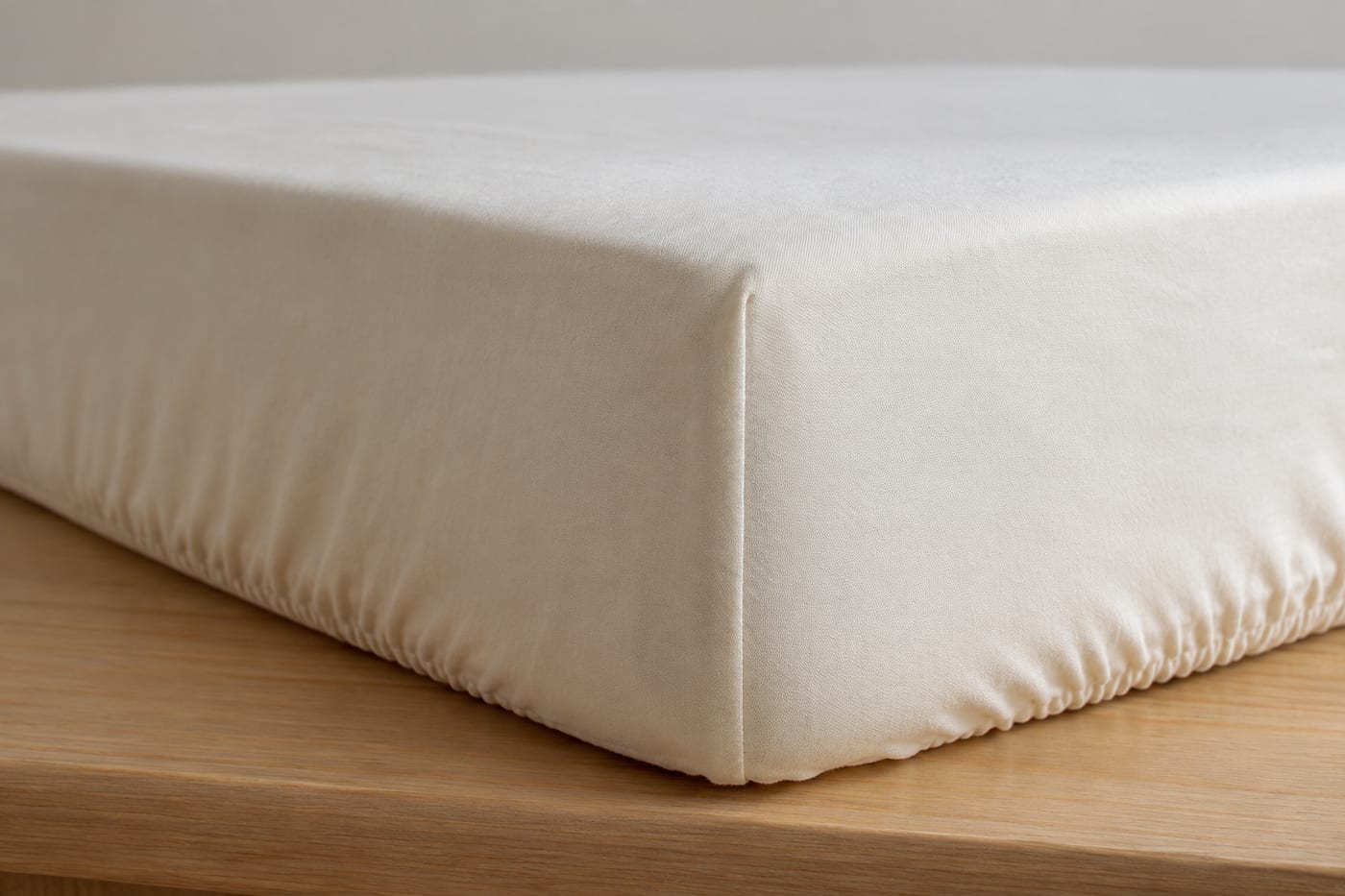
The sheet should fit the length, width and depth of the mattress and remain taut. After washing, check that the corners sit well and that there is no excess fabric that folds near the baby's face. Do not use the sheet of an adult bed with the excess pushed under the mattress, and do not attach bedding holders or improvised accessories designed to solve slipping in an adult bed.
If you use a mattress protector, check that it fits the mattress and bed according to their instructions, stays flat and does not create additional padding or a free part. A thick, padded or mattress topper-like product is not made suitable for a baby just because it is defined as a protector. The textile should fit into a safe surface, and not change its firmness or create an area where the head sinks.
You should keep a suitable and clean replacement sheet in an accessible place. In case of moisture, replace the item and treat the mattress according to its instructions, instead of spreading a towel over the stain and returning the baby. Planning a change in advance reduces the temptation to use what's next to the bed. The measurement details can be found in the baby sheets guide, but the safety guidelines come before any consideration of color or texture.
What is left outside the bed
CPSC and NICHD guidance emphasizes a clear sleep surface: no pillows, soft toys, padded crib bumpers, loose blankets or soft objects. There is no need to build a nest around a baby. A mesh product or an accessory advertised as allowing airflow still needs careful assessment; the word “breathable” does not establish that it belongs in a baby’s sleep space. A simple, clear surface is also easier for caregivers to check.
You can make a basket for photography accessories and decoration outside the bed. If you placed an item for photography when the baby is awake and under supervision, remove it before sleeping; It is best not to turn the baby's bed into a temporary storage area at all. Also ask older siblings not to bring a doll in to help the baby. Explain that their way of helping is to choose a song or bring a diaper to an adult.
You should check the area around the bed, not just the mattress. Charger cables, curtain cords, straps and hanging objects should be out of reach. As the baby grows and begins to move or lift up, the ability to reach changes. Re-examining the place is part of using the bed, and not a task that is done only the day you finish decorating the room.
What should you remember?

- on the back
- Separate and flat surface
- snug fitted sheet only
Clothing, heating and sleeping bags
Keeping a baby warm is not a reason to cover their face or add soft objects to the sleep space. AAP guidance recommends avoiding overheating and keeping the head uncovered during indoor sleep. Appropriate clothing and a correctly sized, non-weighted infant sleep sack can provide warmth without a loose blanket when used as directed. Do not choose an oversized product to make it last another season.
Check the neck and arm openings and how to close according to the product instructions, so that the baby does not slip inside. Heat rating alone is not enough: clothing, room temperature and the product you have chosen also have an effect. Do not apply an adult blanket chart to a baby. If you are not sure how to dress in a certain situation, ask the Tipat Helav team or the doctor.
Do not use weighted blankets, weighted clothing or weighted sleep sacks for a baby. Do not add weight to imitate a comforting hand. If the baby is sweating, feels very hot around the chest or seems unwell, assess their condition and clothing layers rather than relying on the air conditioner setting. A fever or medical problem cannot be addressed simply by changing bedding.
Rolling, wrapping and tummy time
Place your baby on their back for every sleep. Once your baby can roll independently in both directions, professional guidance allows them to remain in the position they reach, provided the sleep surface is suitable and clear. Do not use a sleep positioner to prevent movement. If you are unsure about your baby’s development or ability to roll, ask the care team who knows your baby.
Swaddling is not a means of preventing cot death. If using it, receive appropriate guidance and stop when signs of an attempted rollover appear. Don't continue wrapping because of the age number written on the package when the baby is already trying to roll over, and you shouldn't use a weighted wrap. The distinction between a wrap and a sleeping bag with free arms is important when choosing the product.
Tummy time is an activity while awake and under close supervision, and not a recommended sleeping position. Separate the pictures and instructions of activity during the day and the bed at night. If the baby falls asleep during activity, move him to a suitable sleeping surface. Don't leave him sleeping on an activity pad just because an adult is in the room.
Night feeding and parental fatigue
You should plan in advance what happens after feeding: who puts the baby back to bed, where are the necessary items and how another adult can help. Fatigue is not a failure of the parent, and is a reason to prepare. If there is another caregiver available, share responsibilities explicitly rather than hoping someone will listen and step up when needed.
The AAP specifically warns against falling asleep with a baby on a sofa or recliner. If you are worried that you will fall asleep while feeding, ask for help and plan with the health care team a practical way to reduce the risk. In case you fell asleep with the baby, return him to his separate surface as soon as you wake up. This information does not make bed sharing a recommendation or a substitute for a suitable bed.
Do not delay feeds to follow a sleep schedule downloaded online. A baby’s needs, particularly those of a young or premature baby or one who is not gaining weight well, require individual professional guidance. A parent struggling to stay awake while caring for the baby needs practical support: help from another adult, shared nighttime responsibilities or a discussion with the care team. Buying another bedroom product does not replace that support.
Watch: A safe sleeping environment for a baby
Visual explanation of the Safe to Sleep campaign on a free surface and sleeping on the back. The old video is for illustration; The article is also based on the updated guidelines of AAP, Ministry of Health, FDA and CPSC.
By NICHD — Safe to Sleep · Video language: English

You can read the information in English without watching the video. This article is not a transcript of the external video.
Travels, visits and day sleep
Safe sleep is also required in a short nap and in another house. Before a long visit, find out where the baby will sleep and whether there is a suitable and properly assembled product. Don't wait until he's already asleep to discover that the only option is a couch. If you bring a portable bed, read its instructions and do not add a thicker mattress to make it comfortable.
A safety seat is intended for protection while driving and is not the permanent sleeping surface at home. If a baby falls asleep in the seat during the trip, follow the instructions for use and safety, and upon arrival transfer to a suitable surface as soon as possible. Similarly, do not turn a trampoline, swing or sitting product into a night bed. Supervision does not change the purpose of the product.
Prepare a spare sheet in the bag in the appropriate size for the mobile bed, and not just a large cloth diaper. Check in advance the location in the host's house, including cables and heating. If no suitable arrangement is found, the visit plan is changed. Logistical convenience is important, but not a reason to improvise a sleeping area inside the pillows of a guest bed.
Monitors and assurances to prevent risk
The FDA warns against infant sleep positioners, and health organizations emphasize that consumer products do not replace safe sleep practices. A monitor displaying breathing, movement or heart rate does not make it safe to add a pillow or put a baby to sleep on an unsuitable surface. If medical monitoring is required, follow the instructions given for your individual baby.
When reading a publication, distinguish between measuring a data and proving to prevent a medical outcome. They asked what exactly was approved, for what use and for which population. An influencer's recommendation or multiple positive reviews do not replace professional information. Even a video showing a baby sleeping peacefully does not prove that the product is safe or that the use complies with the guidelines.
Also avoid products that require improvisation around the mattress: a strap that fixes the body, a pillow that raises the head, or an additional slope. In case of emissions or fear of reflux, consult a doctor for guidance and do not change the sleeping surface yourself. The goal is to address the medical issue without creating another risk in the bed.
Coordination between everyone who cares for the baby
Brief, direct instructions are more helpful than assuming everyone knows the recommendations. Show the caregiver where to put the baby to sleep, how the fitted sheet should look and which items stay outside the crib. A short note near the changing supplies can describe the routine and any medical instructions. Focus on practical actions rather than a long list of worries.
If grandparents are used to older advice, explain that guidance changes and that you follow the current recommendations. Read an official source together instead of arguing about who raised children correctly. At daycare or with a paid caregiver, ask how safe sleep is put into practice and how another child’s belongings are kept out of the crib.
Before each sleep, a quick look can check that the surface is free, that the sheet is taut and that the clothing fits. If there is breathing difficulty, a change in color or a reaction, do not look for a solution in the article: call for urgent medical help. In Israel you can call the MDA on 101 and follow the operator's instructions. Knowing first aid for babies is a separate skill that should be learned in a qualified setting.
Frequently asked questions
Can I put my baby to sleep on their side instead of their back?
Start each sleep on your back according to the safe sleep guidelines, and do not choose a side as a compromise. If the baby has a medical condition or special instruction, clarify it with the caring staff. Do not use a pillow or a fixator to keep a side, and do not conclude from a position that is comfortable for an adult that it is also suitable for a sleeping baby.
Is a breathable pillow suitable for a baby?
The word breathable is not a license to add a pillow to a cot. The guidelines emphasize a suitable surface free of soft objects. Check designation and official instructions and not just a photo or promise on the packaging. You can design the room outside of the bed, but there is no need for additional padding around the head for the place to look cozy or complete.
Is it allowed to add a mattress to a portable bed?
Follow the instructions of the bed and its designated mattress. Do not add a thick mattress or a softening layer on your own, because this may change the fit and the safety arrangement. If the surface seems unsuitable or there is a missing part, check with the manufacturer and in the meantime use another suitable sleeping surface, without filling gaps in the fabric.
How do you warm up without a loose blanket?
Choose suitable clothing. A correctly sized, non-weighted infant sleep sack may be an option when used according to its instructions. Avoid overheating and keep the baby’s head uncovered. A warmth rating alone is not enough: consider both the room and the baby. Ask your maternal and child health clinic (Tipat Halav in Israel) or your doctor if you are unsure about clothing or a medical concern.
What do you do if the baby rolls over?
Always place your baby on their back at the start of every sleep. Once they can roll independently in both directions, do not use equipment to hold them in position; keep the sleep surface clear and suitable. Seek advice if you are unsure about their ability to roll or have individual medical instructions. Stop swaddling as soon as the baby shows signs of trying to roll, regardless of the age printed on a product.
Does a monitor allow you to sleep with more accessories?
No. Consumer monitoring does not replace the rules of safe sleep and does not justify pillows, a slope or an inappropriate surface. If medical monitoring is required, follow the personal instructions given. It is important to distinguish between a device that displays data and proof of risk prevention, and not to rely on an alert as a substitute for preparing the sleeping environment.
Are the rules important even for a short nap?
Yes. A short sleep, a visit or a day nap should not be excluded. Prepare a suitable place in the host's house in advance or use a portable bed according to its instructions. An adult's supervision in the room does not make a sofa, pillow or sitting product a suitable sleeping surface. If there is no safe option, change the plan and do not improvise a bed from soft objects.
What should another caregiver know?
Show caregivers where to put the baby to sleep, how the fitted sheet should look, which items stay outside the crib and what to do after a feed. Make sure the instructions are understood, rather than simply asking everyone to be careful. Pass on individual medical instructions accurately. A respectful discussion of current recommendations is more helpful than arguing about habits that used to be common.
Sources and scope
Source check: September 15, 2026. The information was checked against the sources listed here. The selection tips are designed to help you compare; They are not based on product tests we conducted ourselves.
By MyViro.
General information to familiarize yourself with the subject, which is not diagnosis or medical treatment. How we prepare our guides