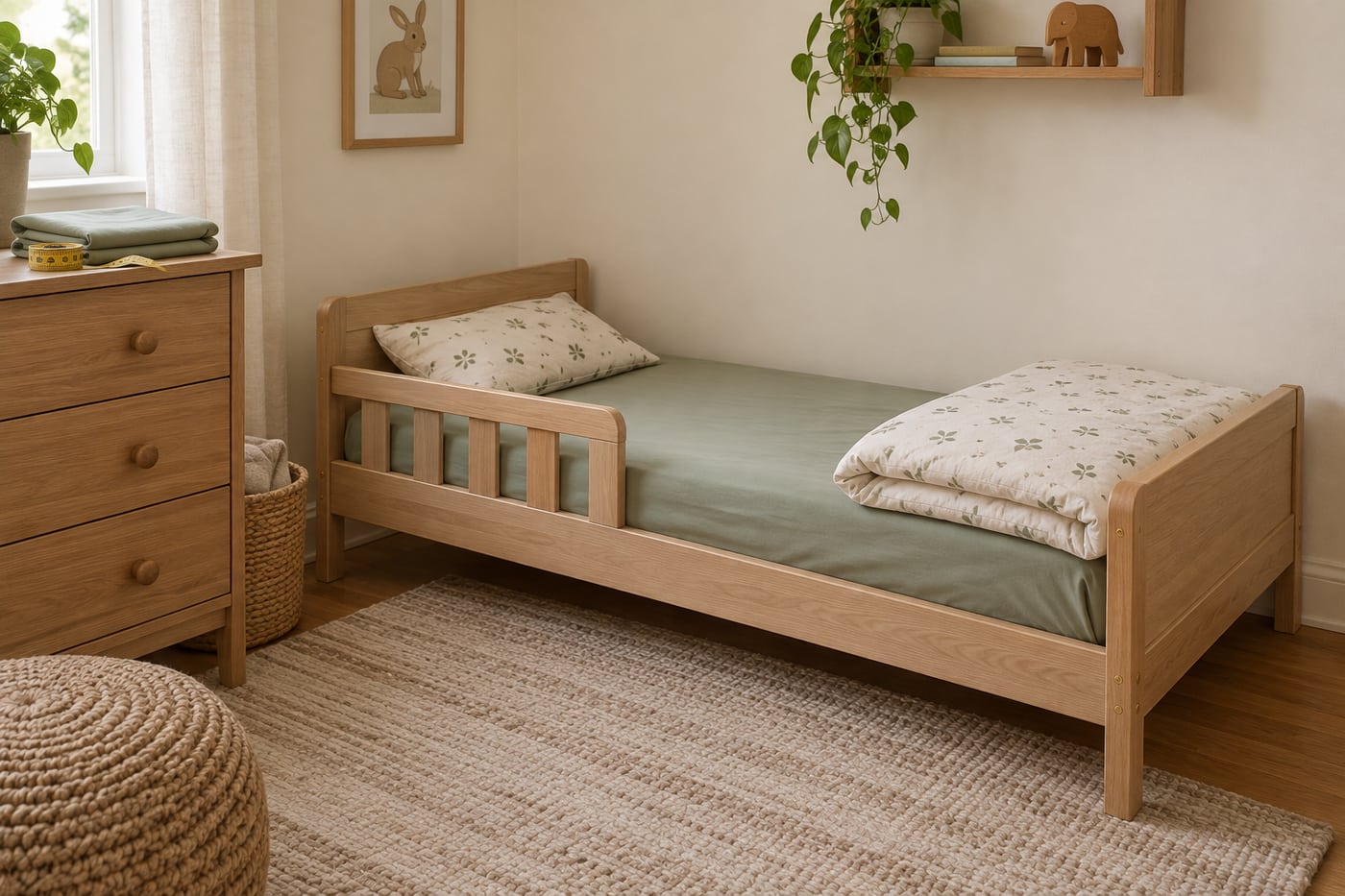
A transition bed is not one size
Transition bed describes a stage or bed type, not a universal bedding size. Short beds, longer junior beds and extendable designs coexist. A set appearing under the right search term may still not fit. Check model and dimensions before pattern. Moving beds provides a chance to separate still-useful equipment from items genuinely requiring replacement.
This guide concerns children already using a suitable transition bed. It does not give instructions for infant duvets, pillows or added cot layers. Age and product directions need separate checks from size. A small item with confusing commercial wording is not automatically suitable for a baby. Ask the maker and an appropriate professional if age or developmental suitability is unclear.
Measure width, length and height
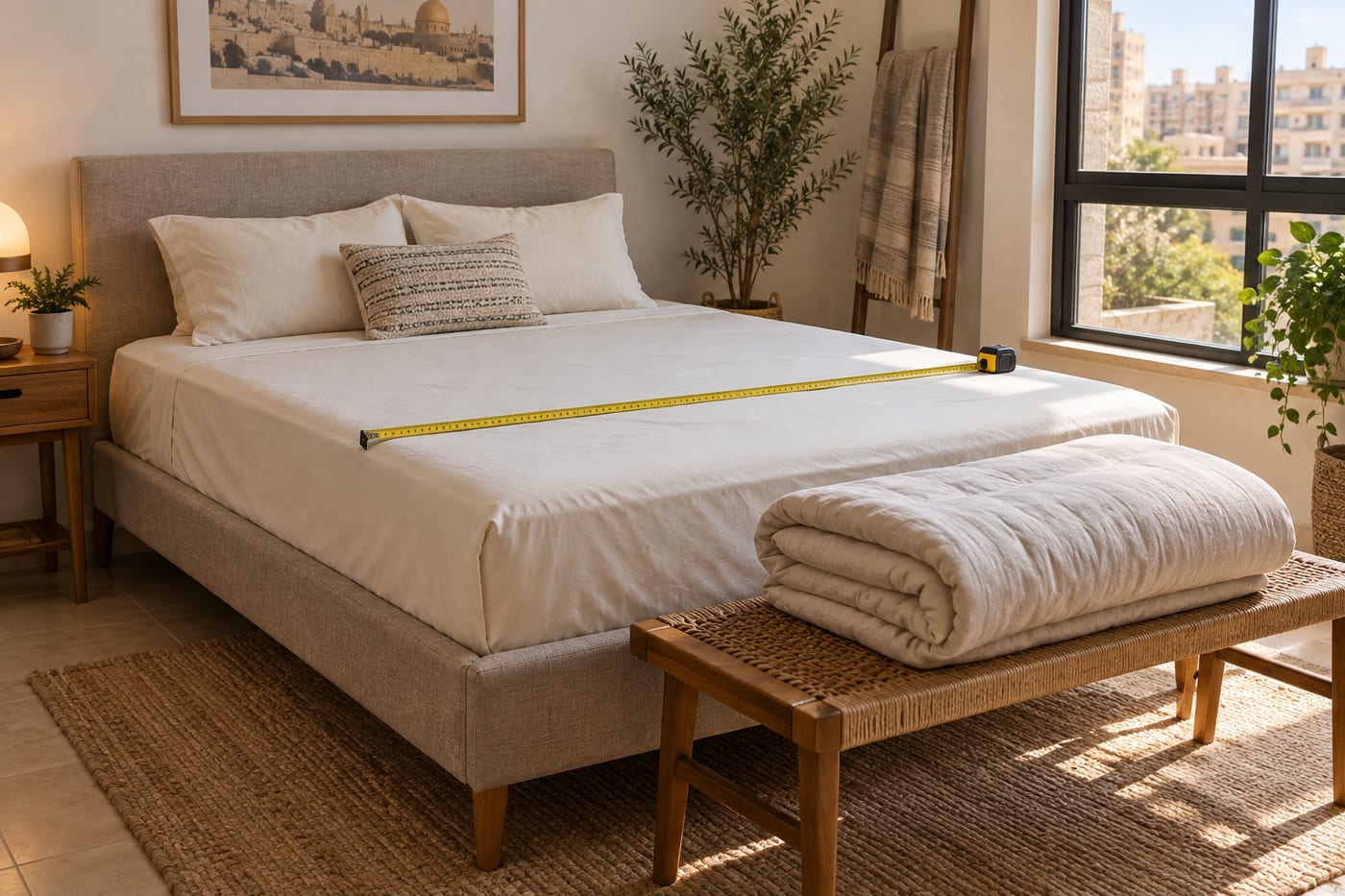
Measure the empty mattress with bedding removed. Run a straight tape across and from head to foot, excluding frame and rail. Check height: matching surface dimensions may still fail on a thick mattress. Save the results and label photo. This guide writes width × length in centimetres; read what each field means elsewhere.
For an extendable bed, measure its current configuration. Extending the frame does not approve the old sheet. Added mattress sections also need checks under equipment instructions. Excess sheet length is not a sensible way to anticipate future growth. Fit present use and recheck when the bed changes. A short measurement avoids recurring lifted corners or loose fabric during changes.
For more information on the subject: Cot and Crib Bedding: Fitted Sheet Sizes and Safe Use.
Child-bed size examples
| Check | Information needed | Practical decision |
|---|---|---|
| Passparto: Bar Pink | Sheet 70×130200 × 220 100×15050 × 70 50×70 | Check height and child-appropriate equipment |
| IKEA: BARNDRÖM | Sheet 70×160 for up to 10 cm thickness | Model is designated for age three and over |
| Snuz: jersey sheet | A 60×120 to 70×140 | Model-specific, not every knit |
| Extendable bed | Current dimensions | Recheck after each change |
| Existing duvet | Dimensions and suitable use | Cover chosen separately from sheet |
| Changes | Drying time and actual soiling | Compatible dry spares outside the bed |
Examples from different products
Passparto’s Bar Pink set lists a 70×130sheet, 100×150 cover and 50×70 case. IKEA’s BARNDRÖM is 70×160 for a mattress up to 10 cm thick, designated for age three and over. These show variation and the importance of product-specific height and age, not a standard or stock promise.
Snuz’s jersey sheet states a60×120 to 70×140range. It belongs to that model, not all stretchy sheets. Do not extend a single-size specification yourself. Ask about measured width, length and height and identify the bed. Explicit compatibility is preferable to stretching an undersized sheet or tucking surplus from an oversized one.
A smooth sheet without improvised fastening
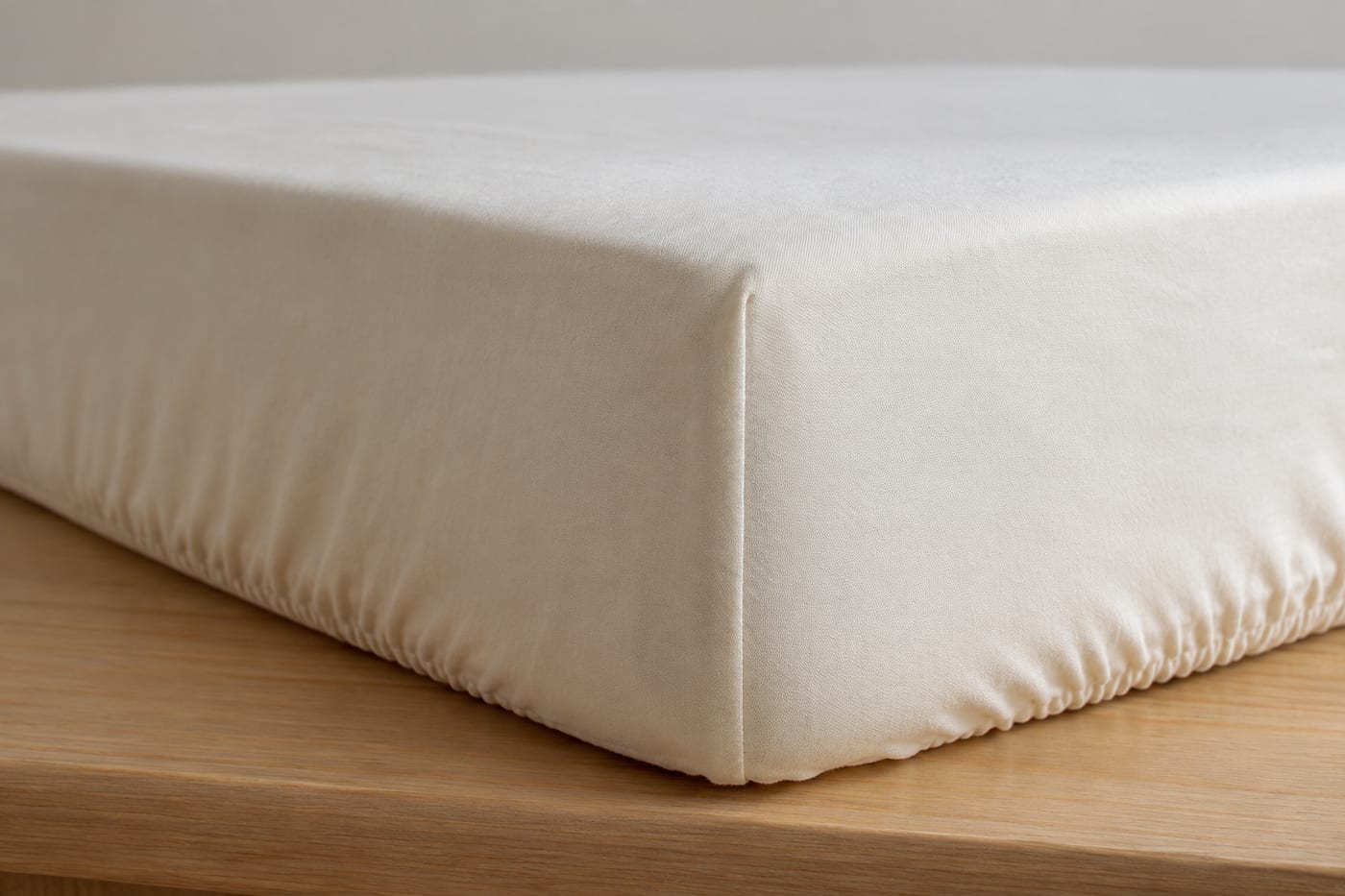
Fit while the child is out of bed. Arrange each corner and check a smooth surface without heavy tension or large folds. Inspect the corner by the wall too: it can be loose despite a tidy front. If the sheet pulls the mattress or rises at corners, revisit specifications rather than hiding the problem with another layer.
Do not correct size with pins, knots, long straps or unapproved accessories. A protector, if needed and permitted for this equipment, requires separate compatibility and proper installation. Check which layers the sheet surrounds and total height. Frequent changes favour easily correct fitting. Inspecting an empty bed is more useful than commercial photographs or assuming elastic will settle during sleep.
Choose duvet and cover independently
Cover size does not automatically follow mattress size. Choose a duvet appropriate for the child and use, then measure it flat. A 100×150 cover may not match another duvet. Require clear component dimensions; do not compare length alone where width differs or infer fit from toddler wording.
For a retained duvet, check condition, instructions and suitable use rather than merely whether it enters the new cover. Large surpluses complicate bed-making; a small cover can fold filling. A thicker duvet is unnecessary just to reproduce photography. Selection depends on the child, conditions and equipment directions. This discussion does not apply to infant cots, where separate safe-sleep rules remain regardless of small product dimensions.
Fabric feel and seams
Children may prefer smooth fabric, soft knitting or noticeable texture. Offer two compatible options and observe preference without making selection a health test. Inspect stitching, case edges and decorations at contact points. Clear composition explains the purchase but cannot guarantee universal comfort or absence of irritation.
If a seam bothers the child, identify the component and location. Another case or less prominent closure may suffice instead of replacing a set. Feeling a sample is more useful than exceptionally luxurious wording. Persistent itching or rash needs appropriate assessment rather than another fabric purchase. The guide concerns use comfort and compatibility, with no medical treatment promise for bedding marketed as natural, soft or designed for children.
Check closures and small components
Examine cover and case closures. Envelopes, buttons and zips behave differently during changes and use. Look for neat finishes, intact components and age directions. A loose button or open seam needs appropriate checking and repair before use. No closure type is automatically approved for every age: construction and model directions matter.
Do not add long ribbons, pins or decorations to hold filling in a cover. Use the intended construction and recheck after washing. A child helping with bed-making can choose the visible pattern according to ability, while an adult checks fit and fastenings. A useful adult component is not a toy. Interior construction and contents give information absent from a front photograph, so examine them before purchase.
Laundry suited to the routine
Read every component label before use, especially in mixed-fabric sets. Follow permitted temperature, process and drying. Children’s bedding has no universal wash heat and cotton cannot replace a label. Use detergent and dosage according to product and appliance directions; a child’s bed is no reason to add extra. Strong scent does not prove cleaning or disinfection.
Treat marks compatibly with fabric and cleaner. Complicated recipes or mixed chemicals are unnecessary. Check results before heat drying where directed. Refit the dry sheet and inspect elastic and compatibility. Do not improvise a fastening if size changed. Retain labels and specifications for discussion with the seller instead of repeated, unapproved hotter treatments.
Night-time changes: accessible spares
Plan a place for a dry correctly sized spare and for soiled items. Set quantity follows actual changes and washing-and-drying time. When mostly the sheet is changed, another cover is not necessarily helpful. Protector need follows equipment directions separately from the set’s appearance; a shop display is not a reason to purchase multiple layers.
Keep clean pieces outside the sleep surface, accessible to an adult. Remake and inspect all corners during changes. Do not prebuild sheets and pads for peeling away unless equipment explicitly supports that arrangement. Added layers alter height and feel rather than solving fit. A convenient routine identifies the correct item and fitting method while tired, without resorting to damp or oversized spares.
Patterns and appropriate participation
After fit and care checks, select a design with the child. Offer defined choices rather than a mostly incompatible catalogue. A favourite colour or character may appeal but cannot promise to resolve difficulty sleeping. Design can make the bed likeable; it does not replace a routine or assessment of ongoing problems.
A plain sheet allows cover changes as preferences evolve without replacing everything. Reversible patterns offer choice without adding objects. Simple supervised participation can include choosing a side or placing a case, according to ability. Adults retain responsibility for compatibility, closures and equipment. Shared choice needs no pile of cushions, decorative layers or accessories to make a bed feel new.
When to retain existing bedding
Retain items only when dimensions, height, condition and use directions fit. A sound sheet can transfer if explicitly supported, not merely because it stretched into place once. Check cases and covers independently against pillows and duvets. A larger mattress might need only a new sheet; other changed equipment needs its own component checks.
Inspect seams, elastic, closures and remaining stains. Old is not automatically poor and new is not automatically compatible. Label size when saving for another bed. Do not transfer transition-bed advice to an infant cot because colours match. The infant-sheet guide links safe-sleep sources. Every bed requires its user-and-equipment assessment rather than automatic hand-me-down sets without fresh measurements.
Before ordering
Gather mattress dimensions, height, bed model, duvet and pillow measurements and missing pieces. Review age and care directions. Request missing fit-height or closure details. Save specifications and exchange conditions, especially when testing requires opening or washing. Ordering on the day of the transition decision is unnecessary if information remains unclear.
On arrival, check contents and measurements, follow care directions and fit the empty bed. Assess changeover convenience as well as appearance. The sizing guide covers measurement; the bedtime guide covers routines. Fit, feel and straightforward changes provide a practical basis for retaining suitable items and filling real gaps instead of buying the right name in the wrong size. Save the list for future spares.
A child’s bedding: measure, fit and check

- Measure the current mattress configuration
- Choose components for equipment and age
- Check grip and condition after washing
Frequently asked questions
What size is transition bedding?
No single size applies; measure and check the model.
Can a cot sheet fit?
Only when dimensions, height and use are approved for this bed.
Is the cover always 100×150?
No. It is a product example; match an appropriate duvet.
Can a large sheet be tucked in?
Choose a specified fit rather than constructing one with surplus and improvised attachments.
How is post-wash fit checked?
On the empty bed: four corners, surface and height without unusual tension.
How many sets are needed?
Follow changes and drying time; another sheet can be more useful than a full set.
Is this a bassinet guide?
No. Infants require separate safe-sleep guidance.
Sources and scope
Sources checked on 12 October 2026. Manufacturer sources describe their own products and instructions; they do not establish one universal rule for all bedding and mattresses.
- Passparto: Bar Pink transition-bed set
Sheet 70×130sheet, 100×150 cover and 50×70 case; dimensions do not approve all-age use.
- IKEA: BARNDRÖM junior sheet
Model 70×160 for thickness up to 10 cm, designated for age three and over; not a universal child-bed direction.
- Snuz: a defined sheet fit range
A 60×120 to 70×140 range for the particular model; not a rule for all jersey sheets.
- GINETEX: textile care symbols
Explains care limits; the actual item’s label governs treatment.
By MyViro.
The content explains textile characteristics and is not the result of a product test in a laboratory. How we prepare our guides