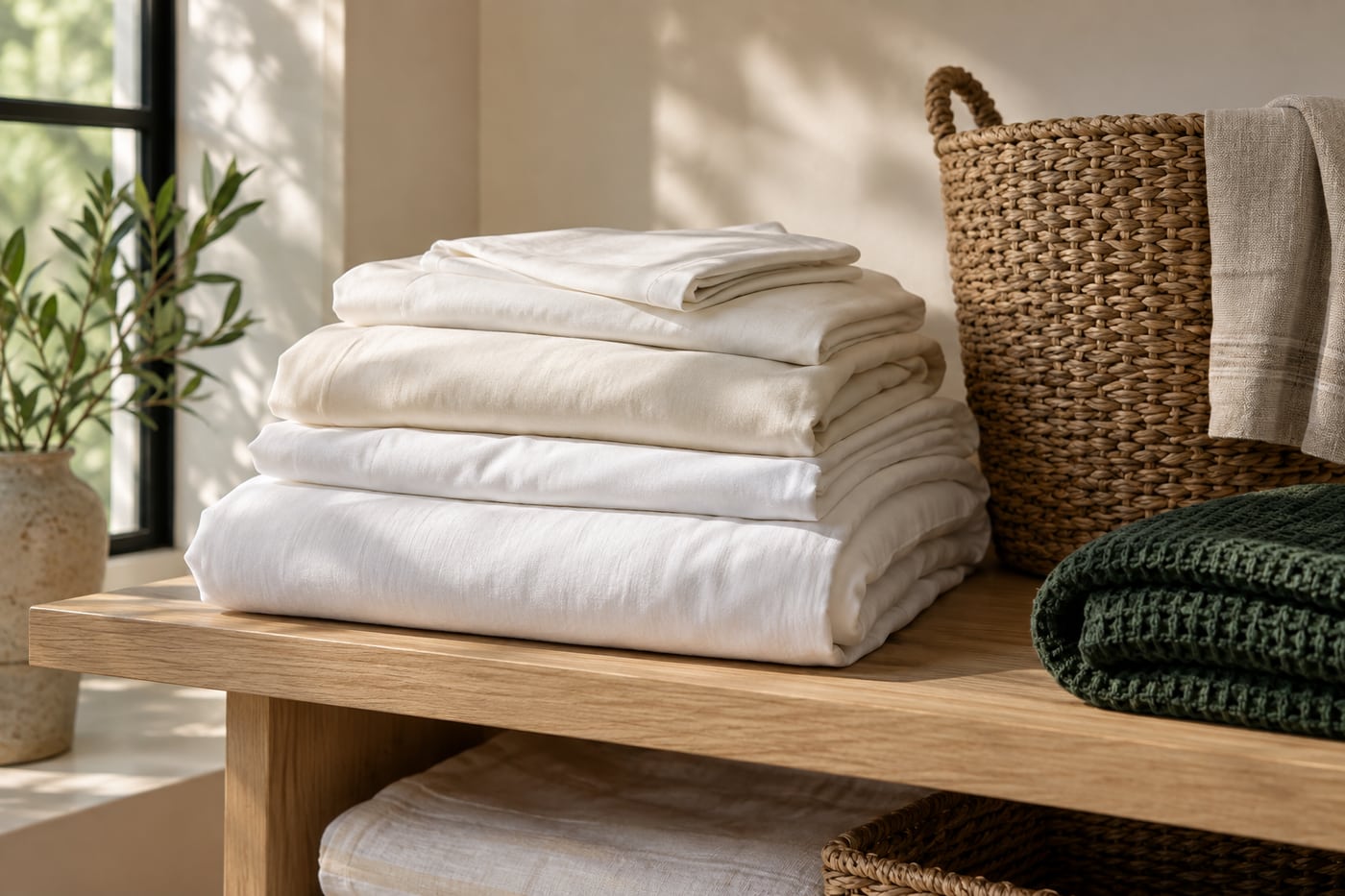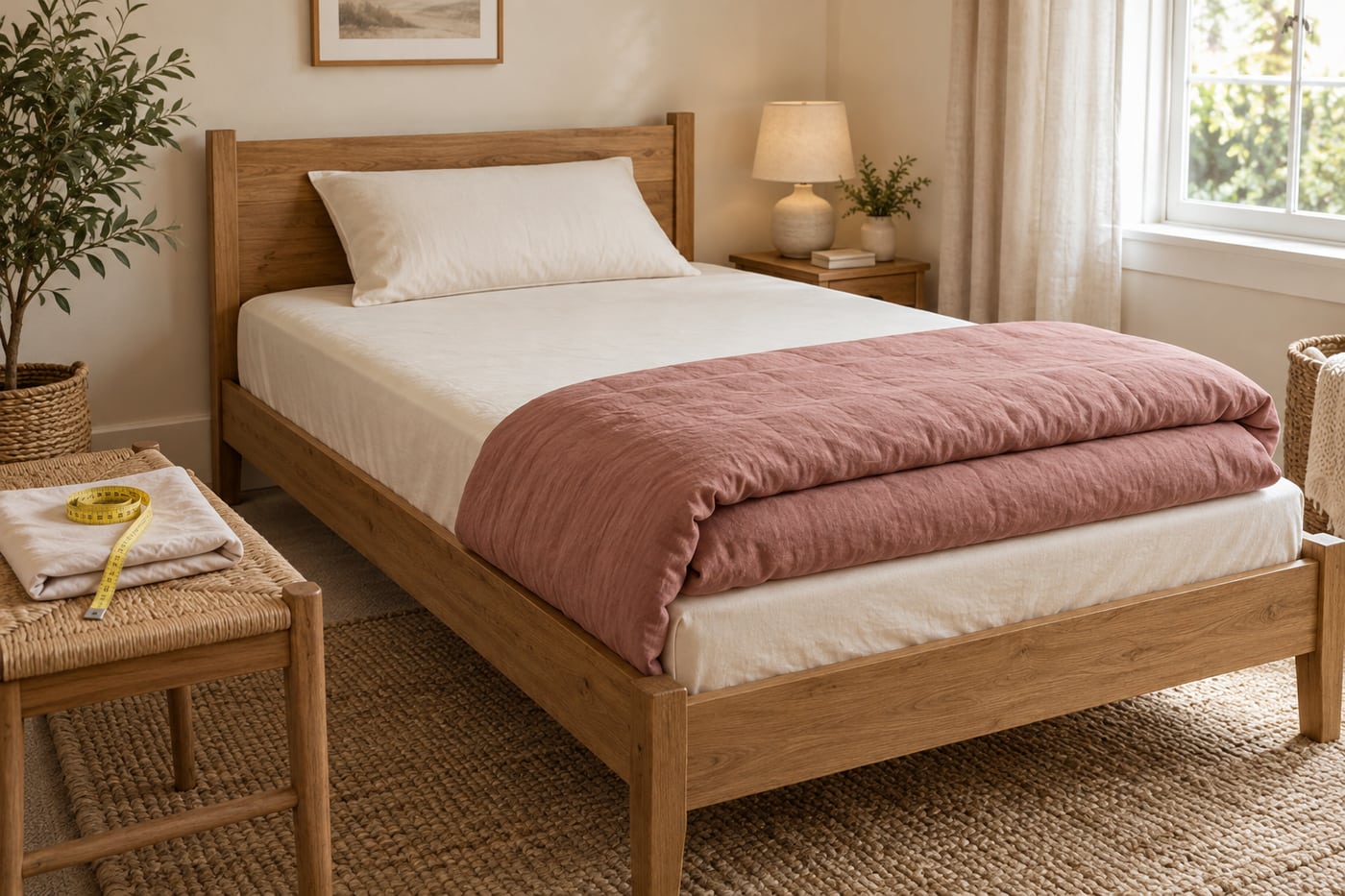
What does wide-single bedding mean?
Wide-single bedding is a retail category that helps locate products, not a complete set specification. In Israel the same description can appear on beds of different lengths, and fitted-sheet size need not be duvet-cover size. Vardinon lists 120×200 cm sheet and set categories, while American Sleep also shows 120×190cm examples. Length matters despite equal width. These specifications are examples, not a compulsory definition for every shop.
Before choosing colour or fabric, list the existing mattress, duvet and pillow. Each has separate dimensions. A new bed with the old duvet may require only another sheet. A changed duvet requires checking its cover even when the mattress remains. This short inventory prevents ordering by one number in a product title.
120×190 or 120×200: measure the mattress
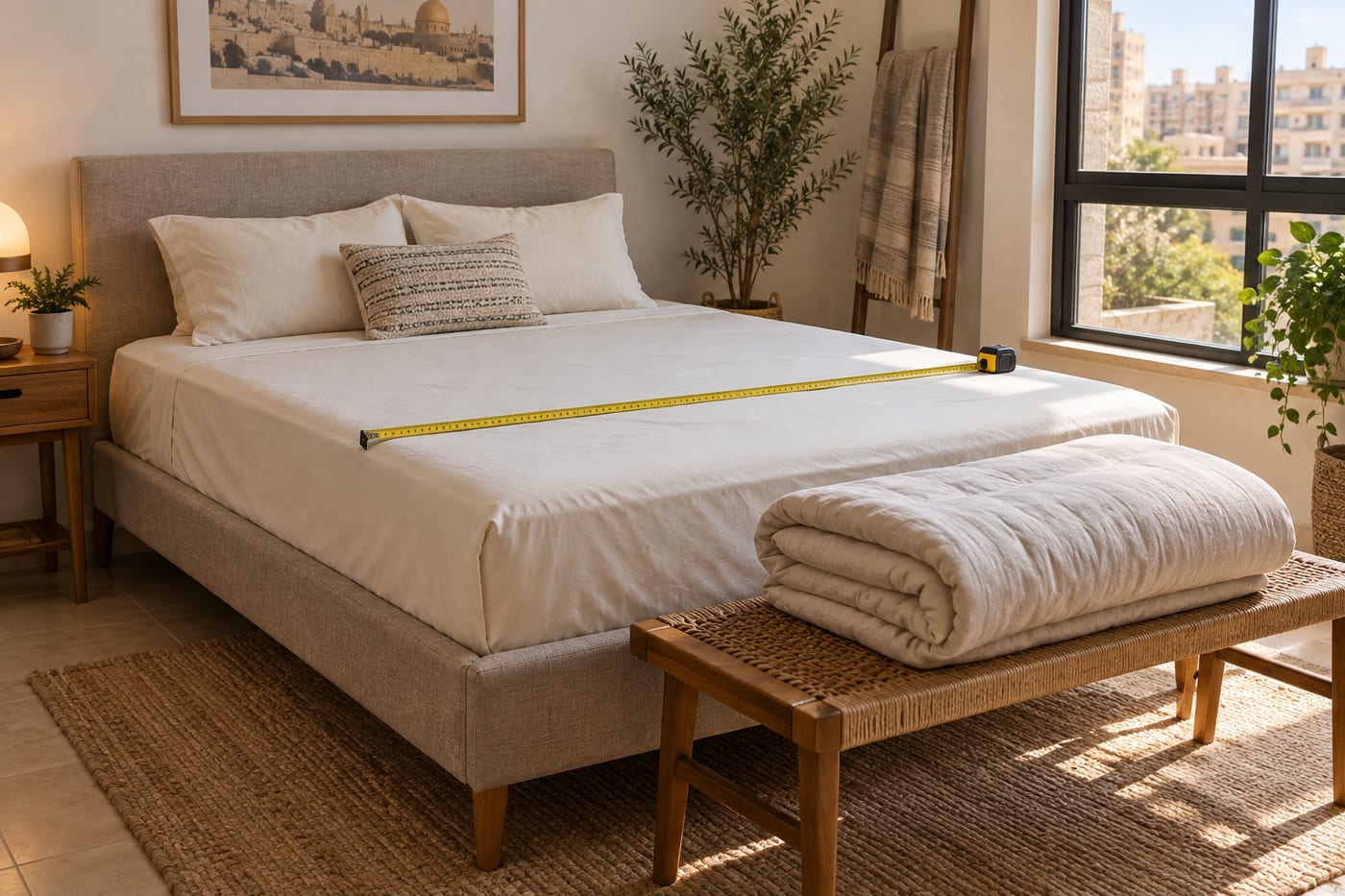
Remove bedding and measure straight across the mattress width and length. Exclude the frame, handles, headboard and outer upholstery. Compare with its label if available. This guide uses width × length in centimetres. Match named fields where another specification changes the order. Repeat an unexpected reading before ordering.
A ten-centimetre length difference is not something to conceal by folding. Excess length can leave spare fabric, while a short sheet may pull corners upward. Some products support defined ranges, but the specification must state them; stretchy is insufficient. Save measurements with the room name, especially where similar beds have different lengths. This record lets you compare actual dimensions without relying on which old sheet happened to fit.
For more information on the subject: Bedding size guide: Israeli bedding size charts by bed type.
Wide-single bedding: choose each component
| Check | Information needed | Practical decision |
|---|---|---|
| 120 × 200 120×190 | Actual width, length and height | Sheet explicitly compatible with those measurements |
| 120 × 200 120×200 | 200 cm length, not only the bed name | Specification must support this length |
| a mattress topper | Total height enclosed by the sheet | Compare with approved height range |
| Duvet | Both edges measured flat | Match its cover independently of the sheet |
| Pillows | Dimensions and quantity | Compatible cases in sufficient quantity |
| Three-piece set | Contents of the selected option | Compare items actually useful |
Height: the easily missed measurement
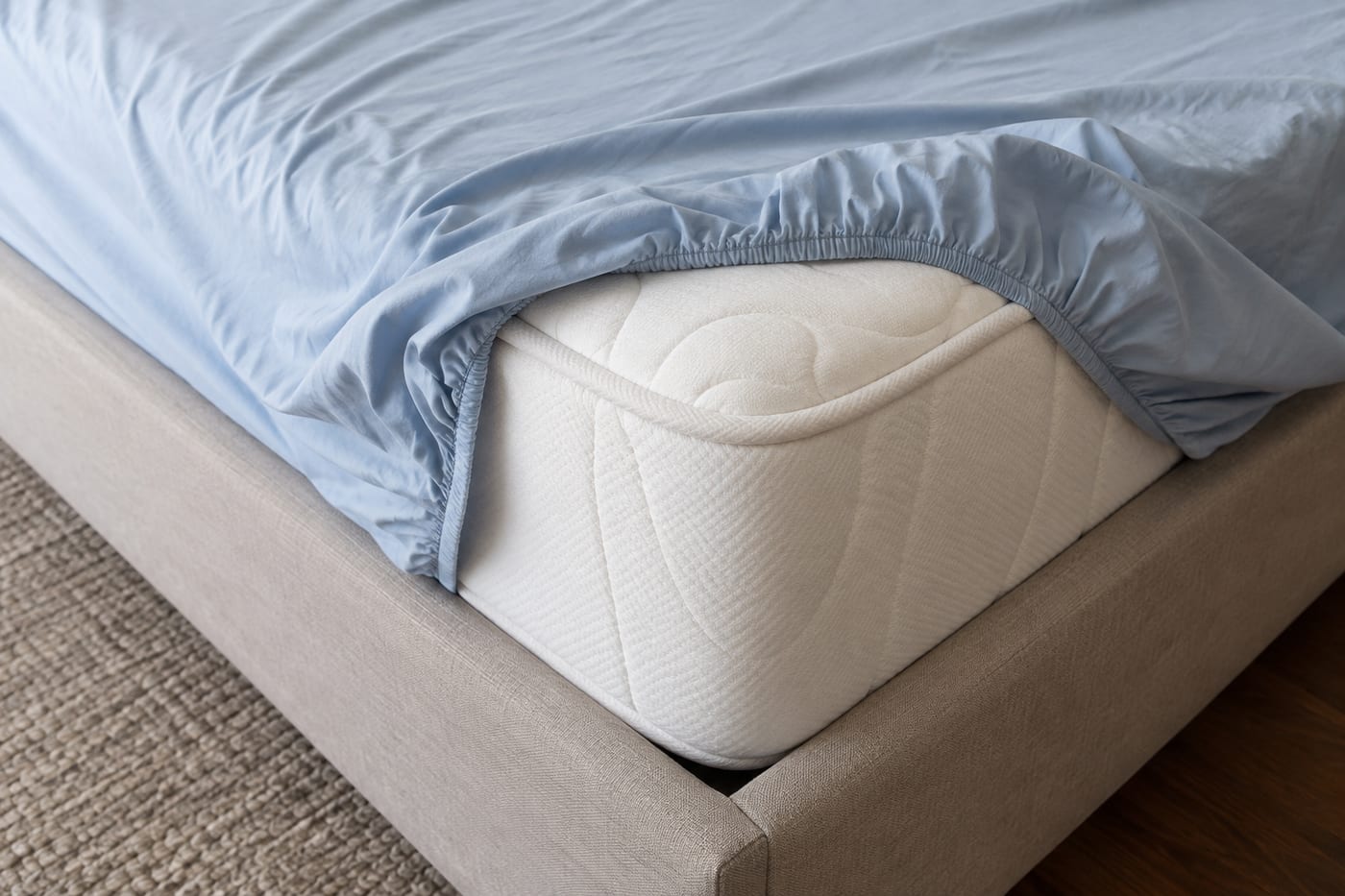
Matching width and length is only the beginning. Measure height, including a topper or other approved layer if the sheet encloses it. Exclude legs and base. A light straight object across the surface can identify the upper level without compressing upholstery. Measure the real arrangement rather than recalling an old catalogue.
Seek an explicit mattress-height limit or range. Pocket depth and fabric height are not necessarily fit height: some fabric passes around corners and beneath the mattress. Forcing a sheet into place does not approve compatibility. If corners rise, investigate dimensions before buying clips. Adjustable beds also need their manufacturer’s directions, because movement changes the grip required. Check the complete arrangement rather than one layer in isolation.
The cover size follows the duvet
Lay the duvet flat and measure both edges. Match the cover to that duvet, not to the wide-single name. Some people use a single duvet on a wider mattress; others prefer a wider one. Each arrangement needs a separate cover match. A set with a 120 cm sheet does not necessarily contain a 120 cm cover, and sheet dimensions do not describe every component.
Check what is sold as bedding. IKEA’s LÄKEVÄNDEROT package contains a cover and case without a sheet, separately dimensioned. A complete-bed photograph is not a contents list. Oversized covers can leave surplus fabric, while small covers can fold filling. Ask about the measured duvet and closure construction before buying.
Three-piece sets: what is included?
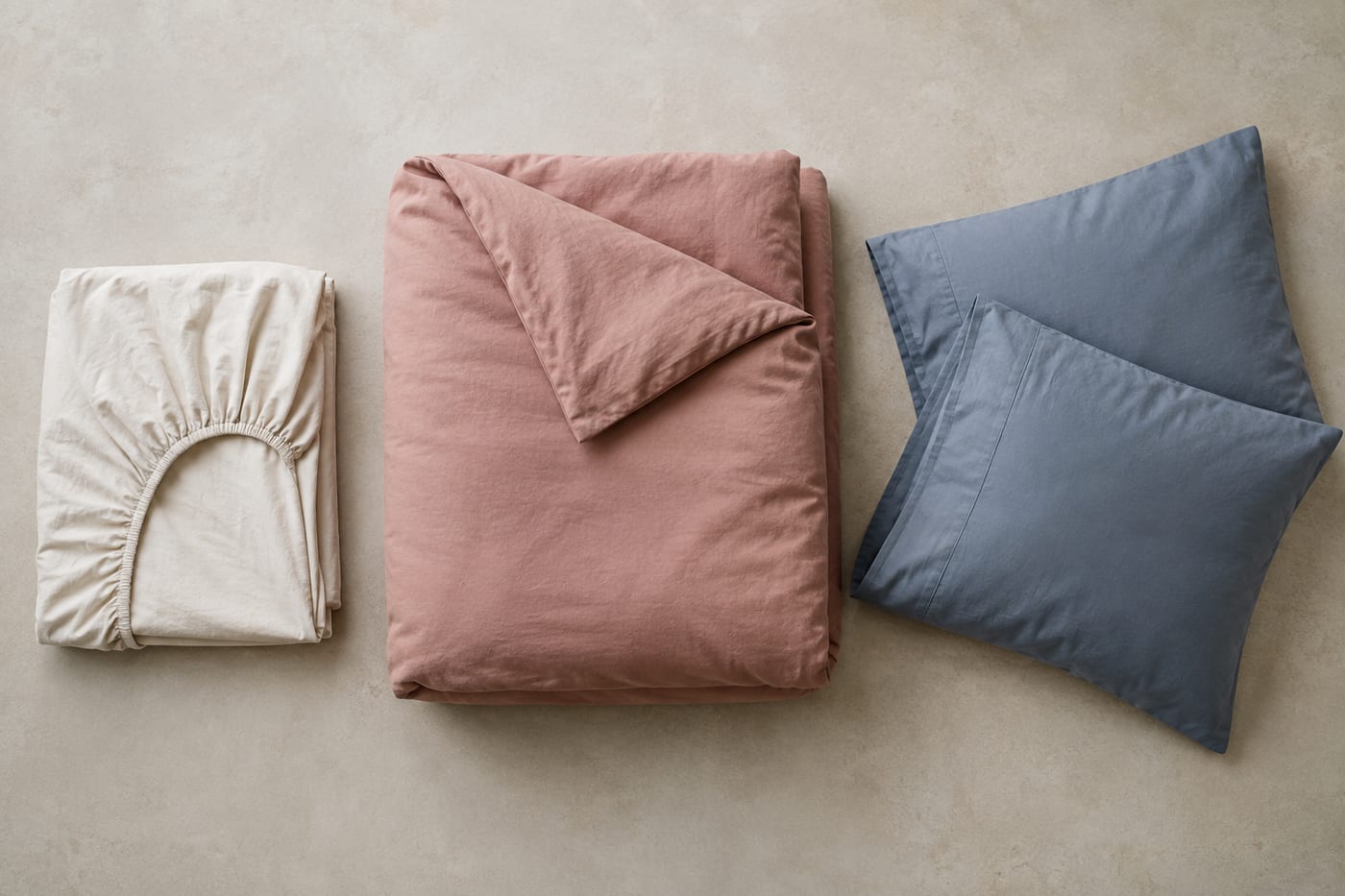
A three-piece wide-single set often means a sheet, cover and one pillowcase, but this is not a compulsory composition. Read the written contents, each size and case quantity. A duvet, pillow and protector are not necessarily included. Photography can contain styling accessories; set does not mean every necessary item is provided.
For two pillows, investigate another matching case or plan a different combination. Flat-sheet users should confirm inclusion or buy separately. Do not pay for an unsuitable cover merely to obtain the right sheet. List what you will use, what remains missing and what would stay unused. Compare useful contents rather than piece count alone, so a cheaper-looking package does not conceal additional purchases.
Fabric, construction and feel
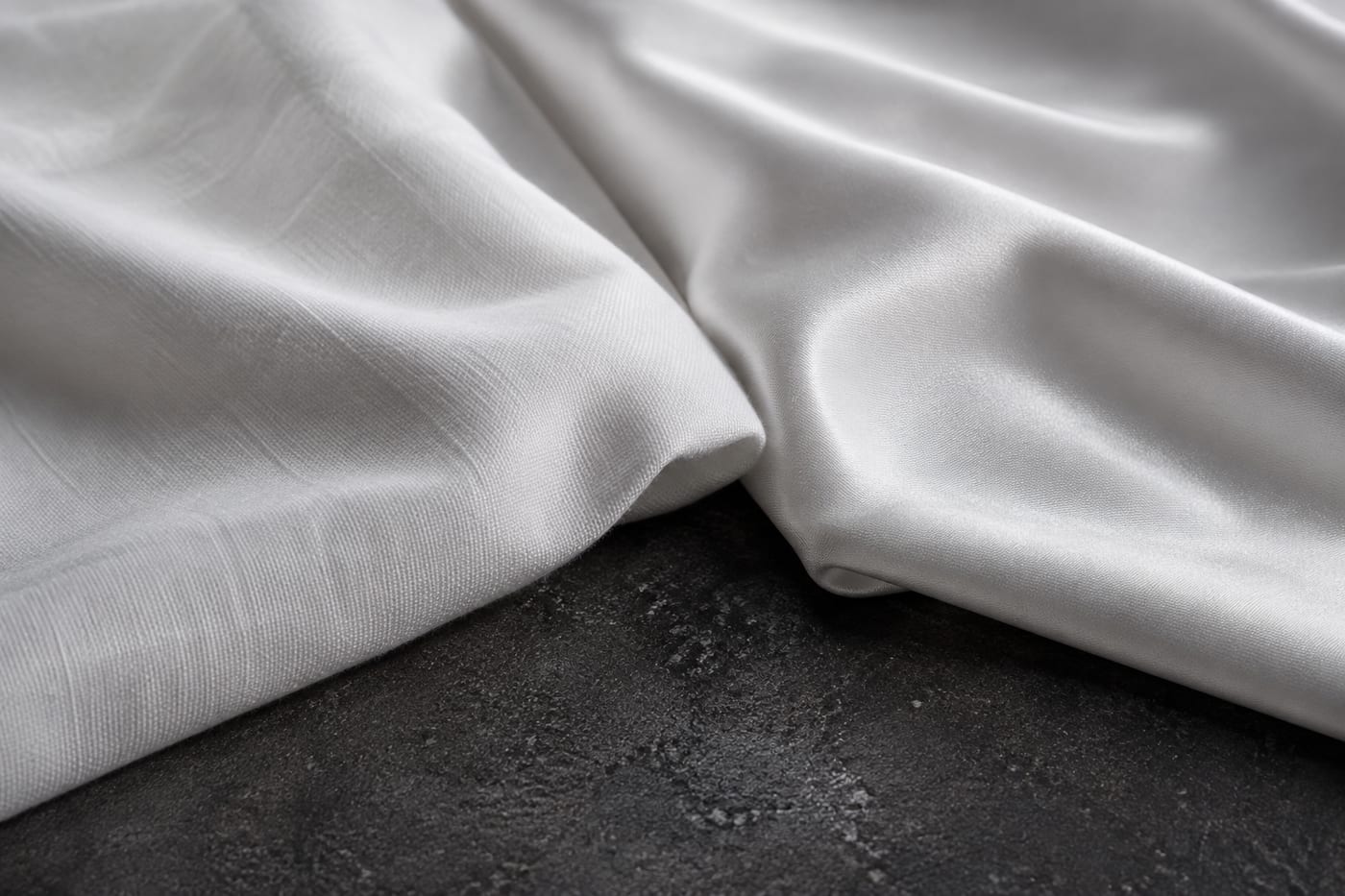
Read fibre percentages and then fabric construction. Cotton is a fibre; percale and sateen are weaves, while jersey is knitted. These are not alternative names in one category. Cotton products can feel different because of yarn, construction and finish. Microfibre wording still requires the actual composition. Feel a sample if possible rather than only packaging or trim.
Consider feasible care. Regular dryer use requires permission for that model. If you prefer folding without ironing, investigate behaviour after approved treatment rather than assuming all products of one fibre are alike. Thread count alone is not a quality score; no fabric guarantees uninterrupted sleep. A useful choice combines preferred feel, correct compatibility and manageable laundry.
Include the person using the bed
For a teenager’s bed, include its user in selecting feel and design. Offer options already matching measurements and budget, then let the person choose. This prevents an attractive pattern from hiding incompatibility or making the purchase depend only on a photograph. Ask about smoothness or texture, plain colour or pattern, and whether the current duvet remains.
Consider room use too: sitting on the bed, pets and where bedding goes during changes. These are practical factors, not proof that one fabric tolerates every situation. Retain a base colour and change a case or cover as preferences evolve. Several identical sets need not be bought in advance. A correctly sized spare component can be more helpful than another unused complete set.
Pull-out and sofa-bed arrangements
A youth bed can pull out, fold away or contain an extra mattress. Measure the sleeping configuration rather than only the closed bed. Record the guest surface separately: similar mattresses may differ in height and length. Check whether instructions require removing bedding before closing to avoid fabric caught in moving parts.
Do not combine surfaces under one sheet without fit and usage approval. Independently moving mattresses may require separate sheets according to their maker. For daily folding, plan access for sheet removal and a clean place for the duvet. A guest set need not match the main bed’s range. Each item should fit its equipment and the mechanism must operate as directed after bed-making.
A set or separate pieces?
A set is convenient when all dimensions and contents match. Separate pieces help with a specialist sheet, two pillows or a duvet incompatible with the included cover. Mix a plain sheet and patterned cover or select cases for differently sized pillows. This is a usage and design decision, not necessarily a quality compromise. Colour coordination need not mean one range or fibre.
Compare the total cost of used components and options for replacement. A model may not remain stocked for years, so investigate current alternatives for an essential spare. Equally, general stock uncertainty need not prompt accumulating sets. The separate-bedding guide supports a focused list. Replace the unsuitable piece and keep useful sound components instead of restarting the whole linen cupboard.
Check fit after washing
Read every label before initial treatment. GINETEX explains that the wash-symbol number sets a maximum temperature and additional symbols affect care. Cotton alone cannot choose the process. Follow product and appliance directions, including drying. Check return conditions where testing requires opening or washing, since policies vary.
Once fully dry, fit the sheet and inspect four corners and the centre. Look for unusual tension, large folds or elastic that will not stay put. Test the cover with its duvet too. Changes warrant a dimension-and-care discussion, not stronger pulling or higher heat. Retain labels and specifications to speak precisely with the seller. A sheet fitting before washing still needs checking afterwards.
Spares and storage
Spare quantity follows washing and drying time. Consider how long a removed set takes to become fully dry and available. If sheets soil more often than covers, another sheet may be more useful than a complete set. Two pillows create an independent case need. No fixed number suits every home; identify an actual gap before a large purchase.
Store dry pieces by bed or size, clearly distinguishing lengths. Keeping a set in a pillowcase helps if it fits without compression. Retain original composition labels and add readable external dimensions. Reassess stock after a bed change: an old sheet may serve another mattress but not automatically the new one. Simple changes rely on accessible correct components, not a crowded cupboard.
Final checks before ordering
Answer five questions: mattress size, in-use height, duvet size, pillows and required components. Compare with a complete specification and request details or a label photograph where information is missing. Do not reconstruct dimensions from photography or size names. For overseas purchases, check units: double and queen do not directly translate into an Israeli wide single.
Once fit is clear, choose feel, colour and budget. The bedding-size guide explains sheet, cover and case relationships; fabric and care guides complete the choice. Save the specification beside room measurements to simplify later component purchases. Check package quantities, closures and drying permission too. A usable set works with actual equipment even when each component carries a different number.
Mattress, duvet and pillow: three separate matches

- Mattress: width, length and height
- Duvet: width and length for its cover
- Pillow: size and case quantity
Video: measuring the actual mattress
BF Colchões gives a short demonstration of mattress measurement. The narration is Portuguese; the article explains the measurement steps in writing. Its product-size examples come from the Israeli market rather than the bed names in the video.
By BF Colchões · Video language: Portuguese
The player loads only after a click, subject to your external-content preferences. Player privacy information.
The article can be read without watching. Captions depend on the options available on YouTube; the explanation is not a transcript.
Frequently asked questions
Which sheet fits a wide single?
A sheet approved for the measured mattress width, length and height rather than the bed name.
Is its duvet cover 120×200?
Not necessarily. Cover size follows the duvet separately from the sheet.
Does 120×200 also fit120×190?
Only where the specification explicitly supports that range.
How many pieces are included?
Often a sheet, cover and one case; check the selected option’s contents.
Can a double set be used?
Only its compatible components; a wider fitted sheet is not an automatic substitute.
Does jersey fit several sizes?
Only where its model specifies a suitable range. Stretch alone does not approve fit.
Is a full set necessary?
No. Replace an incompatible component and retain sound useful pieces.
Sources and scope
Sources checked on 12 October 2026. Manufacturer sources describe their own products and instructions; they do not establish one universal rule for all bedding and mattresses.
- Vardinon: sheets and sets by size
120×200 appears in wide-single categories separately from cover sizes; a market example rather than a standard.
- American Sleep: wide-single examples 120×190
Bed examples showing a different length; no price, stock or standard claim.
- IKEA: LÄKEVÄNDEROT cover and case
Example of a 150×200 cover and 50×70 case package without a sheet; not a purchase endorsement.
- GINETEX: textile care symbols
Explains care limits; the actual item’s label governs treatment.
By MyViro.
The content explains textile characteristics and is not the result of a product test in a laboratory. How we prepare our guides