Laundry symbols explained: read the label before choosing a cycle
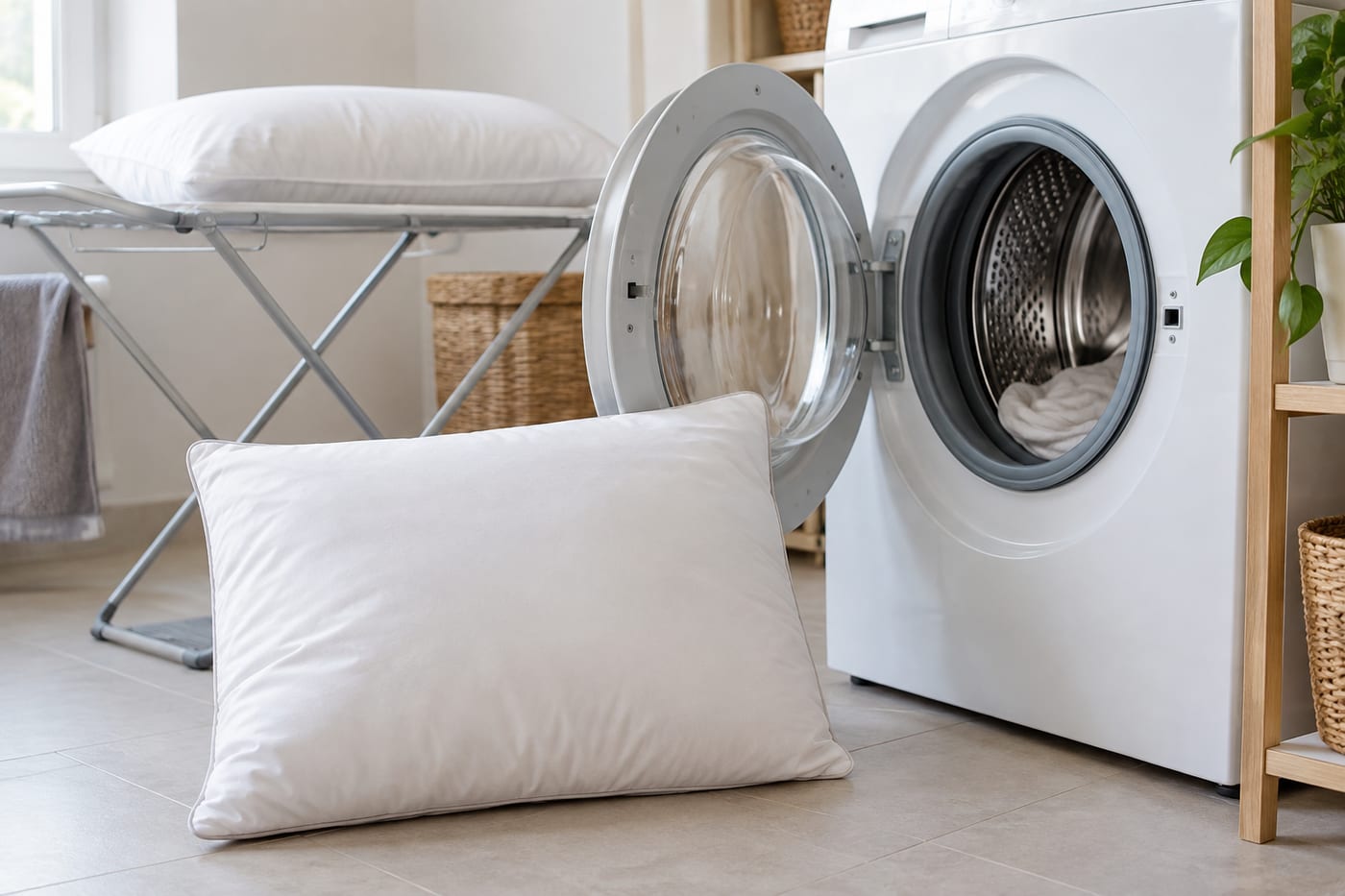
A small label at the edge of a sheet can settle a surprisingly large question at the washing machine. Start with the item rather than the programme dial: is washing allowed, what is the temperature limit, and does it need gentle handling? Then check bleaching, drying and ironing separately. Each decision can affect how the bedding looks and fits after treatment.
This guide brings the common laundry-symbol families together in a readable reference chart and shows how to use them at home. The descriptions help you identify the mark on your own product. They do not replace the brand’s instructions or create one washing method for every sheet, duvet cover, pillow or duvet. Two items that look similar may have different restrictions.
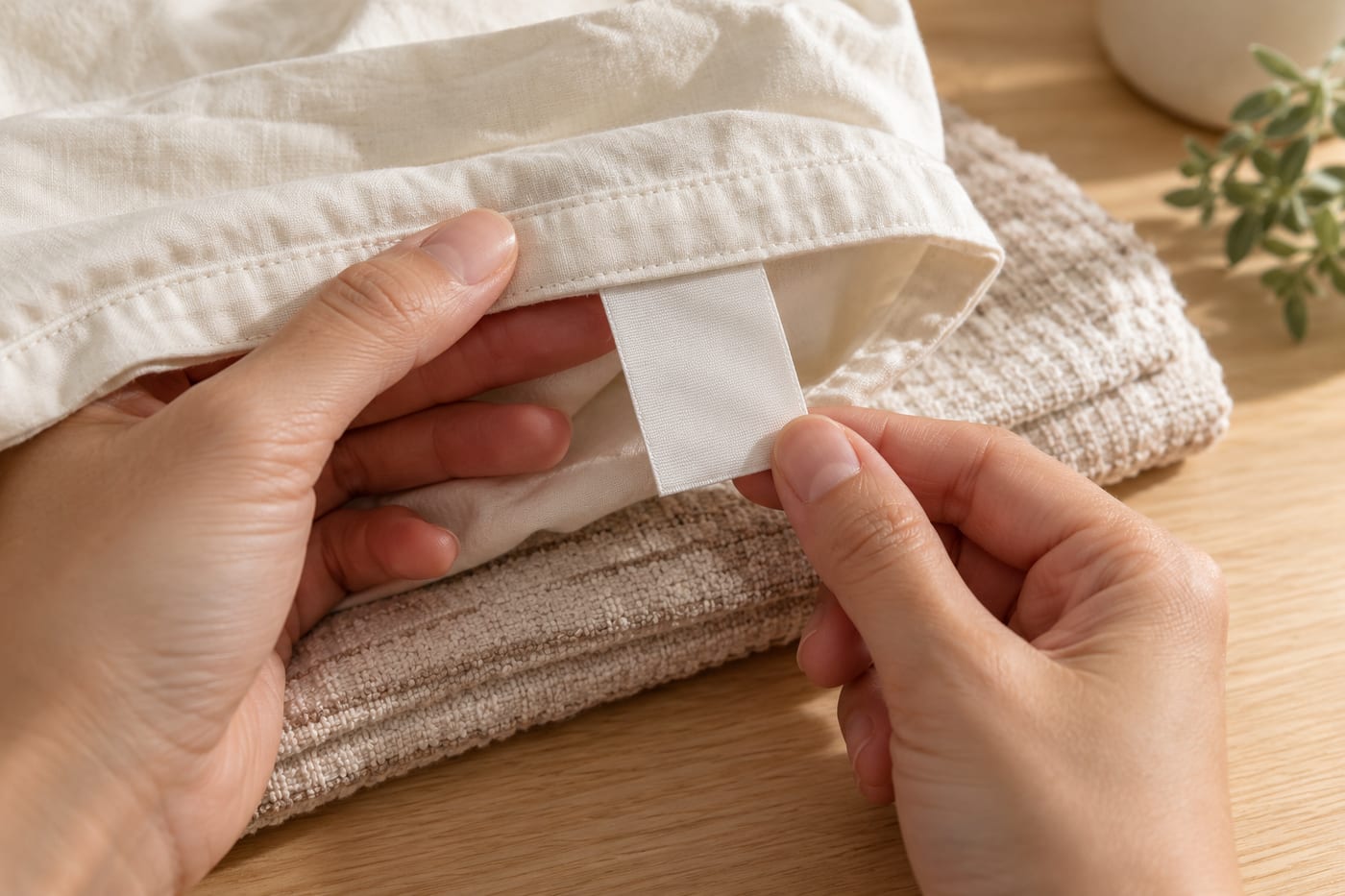
Before the first wash, photograph the label while it is clear. Keep the model name or a link to the product specification too. If the label later folds into a seam or becomes difficult to read, you will have a way to find the instructions for that particular item rather than rely on memory.
The five care-symbol families and what each one controls
The five main shapes refer to separate stages of textile care: a tub for washing, a triangle for bleaching, a square for drying, an iron for ironing and a circle for professional treatment. This is a useful reading order: decide which treatments are permitted before choosing an appliance setting. A cross rules out the treatment shown by that particular mark; it does not automatically rule out all the other options.
Check for written instructions alongside the symbols. “Wash separately”, “no fabric conditioner” or “close the zip” adds information that a small pictogram may not convey. On a product with several components, such as a mattress protector and a removable cover, establish which label belongs to which part before separating or washing anything.
Do not confuse the care label with the fibre-content label. “100% cotton” describes what the product is made from, but does not by itself authorise high heat or bleach. Colour, finishes, prints and additional components make it sensible to read the finished product’s instructions rather than choose a treatment from the fibre name alone.
For more information on the subject: How to wash bedding and care for the fabric.
Laundry-symbol chart: what to look for and what to check
| What appears on the label | Meaning | Practical check |
|---|---|---|
| Tub with a number | Maximum wash temperature in Celsius | Do not exceed it; read bars and text too |
| One bar beneath a tub | Milder process | Match the cycle using the appliance manual |
| Two bars beneath a tub | Very mild process | Check that cycle’s load limit too |
| Hand inside a tub | Hand wash according to label details | Do not assume one temperature for all hand marks |
| Crossed tub | Do not wash | Includes washing by hand |
| Empty triangle | Bleaching permitted | Follow the treatment’s instructions and dose |
| Triangle with two diagonal lines | Oxygen-based, non-chlorine bleach only | Check the type of bleaching agent |
| Crossed triangle | Do not bleach | Choose a bleach-free treatment |
| Square containing a one-dot circle | Lower-heat tumble drying | Match the heat setting using the manual |
| Square containing a two-dot circle | Normal tumble-drying process | Still read the item and appliance instructions |
| Crossed square containing a circle | Do not tumble dry | Check the permitted natural-drying method |
| Square with a vertical line | Line drying | Check added shade or drip-drying information |
| Square with a horizontal line | Dry flat | Prepare a suitable surface |
| Diagonal line in a natural-drying mark | Dry in shade | Read alongside the line- or flat-drying instruction |
| Iron with one dot | Low heat level | Check steam restrictions too |
| Iron with two dots | Medium heat level | Match the label and iron instructions |
| Iron with three dots | High heat level | Does not override additional instructions |
| Crossed iron | Do not iron | Do not use ironing to remove creases |
| Circle with P or F | Appropriate professional dry-cleaning process | Show the complete mark to the cleaner |
| Circle with W | Professional wet cleaning | Not a domestic washing-machine programme |
| Crossed circle | Do not dry clean | Check other permitted treatments separately |
The number inside the tub is a maximum washing temperature
The number inside the tub is a temperature limit in degrees Celsius. If it says 40, do not increase it to 60 to tackle a stain. The number is not a measure of fabric quality or a requirement to use the hottest permitted wash every time. It also does not specify agitation, cycle length or spin speed on its own. Read those requirements together with the remaining mark and any written instructions.
Suppose one sheet allows washing up to 60 degrees and another duvet cover only up to 40. If they share a load, the programme must not exceed the cover’s limit. Check colours, treatment requirements and any instruction to wash separately as well. Being able to fit both items behind the machine door does not mean they belong in the same programme.
If unusual soiling or a health situation at home calls for a particular treatment, do not read the label as a promise of disinfection. It describes what the product can tolerate. Obtain guidance appropriate to the situation and check whether these items can undergo that treatment or whether a different suitable product is needed.
One bar and two bars beneath the washing symbol
A bar beneath the tub calls for a milder mechanical process; two bars call for a very mild process. A 40-degree tub with a bar is therefore different from a 40-degree tub without one. The temperature ceiling is the same, but the handling requirement differs. Match the programme to that requirement instead of only turning down the temperature.
Programme names vary between machines. “Delicates”, “synthetics” and “wool” do not promise an identical process on every model. Open the appliance instructions and check which items each programme is intended for, its permitted load and the settings you can adjust. A suitable choice comes from reading the product label together with the appliance manual.
Load size matters too. A machine with a large capacity on its normal programme may allow a smaller load on a gentle one. If the manual limits that load, do not bypass the limit simply because the bedding fits. For a large duvet cover, check separately whether it needs its own cycle to remain within the model’s instructions.
Hand-wash instructions and the do-not-wash symbol
A hand inside the tub points to hand washing. Read the product’s details about temperature and how water may be removed. Current GINETEX guidance distinguishes hand washing at ambient temperature from hand washing up to 40 degrees. Do not therefore assume that every hand symbol means water at 40 degrees, especially where a number or written instruction adds more detail.
A machine programme called “hand wash” still needs a suitability check. The name alone does not authorise putting every hand-wash-labelled item in the appliance. If the bedding brand limits treatment to washing by hand, or if the instruction is unclear, ask the brand before proceeding. Check restrictions on soaking, water extraction and drying too.
A crossed tub means the item must not be washed, including in a sink. That does not authorise every form of dry cleaning: check the professional-care circle and written instructions separately. For a costly or filled item, a photograph of the complete label will help a professional determine whether and how it can be treated.
The triangle: bleaching and chlorine restrictions
An empty triangle permits bleaching; a triangle with two diagonal lines limits it to oxygen-based, non-chlorine bleach; a crossed triangle prohibits bleaching. This is a separate check from wash temperature. A white duvet cover does not automatically qualify for chlorine bleach because of its colour, and a coloured sheet is not automatically suitable for a stain remover because of a claim on the bottle.
Before using a treatment, read its own label too. Check its intended use, dose, fabric restrictions and any required steps afterwards. “Chlorine-free” does not mean there is no bleaching ingredient. Equally, a symbol that permits bleaching does not tell you to add bleach to every wash. Choose a treatment when it is needed and within the instructions.
For a new bedding set, inspect each component’s instructions. A decorative pillowcase and a plain cover may belong to the same set without allowing the same treatment. If a stain remains after washing, stop and revisit the instructions instead of mixing products or repeatedly trying something stronger. Do not mix cleaning products without explicit instructions from their manufacturer.
The tumble-dryer symbol: a circle inside a square
A square containing a circle refers to tumble drying. One dot calls for a lower-heat process and two dots for a normal process within the symbol system described here. When the mark is crossed out, do not tumble dry. Identify the enclosing shape carefully: a circle without a square concerns professional care, so it is not permission to use a domestic dryer.
Permission to wash is not permission to tumble dry, and permission to tumble dry does not mean choosing the hottest programme. Check your appliance manual for the heat level and cycle that match the bedding’s mark. Do not choose solely from a name such as “cupboard dry”, which also describes a dryness target and does not replace a suitability check.
Even where tumble drying is permitted, a sheet and cover may need a different approach from a pillow or filled duvet. Each has its own volume, construction and instructions. If a cover wraps around other items, follow the model’s loading and dryness-checking guidance rather than immediately compensating with more heat.
Natural drying: line drying, drying flat and shade
A square with lines, without the tumble-dryer circle, refers to natural drying. In the system described here, a vertical line indicates line drying and a horizontal line indicates drying flat. Double lines add drip-drying information, while a diagonal line adds a shade requirement. A square therefore does not always mean “hang it up”: read what appears inside it.
Before washing, consider where you can dry the item according to its instructions. A large cover that needs drying flat requires a suitable surface, while a sheet that can hang needs enough space to spread it out. If your home does not offer that space, consider it when buying or selecting a laundry service, rather than ignoring the label after the item is already wet.
Where shade is specified, do not replace that instruction with an assumption that strong sunlight is always better. Check restrictions on water extraction and reshaping too. Return bedding to the bed or cupboard only once it has reached the dryness required for that product; a dry-looking outer surface may not be enough for layers or filling.
Dots on an iron: do not choose heat from fibre content alone
An iron mark tells you whether ironing is permitted. One, two and three dots represent increasing heat levels; a crossed iron prohibits ironing. Read any steam instruction separately. Do not assume that a cotton sheet automatically allows the highest setting, particularly where prints, embroidery, coatings or additional components are involved.
Older and newer online charts may assign different numeric temperatures to the dots. ISO currently lists ISO 3758:2023, while older sources still show values from earlier editions. This guide describes the heat levels rather than applying one numerical ceiling to every label in circulation. Use the product and iron instructions, and ask for clarification if they conflict.
Before ironing a new set, read each component’s instructions and prepare an appropriate working surface. If the manufacturer recommends ironing on the reverse or using a pressing cloth, include that in the treatment. If you prefer bedding without ironing, choose a product whose appearance suits you after permitted washing and drying rather than applying heat the label does not allow.
Circles and letters: professional care rather than a home programme
A circle with letters such as P or F refers to professional cleaning and appropriate processes or agents. W relates to professional wet cleaning. These marks help the cleaner; they are not instructions to buy a solvent or select a domestic washing-machine programme. Bars beneath the circle add treatment restrictions, so show the complete mark rather than reporting only its letter.
A crossed circle prohibits dry cleaning, while a restriction on professional wet cleaning has its own mark. Do not infer that forbidding one treatment permits every other one. Ask the service whether it can follow all the instructions together, and describe the stain and any treatment already attempted. That keeps the decision focused on the item rather than a general rule of thumb.
For a pillow, duvet or mattress protector, read the label before removing a cover or opening a zip. A removable cover is not necessarily washable, and its instructions are not necessarily instructions for the core. Photographs of the complete product and any separate component labels will help explain exactly what you want cleaned.
Use the reference chart while standing at the machine
For everyday use, read the label in three passes. First identify prohibited treatments, then note the heat limit and gentle-handling requirement, and finally plan the drying. For example, a cover permitting a mild wash up to 40 degrees but prohibiting bleach and tumble drying requires three decisions together: a suitable cycle, a bleach-free treatment and an allowed drying method.
A picture or chart on your phone helps identify marks, but keep the instruction attached to the individual item in your notes. Give the photo a useful name, such as “blue duvet cover — bedroom”, and photograph the model information too. You do not need to memorise every regional system to wash one set: you need to understand its label and your own machine’s settings.
If the label is missing, do not choose heat from colour or feel alone. Find the model on the order or packaging and contact the brand. Different markets, imported products and older labels may use different presentations; automatic image recognition is also something to check rather than a replacement for verification. When the answer remains unclear, pause treatment and clarify it before risking bedding that already fits your bed well.
Before pressing start: a bedding-care check
Start with the correct item: a sheet, duvet cover, pillowcase and filling are not interchangeable. Check separate labels, sorting and closure instructions, and the permitted load for the selected programme. Make sure any stain treatment also respects bleaching restrictions. Do not let a programme title or the set’s white colour make the decision in place of its label.
Prepare for what follows the wash. If tumble drying is prohibited, arrange an allowed drying space beforehand. If ironing is prohibited, do not try to remove creases with heat anyway. Where two components need different treatment, separate them; buying a set together does not require every piece to share a cycle.
The reference chart is designed to be useful repeatedly, particularly on a small screen: identify the mark’s shape, read its meaning and check the action against the product instructions. Continue with MyViro’s guides to washing, drying bedding, white bedding and washing pillows where relevant. The aim is a routine based on the items you actually own, making each wash a clearer and simpler decision.
From care label to action

- Identify the care family
- Read limits and qualifiers
- Match product and program
Video: an introduction to laundry care symbols
HowStuffWorks introduces care-symbol families. The video predates some standards updates and serves as a visual introduction; use the product label and the article for specific limits.
By HowStuffWorks · Video language: English
The player loads only after a click, subject to your external-content preferences. Player privacy information.
The article can be read without watching. Captions depend on the options available on YouTube; the explanation is not a transcript.
Frequently asked questions
What does a 40-degree washing symbol mean?
40 is the maximum washing temperature in Celsius. Read any bars beneath the tub and written instructions as well; the number alone does not specify the cycle’s mechanical intensity.
What is the difference between one and two bars beneath a tub?
One bar indicates a milder process and two a very mild process. Choose the programme and load using the product label together with the appliance manual.
Which symbol means do not tumble dry?
A crossed square containing a circle. A circle without a square refers to professional care and is not the tumble-dryer symbol.
Does a crossed triangle prohibit only chlorine bleach?
No. It prohibits bleaching, including oxygen-based bleach. A triangle with two diagonal lines is the mark that permits oxygen-based, non-chlorine bleaching.
Can every hand-wash-labelled item use a machine’s hand-wash programme?
Do not assume so from the programme name. Check the product and appliance instructions; ask the brand if treatment is limited to washing by hand or remains unclear.
What does W inside a circle mean?
Professional wet cleaning. It informs the cleaning service and is not permission to select a normal water-based cycle in a domestic machine.
What if the care label is missing?
Find the model on the order or packaging and check the brand’s instructions. Colour, feel and fibre content alone are not enough to establish suitable treatment for the item.
Are laundry symbols identical worldwide?
Different regional systems and editions exist. This guide focuses on common symbol families; for an imported item or an unfamiliar mark, check the manufacturer’s instructions for that product and market.
Sources and scope
Sources checked on 10 October 2026. Manufacturer sources describe their own products and instructions; they do not establish one care rule for all bedding and mattresses.
- GINETEX: current care-symbol guidance
Current families and variants under ISO 3758:2023, used to verify interpretation rather than reproduce symbol artwork.
- ISO: ISO 3758:2023 edition record
Public edition record: the fourth edition was published in December 2023 and replaces the 2012 edition.
- GINETEX: principles of care and bleaching
Explanatory booklet containing older charts too; legacy heat values are not automatically applied to newer labels.
- Bosch Israel: washing tub, bars and temperature
Appliance-manufacturer explanations of washing marks. The page’s reference to the 2012 edition is legacy information rather than the current edition listed by ISO.
- Bosch Israel: drying-symbol guidance
Appliance-manufacturer guidance distinguishing tumble drying from natural drying; check the actual model manual for its settings.
- Miele: care symbols and professional treatment
Appliance-manufacturer explanations of professional cleaning; the page also contains legacy information and brand-specific programmes that do not apply to every machine.
- Government of Canada: informational care-symbol guide
Used to illustrate regional differences only; the page states that the relevant national standard was withdrawn in 2017.
By MyViro.
The content explains textile characteristics and is not the result of a product test in a laboratory. How we prepare our guides