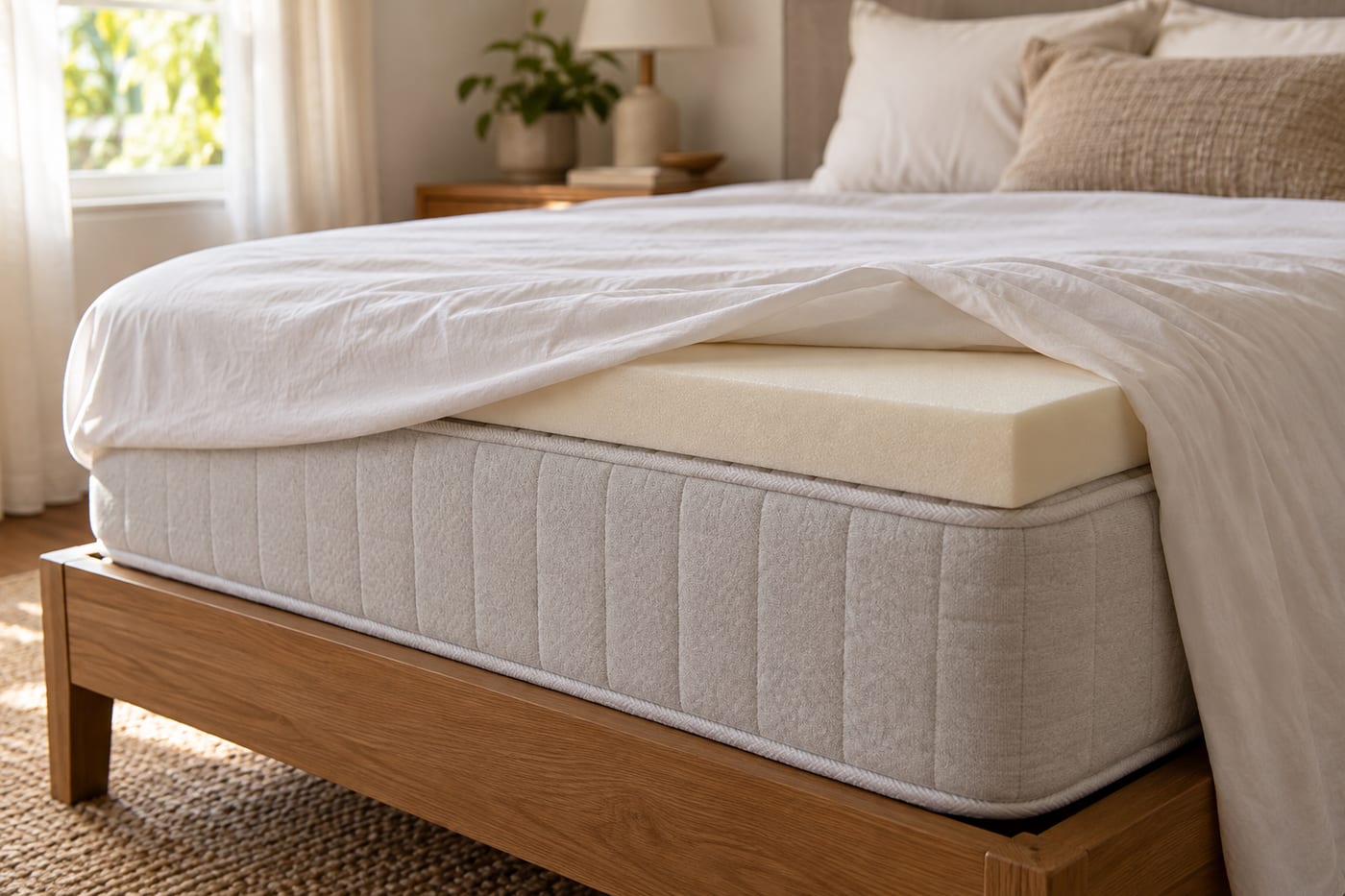
What is a mattress topper, and why add one?
A mattress topper is a separate comfort layer placed on an existing mattress. Depending on its material, thickness and the mattress beneath it, it can change the surface feel and how closely the bed cushions you. A topper does more than cover the bed, but it does not replace the complete support structure of a new mattress. Start by deciding what you want to change rather than looking for the thickest available product.
One useful example is a mattress in good condition whose initial surface feel is firmer than you enjoy. An additional comfort layer may be worth trying in that situation. If your concern is bed height, a slipping sheet or a drink spilling onto the mattress, consider the relevant solutions separately. One extra layer cannot address every problem, and some beds do not need a topper at all.
Topper, protector and cover: three different jobs
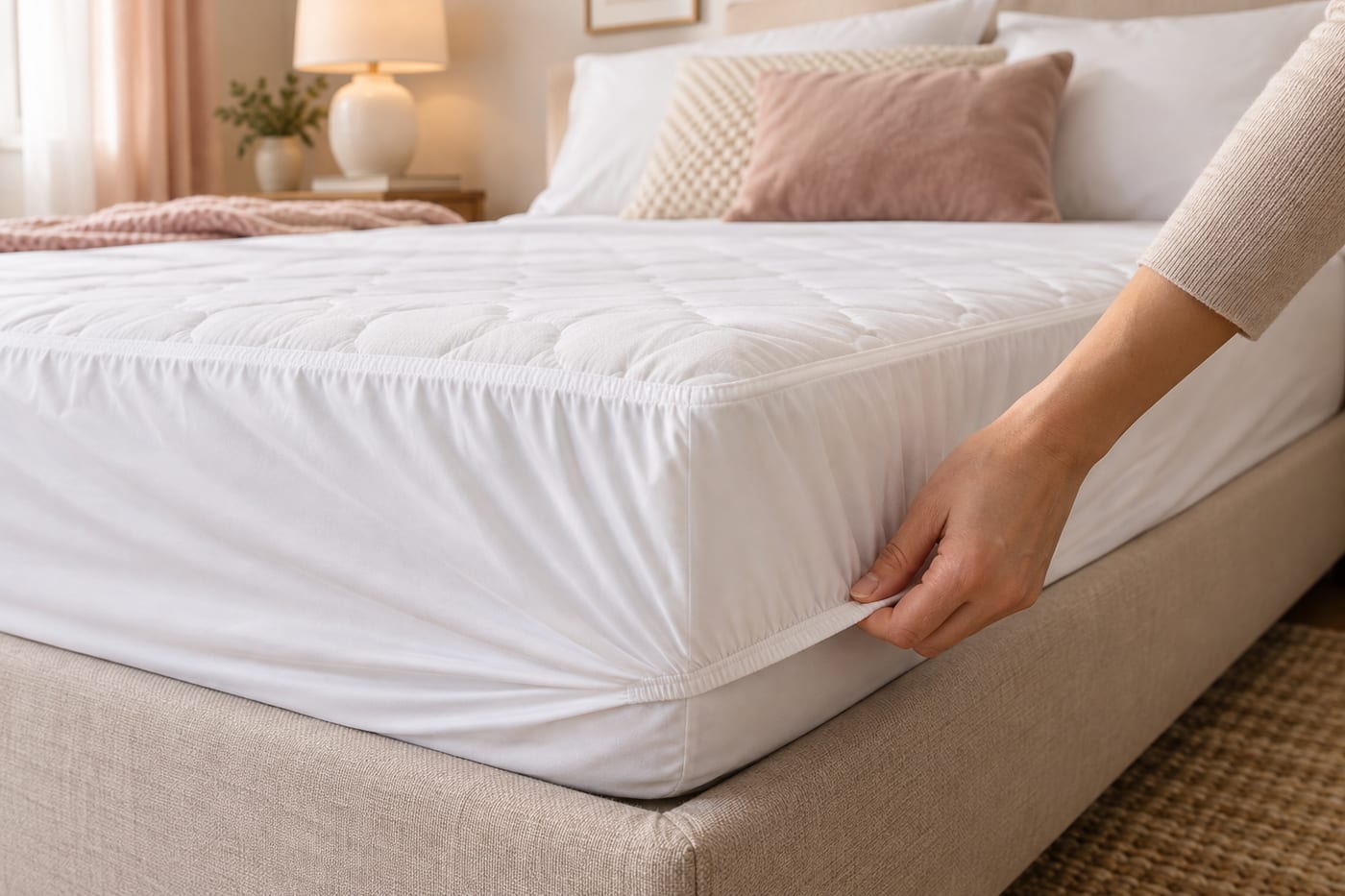
Choose a topper mainly to change comfort. Choose a protector mainly to provide a removable layer between the bedding and the mattress. If you need liquid protection, look for an explicitly waterproof product and appropriate care instructions; thick or quilted fabric is not automatically waterproof. A cover may mean the mattress’s original outer fabric, a removable accessory or an encasement that surrounds every side.
Retailers do not always use these names consistently. One product called a topper may contain a substantial foam layer, while another may be a thin filled pad. Read the material content, thickness, attachment method and protection claims instead of deciding from the name alone. Our mattress protector guide explains what to check when keeping the mattress clean is your main goal.
For more information on the subject: Mattress Protectors: Types, Materials and How to Choose.
Mattress topper, protector and cover: comparison table
| Item | Main purpose | What to check |
|---|---|---|
| a mattress topper | Change the comfort feel | Material, thickness, dimensions and attachment |
| Mattress protector | A separate protective layer | Required waterproofing, depth and care instructions |
| Padded protector | A lighter cushioning layer, depending on the model | Height, filling and any waterproof barrier |
| Original cover | The outer fabric that forms part of the mattress | Whether removal and washing are permitted |
| Full encasement | Surround the mattress for a specified purpose | Size, zipper and stated protective function |
When might a topper suit a firm mattress?
If your mattress is level, undamaged and resting on a suitable base, but you dislike its sleeping surface, a topper is one option for changing the feel. Try it in your usual sleeping positions, with a pillow and clothing similar to those you use at home. Pressing the material with your hand gives a limited sense of its response, but does not reproduce a person lying on the bed for an extended period.
Think about practical changes: whether turning is easy, whether you enjoy a close cushioning feel and whether getting up from the edge remains comfortable. The softest available product is not necessarily the one you will prefer. Check trial and return conditions before opening the packaging, because policies for bedding that has been used for sleep vary.
A sagging mattress: what a topper cannot repair
A permanent depression, damaged spring or unsuitable bed base needs its own assessment. A new layer on top cannot repair the structure underneath and may follow the same dip. Saatva also explains that a topper cannot rescue a worn mattress that is sagging. Before ordering an accessory, remove the bedding and inspect the mattress surface and its support according to the manufacturer’s instructions.
Photograph the condition without putting weight on the mattress and keep the model and warranty information. If the base needs checking, avoid dismantling or reinforcing parts by guesswork. A change in appearance or feel does not identify the responsible layer by itself. When there is substantial wear, compare the cost of a topper with the cost of the actual remedy so that an accessory does not consume the budget without solving the problem.
Memory foam, latex or soft filling: comparing materials
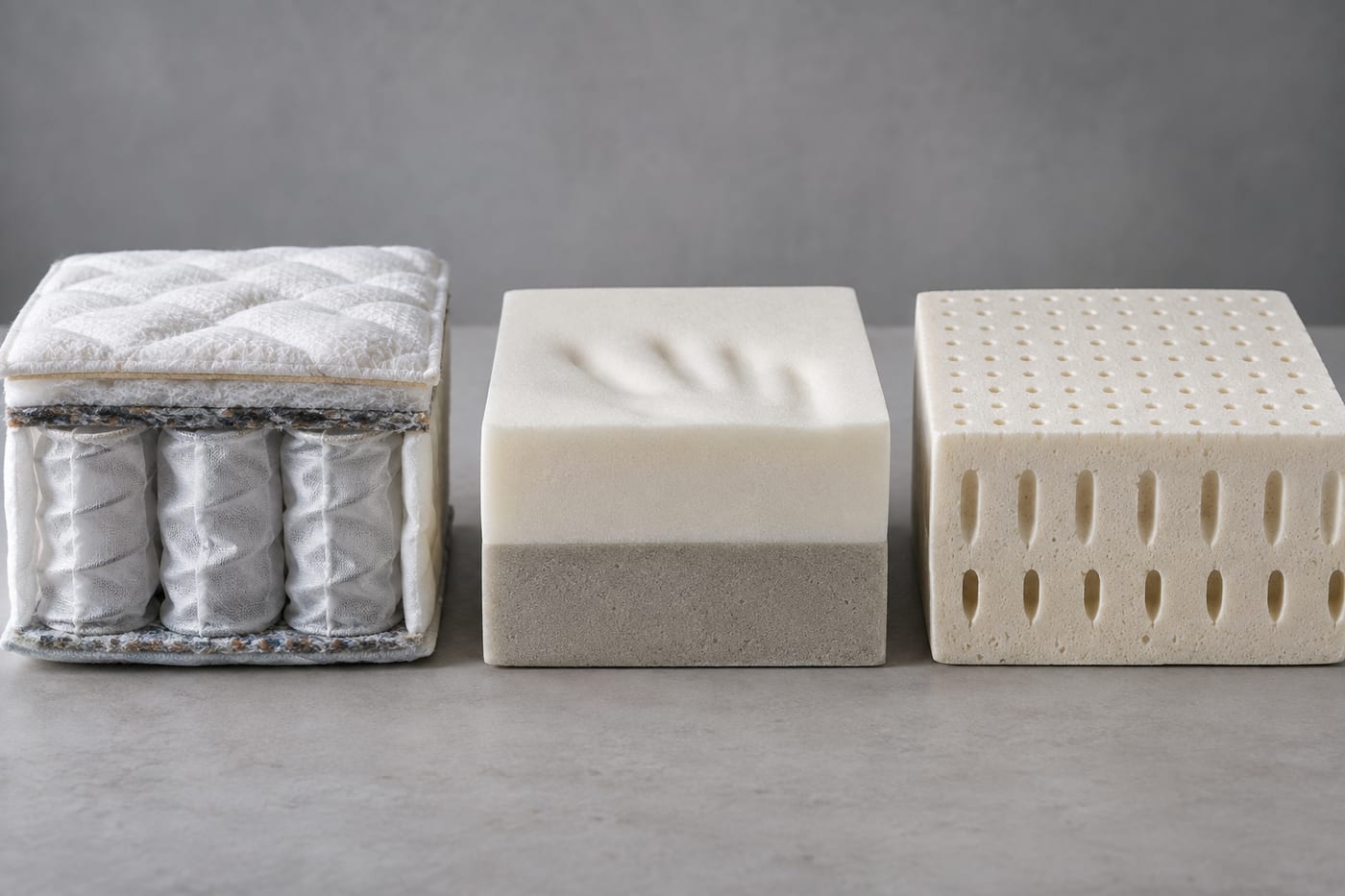
A memory foam topper may offer a close cushioning feel and slower recovery, while a latex topper may feel more springy and responsive. These are broad descriptions rather than promises that every product using the same material feels identical. Density, construction, finishing and thickness influence the finished product. A topper filled with fiber, feathers or wool differs from a continuous foam layer, so check how its filling should be maintained.
Look for specifications for the actual product, including blends and internal layers. Choosing does not have to become a contest between natural and synthetic materials: choose a feel you enjoy and a care routine you can manage. Our mattress type comparison explains common underlying materials, but instructions for a complete mattress do not automatically apply to a separately sold topper.
Which thickness should you choose?
Thickness is useful information, but it is not a quality score. A thicker layer may change the surface feel more noticeably while also raising the bed and increasing the sheet depth you need. There is no single thickness that suits every mattress and person. Start with the change you want rather than a large number in the product name.
Check how the thickness is described: the height of a new unloaded product does not fully describe how it feels when you lie on it. Two equally tall toppers can respond differently to weight. If your bed is already high, consider getting in and out and reaching a bedside table. Measure the whole setup beforehand rather than discovering that a comfortable new layer does not suit the bedroom layout or your existing sheets.
Topper dimensions and fitted sheet depth
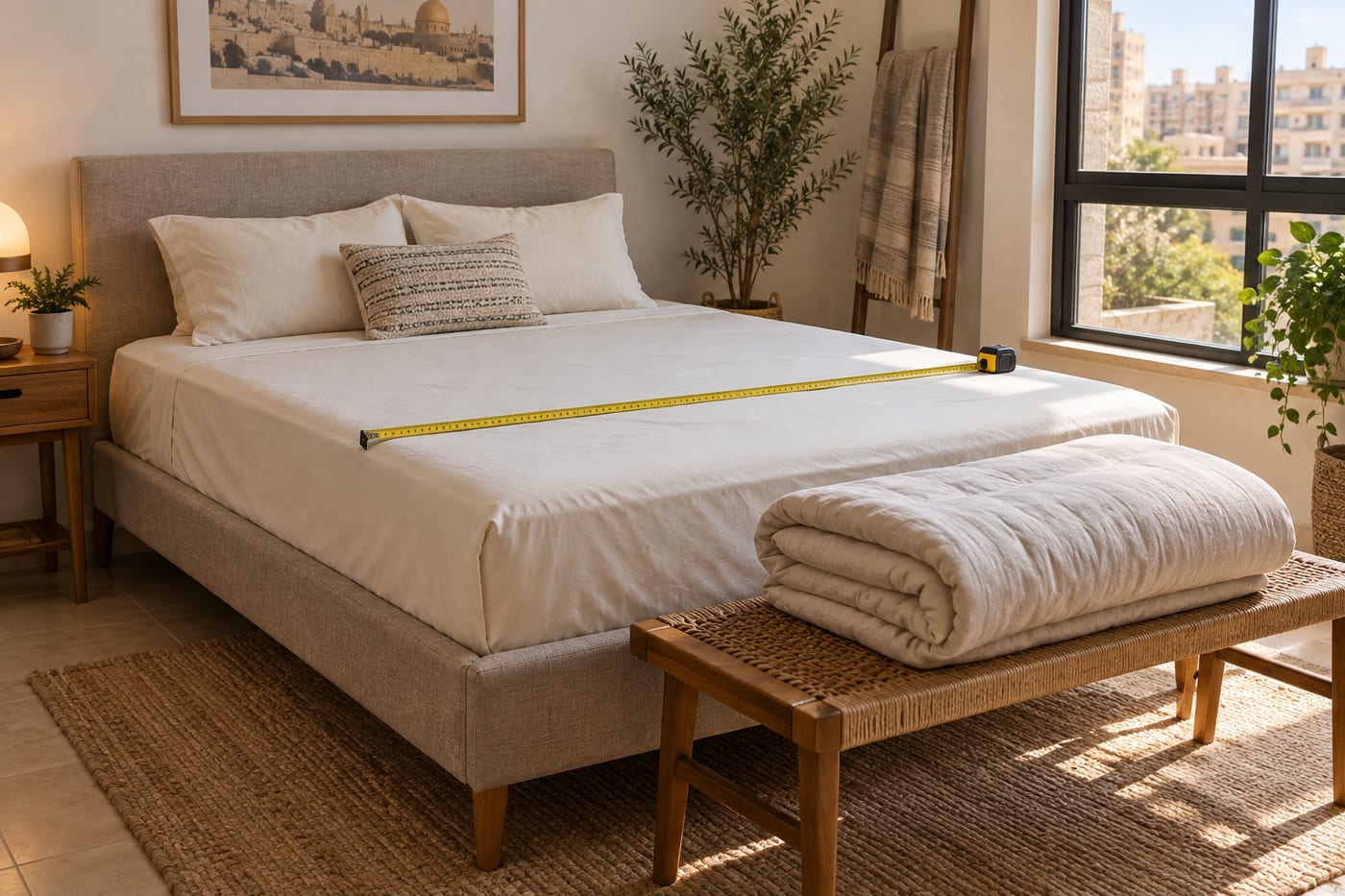
A topper should match the actual width and length of the mattress. Names such as double and king vary between markets, so they cannot replace measurements. Compare both products in centimeters and check that the topper neither extends beyond an edge nor leaves part of the surface uncovered. For a bed with two separate mattresses, consider independent movement and whether the manufacturer permits a shared comfort layer.
Next, measure the combined height. As an illustration only, a 28 cm mattress plus a 5 cm topper makes a 33 cm stack before other additions. This is not a recommended topper thickness. Choose a sheet that fits the height range its manufacturer specifies. Our bedding size guide and size chart explain the measurements and distinguish mattress dimensions from the dimensions of other bedding pieces.
Layer order: where does the protector go?
A common adult-bed arrangement places the topper on the mattress, a suitable protector over the topper and the sheet over the protector. That allows the protector to shield the comfort layer as well. However, follow the instructions for all three products: a full mattress encasement may belong elsewhere, and a particular product may require its original cover or a specific attachment method.
Check that the protector does not pull the topper so tightly that it changes the sleeping surface. Fit each layer smoothly without folds or forceful stretching. If the feel changes after adding a protector, check its fit before blaming the topper. Additional protective layers should have a clear purpose; each one changes the setup, the fit of the bedding and the amount of laundry.
Feeling too warm? Assess the whole bed
A cool-to-the-touch description may refer to the initial sensation rather than a full night of use. Assess cooling claims against the particular product and the test behind them. There is no basis for assuming that every gel, latex or memory foam topper will solve overheating. The duvet, sheet, protector, sleepwear and room all contribute to how the bed feels.
When trying a new topper, keep the other conditions as consistent as you reasonably can so that you can identify the change. Notice moisture, the cushioning feel and ease of turning as well as the first touch. Our bedroom environment guide discusses light, noise and temperature. Changing one product at a time makes a more useful comparison than replacing several layers together.
A sliding topper: check fit and attachment
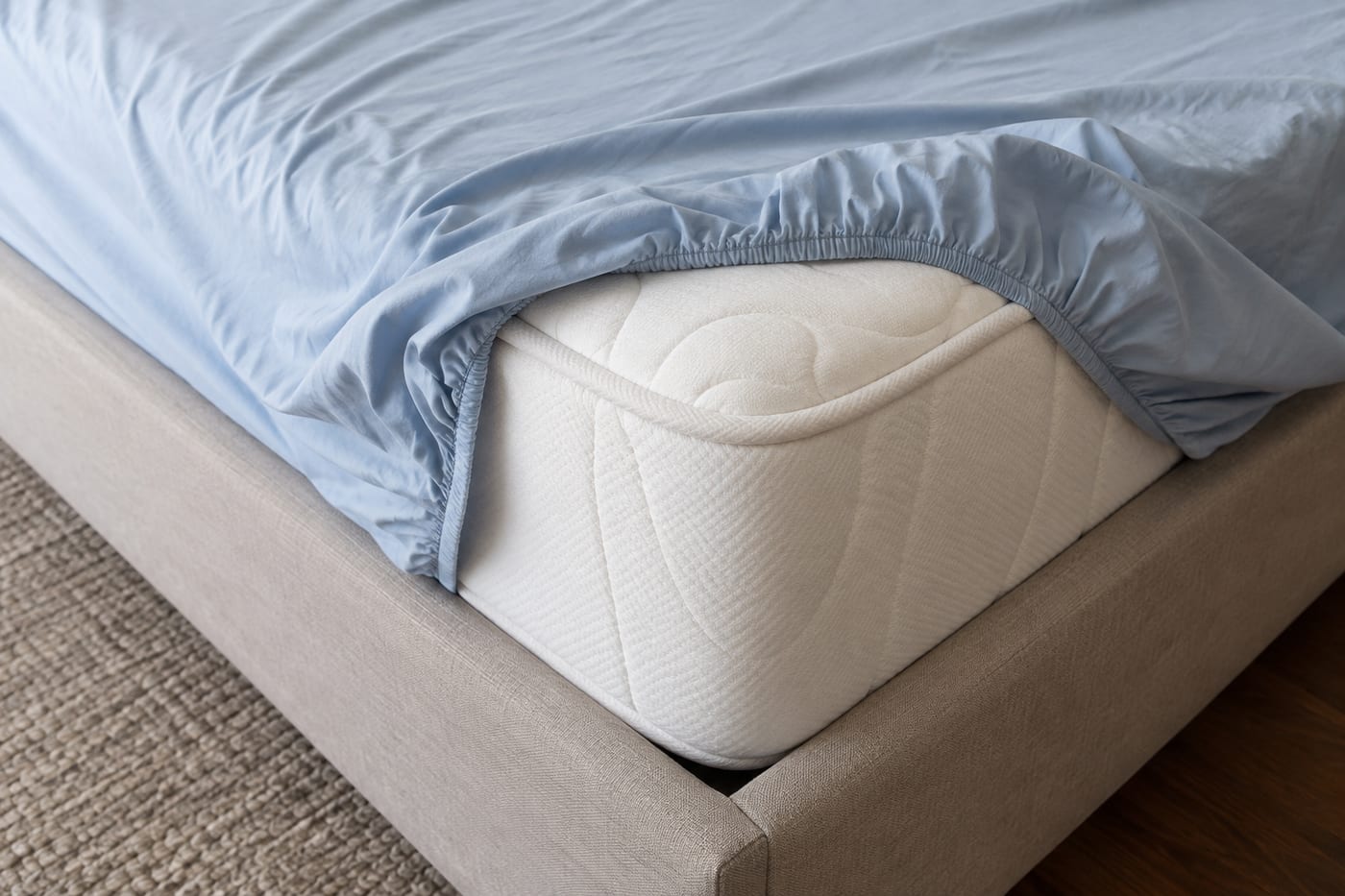
If the topper moves, first check that its dimensions match and that the intended underside faces down. Use supplied straps or attachments as instructed. Also check whether a shallow fitted sheet pulls the layer when you move, or whether the protector above or below it has folds. Inspect the uncovered setup before making the bed so you can identify which layer is moving.
Do not pierce foam with pins or apply adhesive that is not approved for the product. Extra sheet width does not necessarily compensate for inadequate depth. Our guide to fitted sheets that slip off explains the checks. If the attachments are sound and the problem remains, send the supplier your measurements and a photograph; clear information is more useful than adding accessories without identifying the cause.
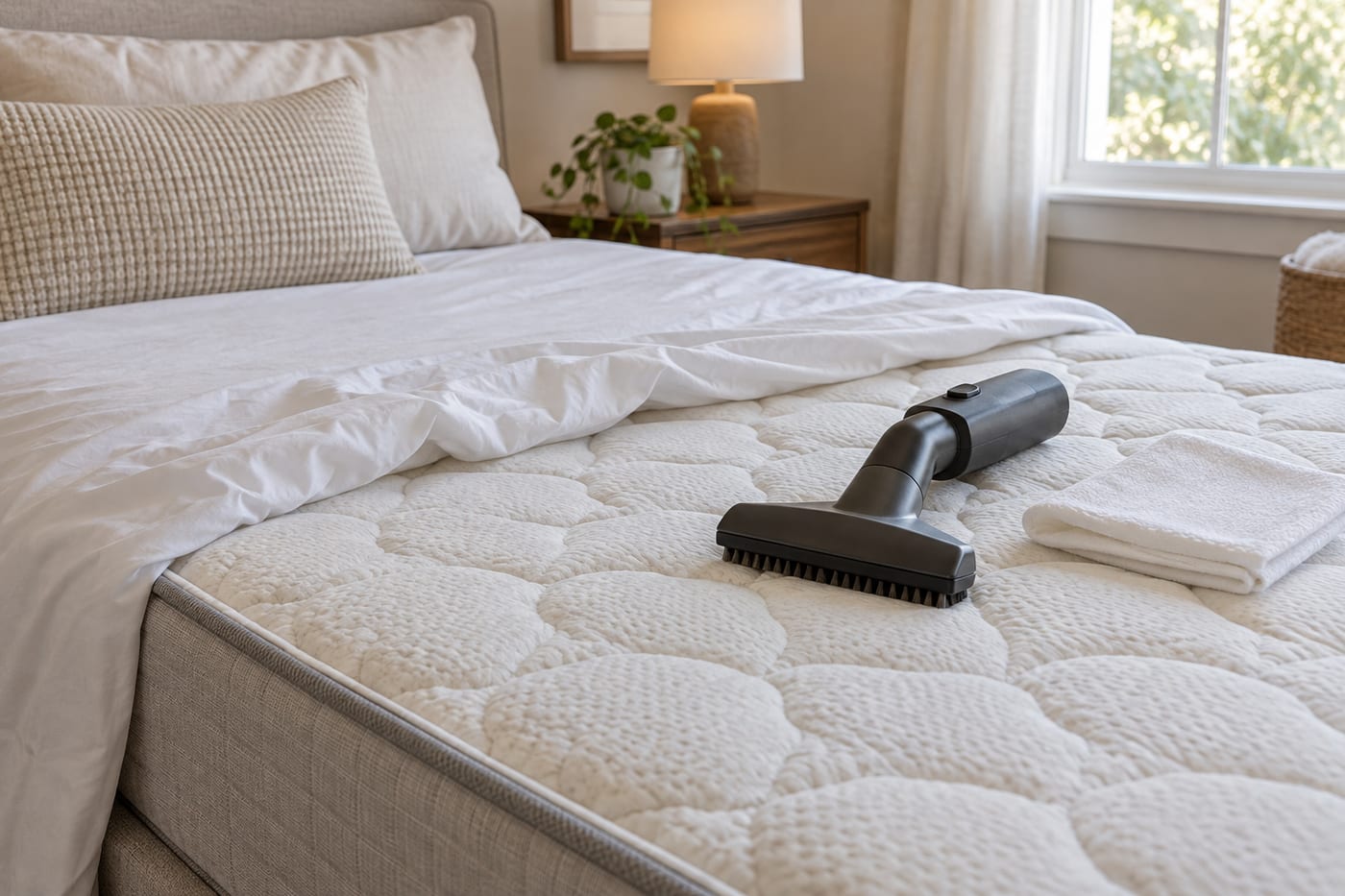
How do you clean a topper without damaging it?
A removable cover does not mean the entire topper can be washed. Separate the cover instructions from those for the core, and look for explicit wash temperature and drying guidance. TEMPUR prohibits washing or wetting its foam material even when a particular model has a washable cover. Avocado specifies spot treatment of the outer layer only for certain toppers, without removing it or machine washing it.
These examples show why one cleaning method cannot suit every topper. Photograph the care label before the product goes onto the bed. After a spill, remove the bedding and protector and gently absorb free liquid; avoid adding water or cleaner to the core by guesswork. The product must be fully dry before covering or storage, and a persistent odor needs assessment rather than perfume.
How to buy a topper using clear specifications
Before ordering, make a short checklist: mattress dimensions, expected total height, topper materials, attachment method and care instructions. Add the trial, return and warranty conditions. Ask whether the price includes a cover and whether a replacement cover is available. A low initial price may not save money if you subsequently need new sheets or a protector in a special size.
A topper is not a medical treatment, and it should not be promised to resolve back pain or every sleep problem. Seek advice from a healthcare professional for persistent pain rather than choosing from a marketing claim alone. The aim here is to match a comfort layer to a sound bed and personal preference. If you already enjoy your bed, a suitable protector and good bedding care may be more useful than an unnecessary extra layer.
Three layers, three roles

- Sheet: sleeping surface
- Protector: specified protection
- Topper: comfort layer
Video: topper, mattress pad and protector differences
Mattress Clarity explains the roles of different bed layers. This is a commercial source for terminology; the article does not rank the products shown in the video.
By Mattress Clarity · Video language: English
The player loads only after a click, subject to your external-content preferences. Player privacy information.
The article can be read without watching. Captions depend on the options available on YouTube; the explanation is not a transcript.
Frequently asked questions
What is a mattress topper?
A separate comfort layer placed on an existing mattress to change its surface feel. Suitability depends on the product and mattress condition.
How is a topper different from a protector?
A topper mainly changes comfort; a protector mainly provides protection and easier maintenance. Verify an explicit waterproof specification if liquid protection is required.
Can a topper repair a sagging mattress?
No. It cannot repair a damaged core, springs or base. Assess the cause of the sag before buying another layer.
How thick should a topper be?
There is no single correct thickness. Compare feel, material, bed height and sheet fit, and assess the product on the actual mattress.
Will I need a new fitted sheet?
Only if your current sheet cannot accommodate the new combined height. Measure the layers it wraps around and compare with the manufacturer’s approved depth range.
Does the protector go above the topper?
In a common arrangement, yes, so it protects the topper too. Follow the instructions for all products and check that it fits without excessive tension.
Can a topper be machine washed?
Only if the model instructions explicitly allow it. A washable cover does not mean the core is washable; many foam products must not be wetted.
Is this guide suitable for a baby’s crib?
This guide concerns adult beds. Do not apply its layering advice to a crib; follow the crib and mattress instructions and safer-sleep guidance.
Sources and scope
Sources checked on 10 October 2026. Manufacturer sources describe their own products and instructions; they do not establish one care rule for all bedding and mattresses.
- Saatva: what a topper can change and when it cannot help
Distinguishes comfort adjustment from mattress sagging and wear.
- TEMPUR: toppers and the mattress underneath
Example specifications and the definition of an additional comfort layer; commercial manufacturer information.
- TEMPUR ONE: caring for the topper core and cover
TEMPUR material must not be washed or wetted; cover care depends on the model.
- Avocado: caring for toppers and their outer covers
Examples of toppers whose outer cover is suitable for spot cleaning only.
By MyViro.
The content explains textile characteristics and is not the result of a product test in a laboratory. How we prepare our guides