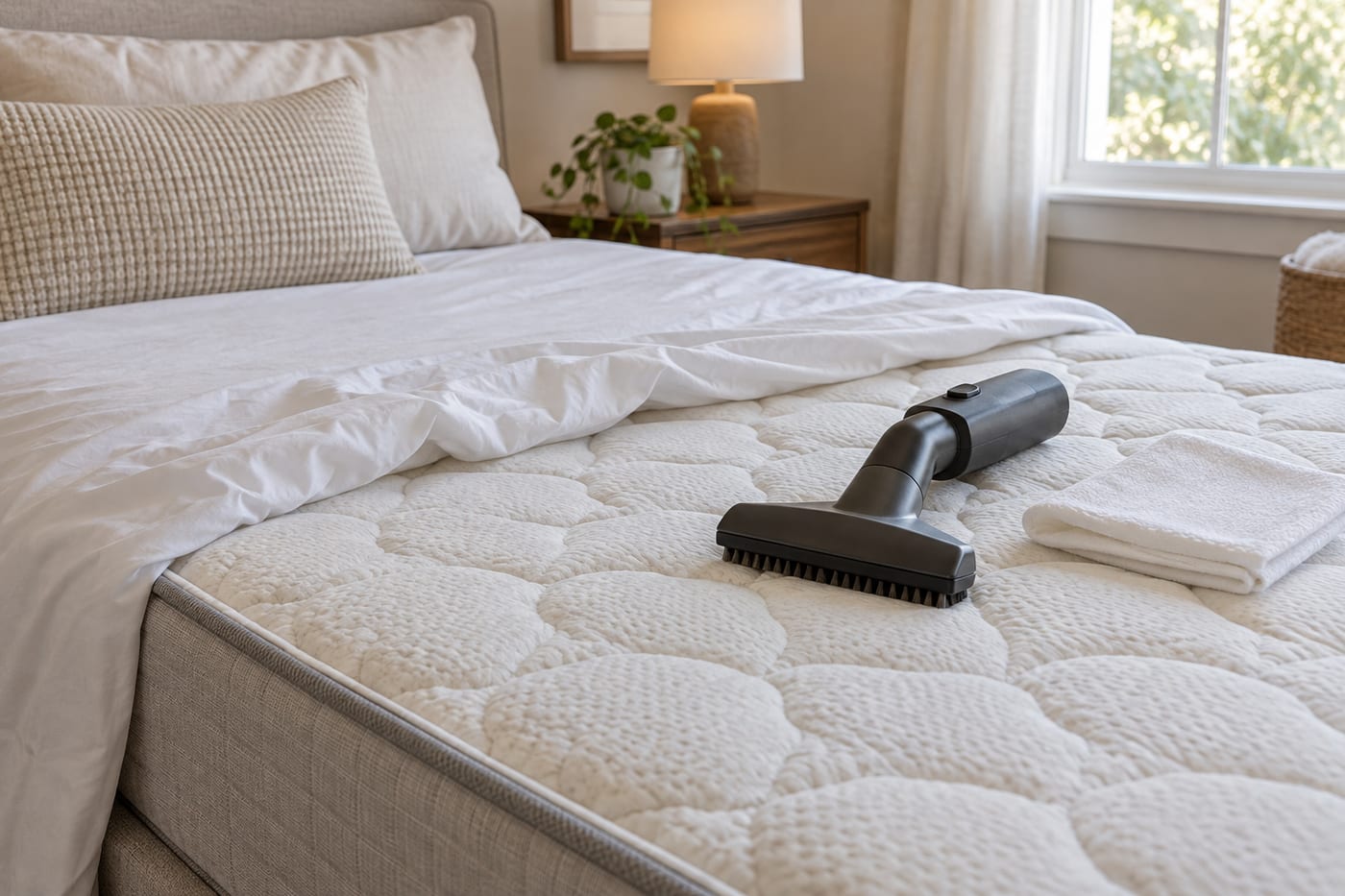
How to clean a mattress at home: identify it first
Cleaning a mattress starts with its label and model information. Identify the mattress type, care instructions and distinction between the outer cover and core. A memory foam, latex, spring or hybrid mattress may combine several materials, so the category name alone is insufficient for choosing a cleaning product or machine. Photograph the label and keep it on your phone so you do not have to lift the mattress again halfway through the job.
Define the task as well: routine dust removal, a fresh spill, an old stain or a persistent odor. These need different decisions. A small spot does not require wetting the entire surface, and a clean appearance cannot prove that the core is clean or dry. If instructions are unavailable, remove the bedding, absorb free liquid and contact the manufacturer before adding a cleaner.
A zipper does not mean the cover is washable
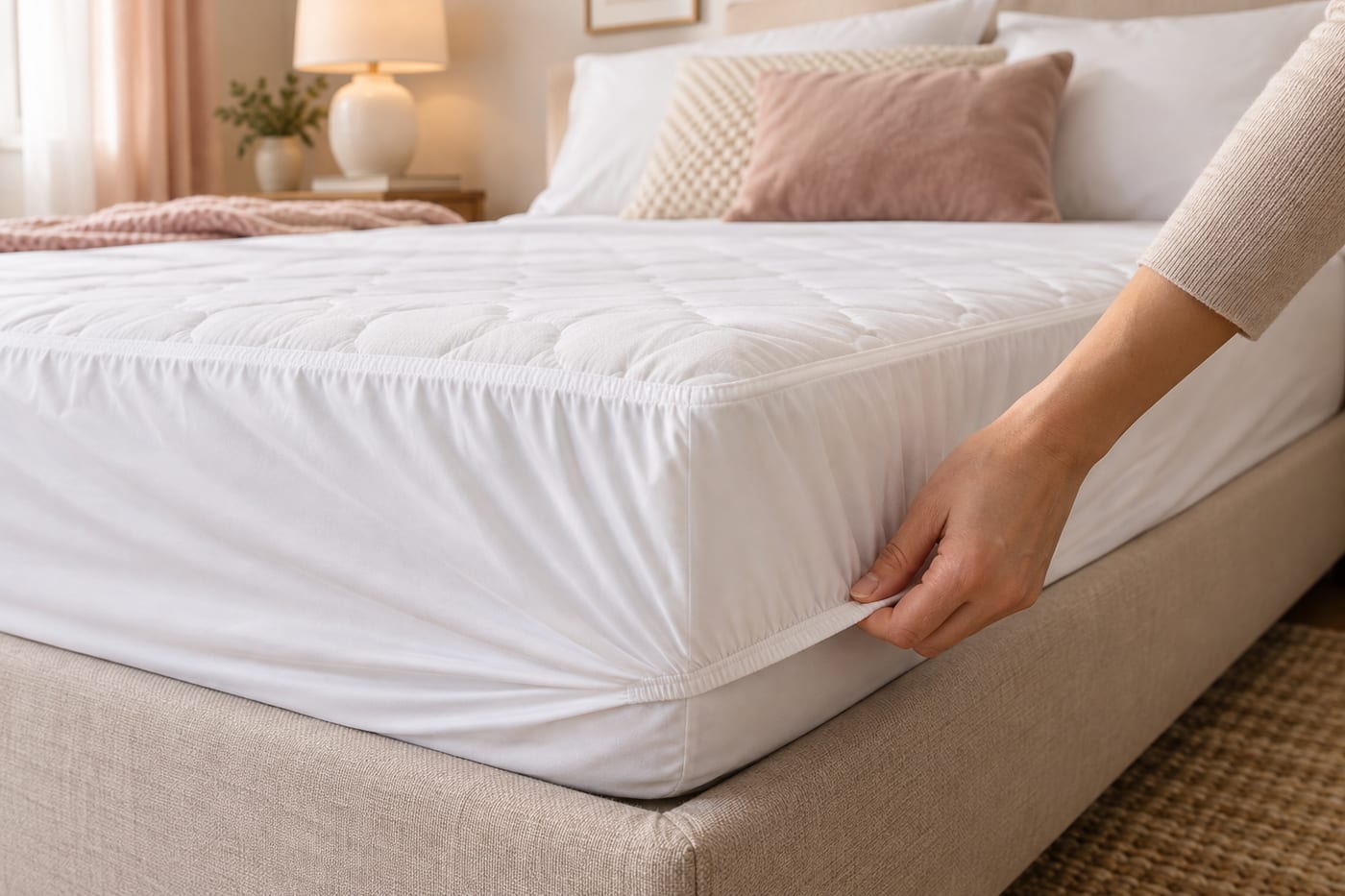
Distinguish the sheet, protector, original cover and mattress core. Sheets and protectors are separate products with their own labels. The original cover forms part of the mattress and may not be removable even when it has a zipper. Purple states that its mattress cover zipper is not intended for opening and removal. Some TEMPUR covers can be removed but not washed, particularly when foam material is incorporated into them.
Before opening any zipper, check an explicit instruction for your model. Do not remove inner layers, protective barriers or labels to reach a stain. If washing the cover is permitted, note its orientation and refit it only after it is completely dry as instructed. Removing an unsuitable cover can turn a small stain into a larger problem involving refitting, exposed filling or damage.
For more information on the subject: Mattress Protectors: Types, Materials and How to Choose.
Mattress cleaning by material: decision table
| Material or layer | What to check | Main restriction |
|---|---|---|
| TEMPUR core | Brand and model care instructions | No washing, wet sponging, steam or dry cleaning of the material |
| Other memory foam | Core and cover specifications | The material name does not authorize wet treatment |
| Latex | Model and outer-cover instructions | Permitted fabric care does not authorize washing the core |
| Spring / hybrid | Upholstery and foam layers as well | Spring construction does not authorize steam or wet extraction |
| Original cover | Explicit permission for removal and washing | A zipper is not washing permission |
| Removable protector | Protector and waterproof-barrier label | Use instructions specific to the protector |
What should you prepare before cleaning?
Remove the bedding and protector and prepare clean, absorbent white cloths. If the mattress instructions permit vacuuming, use a vacuum with a clean upholstery attachment. Select a spot-treatment product only after checking compatibility with the fabric and mattress. There is no need to assemble several different cleaners on the assumption that combining them will work better. Keep the cleaner instructions beside the mattress instructions.
Plan the drying time and space, including another sleeping arrangement if drying takes longer than expected. Avoid starting a treatment that wets fabric immediately before bedtime. Move items that could be damaged and maintain a safe path around the bed. Do not lift a heavy mattress alone to reach its underside; follow the handling and base instructions. Preparation allows careful work without pressure to put a sheet over a damp area.
Routine care: dust, hair and seams
For routine dry care, first check whether the cover may be vacuumed. Use a clean upholstery attachment with gentle movements, paying attention to seams and edges without pulling threads or fabric. If suction is adjustable, follow the mattress and appliance instructions when choosing a setting. There is no need to beat the mattress, scrub aggressively or open it to remove surface hair.
Dry care cannot guarantee removal of every source of odor and does not replace pest treatment when an infestation is suspected. Avoid distributing powders over an exposed core or where they cannot be removed properly. An ordinary vacuum is not designed to collect liquid, so absorb wet spots with a cloth first. A brief inspection during sheet changes can reveal damage or moisture without imposing a deep-cleaning schedule that does not suit every mattress.
A fresh spill: absorb before cleaning
Remove the bedding and protector promptly to identify which layer is wet. Place a clean cloth on the liquid and press gently to absorb it, replacing the cloth as it becomes saturated. Avoid rubbing the stain outward or adding water to flush the core. Tempur-Pedic’s instructions emphasize early absorption and airing, while acknowledging that even prompt action cannot guarantee complete stain or odor removal.
If the protector stopped the spill and the mattress remains dry, only the removable bedding may need treatment. If the outer cover is wet, check whether spot cleaning or removal and washing are permitted. Apply an approved product in the quantity and manner specified, targeting the intended fabric area rather than the mattress interior. For substantial moisture in the core, stop attempts to rinse it and request guidance for the model.
Urine on a mattress: fresh and old stains
Treat fresh urine first as a liquid spill: remove wet layers and gently absorb the liquid with a clean cloth. Then check the care instructions. A stain remover marketed for urine or containing enzymes is not automatically suitable for every fabric, foam or mattress. Check both the cleaner instructions and the mattress’s permitted treatment, and test a hidden area when spot cleaning is allowed.
An old stain or recurring odor may show that surface treatment was insufficient, but cannot establish what is happening inside the mattress. Avoid repeated deep wetting to reach an assumed odor source. Vinegar, hydrogen peroxide and homemade mixtures are not universal methods permitted for every product. If the problem persists, tell the manufacturer or specialist the mattress type, elapsed time, approximate liquid quantity and every treatment already attempted.
Blood, drinks and yellow marks need different decisions
Blood or another body-fluid stain differs from a colored drink or an oily mark. Wear gloves when appropriate for blood and do not improvise with heat. For a removable washable cover, choose a protein-stain treatment compatible with the fabric label and suitable cleaner instructions. Cover laundering instructions cannot be applied to the core. For a colored drink, start by absorbing it and preserve the stain’s boundaries instead of rubbing it across a larger area.
A yellow mark does not reliably identify its cause. It may relate to use, residues or a material change, so not every discoloration needs bleaching. Removing color does not prove disinfection, and a lighter appearance does not demonstrate that the mattress interior is dry. If a gentle approved treatment fails, keep a record and obtain guidance before moving to a stronger stain remover.
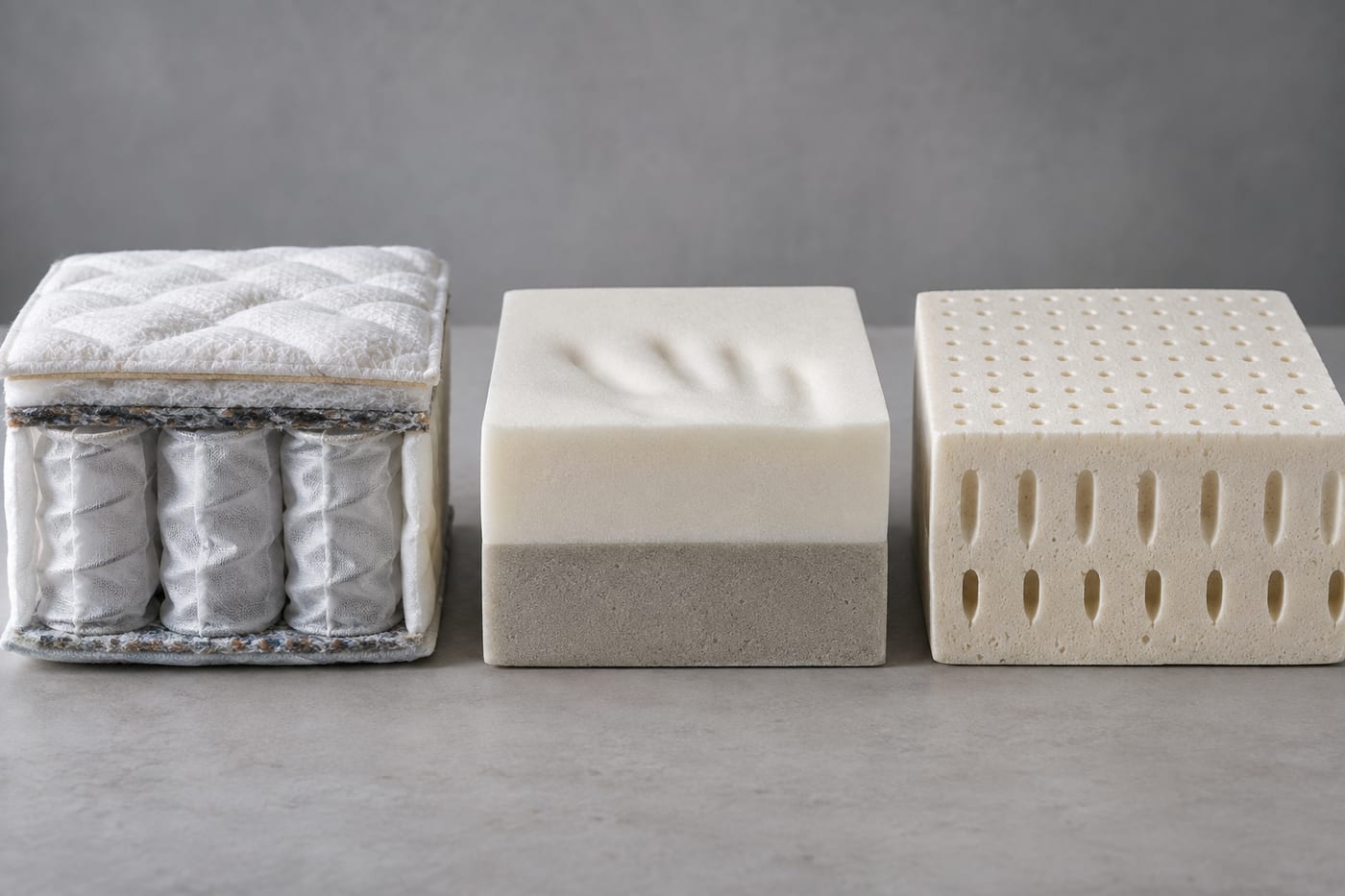
Memory foam, latex or springs: what changes?
Internal material determines which restrictions to investigate, but the cover and construction matter too. TEMPUR prohibits washing, wet sponging, dry cleaning and steam treatment of its material. That is a rule for its products, not permission to choose another method for every non-TEMPUR foam. For a latex mattress, check the model and cover instructions; permission to spot-clean fabric does not imply permission to wash the core.
A spring or hybrid mattress may also contain foam and upholstery layers, so it does not automatically permit steam or wet extraction. Do not choose a service solely from its method name. Compare the proposed procedure with the product instructions, especially regarding heat, moisture and cover removal. Our mattress type comparison helps identify construction and materials, while the specific model instructions determine its care.
Washable covers and protectors: treat them separately
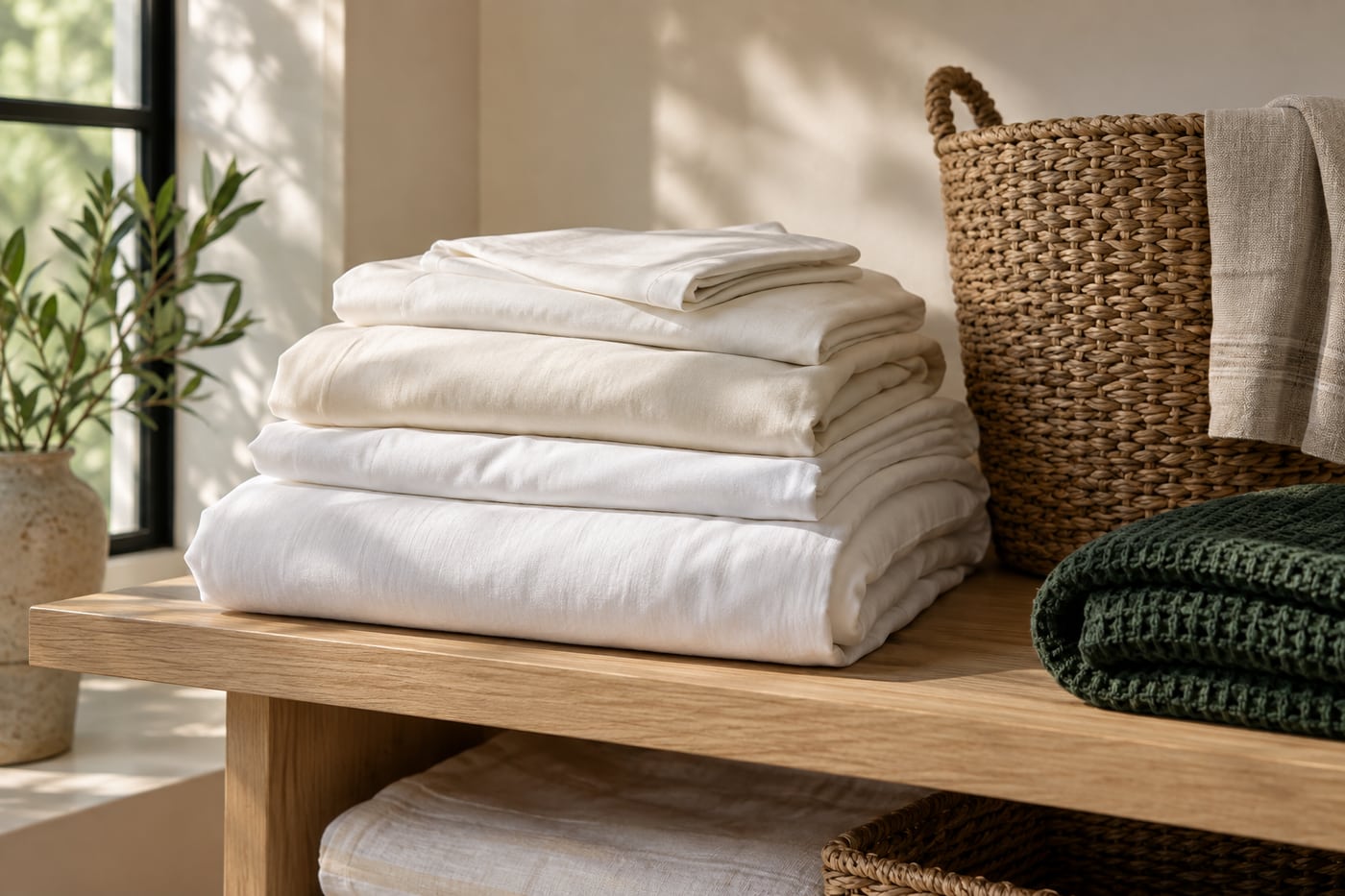
When removal and washing are permitted, follow the label for temperature, program, spin and drying. There is no universal washing temperature for mattress covers. Also check that the washing machine can accommodate the item as instructed, without packing it so tightly that movement is restricted. A large cover may need a different laundry arrangement from a sheet; avoid forcing or stretching it into the machine.
A protector with a waterproof barrier needs its own care instructions because unsuitable heat or cleaners can impair its function. Our bedding laundry guide explains care-label checks, and themattress protector guide helps with choosing a suitable layer. Before refitting, check that the fabric is dry at seams, edges and around the zipper as well as across the center.
Complete drying matters more than a fixed timetable
No fixed number of hours guarantees that every mattress will dry. Liquid quantity, penetration depth, product thickness and room conditions all affect the process. Ventilate as instructed and use airflow if permitted. Do not improvise with direct heat from a hair dryer or another heat source, and do not assume that sunlight disinfects the core or resolves deep moisture.
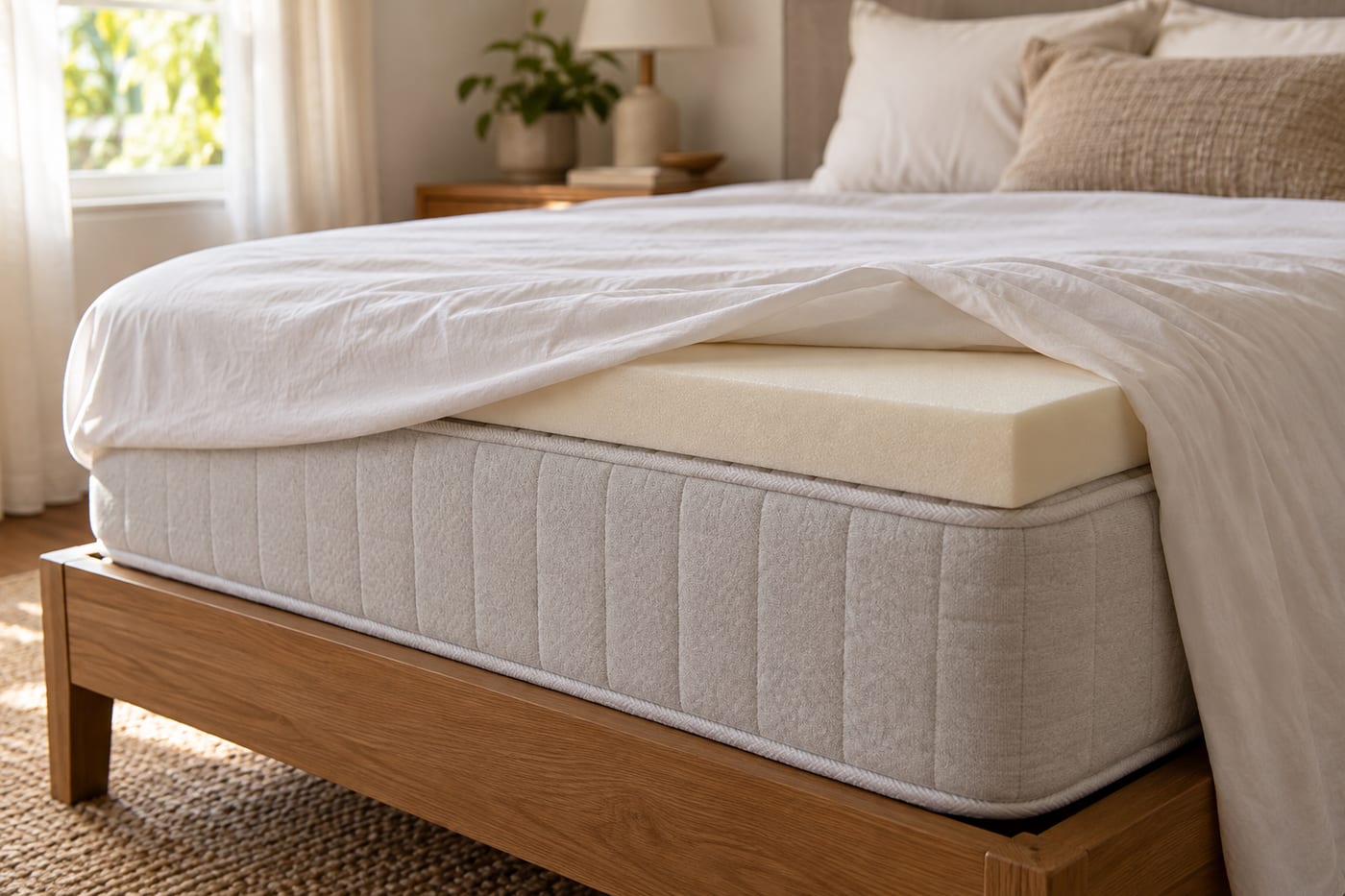
Avoid replacing the protector and sheet to hide a damp area. Check the treated surface and its edges, remembering that a dry outer feel cannot guarantee a dry interior after a substantial spill. Seek an assessment before returning to use in that situation. If you have a topper, inspect it and the mattress beneath it too. Our topper guide distinguishes a comfort layer from a protector intended to stop liquids.
Musty odor or suspected mold: when to stop
If you notice marks suggesting mold, a persistent musty odor or a mattress that has become heavily wet, stop experimenting with cleaners to improve its appearance. EPA guidance explains that mold in porous materials can be difficult or impossible to remove completely, and some items may need disposal. This is general advice about porous materials; it cannot diagnose your mattress from a photograph or odor.
Request an assessment from the manufacturer or an appropriate specialist and investigate moisture in the room or base as well. Surface cleaning without addressing the moisture source may leave the problem unresolved. Do not seal a damp mattress in an impermeable cover or treat perfume, ozone or light treatment as proof that it is safe to use. Suspected pests require a separate assessment because routine cleaning and pest control are different tasks.
When to call a professional, and what to ask
For a stubborn stain, recurring odor or deep moisture, a professional service may help assess the next step; it cannot guarantee that every mattress can be restored. Provide the model, materials, manufacturer instructions and photographs beforehand. Ask what procedure will be used, where cleaner will reach, how drying will be assessed and what happens if the method is unsuitable. A claim to clean every mattress is insufficient.
Look for an answer that distinguishes a visible stain from odor, moisture and core condition. Check how the product instructions will be respected and the service’s limits of responsibility. If a proposed method conflicts with an explicit manufacturer restriction, request an alternative before work begins. Replacement may be more reasonable than repeated treatments in some cases. Consider drying time, another sleeping arrangement and the risk of retaining an unsuitable product as part of the decision.
A routine that reduces the need for deep treatment
A suitable protector, bedding changes and early attention to spills are practical ways to care for a mattress. Choose the protector for the dimensions, height and purpose; verify explicit waterproofing when liquid protection is needed. Maintain the recommended base and ventilation. Rotate or flip the mattress only when the manufacturer permits it; a one-sided product should not be turned over to hide a stain.
During sheet changes, inspect the edges and protector for tears, moisture or an ongoing change. Our bedding size chart helps match a sheet to the combined height, while thebedroom environment guide encourages checking room conditions. Aim for a routine you can sustain through suitable products and early identification of problems rather than repeated aggressive cleaning experiments.
Deciding what can be cleaned

- Identify cover and core
- Check instructions and stain
- Treat and dry as directed
Video: an introduction to mattress cleaning
Sleep Doctor introduces mattress cleaning. Before applying any method, check that your manufacturer permits it for the material and model. The demonstration does not authorize wetting a foam core or using a prohibited treatment.
By Sleep Doctor · Video language: English
The player loads only after a click, subject to your external-content preferences. Player privacy information.
The article can be read without watching. Captions depend on the options available on YouTube; the explanation is not a transcript.
Frequently asked questions
How can I clean a mattress without wetting it?
Remove the bedding and protector, check the care instructions and vacuum gently with an upholstery attachment if permitted. Dry care cannot guarantee removal of every stain or odor.
What should I do with fresh urine on a mattress?
Remove wet layers and gently absorb the liquid with a clean cloth. Use spot treatment only when compatible with the cover and model instructions; do not flush the core.
Can a memory foam mattress be steam cleaned?
Do not assume permission. TEMPUR prohibits steam for its material; for another product, obtain explicit manufacturer guidance before applying heat and moisture.
Does a cover zipper mean it can be washed?
No. Some covers must not be removed; others may be removed but not washed. Check the label and model instructions.
Are vinegar and baking soda suitable for every mattress?
No. No homemade mixture automatically suits every cover and core. Follow the product instructions and a compatible cleaner’s directions without improvising mixtures.
How long does drying take after cleaning?
There is no fixed duration. Moisture amount and depth and room conditions affect drying. Do not cover or resume use until fully dry; deep moisture needs assessment.
Can cleaning remove mattress mold?
That cannot be guaranteed. Mold in porous material may be difficult to remove completely; investigate moisture and obtain an assessment before continued use.
Is professional cleaning suitable for every mattress?
No. The method must suit the model, materials and manufacturer instructions. Check heat, moisture, cover removal, drying and the limits of the result beforehand.
Sources and scope
Sources checked on 10 October 2026. Manufacturer sources describe their own products and instructions; they do not establish one care rule for all bedding and mattresses.
- TEMPUR: care restrictions for material and covers
Distinguishes foam from cover care; prohibits washing, wet sponging, steam and dry cleaning of the material.
- Tempur-Pedic: responding to a spill
Absorption and drying as instructed; complete stain or odor removal cannot be guaranteed.
- Purple: cleaning and cover-removal restrictions
An example of a zipper that does not permit cover removal; do not transfer methods to another model.
- Casper: identifying stains and spot treatment
General manufacturer stain-care information; specific model instructions take precedence.
- EPA: mold in porous materials
General limits of porous-material cleaning and addressing moisture; not a mattress diagnosis.
By MyViro.
The content explains textile characteristics and is not the result of a product test in a laboratory. How we prepare our guides