Shield and sheet have different roles
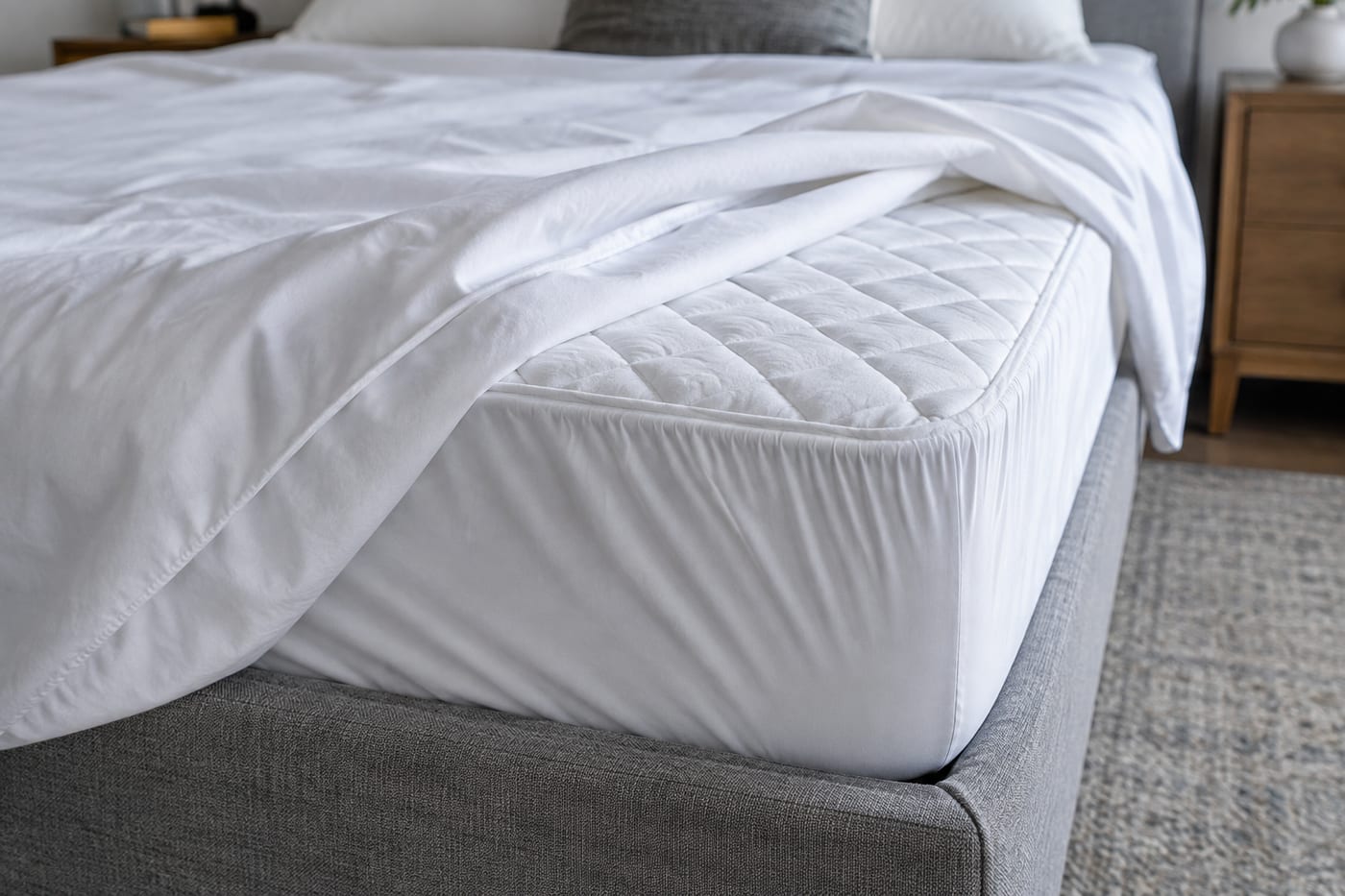
A sheet covers the bed and provides the surface you touch. A mattress protector adds protection according to its specifications. A topper is an extra comfort layer that changes the feel of the mattress; it is not another name for a protector.
Decide what you need: protection from dirt from normal use, liquids or a cover that can be removed for washing. Not every shield is suitable for each of these purposes.
Check what covers and what is sealed
Read if the protection against liquids refers to the top surface only or to the sides as well. "Water resistant" and "waterproof" are not descriptions that can be interchanged without checking the specifications and instructions for use.
A cover with elastic and a cover that wraps the entire mattress with a zipper are constructed differently. Do not assume that a regular shield is designed to block allergens or prevent allergies; Adaptation to the particular role is required.
For more information on the subject: Israeli bedding sizes: sheets, duvet covers and pillowcases.
Height and feel are important
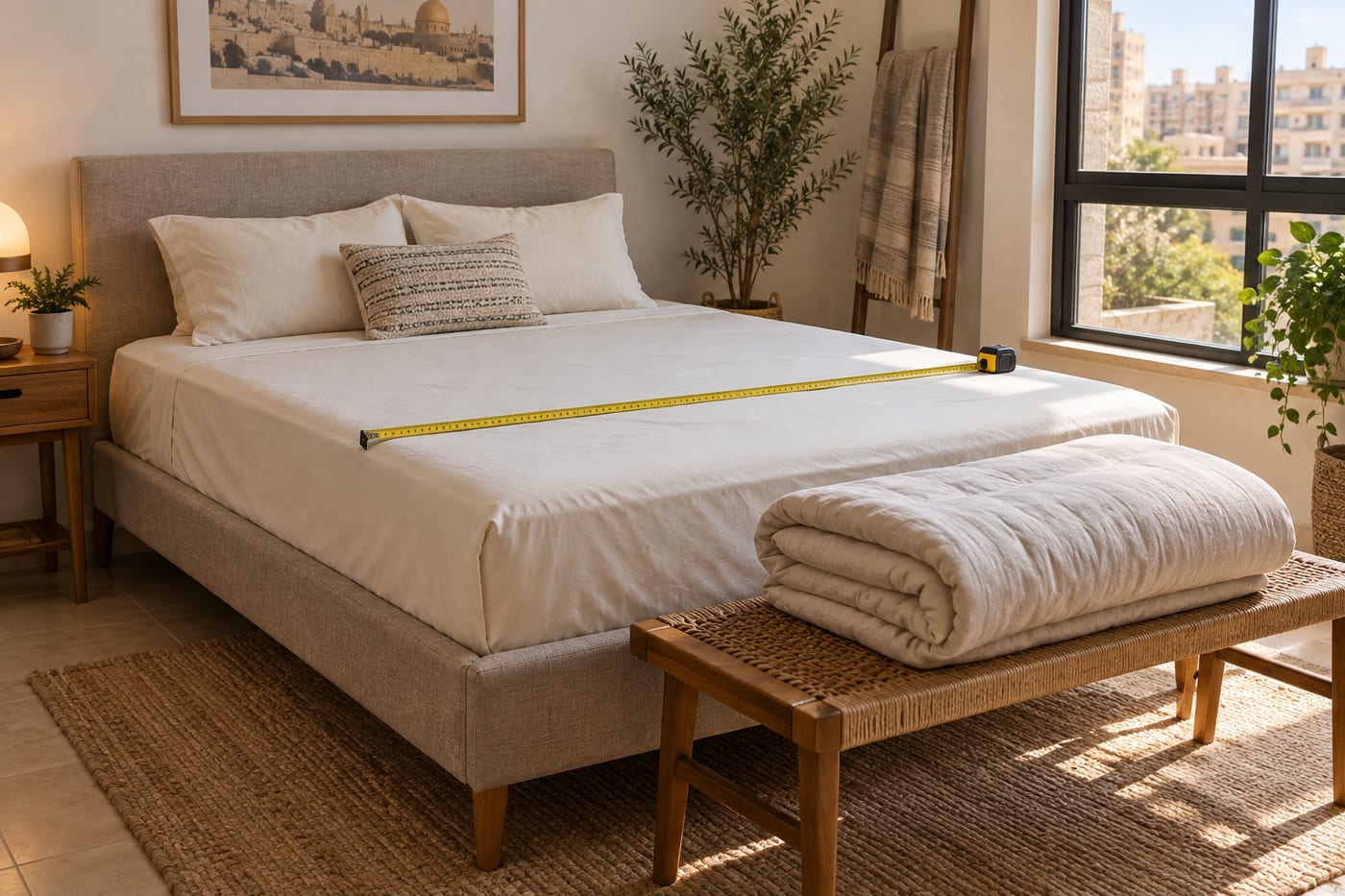
Measure width, length and height including layers that the shield should wrap. Check that the elastic holds without pulling the corners of the mattress and that the sheet above it still fits.
If possible, check for noise, movement and contact under the sheet. An additional layer may change the feel of the bed, so the protection specification is not the only consideration.
Treat without damaging the protective layer
Check the washing temperature, whether tumble drying is allowed and which laundry products are prohibited. Heat or cleaning products suitable for a sheet may not suit a waterproof layer in a mattress protector.
Dry well before returning to the mattress. Check for wear, tears or peeling according to the manufacturer's instructions. If liquid got into the mattress, treat it as well according to its instructions; Changing the shield alone does not clean what's underneath.
Top cover or full shell?
A protector that only covers the top of the mattress is not the same as a cover that wraps around it from all sides and closes with a zipper. Before buying, define what you want to protect: the sleeping surface, also the sides, or the entire mattress. Even in a product that covers the entire mattress, you should not conclude that all sides are equally resistant to liquids without reading the specifications.
Check how to remove the protector for washing. On a heavy double mattress, a full cover may require more effort than a elastic protector. If the replacement is difficult to do on your own, you should take this into account in advance. A product that protects a larger area is not necessarily the most convenient choice for every home.
Checking fit without spilling water on the bed
No need to wet a mattress to try a new protector. Spread the protector according to the instructions, add the regular sheet and check if folds are formed, if the corners are drawn and if the movement in the bed causes a sensation or noise that bothers you. Also check that the shield does not cover ventilation openings or parts that the manufacturer wants to leave exposed.
If you need to find out about resistance to liquids, ask for the supplier's test instructions and do not improvise an experiment on the mattress itself. After washing, check the seams and the visible protective layer, if there is one. Peeling, tearing or crumbling is a reason to stop relying on the shield until it is clarified. An additional layer over a damaged product is not a repair of the original protection.
Checking fit after the shield is already on the bed
Fit the protector to an adult mattress according to the instructions, then add your usual sheet. Check that the corners fit and that no thick folds form beneath your back or near the mattress edge. Sit down, then lie in your usual position to check whether the layer shifts or makes noise. After getting up, check whether the sheet has been pulled out of place along with the protector.
If the result is not comfortable, change one component at a time: first aligning the shield, then adjusting the sheet. There is no need to pour water on the bed to test for tightness; Such an experiment may wet the mattress and is not a standard test. Rely on the product specifications and the manufacturer's instructions. The example is not intended for a crib, where the fitting of the equipment and the rules of safe sleep require separate consideration.
Bed layers at a glance

- Blanket and duvet cover: over the body, as needed.
- sheet: The layer on which you lie.
- Mattress protector: If using it, under the sheet.
- Mattress: the base for the layers above it.
The diagram depicts an adult bed, without a mattress topper. The feeling depends on the combination of layers, and not only on the type of sheet. In a crib they act according to Safe sleep guidelines for babies.
A practical comparison before choosing
| a need | An important detail in the specification | Home inspection |
|---|---|---|
| Liquids on the sleeping surface | What an opaque area | Creaseless fit |
| covering the sides | The structure of the cover | Easy to remove and put back on |
| High mattress with mattress topper | Total height range | Grip without strong traction |
| sensitivity to rustling | The composition and structure of the layers | Feeling under the usual sheet |
Frequently asked questions
Is a mattress protector a mattress topper?
No. A topper is a comfort layer intended to change the sleeping surface; a mattress protector provides protection according to its specifications. A topper may also need suitable protection.
Is an opaque shield also anti-mite?
Do not infer that. Liquid resistance and allergen blocking are different properties that must be tested separately.
Are the recommendations also suitable for a crib?
The guide deals with adult beds. A cot has separate safety requirements; Do not add layers or accessories based on advice for an adult bed.
Sources and scope
Source check: September 15, 2026. The information was checked against the sources listed here. The selection tips are designed to help you compare; They are not based on product tests we conducted ourselves.
By MyViro.
The content explains textile characteristics and is not the result of a product test in a laboratory. How we prepare our guides
Based on content from the MyViro archive, edited and revised in September 2026.