Identify the item: protector, absorbent pad or mattress cover
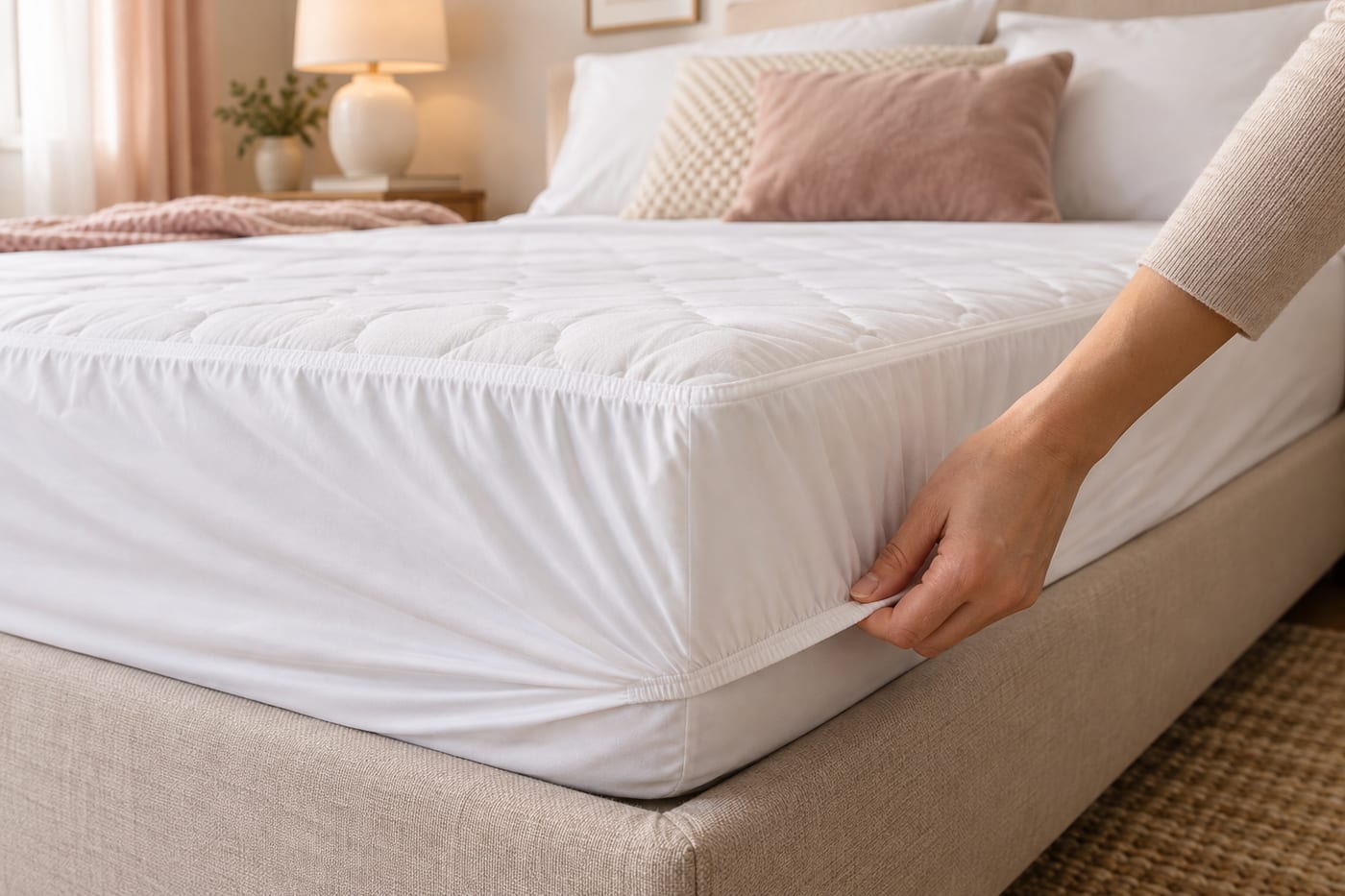
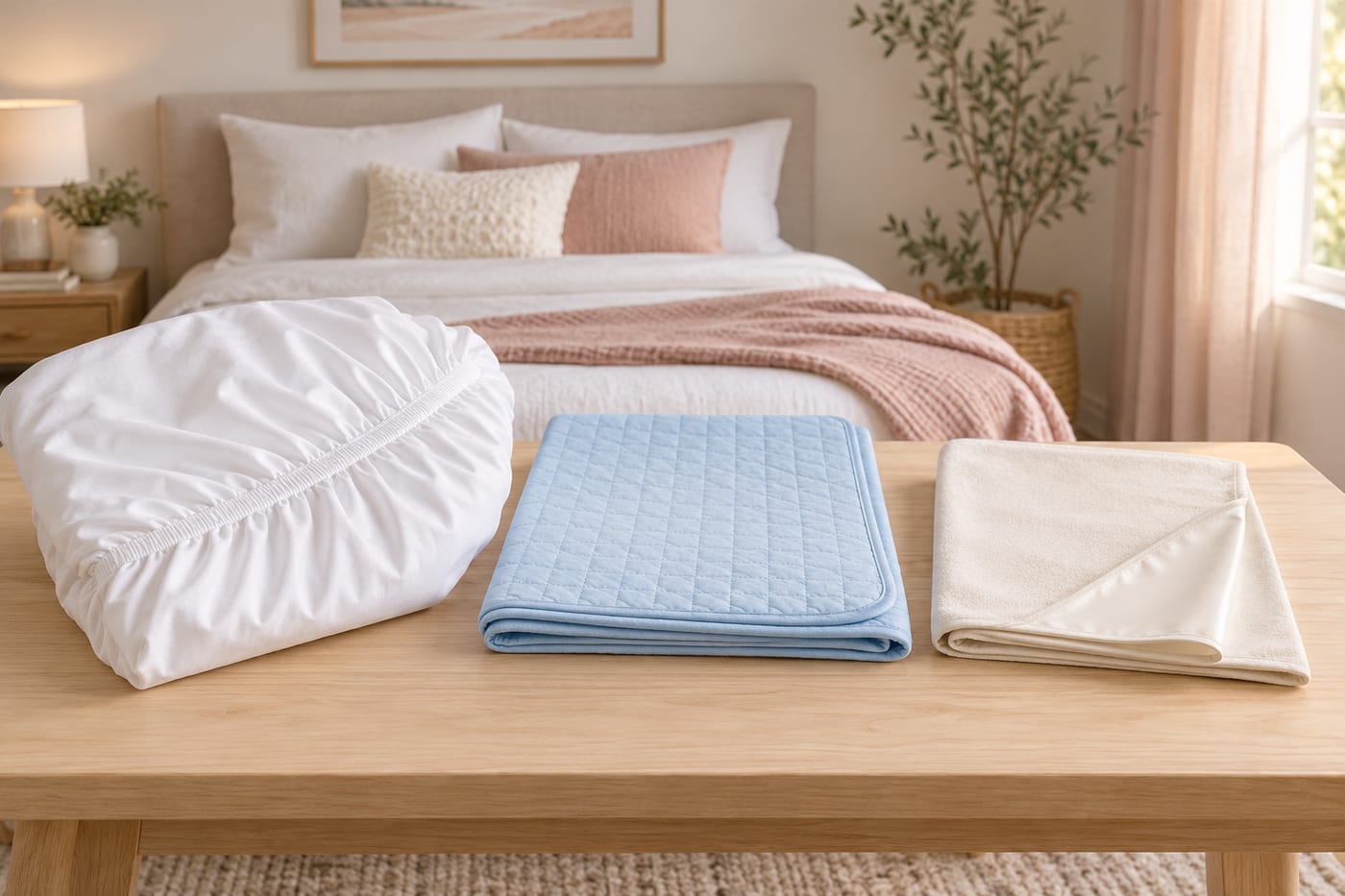
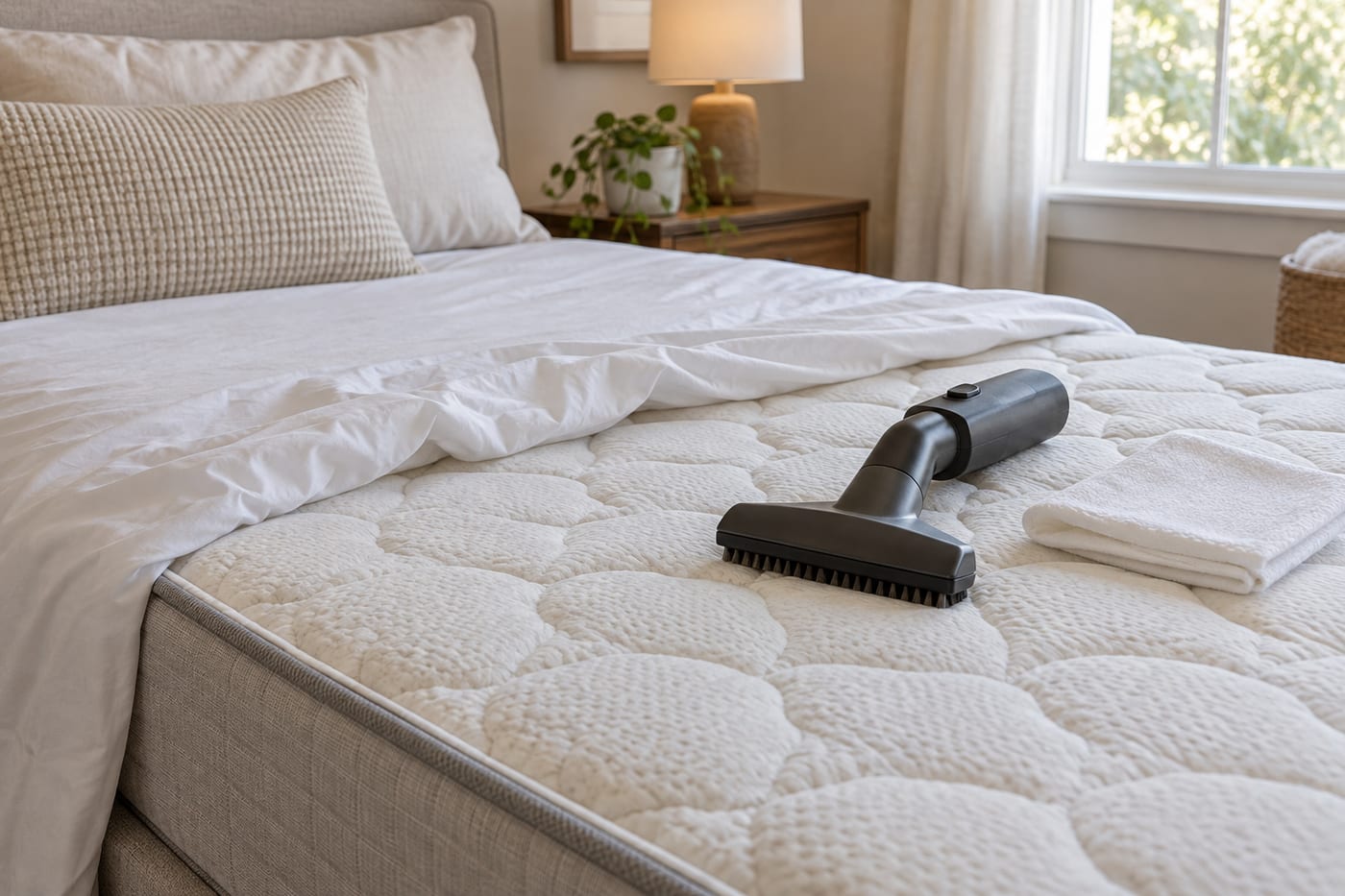
A mattress protector may be a thin fabric with a waterproof layer, a padded item containing filling or an encasement surrounding the entire mattress. Its white appearance and shop description do not tell you how to wash it. An absorbent pad, a waterproof sheet and the mattress’s original cover may look similar when folded, but have different structures and care requirements. Start by identifying the item and checking whether the cover is actually intended for removal. A zip on a mattress is not necessarily permission to wash its cover at home.
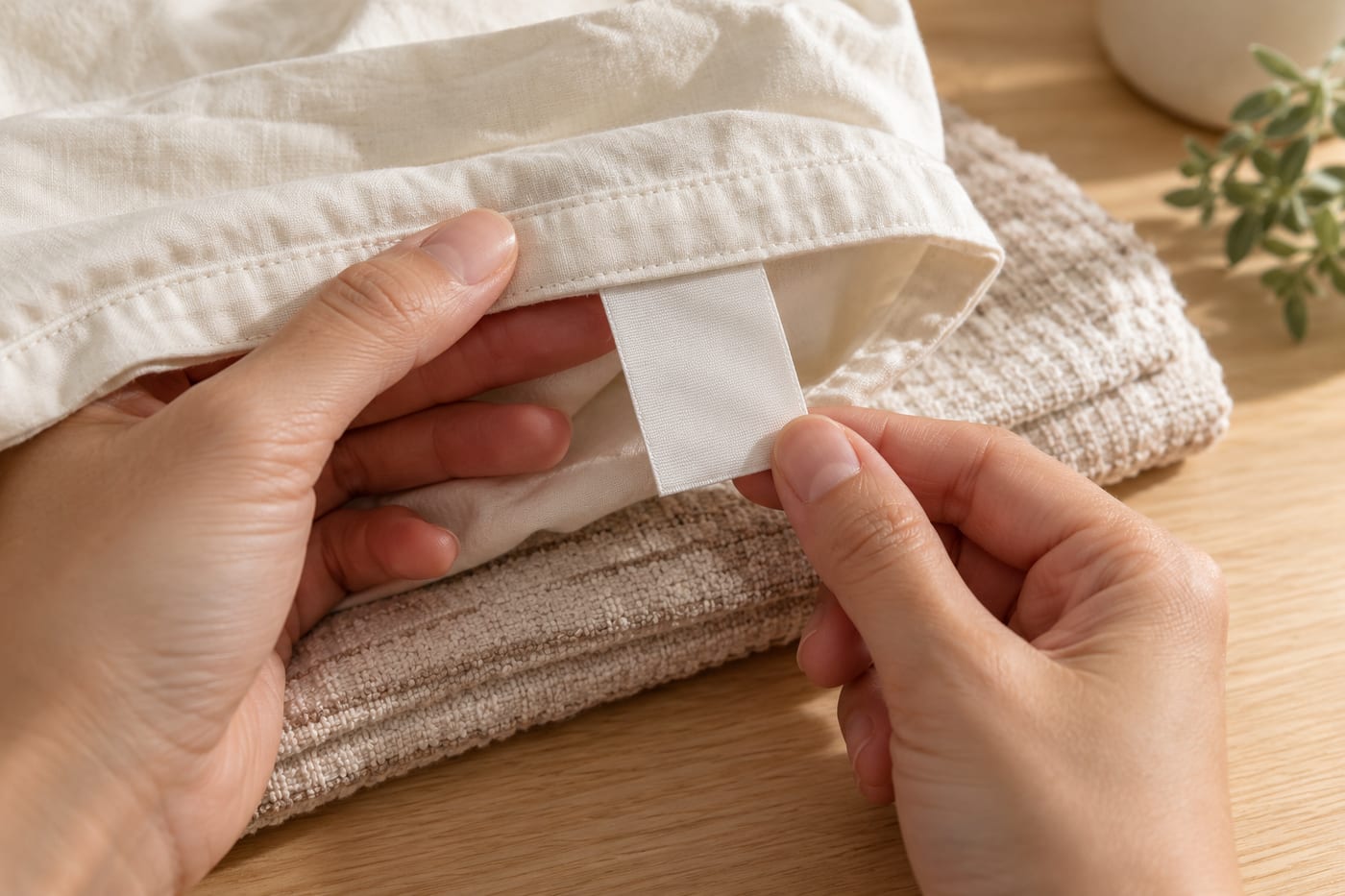
Find the label on the protector itself, separately from the sheet and mattress. Record or photograph the model name and composition, particularly if you own several similar protectors. Where there is a waterproof barrier, the directions must apply to the complete item rather than just its cotton surface. On a foam topper, permission to wash a removable cover does not permit immersion of the core. If you are unsure what you have, establish its identity before selecting a cycle or cleaning product.
The care label decides: why there is no single correct temperature
For a mattress protector, read the washing symbol, programme restrictions and drying symbol together. The number in the wash tub represents a manufacturer-defined limit, rather than a temperature to select for every item. A washer’s hygiene programme does not override the protector’s limit. Check instructions concerning bleach, softener and ironing as well as temperature. Our laundry-symbols guide can help interpret the signs, but the decision still follows the label on the item you own.
Manufacturer instructions illustrate the variation. IKEA GRUSNARV, article number 605.221.29, specifies washing up to 60°C and low-temperature tumble drying. The Panda London Bamboo Mattress Protector product page, checked on 10 October 2026, specifies washing up to 50°C and prefers line drying, while allowing low-temperature tumble drying. These are examples for two particular models. If the label on your item differs from the website, ask the manufacturer about your product version before treating it. A familiar brand name alone cannot resolve that discrepancy.
For more information on the subject: Mattress Protectors: Types, Materials and How to Choose.
Washing and drying checks by protector construction
| Construction or condition | Check when washing | Check when drying and replacing |
|---|---|---|
| Thin waterproof protector | Complete-item label and protection from sharp items | Approved drying method and condition of the inner layer |
| Padded protector | Programme volume and load suitability; filling instructions | Dryness at seams and in thick areas |
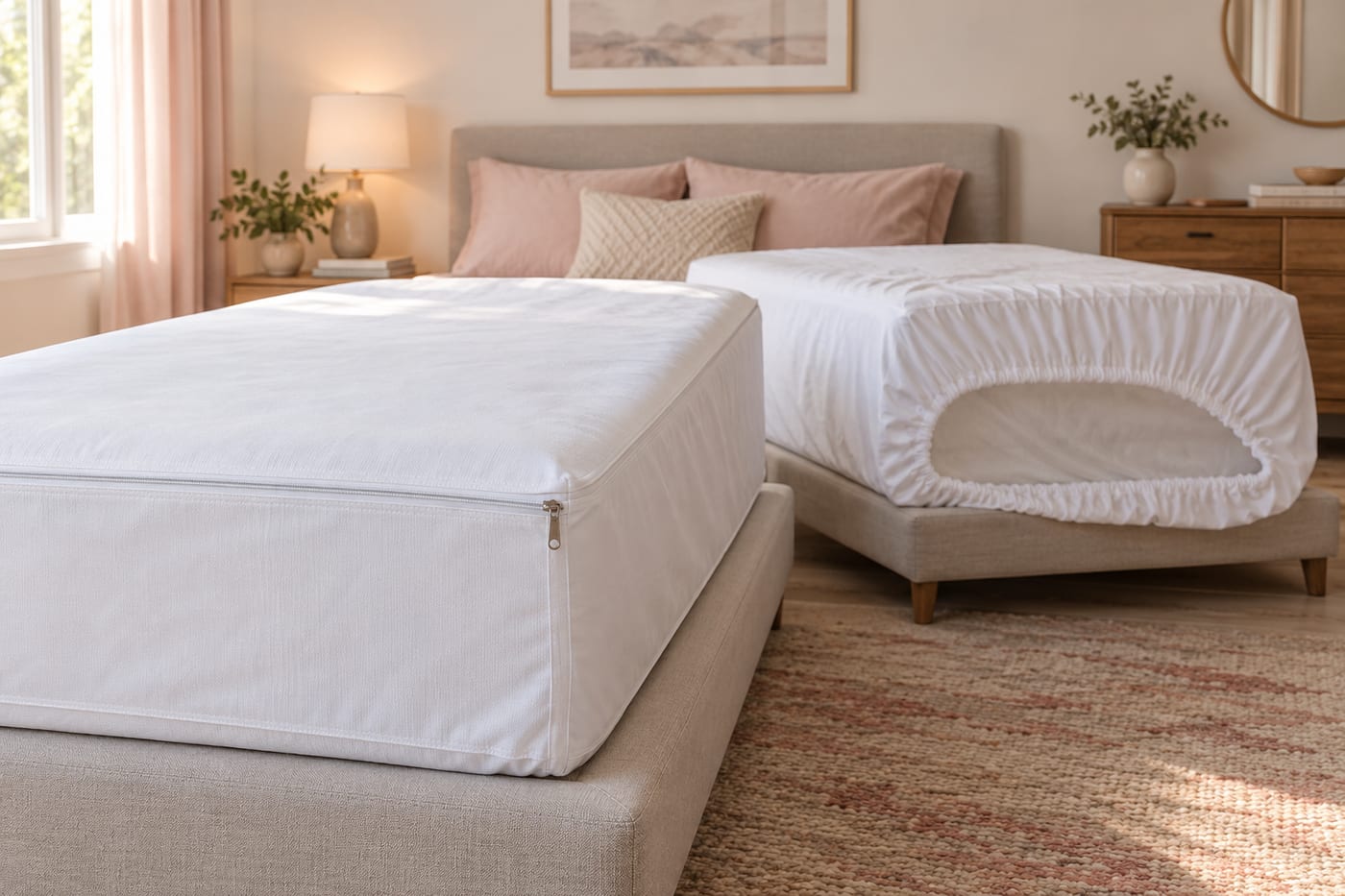
| Full zipped encasement | Directions for fastening the zip and removing the encasement | Dry folds and complete mattress fit |
| IKEA GRUSNARV 605.221.29 | Up to 60°C on a regular cycle; no bleach | Low-temperature tumble drying; no ironing |
| Panda Bamboo Mattress Protector | Up to 50°C on the checked product page; no softener or bleach | Line drying preferred; low-temperature tumble drying allowed |
| Peeling or torn barrier | Ask the manufacturer before further treatment | Do not assume washing will restore protection |
Inspect the protector before getting it wet
Spread the protector on a clean surface and inspect both faces, the corners and the areas around elastic or a zip. Look for tears, open seams, peeling areas or separation between layers. The top may look clean while the underside shows damage. Washing cannot repair a defective protective barrier. If you notice a clear change, photograph it and ask the manufacturer for instructions before putting it in the washer. This preserves a record of the item’s condition before cleaning begins.
Remove small objects caught in folds, and separate detachable parts only as directed for the product. On a zipped encasement, check how the manufacturer wants the zip secured for washing; do not drag a stuck zip through the fabric. Sew or glue a repair only if that method is approved for the item, since extra punctures in a waterproof area can affect protection. When containing liquid is the main purpose, a visibly torn item needs assessment or replacement even if its upper fabric still feels soft.
After a spill, remove it gently and check the mattress too
After a spill, remove the sheet and protector carefully to avoid transferring dirt to clean areas. If liquid remains on the protector’s surface, blot the excess gently without scrubbing or pressing it into the layers. Inspect the mattress surface as well. A slipped protector, an uncovered area or damage to the barrier may have left part of the bed exposed. If the mattress is wet, treat it separately according to its own instructions instead of immediately hiding it beneath a clean covering.
For stain pretreatment, use only a method and product compatible with the care label and protective layer. Read the stain remover’s directions too, including any required test on a concealed area. There is no universal recipe involving vinegar, baking soda or mixed cleaning products that suits every membrane. Do not scrape dirt away with a sharp tool or soak the item for an extended period merely because its top fabric seems robust. A remaining stain does not prove waterproofing has failed, and a removed stain does not prove the barrier is intact.
Choose a programme for both the protector and the washer
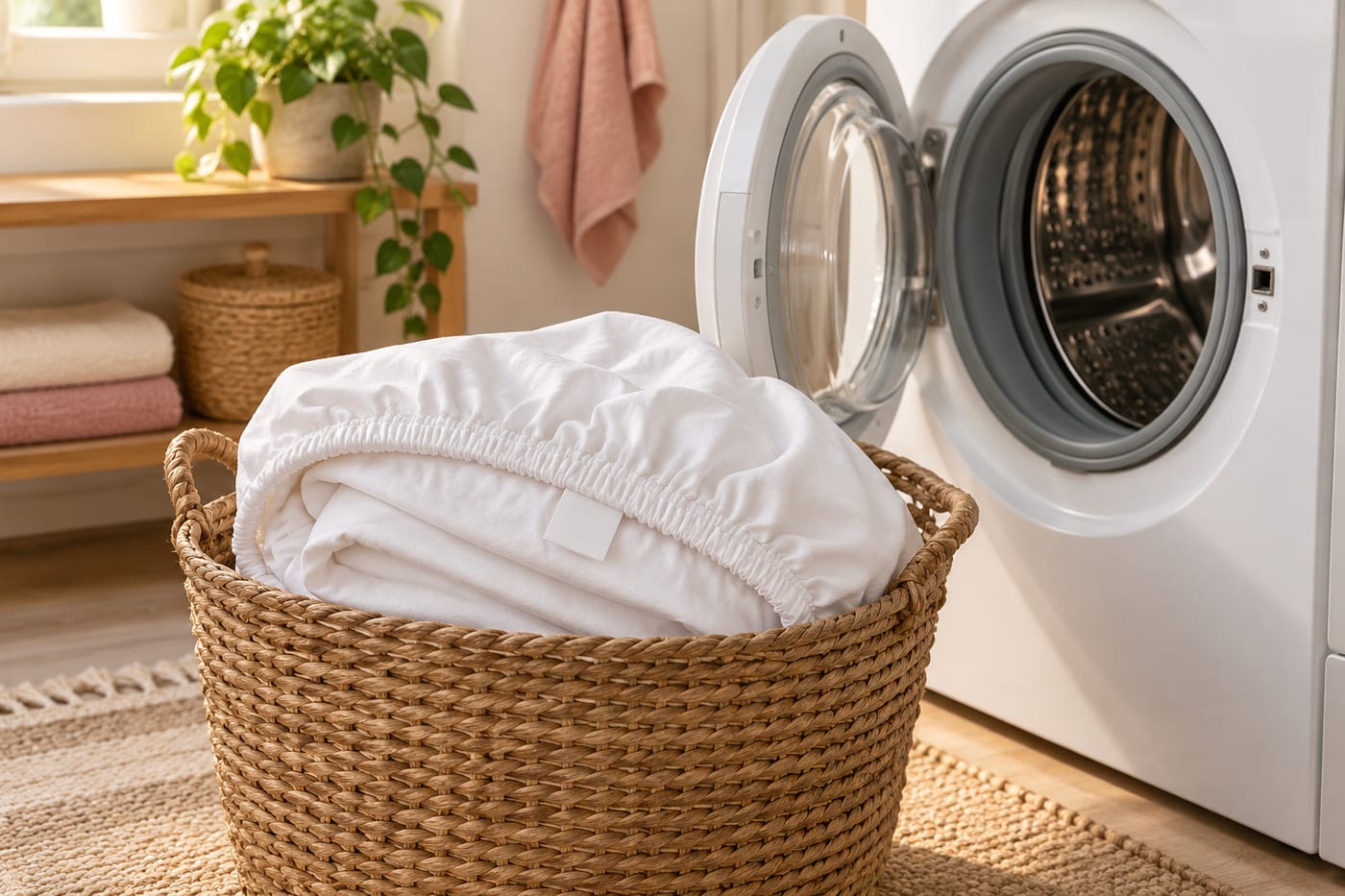
After reading the label, consult your washer’s programme table. Delicate, regular and bulky-item cycles may each allow a different load, and the name on the display is not enough. Check that temperature and mechanical action match the protector’s requirements and that the washer can accommodate its volume. A padded double protector may occupy more space than a thin protector of the same dimensions. No single kilogram capacity guarantees that every double protector will fit, because product construction and volume vary.
Load it without forceful compression or rolling it into a rigid bundle, following the appliance’s loading directions. If the manufacturer requires separate washing, do not add sheets simply to fill the drum. A short cycle is not automatically appropriate for a stained protector or a large item either. When you cannot establish a compatible combination of programme, load and permitted drying method, ask the manufacturer or a suitable laundry service before starting. Give them the waterproof-layer instructions as well as the bed size so that the treatment is based on the complete product.
Detergent and softener: check permission and dose
Choose a detergent suitable for the protector and washer, then set the dose using both sets of instructions, load size and relevant conditions. Extra detergent does not guarantee stain removal or restore waterproofing. Residue may remain when loading or dosing is unsuitable. If your washer uses automatic dispensing, check its configuration for the selected cycle. Changing from powder to liquid is not a rule for every protector; compatibility with the particular model’s instructions is what matters. Keep the detergent packaging available until treatment is complete.
Softener, bleach and fragrance additives require separate decisions. Panda London prohibits softener and bleach for its protector, while IKEA prohibits bleach for the GRUSNARV model checked here. Do not transfer permission or restrictions between models without reading the label, and do not add a product just because it features in your usual sheet-washing routine. Mixing cleaners is unnecessary for dealing with an odour. If the required treatment falls outside the supplied directions, describe the stain to the manufacturer before trying a new combination of additives.
Which items can share the drum?
A protective membrane can be thin even when the protector’s fabric feels substantial. Check the construction of accompanying items as well as their colours. For GRUSNARV, IKEA warns against washing with items containing zips or buttons that could damage the inner layer. Exclude those items when the instructions require it, and check for small objects left in pockets or the drum. A zipped duvet cover is not necessarily a suitable companion merely because both items are bedding. Selecting matching whites is only one part of organising the load.
If the protector itself is a zipped encasement, follow its own directions for fastening and protecting that zip. A warning about other laundry does not automatically prohibit the zipped product itself. A laundry bag is an option only when compatible with the item and appliance, and it does not cancel a load limit or care restriction. Adding heavy towels is not an automatic solution either. Organise the wash around the protector’s requirements and use a separate load for the sheets when there is no clear compatibility.
Spin speed and imbalance: avoid automatic increases
The spin setting must suit the protector’s label and the washer programme. Without clear permission, choosing maximum speed simply to shorten line drying is unhelpful. Your machine may limit spinning on a particular cycle, and a padded protector or large encasement may behave differently from a thin item. Consult the manual before changing settings. If the protector is heavy or folded around itself after washing, open it gently to inspect the fabric and distribution of moisture without pulling on the elastic.
If the machine stops or reports imbalance, follow its instructions. Do not repeatedly select a stronger spin or add objects at random to try to resolve it. Reposition the load only after the required stop and in the way the manual permits. Avoid forcefully twisting a waterproof layer by hand unless its care directions allow that treatment. If the problem recurs with the same protector, its volume or programme may be unsuitable. An informed check is preferable to repeated attempts that subject the product to additional treatment without resolving the cause.
Tumble drying or line drying: washing permission is not heat permission
Plan the drying method before getting the protector wet. Check whether tumble drying is permitted and at which heat level, or whether the item requires air drying. Permission to wash at 60°C does not imply permission for a hot drying programme. The two stages have separate instructions. The GRUSNARV model checked here allows low-temperature tumble drying and prohibits ironing; that example does not authorise the same treatment for every membrane. An oven, heater or iron is not a shortcut to introduce without product-specific permission.
When line drying, support the item according to its structure and instructions, allowing air around the damp areas. Avoid hauling a heavy protector by its elastic to reach the line. In a dryer, check suitable volume and whether the item has folded around wet inner layers. Drying time varies with the protector, spin cycle and equipment, so a fixed number of minutes does not establish complete dryness. Remove or rearrange it as the manufacturer requires, then continue only by an approved method if any damp area remains.
Check dryness and replace it with the correct fit
After drying, spread the protector out and check corners, elastic edges, seams and padded areas. The upper fabric can feel dry while a fold or internal layer remains damp. Do not put a damp-feeling item back on the bed or close it in a storage bag to finish the task. Allow it to complete the approved drying process and check several areas again. Ensure that the mattress surface is dry and has received appropriate treatment if a spill occurred before the protector was washed.
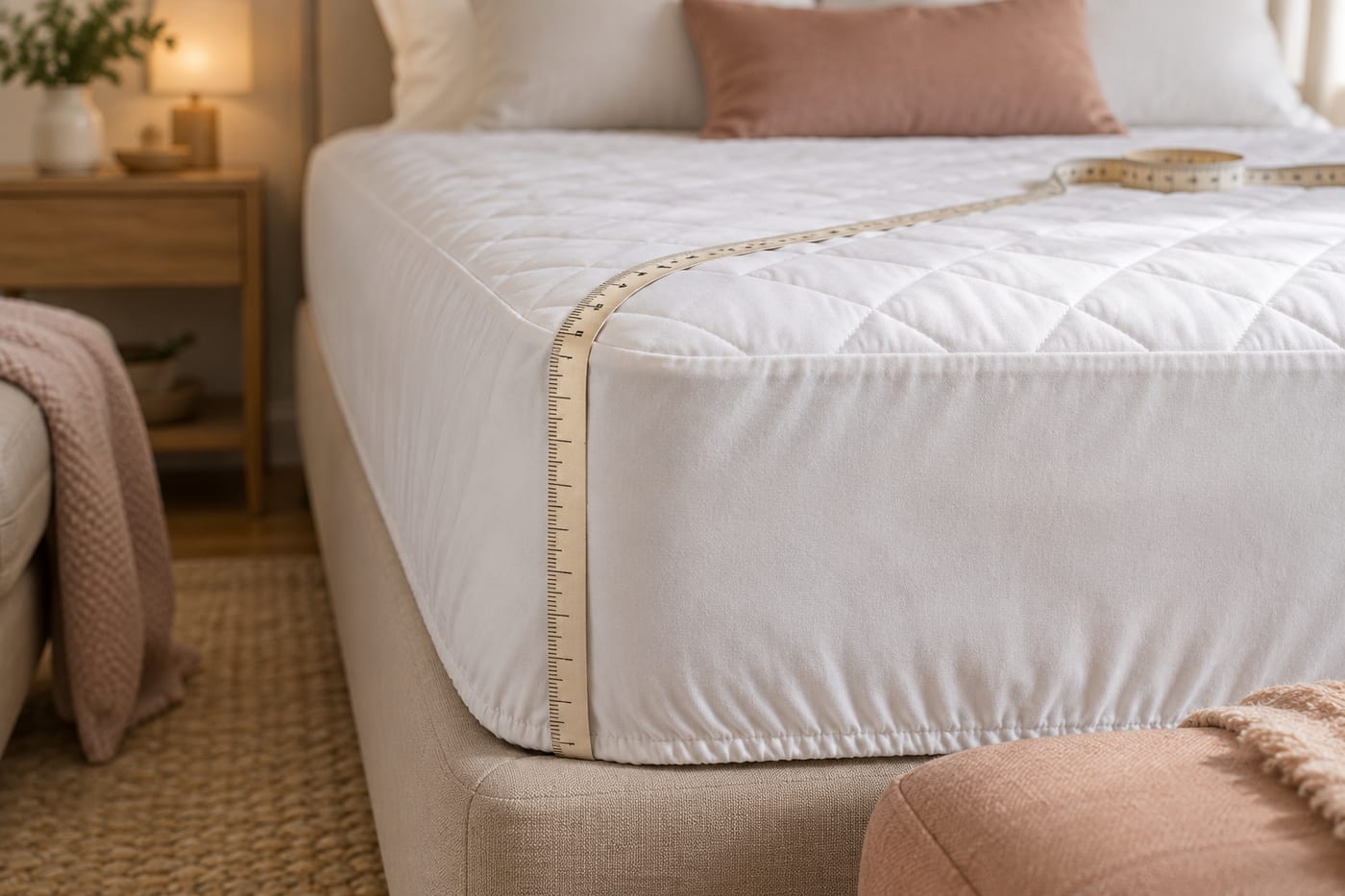
Fit the protector without forcing its corners, then add a clean sheet. If it appears smaller after washing, fails to cover the required area or stretches excessively around a topper, check dimensions and pocket depth before further use. Stretching does not compensate for poor fit. Our mattress-protector size guide explains how to include the complete height in your measurements. Once fitted, run a hand over the surface and check for a large fold, a loose corner or any area that remains uncovered.
How often should a mattress protector be washed?
Frequency depends on product instructions and actual use. Perspiration, a spill, pets sharing the bed and a change of users can all affect the need. There is no universal weekly or monthly schedule for every household. The protector does not always need to enter the machine with the sheet, but being underneath a sheet does not remove its maintenance requirements. Inspect it when changing bedding and look for dirt, odour or a structural change rather than relying solely on a calendar date. Follow any specific routine supplied for your model.
Keeping a spare of the same size and suitable depth can make the routine easier, especially when air drying takes time. Record the cleaning date and programme if your protectors have different instructions. Where a medical situation requires particular hygiene measures, obtain appropriate professional advice and choose a product compatible with those measures instead of exceeding its label temperature for improvised disinfection. Hotter washing is not automatically better for the item. Matching a protector to your needs includes considering maintenance requirements before buying it.
Peeling, cracks and leaks: when to seek advice or replace it
If the inner layer peels, cracks or separates from the fabric, stop and ask the manufacturer for guidance. A waterproof protector may still resemble a usable sheet after its barrier has been damaged. There is no general detergent or home treatment that restores a membrane to its original condition. Keep the model details, photographs and care instructions so you can explain when you first noticed the change. If the item is new or within a warranty period, check the service terms before attempting a repair yourself.
Moisture on the mattress does not always prove material failure. Also check slipping, incorrect size, partial coverage and liquid arriving from the sides. Nevertheless, do not rely on a visibly damaged item for essential protection while awaiting advice. There is no need to pour a bottle of water onto it while it is fitted to the mattress. If the manufacturer suggests a function test, use the method and location specified. Persistent dirt, unusual odour or structural change calls for a considered cleaning or replacement decision instead of another automatic wash.
Finish the routine and plan your next protector
When treatment is complete, keep a photograph of the care label and model details somewhere easy to find. Mark the size on a spare protector’s storage bag while retaining its original label on the product. Fold and store it only when completely dry and according to its directions, avoiding compression where restricted. When you retrieve it months later, you should not have to guess whether it is the model permitting a higher wash temperature or one requiring different treatment. Clear identification is particularly useful with several similar-looking protectors.
For your next purchase, include maintenance in the requirements: a wash temperature appropriate to your needs, a drying method available at home, correct dimensions and depth, and clear information about which area has waterproof protection. The choice between fitted elastic and zipped encasement also affects removal and refitting, so our comparison guide is useful. An item that is manageable to remove and has understandable directions supports a practical routine. The intended result is a clean, dry protector that fits and has an intact protective layer, maintained through a process you can confidently repeat.
From care label to drying

- Read model instructions
- Wash only as permitted
- Dry and inspect the layer
Video: laundering a SafeRest protector example
SafeRest’s 2014 manufacturer video shows removal, laundering and drying of its protectors. The instructions concern the illustrated models and publication date; your current model’s label and instructions determine permitted temperatures, products and drying.
By SafeRest · Video language: English
The player loads only after a click, subject to your external-content preferences. Player privacy information.
The article can be read without watching. Captions depend on the options available on YouTube; the explanation is not a transcript.
Frequently asked questions
What temperature should I wash a mattress protector at?
Use the model’s care label. Some models specify 60°C and others have different limits; neither the surface fabric nor the generic name establishes one temperature for all protectors.
Can a mattress protector go in a tumble dryer?
Only when its label permits it, at the approved heat level. Washing permission does not imply tumble-dryer permission, and ironing or direct heating is not automatically an approved alternative.
Can I add fabric softener?
Check the model instructions. Some manufacturers prohibit it for their protectors, so do not add it from habit when washing bedding.
How can I treat a stain without harming the barrier?
Blot excess gently and use only an approved product and method. Read the stain remover’s instructions too; no single home mixture suits every protective layer.
Can I wash the protector with sheets?
Only when protector and appliance instructions allow it and the load is suitable. Items with buttons or zips may be prohibited for a particular model even when colours match.
How often should I wash a mattress protector?
Use manufacturer guidance, the item’s condition and actual use. A spill or dirt may require earlier treatment; there is no fixed frequency for every home.
My protector peeled after washing. Will another wash help?
Washing does not restore a separated or damaged barrier. Photograph the condition and ask the manufacturer about treatment, warranty or replacement.
Do I also need to wash the mattress?
The mattress and protector are separate items. If the mattress became wet or dirty, treat it according to its own instructions and check dryness before replacing the protector and sheet.
Sources and scope
Sources checked on 10 October 2026. Manufacturer sources describe their own products and instructions; they do not establish one care rule for all bedding and mattresses.
- IKEA: GRUSNARV 605.221.29 care instructions
Israeli product page: washing up to 60°C, low-temperature tumble drying, no ironing and a warning about buttons and zips. Checked 10 October 2026.
- Panda London: Bamboo Mattress Protector
Product-specific page: washing up to 50°C, preferred line drying and permitted low-temperature tumble drying. This refers to the page checked on 10 October 2026; the product version’s label takes precedence.
- Panda London: product care guide
Separate directions for protectors, topper covers and foam items. The protector instructions also prohibit softener and bleach. Cover instructions do not apply to a foam core.
- Whirlpool: preventing laundry damage
Manufacturer guidance on loading and item inspection; consult your own appliance manual for programme and load compatibility.
By MyViro.
The content explains textile characteristics and is not the result of a product test in a laboratory. How we prepare our guides