Three names, without three fixed definitions
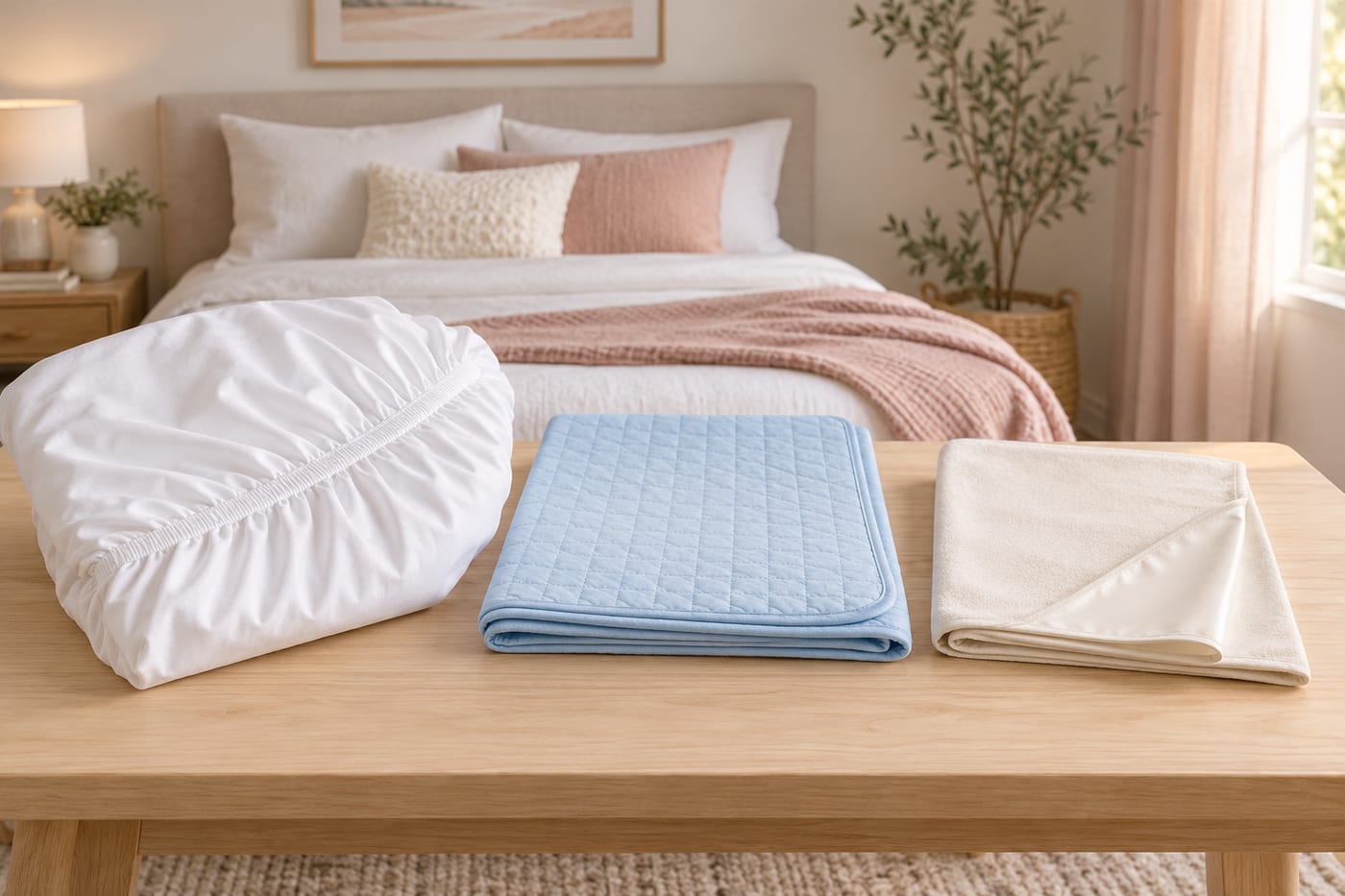
Searching for a waterproof mattress protector also brings up waterproof sheets, underpads, absorbent bed pads and pads with tuck-in wings. Shops do not use these names in one consistent way. An item called a mattress protector in one shop may be a small pad placed above a sheet, while another item with the same name fits over the whole mattress. A bed pad may be disposable or washable. The title is a useful starting point for a search, but it cannot tell you exactly what you will receive.
Compare four separate questions: does the item absorb liquid, does it provide a barrier against passage, which area does it cover, and how does it stay in position? Those properties should not be bundled into one assumption. Goldpharm’s Israeli category places protectors, waterproof sheets and bed pads together, illustrating the overlap in local terminology. This guide uses the names to explain common constructions without assuming that every product carrying a particular name has that exact structure. Confirm the actual construction in the individual model’s description and label.
Absorption and a liquid barrier do different jobs
Absorption means that a material takes liquid into itself and holds some of it. A barrier is a layer intended to prevent liquid reaching what lies below. A towel illustrates absorption, but it is not necessarily a barrier: once wet, it can pass moisture into the fabric underneath. Conversely, a waterproof sheet can block passage without taking up the liquid, leaving it on the surface or allowing it to move towards an edge. That distinction is more useful than descriptions such as thick, soft or high quality.
A multilayer item can combine a surface fabric, an absorbent layer and a backing intended to block liquid. Even then, examine the limits of its use: coverage, seam condition, any stated capacity and manufacturer instructions. A stated capacity does not establish performance in every sleeping position or spill. Liquid does not always land in the centre, and movement may change where it goes. When comparing items, record absorption and barrier function separately instead of treating the two as a single feature that automatically comes with the product.
For more information on the subject: Mattress Protectors: Types, Materials and How to Choose.
Waterproof protectors, waterproof sheets and bed pads: what to check
| Construction | Possible function | Check before choosing |
|---|---|---|
| Fitted protector with a barrier | Sleeping-surface coverage as specified | Mattress dimensions, pocket depth and barrier-covered areas |
| Padded protector without a stated barrier | Maintenance or an additional surface feel | Do not infer liquid protection |
| Waterproof sheet or protective sheet | A barrier over the area it covers | Material, fastening and permission to wipe or wash |
| Disposable bed pad | Local absorption, sometimes with protective backing | Active area, permitted position and replacement directions |
| Reusable bed pad with wings | Local absorption and tuck-in positioning | Active area measured separately from wings |
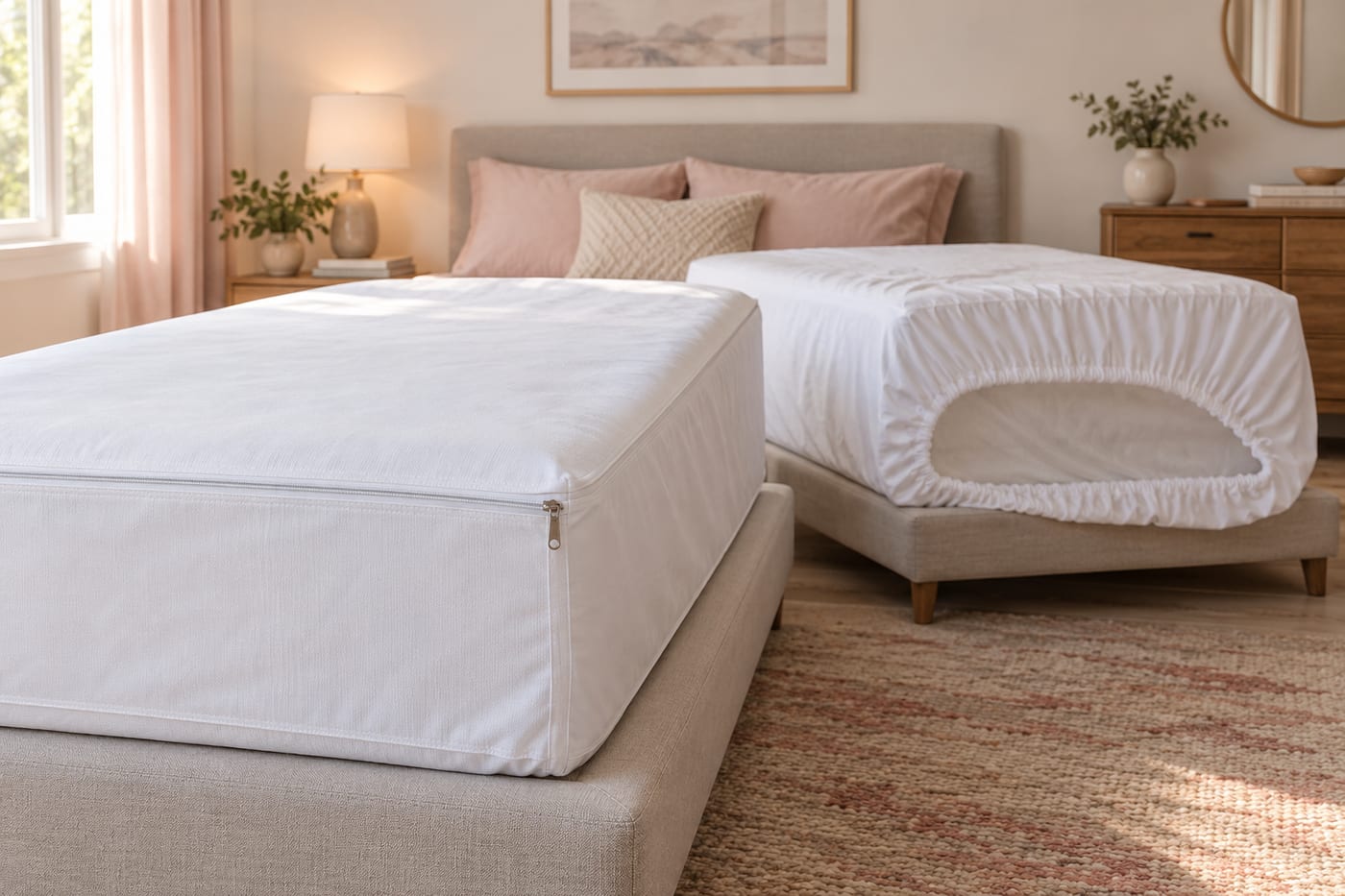
| Full zippered encasement | Top, side and bottom coverage according to construction | Which panels include a barrier and how it is removed for care |
What is a fitted waterproof mattress protector?
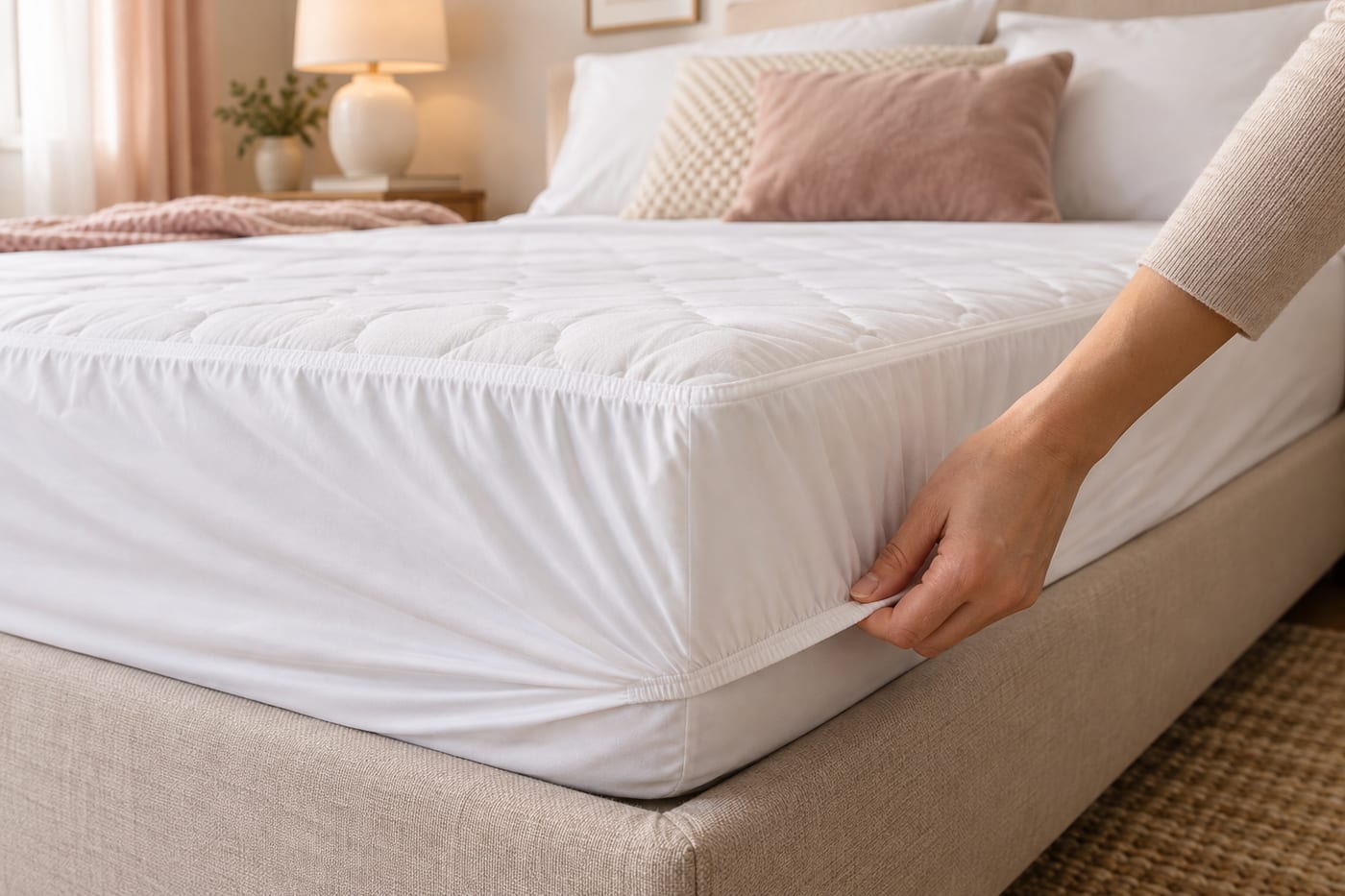
A protector fitted like an elasticated sheet usually covers the sleeping surface and is held by elasticated corners or edging. Some models combine an upper fabric with a barrier layer; others use padding intended chiefly for maintenance and feel. The words mattress protector therefore do not establish waterproofing. Look for an explicit description of the protective layer and exactly which areas it covers. A skirt extending around the sides does not automatically demonstrate that those sides have the same barrier as the sleeping surface.
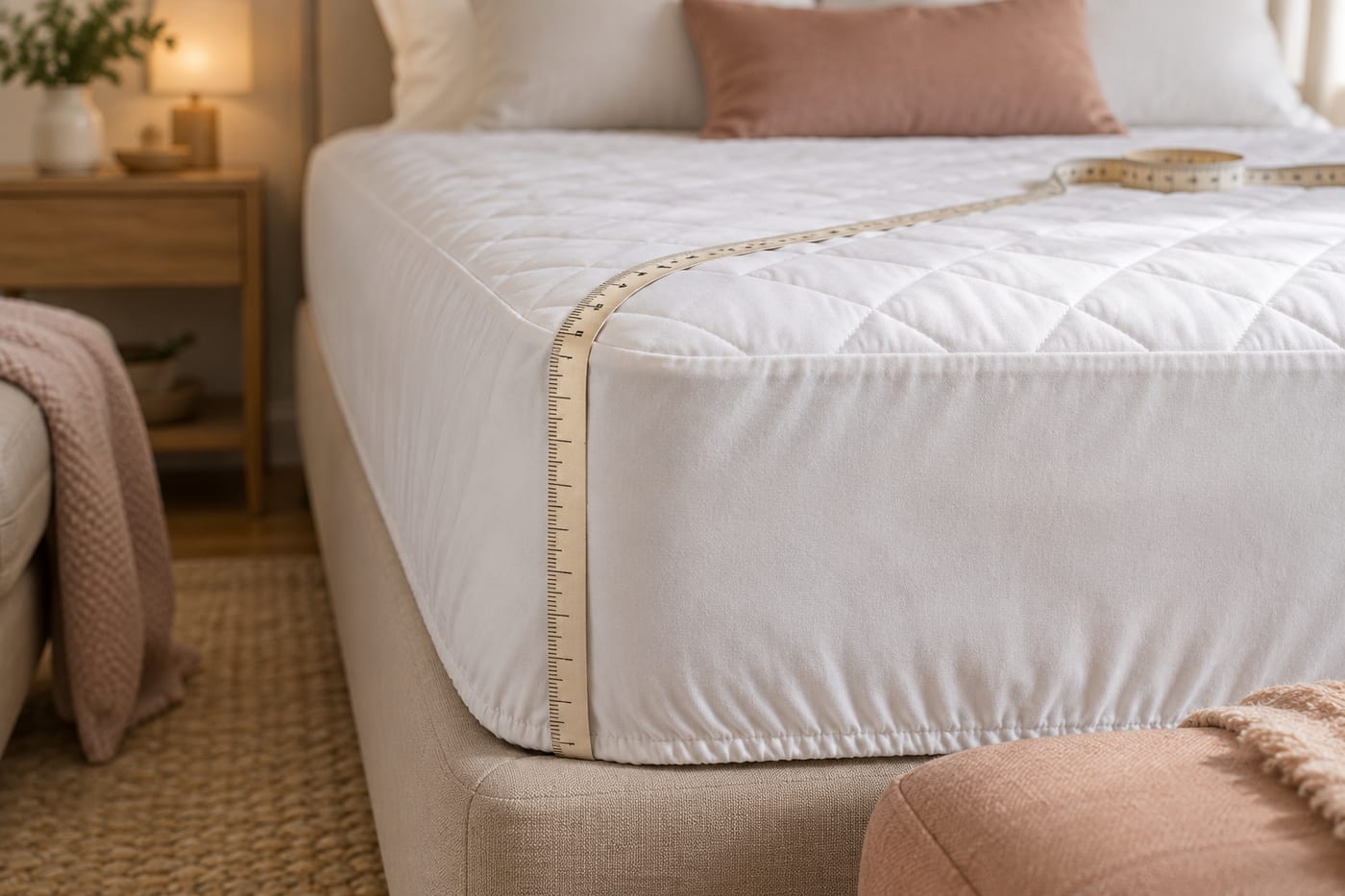
For example, IKEA describes GRUSNARV as having a layer that prevents liquid passing through, elastic edging and compatibility with mattresses up to thirty centimetres high. This demonstrates a specification worth reading rather than a universal rule for fitted protectors. Measure length, width and height before fitting, and check that the corners do not need forceful pulling. A protector that rises or folds may leave an area you intended to cover exposed. Thezippered versus fitted protector guide.
Waterproof sheets: check material, coverage and care
The Hebrew term shaavonit is often used for a simple protective sheet with a waterproof side. However, local shops also use it for items with fabric, additional layers or washing permission. Do not assume every waterproof sheet uses the same plastic or can be wiped with the same cleaning agent. Establish whether you are considering a plain sheet, a fabric-backed sheet or a padded item. Permitted contact and positioning may differ between models too, so read the directions before putting the item into use.
A flat product can be practical for covering a defined area without wrapping an entire mattress, if that is a manufacturer-approved use. You still need to understand how it avoids folds and movement, and where the protected area ends. Do not treat sheet width as the width of a mattress it is designed to fit. If a model is described as wipe-clean, obtain directions for cleaning agents and drying. That phrase does not automatically authorise bleach, disinfectant or a washing machine. Choose an item with a maintenance routine you can actually carry out.
Absorbent bed pads: local coverage that can be changed
A bed pad generally covers a defined area, and may also have a backing that blocks liquid. Disposable and reusable versions are available, with or without tuck-in wings. Do not assume a pad covers the whole mattress simply because its title includes double or queen. Check the active area and position it according to the model’s directions. Being able to remove a local pad can help when you want to change the wet area without stripping the entire bed, provided the other layers have stayed dry.
When comparing disposable and reusable options, think through the actual changeover: how many items are needed between laundry loads, where a used item goes and how a multilayer reusable pad will be dried. Check for restrictions on reuse or placement as well. An absorbent pad does not remove the need to inspect the sheet and layers underneath after wetting. If an edge has curled, liquid has landed outside the protected area or the backing is damaged, identify what became wet and change it accordingly. This is a check of the bed’s condition, not a promise that a particular number of layers always suffices.
Pad dimensions are not always mattress dimensions
There are two different measurements: the size of the mattress and the size of the protective area. A fitted protector is usually chosen by mattress length and width together with its height. A local pad is chosen according to the area to cover and its fixing method. Eznites lists a double-bed Brolly pad with a one hundred and fifty-five by ninety-five centimetre area and seventy-five-centimetre wings. These are pad and wing measurements, not the dimensions of a double mattress measuring the same size.
The wings are used for positioning as directed; do not count them as additional absorbent area unless the manufacturer explicitly does so. Orientation also matters: placing a pad across a bed can cover a different region from positioning it lengthways. IKEA LEN in seventy by one hundred centimetres, by contrast, illustrates a local sheet with waterproof backing rather than a fitted protector for a whole mattress. Before buying, sketch the mattress as a simple rectangle and mark the intended coverage. The mattress protector sizing guide helps distinguish these measurements.
Layer order: mattress, topper, protector and sheet
On an adult or older child’s ordinary bed, a fitted protector is commonly positioned below the sheet, subject to its instructions. A local absorbent product may instead be intended to go above the sheet so it can be changed conveniently. There is therefore no single layer order for everything called a protector. Look at the diagram or directions to establish which side faces up, whether direct contact is intended and where wings should tuck in. Incorrect orientation can change the absorption arrangement and the comfort of use.
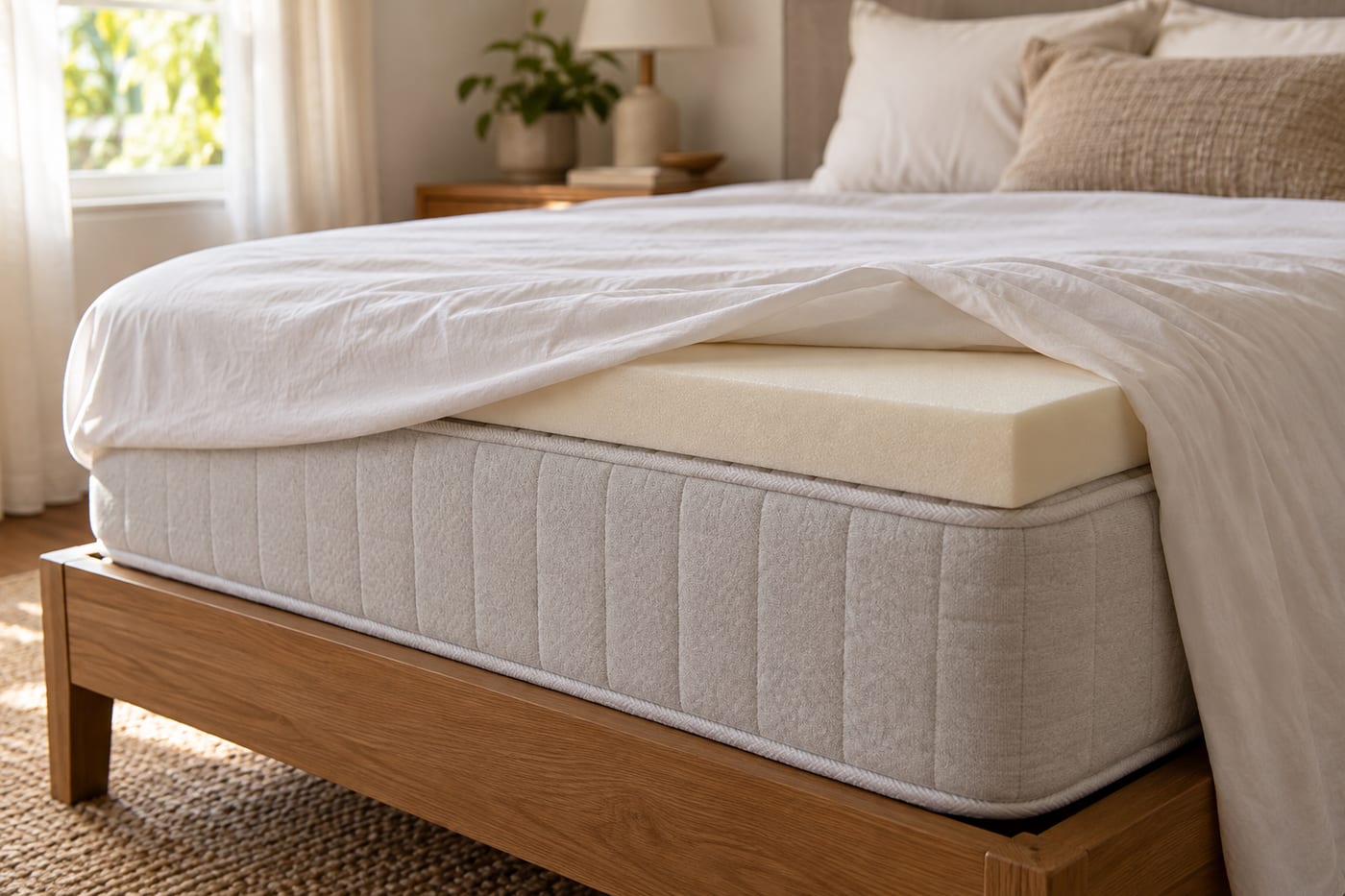
If there is a topper, first decide which layer you want to protect. A protector below a topper does not necessarily cover the topper against liquid arriving from above. A protector wrapping the mattress and topper together needs to fit their combined height and follow the requirements of both items. Adding layers without a defined purpose can change the feel and complicate changeovers. Read the mattress topper guide to distinguish a comfort layer from a protective layer, and plan which items will be removed for cleaning if something gets wet.
Protected area, edges and movement during use
Even when the material includes a liquid barrier, the bed is not necessarily a closed system. Liquid may reach an uncovered side, pass around the edge of a local pad or wet the upper sheet. Some protectors have a barrier only over the top area, while a full encasement includes a bottom and side panels according to its specification. Suitable positioning depends on the aim: broad protection of a sleeping surface is different from convenient replacement of a small area. Define the required coverage before comparing thickness or colour.
After fitting, check that the product lies flat, the wings or elastic are arranged correctly and no corner has rolled over. Check again after ordinary use to see whether it has moved. Do not add pins, clips or improvised fittings that the product does not authorise. If it will not stay in position, return to the sizing, construction and fitting directions. Something that looks satisfactory on the first day but requires correction at every bedding change may not suit your routine. Record where movement occurs instead of assuming that every layer simply needs tighter fastening.
Feel, rustling and descriptions such as breathable
How bedding feels depends on the complete item: its upper fabric, barrier layers, padding, the sheet and how tightly it is stretched over the mattress. The name of one material does not guarantee that you will experience no heat or rustling. The word breathable does not by itself explain how the property was measured or how the product will feel in your home. Where possible, examine a sample or detailed construction information. A photograph of a soft surface does not establish the absence of a barrier, and the word plastic does not make every model feel identical.
Also consider whether you mainly want a thin barrier, an absorbent area or padding that changes the surface feel. These needs can lead to different constructions. If the fitted sheet is already stretched tightly, an additional thick layer can affect its fit, so reassess pocket depth. If the bedding feels uncomfortable after fitting, first look for a fold, reversed orientation or overstretched elastic. Then consider whether the construction suits you. Claims such as completely silent cannot replace examining the actual model and checking the return conditions before purchasing.
Cleaning: protection layers do not share one set of directions
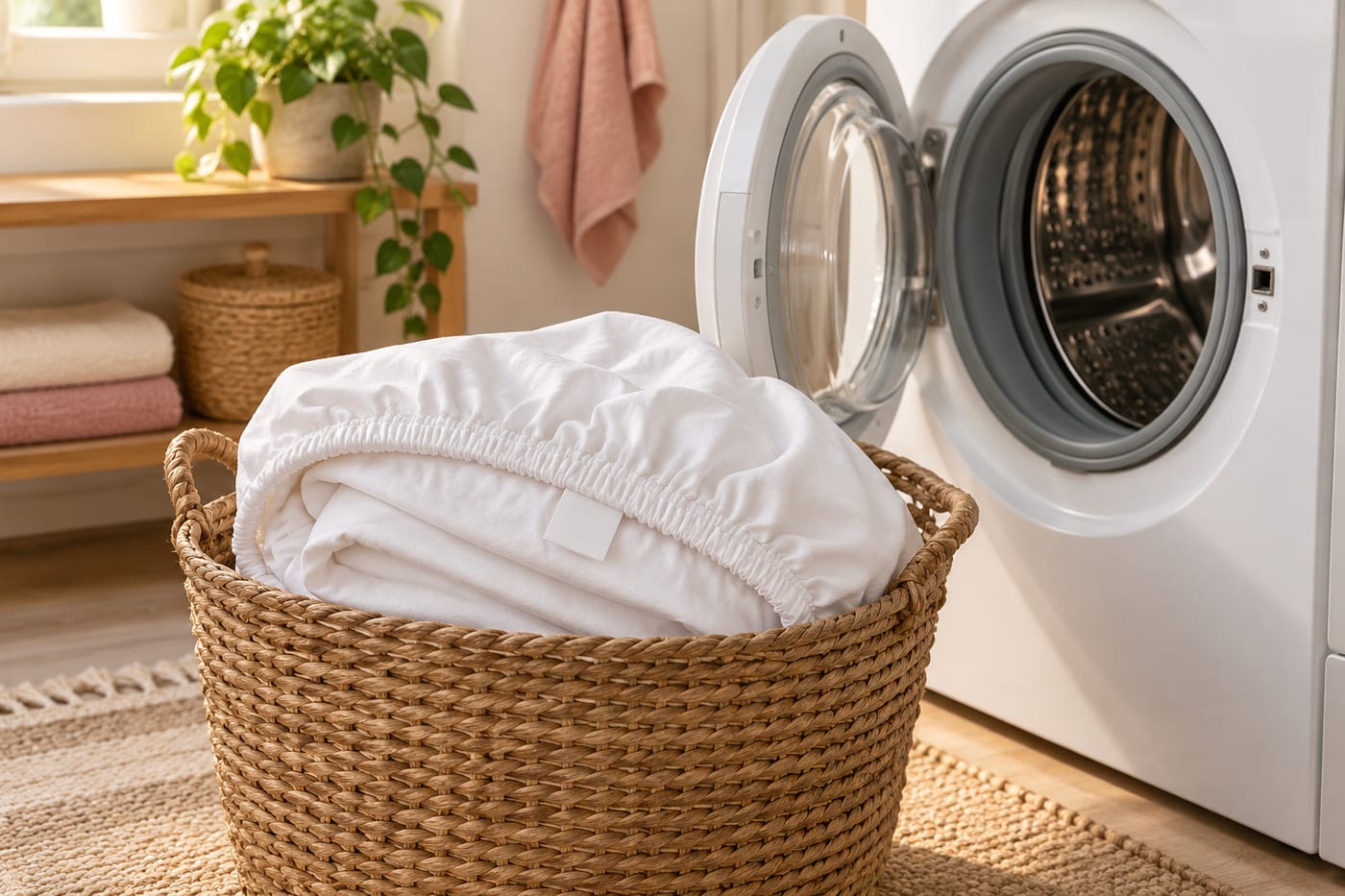
Different protective materials may have different washing and drying instructions even when both products are intended for liquid protection. IKEA provides a clear model-specific example: the LEN page reviewed does not permit tumble drying, whereas the GRUSNARV page specifies low-heat tumble drying. Do not transfer directions from one to the other, and do not infer backing care from the number of layers or a cotton surface. A disposable item does not become reusable merely because it appears intact after use.
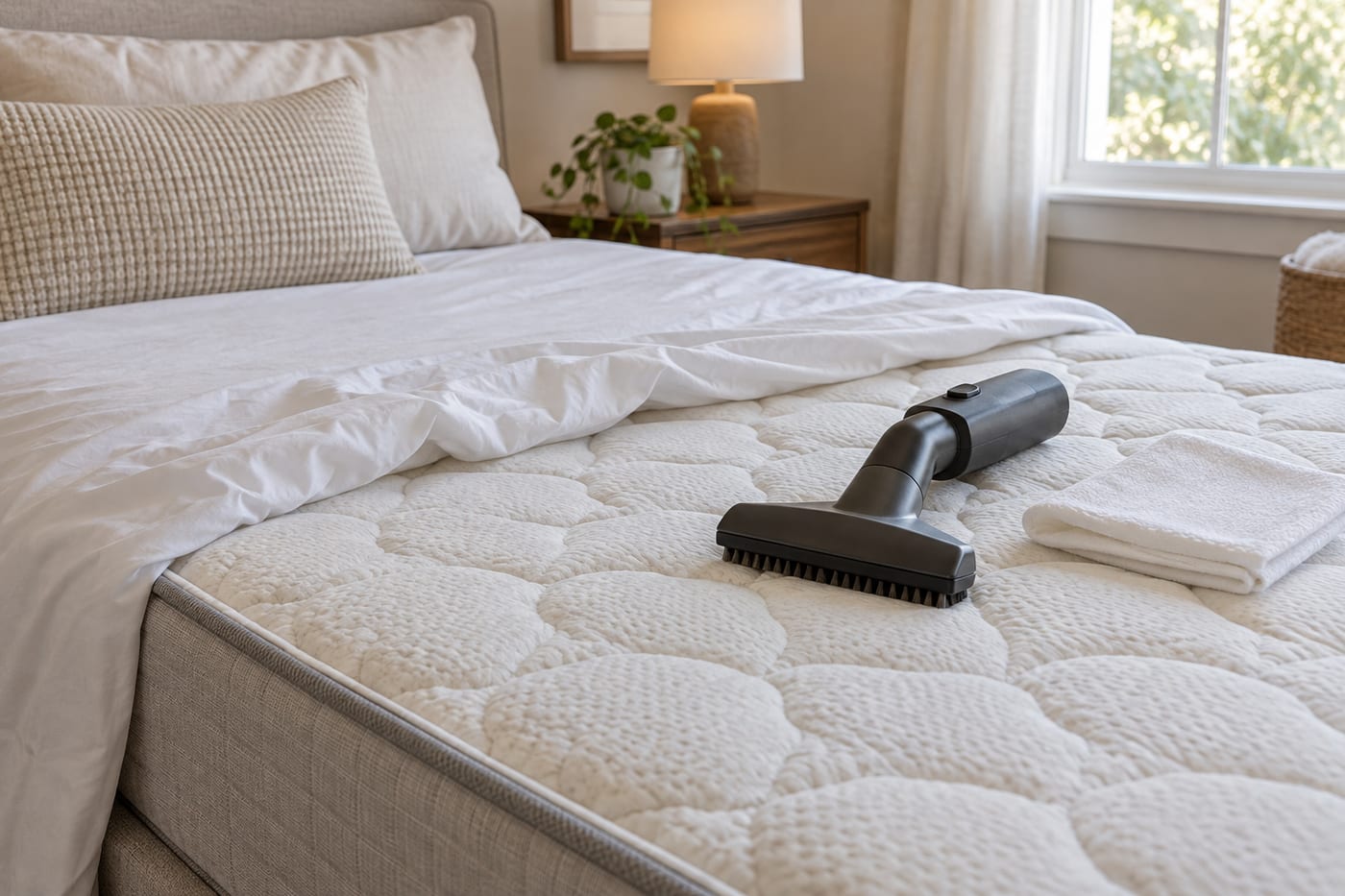
Keep the label and photograph it before it fades. Check the approved detergent, temperature, spin and drying method, together with any softener or bleach restrictions. A dry-feeling top fabric is not a sufficient dryness check for a multilayer item. Inspect folded regions and wings before returning it to a bed or cupboard. Themattress protector washing guide provides a label-led sequence. Planning care in advance also helps you choose a practical quantity of replacement items without inventing a laundry timetable that is supposed to suit every household.
After a spill, inspect each layer separately
When you find wet bedding, remove the wet item in a way that limits transfer to the remaining layers and inspect what lies underneath. A pad that leaves the sheet wet does not necessarily prove that every part of the protector failed: liquid may have landed outside its coverage. Conversely, a partly dry upper surface does not establish that the mattress below is dry. Inspect the relevant area, edges and underside. Do not put damp layers back merely to finish making the bed quickly.
If the mattress has become wet, follow its own manufacturer directions. Do not soak it or pour cleaning agent through the protector to reach a stain. The mattress cleaning guide explains the difference between local treatment and cleaning a removable cover. When the protector is clean and dry, examine it for tears, peeling layers or opened seams. Returning to its original shape after washing is not enough. If you suspect barrier damage, ask the manufacturer for guidance before relying on it for the purpose you bought it for, and check whether its fit remains correct.
Choose around the actual household need
For broad coverage below a sheet, begin with a correctly sized protector that explicitly provides a liquid barrier over the required area. For changing a defined region, examine a local absorbent pad and its permitted positioning. For a wipe-clean sheet, establish that the model really allows wiping and that its fixing method suits the surface. Functions can be combined, but first identify the job of every layer. Two items with different names may duplicate one job while leaving a different requirement unanswered.
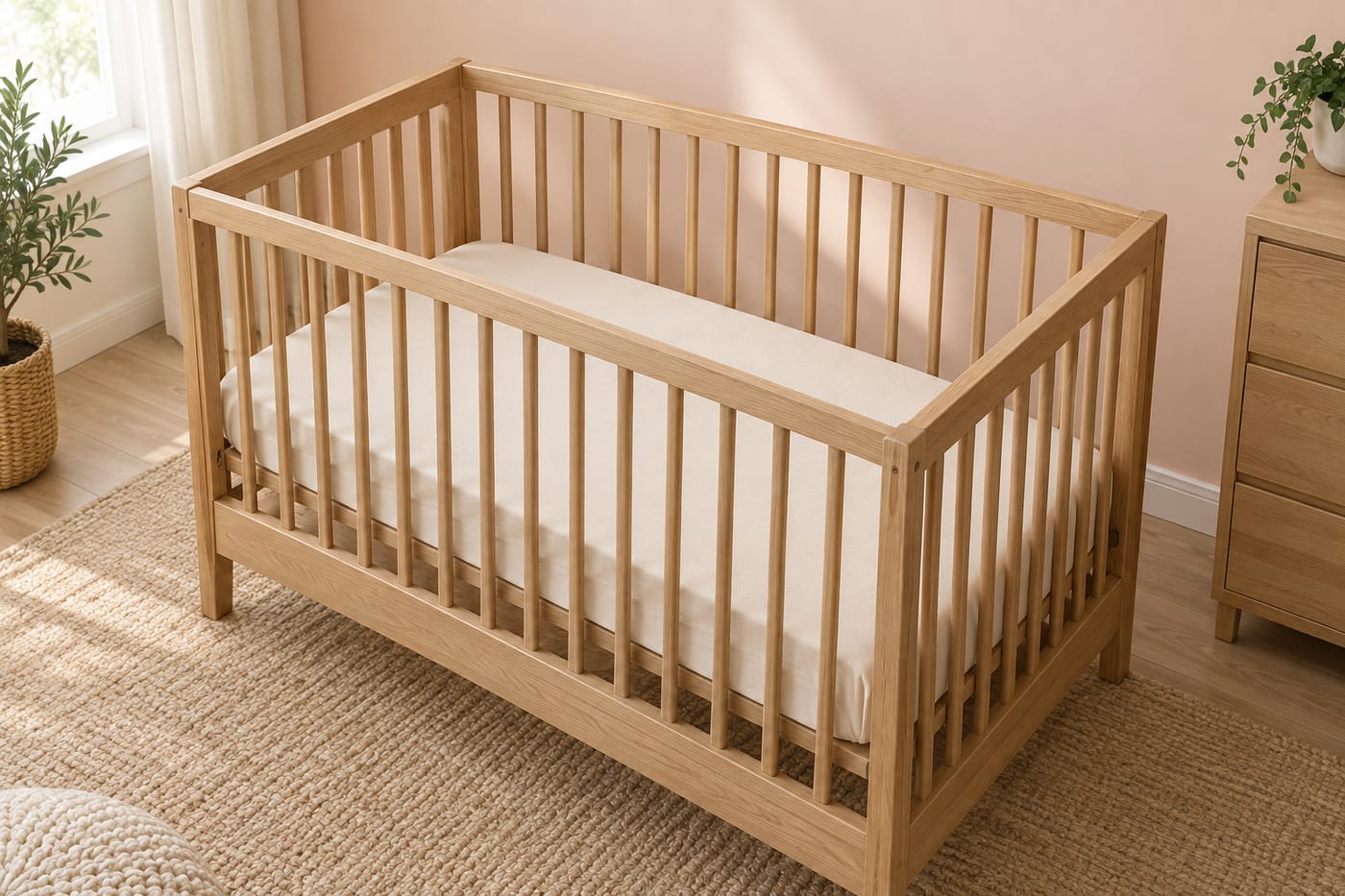
Before buying, record mattress dimensions, height including a topper if relevant, required protective area and the cleaning method available at home. Compare specifications rather than sweeping promises, and keep the model’s directions. For infants, this guide does not establish a recommendation to add pads, cushioning or layers to a cot; the sleeping environment requires its specific safety guidance. See the safe infant sleep guide. This article explains protective bedding and maintenance rather than determining medical management for wetting, sensitive skin or allergies. Those needs should guide selection through appropriate professional advice.
What does the protective product do?

- Check coverage
- Absorb or block?
- Placement and care
Video: construction and use of a waterproof protector
SleepyCat demonstrates a commercial fitted protector with a liquid barrier. This illustrates one product: the supplier’s demonstration is not a MyViro test and does not establish pest prevention, medical suitability or other protectors’ performance.
By SleepyCat · Video language: English
The player loads only after a click, subject to your external-content preferences. Player privacy information.
The article can be read without watching. Captions depend on the options available on YouTube; the explanation is not a transcript.
Frequently asked questions
Is an ordinary mattress protector waterproof?
Not necessarily. Some protectors provide maintenance or padding without a stated liquid barrier. Check the actual specification and the area covered by the protective layer.
How is a waterproof sheet different from a bed pad?
A waterproof sheet usually describes a barrier sheet, while a bed pad usually describes local absorption. Retail names vary, and one item may combine both functions.
Does a bed pad go above the sheet?
Some models do, to enable local changes. Check the product’s directions, upper face and wing positioning; there is no rule for every pad.
Does a 155 by 95 pad fit a mattress of that size?
The numbers may describe only the absorbent area. The double-bed Brolly example also has separate wings and manufacturer-described orientation. Check fit according to construction.
Does an absorbent layer also block liquid?
Only if the specification includes a suitable barrier. Absorption alone does not establish that liquid cannot reach the layer below.
Where does a protector go when there is a topper?
That depends on what you want to protect and the instructions for both items. A protector below a topper does not cover the topper from above; wrapping both requires suitable combined-height capacity.
Can every protector be tumble dried?
No. Permission varies between models. Check the actual label and manufacturer directions before washing and dry it completely by the approved method.
Can this kind of pad be used in a cot?
Do not infer infant suitability from a general guide or product name. Follow safe sleep guidance and the item’s compatibility requirements; do not improvise additional layers.
Sources and scope
Sources checked on 10 October 2026. Manufacturer sources describe their own products and instructions; they do not establish one care rule for all bedding and mattresses.
- Goldpharm: waterproof sheet and mattress protector category
An Israeli source demonstrating overlapping names for pads, sheets and protectors and different available constructions. Medical and promotional statements on that page do not establish promises in this guide.
- Eznites: Brolly pad with wings for a double bed
An example of a 155×95 cm active area with 75 cm wings; the active-area dimensions are not mattress dimensions.
- IKEA: LEN protector, 70×100
An example of local coverage with waterproof backing and its own care directions, including no tumble drying.
- IKEA: GRUSNARV with elastic edging
An example of a barrier protector with a maximum mattress height of 30 cm and low-heat drying permission; the specification should not be applied to other models.
By MyViro.
The content explains textile characteristics and is not the result of a product test in a laboratory. How we prepare our guides