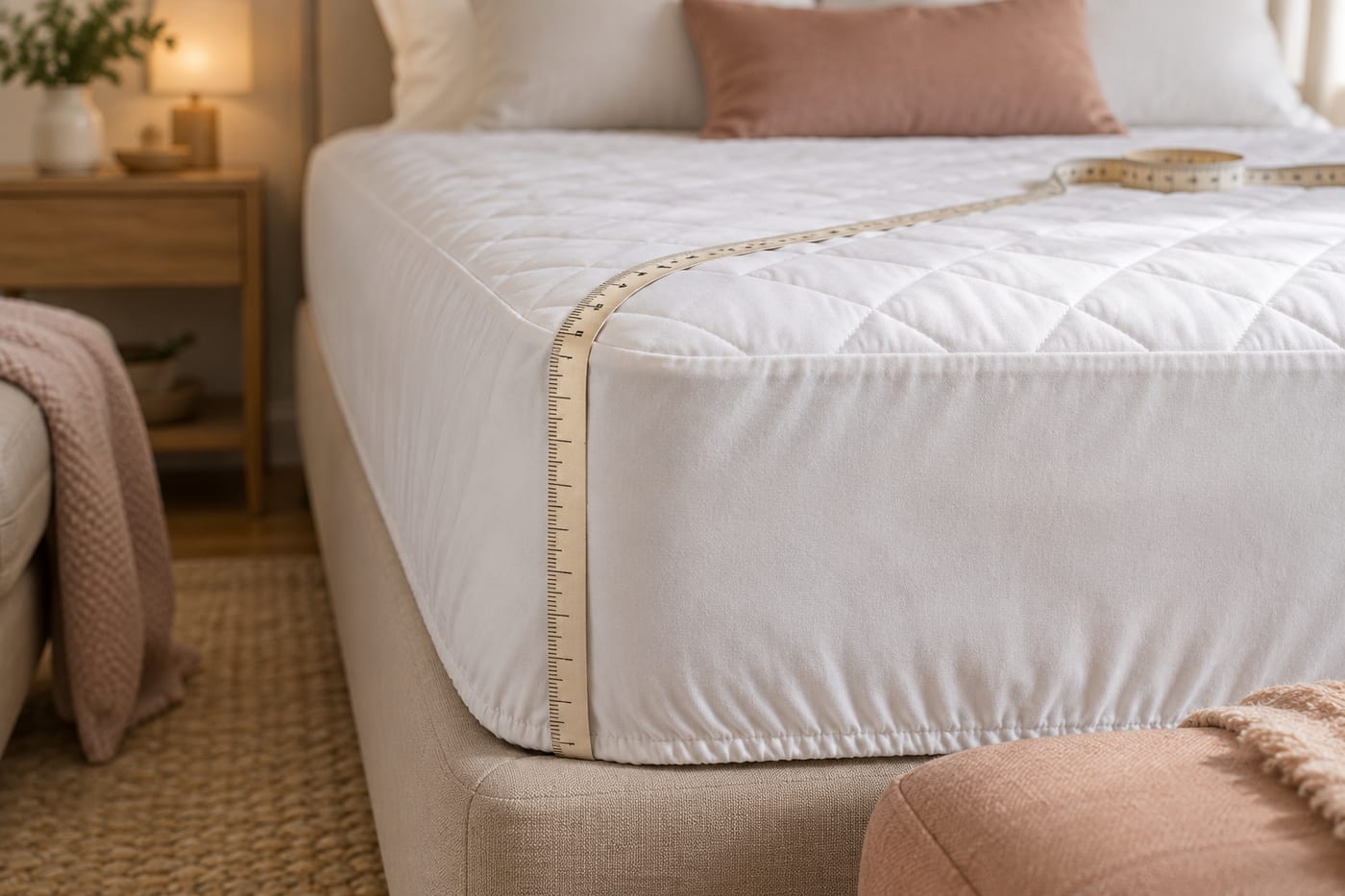
Start with the mattress, not the bed name
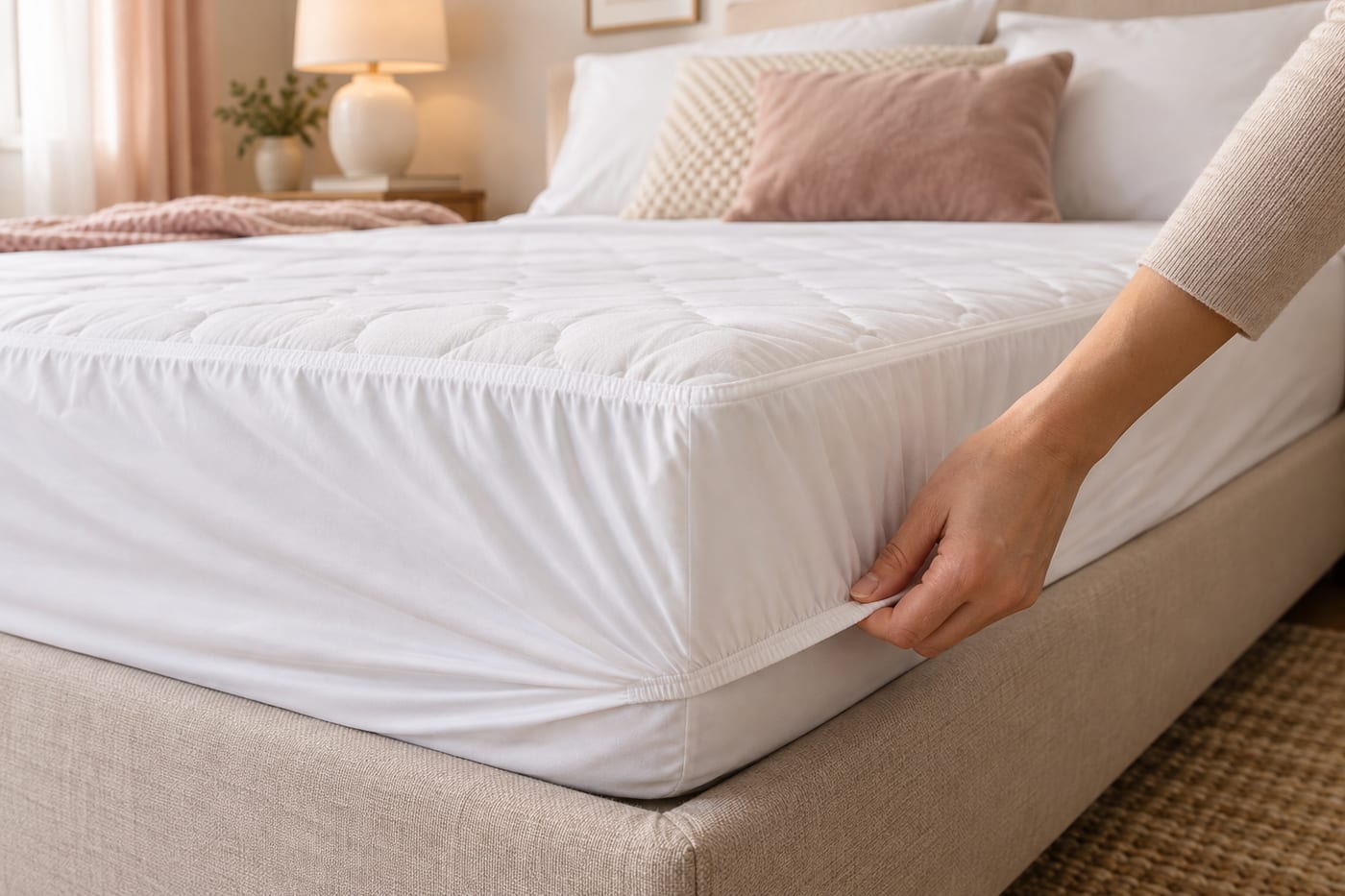
A mattress protector needs to fit the object it covers. Names such as single, wide single or double can help you start a search, but they cannot replace three measurements: width, length and height. Two beds described as doubles may have different mattresses, and a particular width may be sold in several lengths. The outer dimensions of the bed frame are a separate measurement. Upholstery, a headboard and a projecting frame edge can add centimetres that have no bearing on the protector.
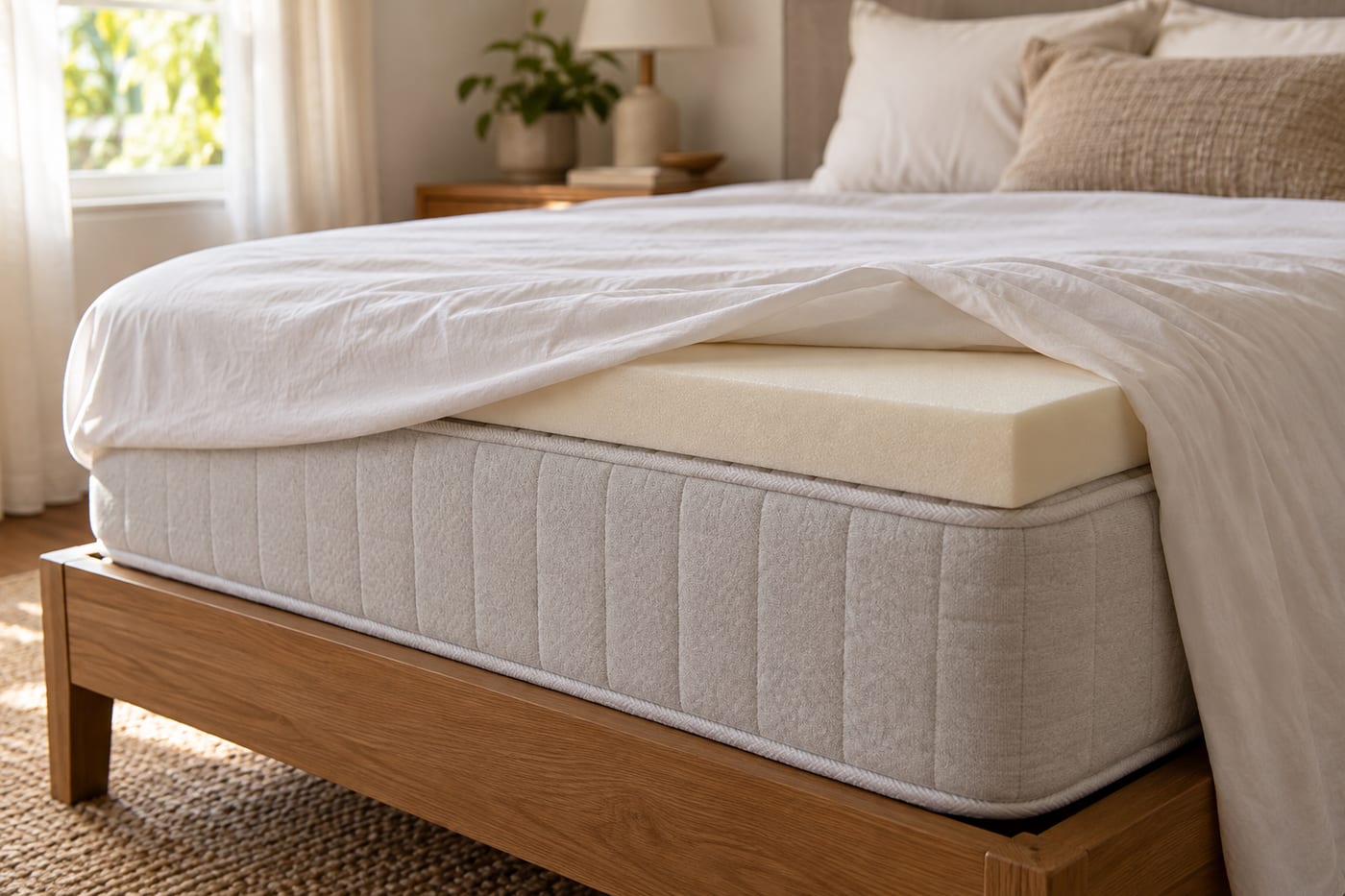
Remove the bedding and examine the mattress you will actually use. If there is a topper, decide now whether the protector will wrap around that too. Record the measurements on your phone in a consistent order and keep a photograph of the label. When buying for several bedrooms, add the room name to each record. This makes it possible to compare your measurements with a product specification without relying on memory, bed colour or the sheet that previously happened to fit.
How to read a size such as 160×200 cm
Throughout this guide, sizes are written as width × length in centimetres. A size of 160×200 therefore means 160 cm wide and 200 cm long. Do not assume that every seller uses that order: some write length first, and specialist products may include height in the same line. Read the field labels, diagram or detailed description. The size in a title may describe the mattress the item fits rather than the dimensions of the fabric when laid out on a table.
When ordering outside Israel, also check the unit of measurement. Inches and centimetres are not interchangeable numbers, and names such as queen and king vary between markets. Convert both mattress surface dimensions into the seller’s stated unit before comparing them. Our guide to bedding sizes in Israel explains how to distinguish fitted-sheet, duvet-cover and pillowcase measurements when assembling a complete bedding set.
For more information on the subject: Mattress Protectors: Types, Materials and How to Choose.
Mattress size chart for choosing a protector
| Mattress size | Possible bed arrangement | Compare before buying |
|---|---|---|
| 80×190 | Narrow single or one split-bed side | 190 cm length; do not automatically substitute 200 |
| 80×200 | Long narrow single or one split-bed side | 200 cm length and each side’s height separately |
| 90×190 | Single | 90 cm width and 190 cm length |
| 90×200 | Long single | 90 cm width and 200 cm length |
| 100×190 | Wider single, depending on the bed | 100 cm width; the bed name is insufficient |
| 120×190 | Wide single, depending on the mattress | 190 cm length in the item specification |
| 120×200 | Long wide single, depending on the mattress | 200 cm length rather than just a double label |
| 140×190 | Double, depending on the mattress | 190 cm length even on a double mattress |
| 140×200 | Long double, depending on the mattress | 200 cm length and total height |
| 160×200 | Wide double, sometimes called queen | Actual dimensions rather than the market name |
| 180×200 | Wide double, sometimes called king | One surface or a two-mattress construction |
| 200×200 | Wide square mattress, depending on the bed | Both dimensions and practical removal for care |
Measuring width and length with a straight tape
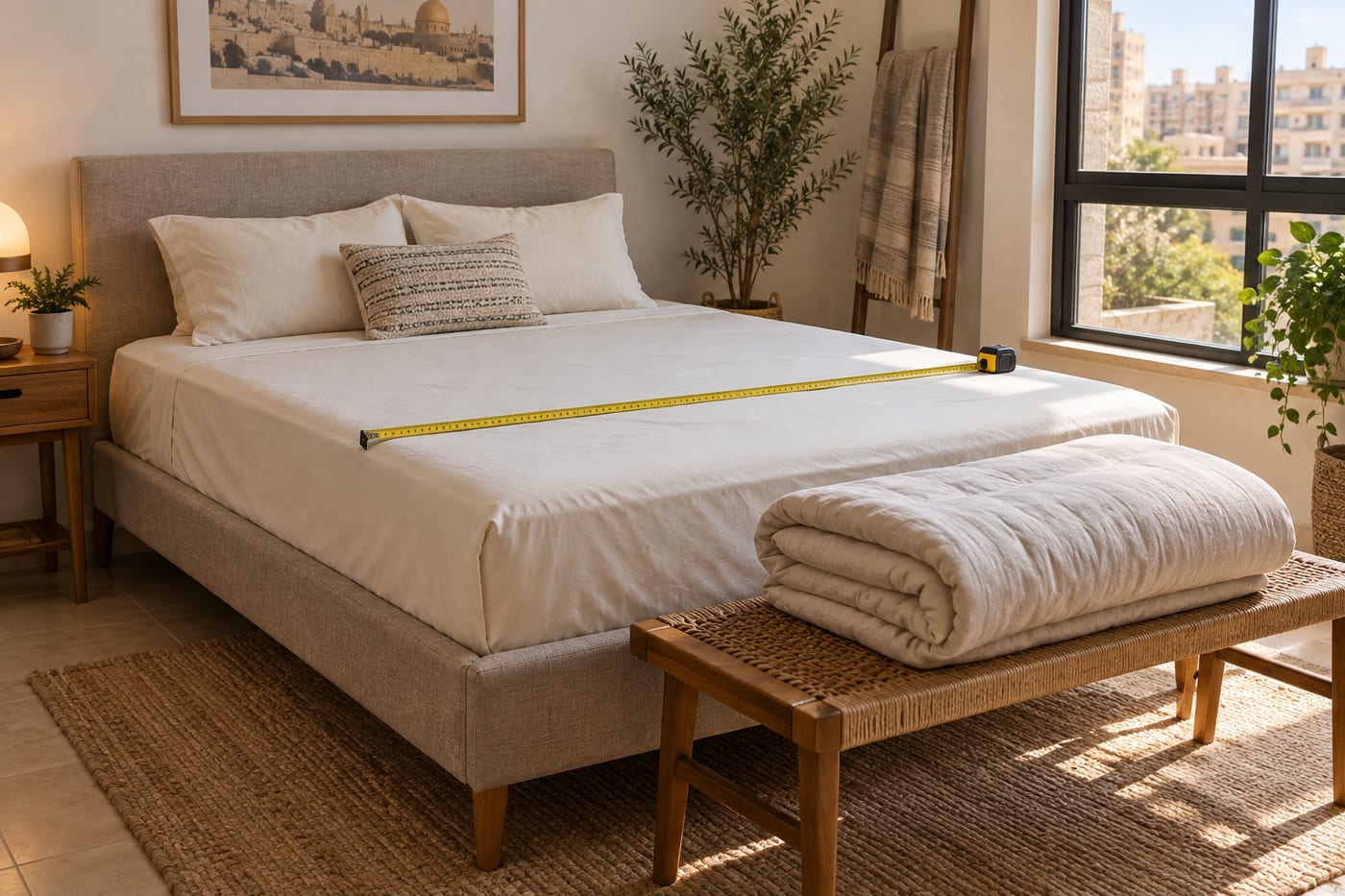
Use a measuring tape held in a straight line from one side to the other. Measure the width between the two mattress sides and the length from head to foot. Do not take the tape around a corner or include the bed frame. Avoid pressing down on a very soft mattress in a way that changes the reading. Repeat the measurement at another point if needed to confirm that the tape stayed straight and you read the correct mark at the far edge.
If the result differs from the label, check the unit and the order of dimensions again. Rounded corners, projecting stitching or a loose cover can make the edges less obvious, but estimating compatibility by sight is unnecessary. Look for a manufacturer statement covering your mattress measurements or a defined range of sizes. Do not automatically round a short mattress up to a longer protector on the assumption that elastic will absorb the difference; the actual product needs to allow that fit.
Mattress height is the third measurement
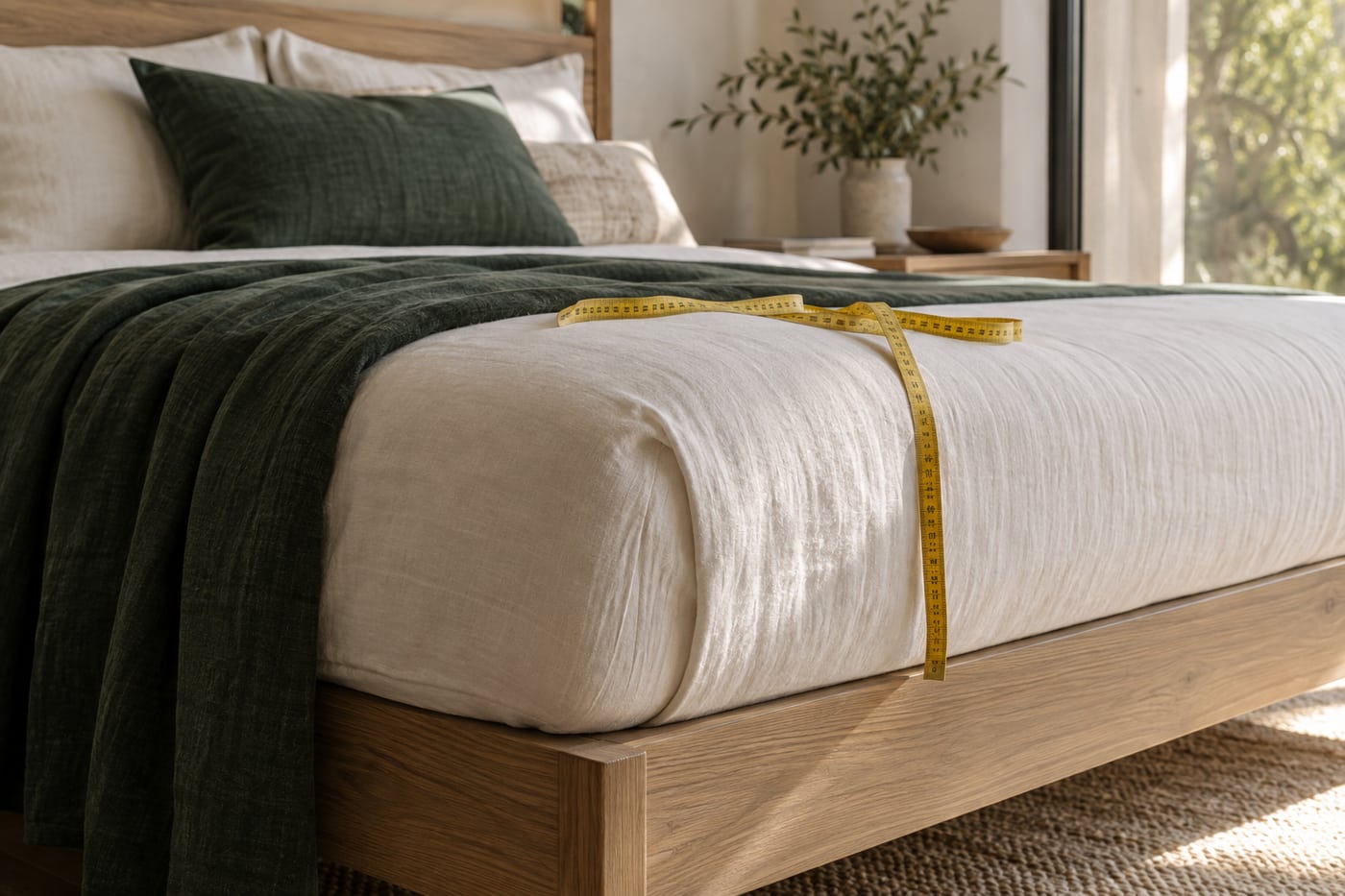
Measure from the mattress base to its upper surface, excluding the bed legs and headboard. One practical method is to place a light, straight object across the top and measure beside the mattress up to the object’s underside without compressing the upholstery. If the protector will cover a topper as well, measure both together in their intended arrangement. A thick cover already fitted to the mattress may contribute to the relevant height, depending on your planned order of layers.
A protector can have the correct width and length while still being unsuitable for the mattress height. Excess tension may lift corners, pull seams or stop the surface lying smoothly. Conversely, a deeper pocket is not automatically suitable for every shallow mattress. Look for the manufacturer’s stated height range and attachment method. Your measurements allow a precise question: does this model fit the recorded width, length and height, including every layer it is intended to surround?
Pocket depth, skirt height and maximum fit are different
Skirt height describes part of the fabric; maximum mattress height states a fit limit. One cannot always be inferred from the other because the design may need to reach around corners or beneath the mattress. Some protectors have no skirt at all and use corner straps instead. There is consequently no fixed subtraction formula that converts pocket depth into a suitable mattress height, and no reason to add an arbitrary number of centimetres to every purchase.
IKEA lists a maximum mattress height of 30 cm for GRUSNARV and 42 cm for ROSENVIAL. These are model-specific figures rather than rules based on material or price. The Brolly cotton protector page gives a protector height of 40 cm; its actual mattress fit range should be confirmed. A useful comparison matches the meaning of the measurements in both specifications, rather than simply choosing the larger number.
What the size table establishes and what remains to check
The table below gives examples of mattress sizes supported by Sealy Israel’s Copper protector, checked on 10 October 2026. Its selector combines lengths in options such as 80×190/200, and the dimensions panel confirms fit for both lengths. The table separates mattress measurements for clarity, rather than claiming separate product variants. It is not a list of every Israeli size, a standard or a promise of stock availability. The bed descriptions are only orientation labels; the numbers are what you need to compare.
After finding a row with matching width and length, return to the model you intend to buy and check height, construction, protected area and care instructions. A dimension table cannot establish whether a product is waterproof at the sides, whether your machine can wash it or whether it works with an adjustable base. Those are separate questions. Our Guide to mattress protector types helps you choose a construction before confirming the final fit.
Single protectors: length matters on narrow beds too
Pay particular attention to length on a single bed. An 80×190 cm mattress is different from an 80×200cm mattress, although both can be described as singles. Ten centimetres is part of the surface the protector needs to cover, rather than a difference in colour or style. The same separate check applies to 90×190 and90×200 cm. If there is a pull-out guest mattress beneath the bed, measure it independently instead of using the upper mattress dimensions.
A larger protector that stayed on one bed in the past does not establish compatibility with another mattress. Check whether the product is specified for one size or a range, and whether that statement covers your length and height as well. For bunk beds or frames with a mattress-height limit, consult the bed instructions before adding a padded layer. Measuring for a protector is not a direction to increase thickness and does not replace checking the mattress and other bed components.
Wide singles: check intermediate lengths as well
The Israeli term “bed and a half” is useful but not unambiguous. Do not select a protector solely because its packaging says double or shows a wide bed. Check the width, length and the specific model’s definition. Sealy’s Copper selector lists a combined 120×190/200option. Model-specific compatibility with both lengths shows why one retail name can be too broad for an accurate fit.
On the Brolly page checked for this guide, the detailed product block gives the wide-single size as 120×195cm, while the site’s size table also gives a 120×190cm description. When information conflicts, do not choose whichever number is more convenient and ignore the other. Request confirmation of the item being supplied and its intended mattress fit. Keep the reply with your order details. An intermediate length can exist for a particular product, but that does not make it the length of every protector sold under the same name.
Double, queen and king: compare dimensions before ordering
With a double protector, it is easy to concentrate on width and overlook length and height. Record all three even if the bed appears to have a familiar size. A 160×200 cm item is not automatically right for every bed called queen, and an 180×200 cm item cannot be matched to an imported king by its name alone. An English label does not provide compatibility that is absent from the numerical specification.
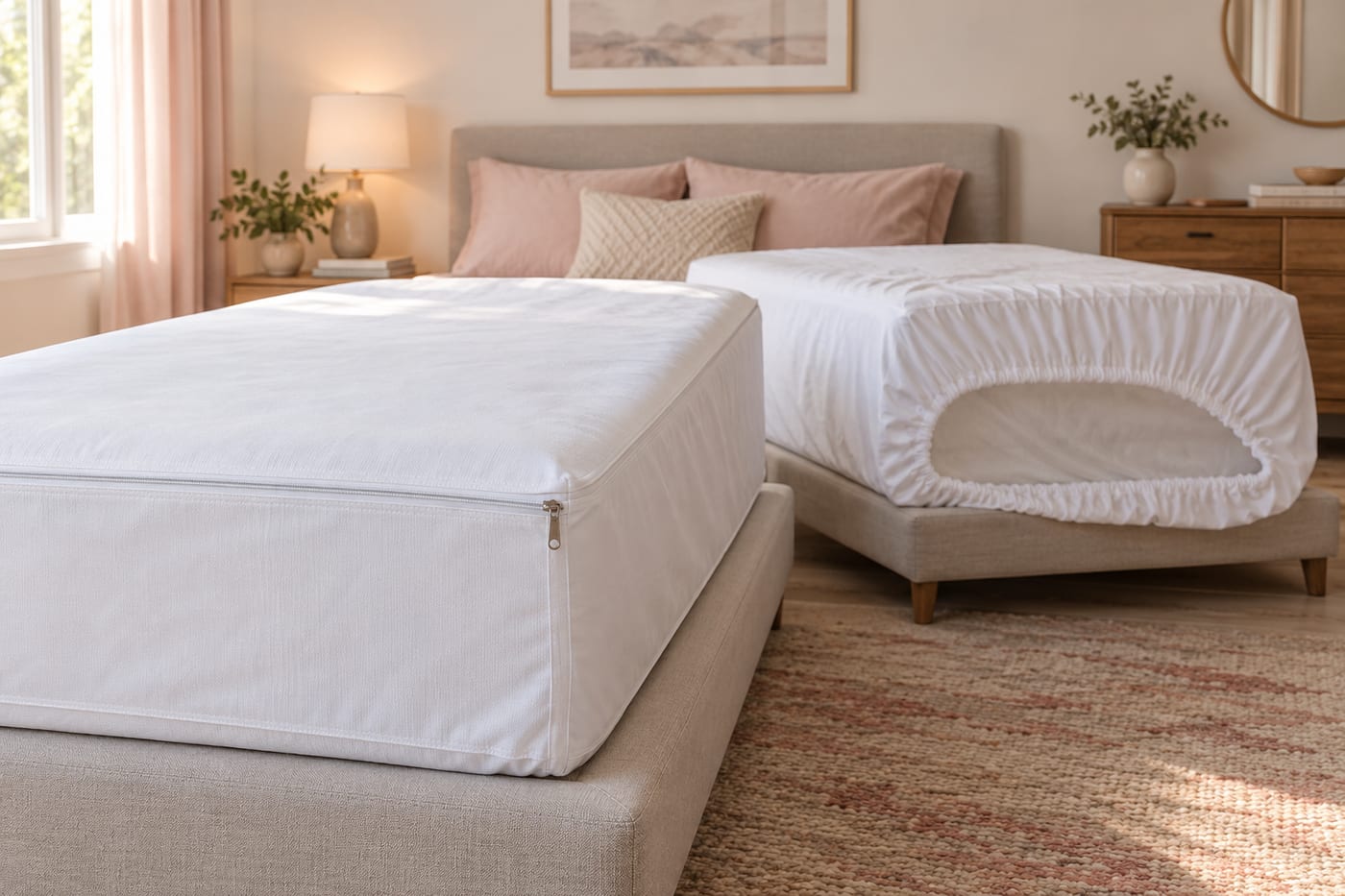
For a large protector, also plan how you will fit and remove it. A zipped encasement requires access to the mattress underside, and handling a heavy mattress may make that awkward. A skirted or strapped protector can be more convenient for routine removal, but it still needs to suit the dimensions and intended protection. Our comparison of zipped and fitted protectors connects the sizing decision with the practical bedding-change routine.
Beds with two mattresses: measure each side
For a separated bed, split mattress arrangement or adjustable base, check both the number of mattresses and how they are used. Two 80 cm-wide mattresses may differ in length or height. Measure each independently and note which record belongs to which side. An 80×190 cm protector and an 80×200 cm protector are not automatic substitutes. When the sides separate or move independently, check individual protectors against the bed’s instructions.
If the mattresses normally sit together, do not assume that one protector equal to their combined width will remain suitable in every configuration. A centre gap, base movement or separating the beds changes the arrangement. A shared topper may also affect the decision. Describe the structure and movement to the seller rather than providing only the combined dimensions. The protector should not be used to join the mattresses; its role is the protection specified by its manufacturer, rather than changing how the bed operates.
Toppers and tall mattresses: measure the covered layers
As a calculation example only, a 28 cm mattress plus a 5 cm topper makes 33 cm before any additional layers. If the protector will wrap around both, compare its fit specification with that combined height. This is not a recommendation for a particular topper thickness or mattress height. Separate protection for separate layers may be possible when their instructions allow it, but choosing by mattress height alone and then adding a topper requires another fit check.
The fitted sheet also needs to suit the new arrangement. A newly added protector can fit well while the sheet lifts at the corners because the sheet is unsuitable for the total height. Assess each item independently and avoid pulling hard on the protector to stabilise the sheet. Our mattress topper guide explains the difference between changing comfort and adding protection, helping you decide which layers your bed actually needs.
Pads and full encasements need different measurements
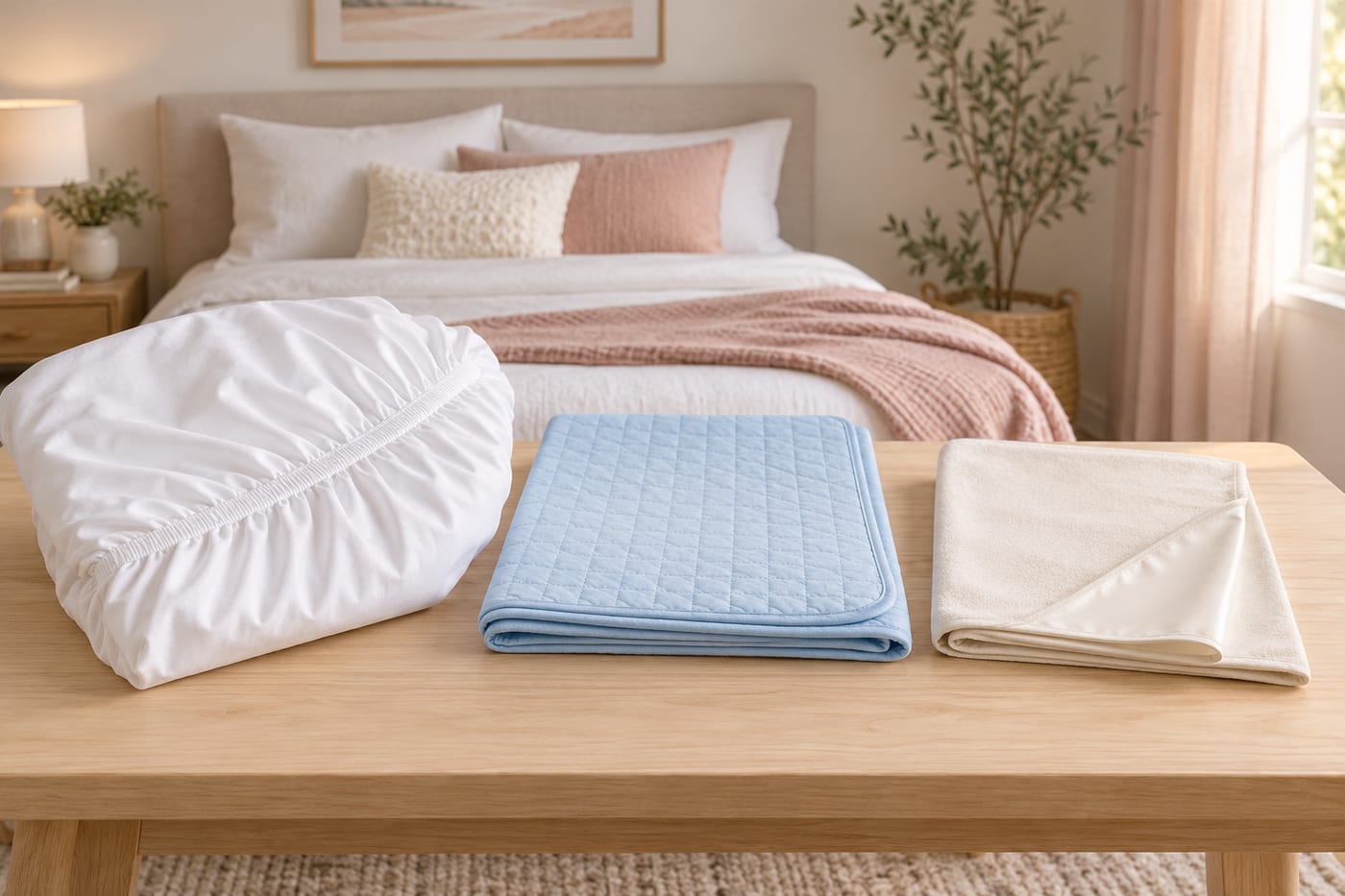
A pad covering only part of the sleeping area does not necessarily need the full mattress width and length. With a winged product, distinguish the protected panel from the fabric that tucks beneath the mattress. Check whether the stated size includes the wings and which orientation the manufacturer requires. Straps, skirts and elastic may secure a product without being part of its waterproof area. Do not treat the total fabric dimensions as the protected dimensions.
A full zipped encasement needs to match width and length as well as the stated height range. Surplus fabric may fold, while an undersized encasement may strain its closure. Do not attempt to resolve a size mismatch by leaving the zipper partly open or cutting the fabric. Our guide to waterproof protectors, waterproof sheets and pads explains how to identify the coverage of each design, so the sizing check follows the intended role rather than just the rectangle in a product photograph.
Check fit as instructed and after laundering
When the protector arrives, compare the package size with your order and the label on the actual item. Check first-wash directions and return conditions before opening or using it. If the instructions allow a fit check at that stage, put it on without forcing the fabric: the surface should spread as described, and corners or closures should reach their intended positions. Then check your usual sheet as well, so you do not discover later that only one of the two items fits.
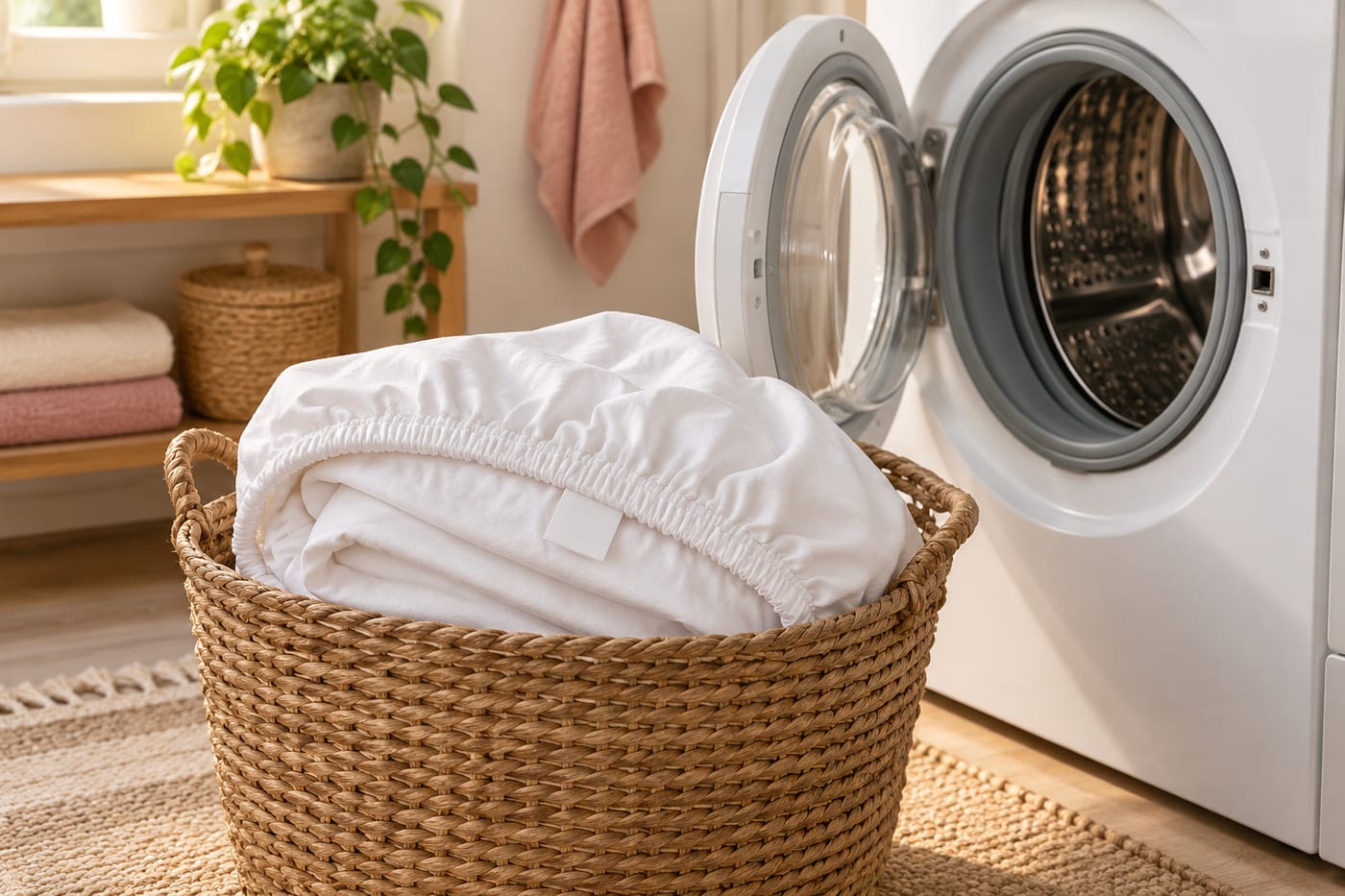
Check again after permitted washing and complete drying. There is no single shrinkage percentage for every material, and buying a larger size is not a solution to damage from unsuitable laundering. If the product changes, compare the label with the care method you used and contact the seller with those details. Our mattress protector washing guide explains how to plan care for padded or waterproof layers without automatically copying the directions for the sheet above them.
Before paying: keep a short fit record
Put the mattress width, length, total height being covered and required construction into one record. Beside it, note a split bed, a topper and whether protection is needed for the whole surface or a particular area. For example, specify that the dimensions belong to the mattress, the topper is included in the height and each base side moves independently. This is a usage record rather than a product recommendation, and it lets you compare the same information across several specifications.
Find clear confirmation for every point before ordering. Descriptions limited to double size, a deep skirt or compatibility with most beds still leave information missing. Request the detail you need, and retain a screenshot of the specification and any reply resolving conflicting information. Once size and construction are clear, choose protection and care requirements that suit your household. A new protector does not treat an existing mattress stain; our mattress cleaning guide separates care for an existing problem from protection during future use.
Three measurements before choosing a protector

- Measure width
- Measure length
- Measure height and layers
Video: measuring the actual mattress
BF Colchões gives a short demonstration of mattress measurement. The narration is Portuguese; the article explains the measurement steps in writing. Its product-size examples come from the Israeli market rather than the bed names in the video.
By BF Colchões · Video language: Portuguese
The player loads only after a click, subject to your external-content preferences. Player privacy information.
The article can be read without watching. Captions depend on the options available on YouTube; the explanation is not a transcript.
Frequently asked questions
Which protector fits a 160×200?
One specified by its manufacturer for 160 cm width and 200 cm length, with a height range covering the mattress and intended layers. A double label alone is insufficient.
What is the difference between 80×190 and80×200?
The width is identical but the length differs by ten centimetres. These are separate sizes; compatibility with both needs to be explicit in the protector specification.
Is every Israeli wide-single protector 120×190?
No. Check the actual product dimensions. Different lengths are available, and the reviewed Brolly details also give 120×195 cm alongside different information in the site table.
Does a 40 cm skirt fit a 40 cm-high mattress?
That cannot be inferred automatically. Skirt height and maximum mattress height are different measurements. Request the manufacturer’s approved mattress fit range.
How should I measure a mattress with a topper?
If the protector will cover both, measure width, length and the combined height in the intended arrangement. Check the fitted sheet’s compatibility with the layers separately.
Which protector do I need for a separated bed?
Measure each mattress independently. Where the sides separate or move independently, check individual protectors against the bed instructions rather than selecting by combined width alone.
Can I buy a larger protector to make it fit?
Only if its specification permits your dimensions. Spare fabric and elastic do not establish compatibility, and an oversized encasement or pad can fold.
Are pad dimensions the same as mattress dimensions?
Not necessarily. They may describe a protected panel or fabric including wings. Check what is included, the protected surface and the fitting orientation.
Sources and scope
Sources checked on 10 October 2026. Manufacturer sources describe their own products and instructions; they do not establish one care rule for all bedding and mattresses.
- Sealy Israel: mattress protector size selector
Primary source for the example table dimensions; not a standard or an availability guarantee.
- IKEA: GRUSNARV, model 605.221.29
Dimensions: 160×200 cm, with a 30 cm maximum mattress height for this model.
- IKEA: ROSENVIAL, model 805.308.64
Dimensions: 90×200 cm, with fit up to 42 cm high for this corner-strap model.
- Eznites: Brolly cotton mattress protector
Model details give 120×195 cm and 40 cm protector height; conflicting size information on the same page needs confirmation before ordering.
By MyViro.
The content explains textile characteristics and is not the result of a product test in a laboratory. How we prepare our guides