Start with the area you want to cover
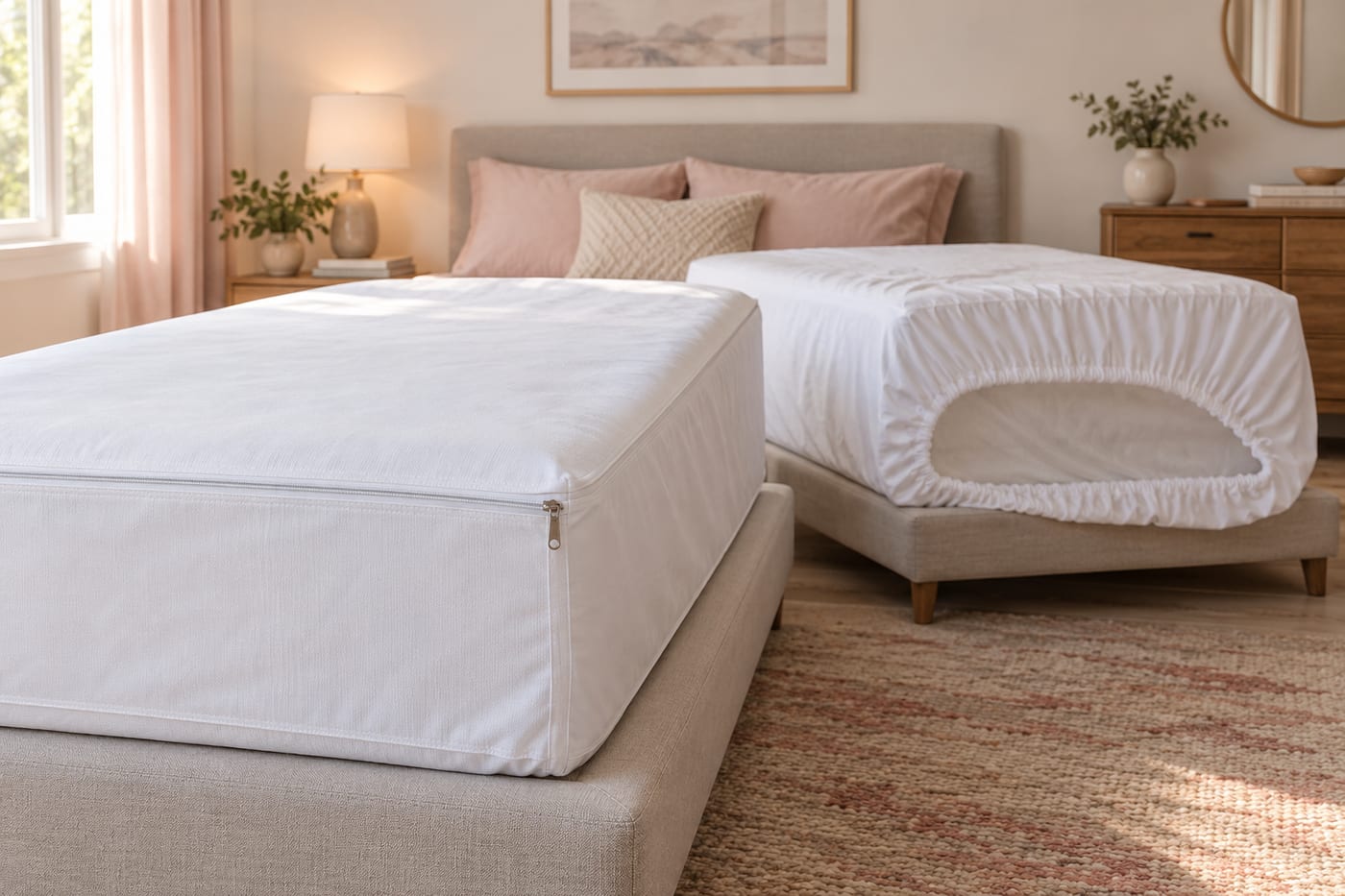
The difference between a zipper and elastic is first a difference in construction and fitting. A fitted protector takes shape when pulled over the mattress corners from above. A full zippered encasement surrounds the mattress underneath as well and closes around it. Neither is automatically the right choice for every household. Before comparing models, decide whether you need a layer easily removed from the sleeping surface or an enclosure that also covers the sides and bottom. This gives you a clear aim against which to assess the product.
Mattress dimensions and weight, bed frame design and frequency of removal all influence the choice. Someone laundering a protector frequently may place considerable weight on access to the corners, while a bed accessible from every side may make a full encasement more practical. Also establish whether liquid protection is needed or the aim is a maintenance layer. Physical coverage and the fabric’s barrier function are different questions. Wrapping more of the mattress does not in itself prove that the fabric performs a particular protective job.
Fitted protectors: a skirt or corner straps
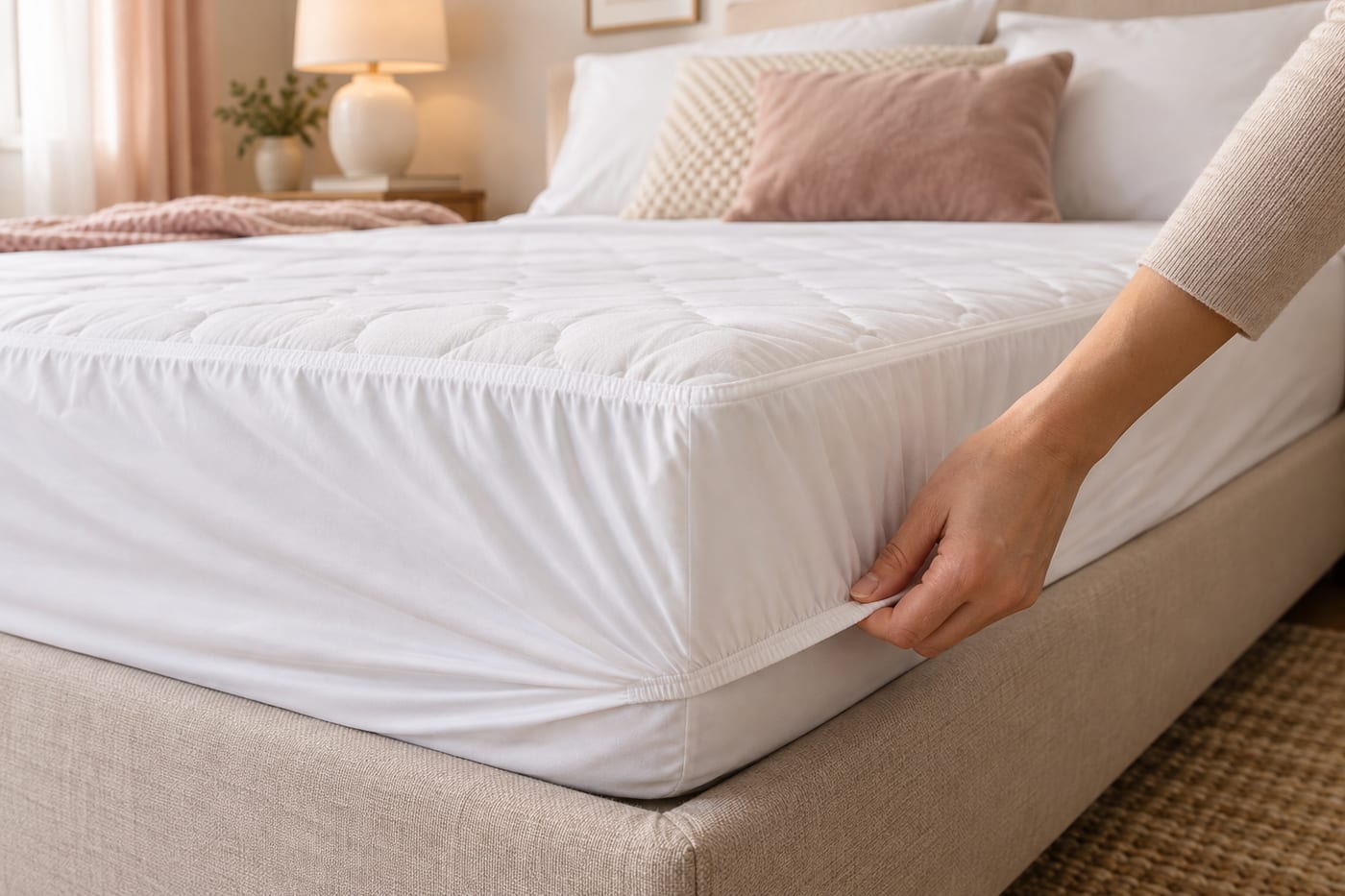
The fitted-protector family includes several fixing methods. One model may have a fabric skirt with elastic edging that reaches beneath the corners, while another has a top panel held by elastic corner straps. Photographs of a made bed can make them look similar, although their coverage differs. Corner straps do not enclose the sides, and a skirt does not form a complete bottom. Examine side views, the reverse of the item and the description to understand its construction rather than relying only on the finished-bed image.
The practical benefit of fitting from above is that the protector can usually be removed without taking the entire mattress out of the frame. You still need access to release the elastic and align the corners. IKEA’s GRUSNARV page specifies elastic edging and compatibility with mattresses up to thirty centimetres high. That height belongs to this particular model. If a protector rides up, do not keep pulling harder: measure the mattress, check whether another layer has been added and reassess whether this fixing method suits the bed.
For more information on the subject: Mattress Protectors: Types, Materials and How to Choose.
Zippered versus fitted: compare construction and use
| Check | Fitted protector | Full zippered encasement |
|---|---|---|
| Coverage | Usually the sleeping surface, sometimes sides or corner straps | Top, sides and bottom according to construction |
| Fitting | Pull over the corners from above | Arrange fabric underneath as well and close the zipper |
| Removal for care | Corner access is usually sufficient | Requires access underneath and to the fastener opening |
| Height compatibility | Check pocket depth and maximum height | Check the specified enclosure height or range |
| Liquid barrier | Check the specification and protected area | Check separately from full coverage and the zipper |
| Topper and two mattresses | Compatibility with height and layer arrangement | Decide what is inside and outside the enclosure |
| Washing and drying | Follow the model’s care label | Follow the model’s label and zipper care directions |
A full zippered encasement includes the bottom
A full encasement creates a cover that surrounds every side of the mattress. Fitting requires placing part of the cover underneath and closing it according to its design. The opening’s length changes the process: a broad opening may allow a different arrangement from an opening at just one end. Do not assume every zipper runs around the same number of sides or allows the entire top to separate. Check the description or fitting directions to see how the enclosure opens and goes onto the mattress.
Hollandia’s Anti Bed Bugs page provides an example that the supplier describes as covering the whole mattress with a zipper and an additional closure. We use it here as a construction example only. The product name or existence of a zipper does not establish pest prevention, allergy management or a medical outcome. If a particular need requires an encasement, assess the relevant specification and specialist guidance. For ordinary bedding maintenance, the direct question is whether its coverage and access for removal fit the way you intend to use it.
The mattress’s original zipper does not establish a washable protector
Before buying a new product or removing an existing cover, distinguish a separate protector from the cover originally supplied as part of the mattress. That original cover may have a zipper, yet it is not necessarily an accessory intended for routine removal and washing. The ability to open a fastener is not an instruction to do so. Check the mattress manual for permission to remove the cover, what can be cleaned and which components must remain in position. These requirements belong to the mattress model, not to whichever new protector you choose.
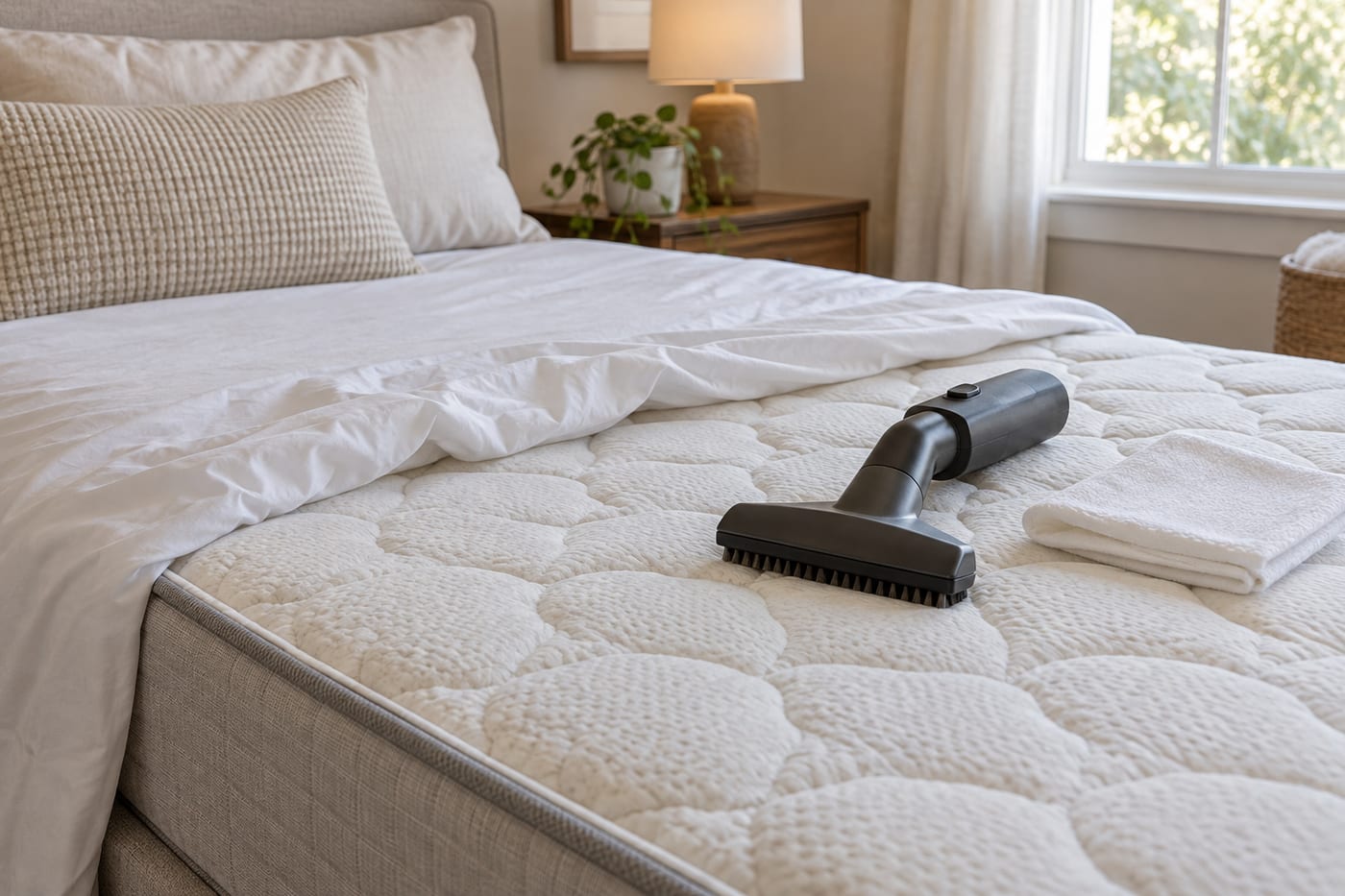
For example, TEMPUR’s care guidance explains that some covers containing its material may be removed for airing but cannot be washed. Removal and washing are therefore separate permissions. Do not select a wash programme by copying another mattress cover or assuming a large machine can handle it. If the label is unclear, identify the model and obtain its directions before opening the cover. Themattress cleaning guide provides further explanation of surface treatment and how it differs from cleaning a removable cover.
Three measurements: length, width and height
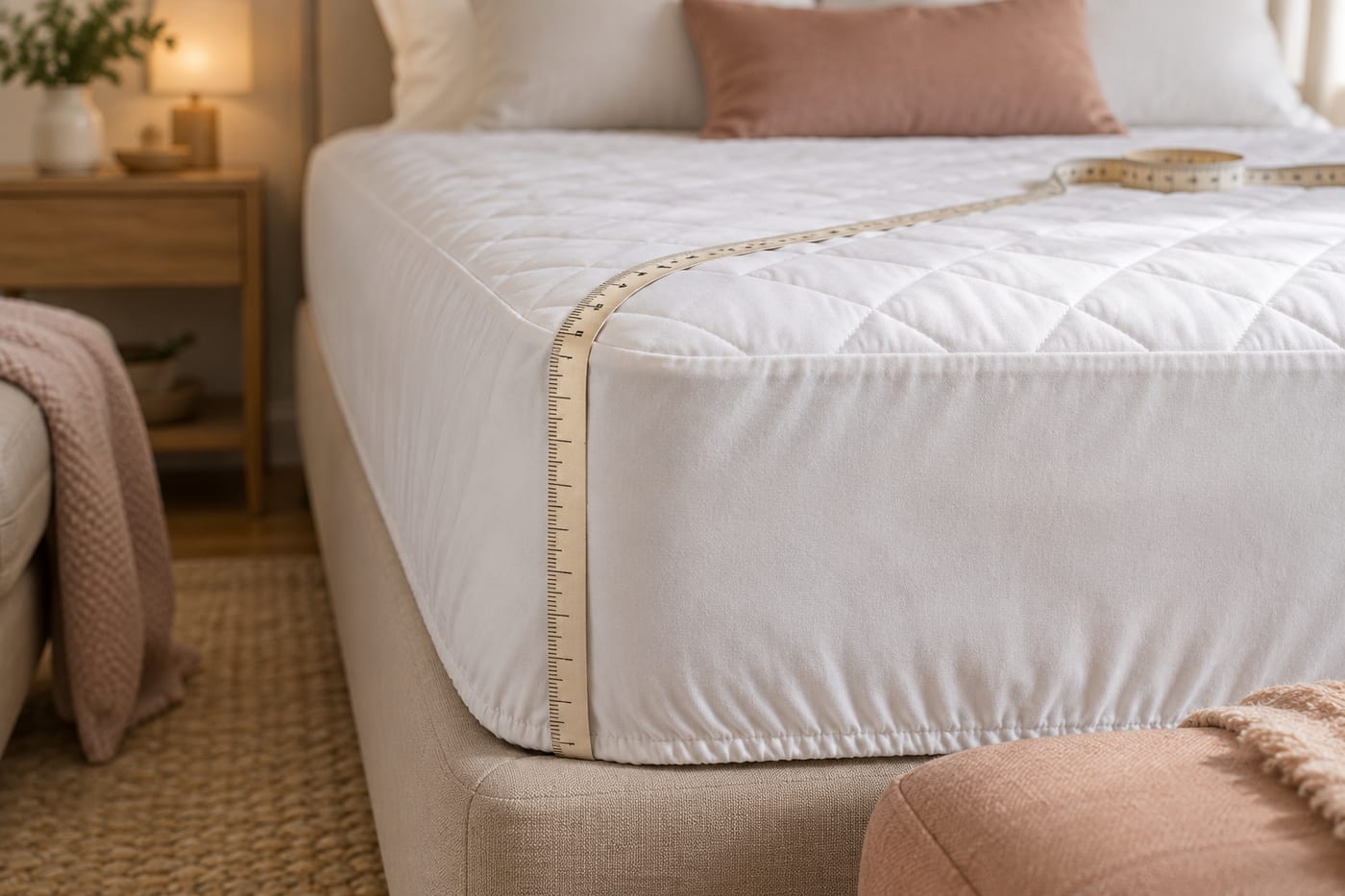
Both fitted protectors and full encasements require length, width and height measurements. A size such as one hundred and sixty by two hundred centimetres usually describes the top surface only, so it does not establish compatibility with a deep mattress. For a fitted protector, check the manufacturer’s maximum height or pocket capacity. For an encasement, check the stated height or compatible range. The cover should close without pulling the seams or bending the mattress to compensate for insufficient space inside the product.
Measure the mattress itself in its ordinary position on the bed, rather than measuring the frame or relying on an old size you remember. If the two sides are different heights, record this and check compatibility with the supplier. A zipper does not make every enclosure expand without limit, and elastic cannot compensate for every length mismatch. Considerable spare fabric can produce folds, while too little can overstretch the construction. The mattress protector sizing guide explains how to compare a printed size with actual measurements and the height you need.
Full coverage does not automatically mean a barrier on every panel
An entire encasement can be sewn from fabric that is not intended to block liquid, while a top-only protector may have a defined barrier. The words full, zippered and fitted therefore do not measure waterproofing. Establish which components have a protective layer: the top, sides, bottom or only selected areas. Physical side coverage does not prove that the side panels have the same backing as the sleeping surface. If the specification is unclear, ask about the particular region you need to protect before buying.
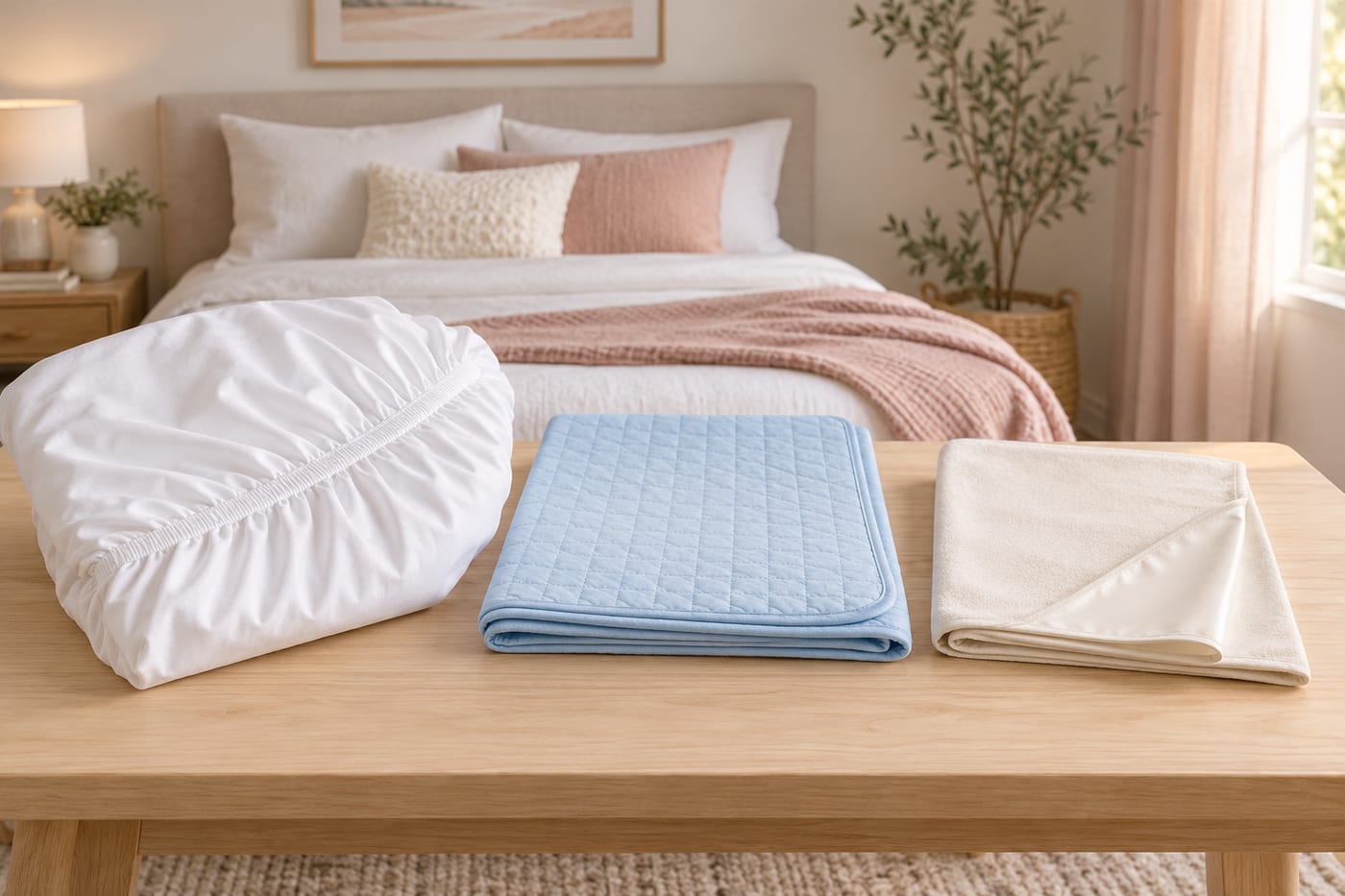
Seams and the zipper are part of the construction, so check their condition and closure according to the product’s instructions. Smooth fastening does not demonstrate a closed system against every spill in every situation. Meanwhile, a top protector may serve a defined purpose well despite having an open bottom. A useful comparison addresses covered area, barrier type and care rather than general promises of total protection. The guide to waterproof protectors, sheets and absorbent pads also explains why a liquid barrier and local absorption are different functions.
Check mattress access before starting to fit
Preparing the bed can make fitting easier. Remove bedding, clear access to the corners and check whether a headboard, deep frame or nearby wall restricts movement. A fitted protector needs access to release and dress the corners. A full encasement also needs access underneath and to the zipper opening. If fitting requires moving or supporting a heavy mattress, arrange appropriate assistance and avoid pulling on the enclosure to lift it. The protector’s fabric is not a carrying handle for the mattress.
Read the fitting directions before opening the zipper and orient the cover correctly. Do not force the mattress through an opening that appears too small or pull hard on the fastener. If the zipper catches, stop and check for trapped fabric or misaligned corners. Working calmly helps reveal a wrong size before seams are strained. After closing, inspect the side facing away from you too, then return the mattress to position without twisting or pulling the cover. The aim is a stable fit that can be repeated on the next laundry day.
With a topper, decide what is inside the protector
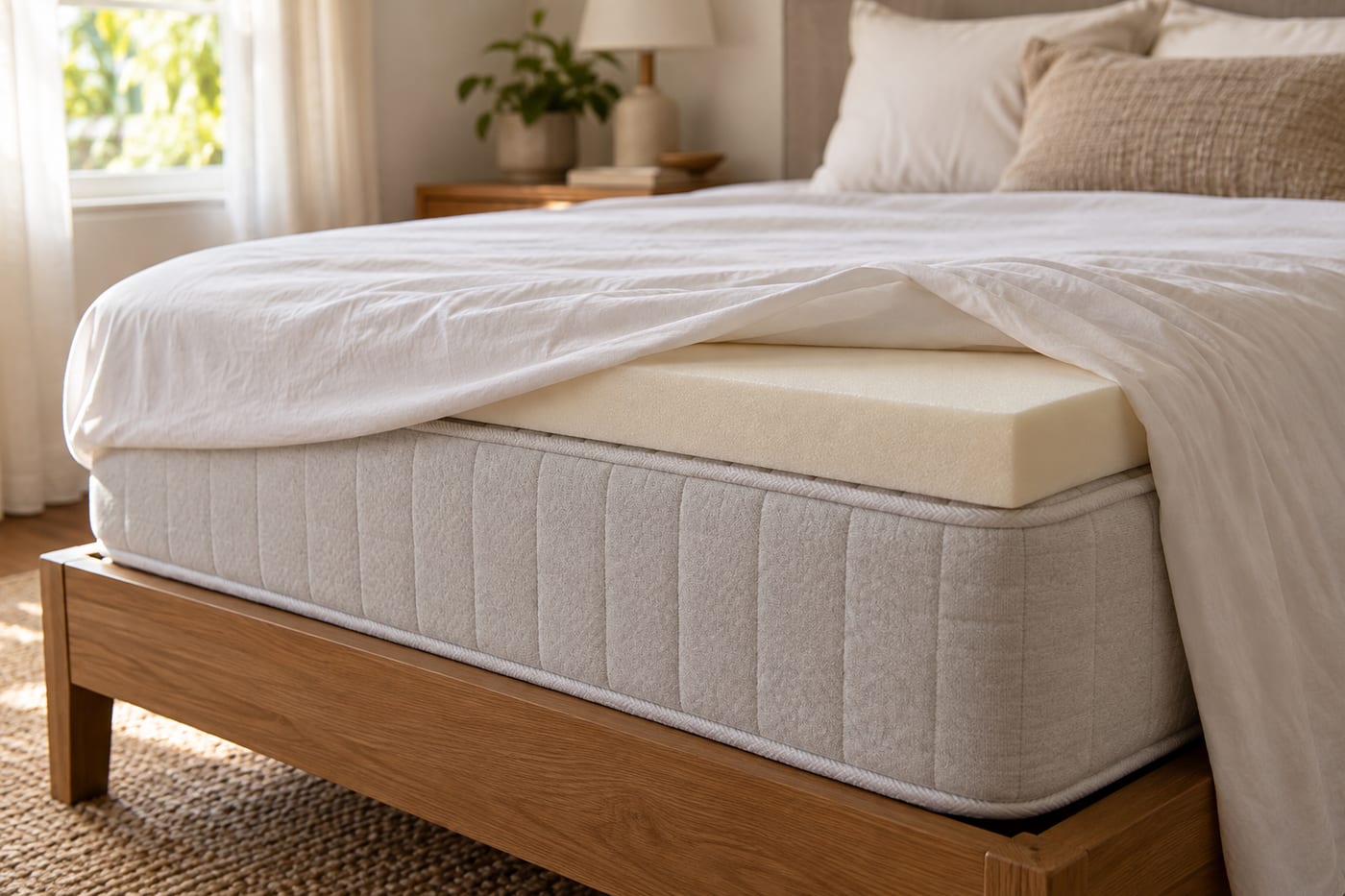
A topper adds a comfort layer, so decide whether you are protecting the mattress, the topper or both. If a full encasement remains around the mattress and the topper sits above it, the topper is outside that enclosure. To wrap both together, check that the arrangement complies with their directions and that combined height is within the protector’s range. Do not choose an enclosure using mattress height alone and then try to add another layer. The mismatch may become apparent only as the zipper nears closure and the sides become taut.
A fitted protector over the topper can be an option if the model suits the dimensions and height, but it should fit without compressing or displacing the comfort layer. A removable cover already supplied with the topper does not automatically establish liquid protection. Plan what will be removed for cleaning and what will remain on the bed. Where appropriate, mattress and topper can have separate maintenance arrangements that follow their directions. The topper guide andmattress protector selection guide help define each layer’s role before adding an accessory.
Two mattresses and adjustable beds need additional planning
On a double bed made from two mattresses, measure each one separately even if their combined size is familiar. A full enclosure around each mattress is different from a cover joining both. A shared protector changes removal and needs checking against the bed’s construction. If a shared topper spans them, there is a third layer to consider when deciding what lies inside the protection. A quick drawing of the layers helps reveal the difference between the upper surface dimensions and the individual items beneath it.
For an adjustable bed, check explicit compatibility with movement of the base and mattresses. Correct dimensions while flat do not establish suitability when one side rises. Follow the bed and protector instructions, and do not stretch a shared item between independently moving sides without suitable permission. After fitting, use the manufacturer-approved method to check that fabric does not catch and corners do not rise. If the cover becomes taut or moves with the bed, reassess model compatibility instead of improvising tighter fastening. The closure is only part of the assessment; the bed’s geometry matters independently.
Removal, washing and drying: consider the complete cycle
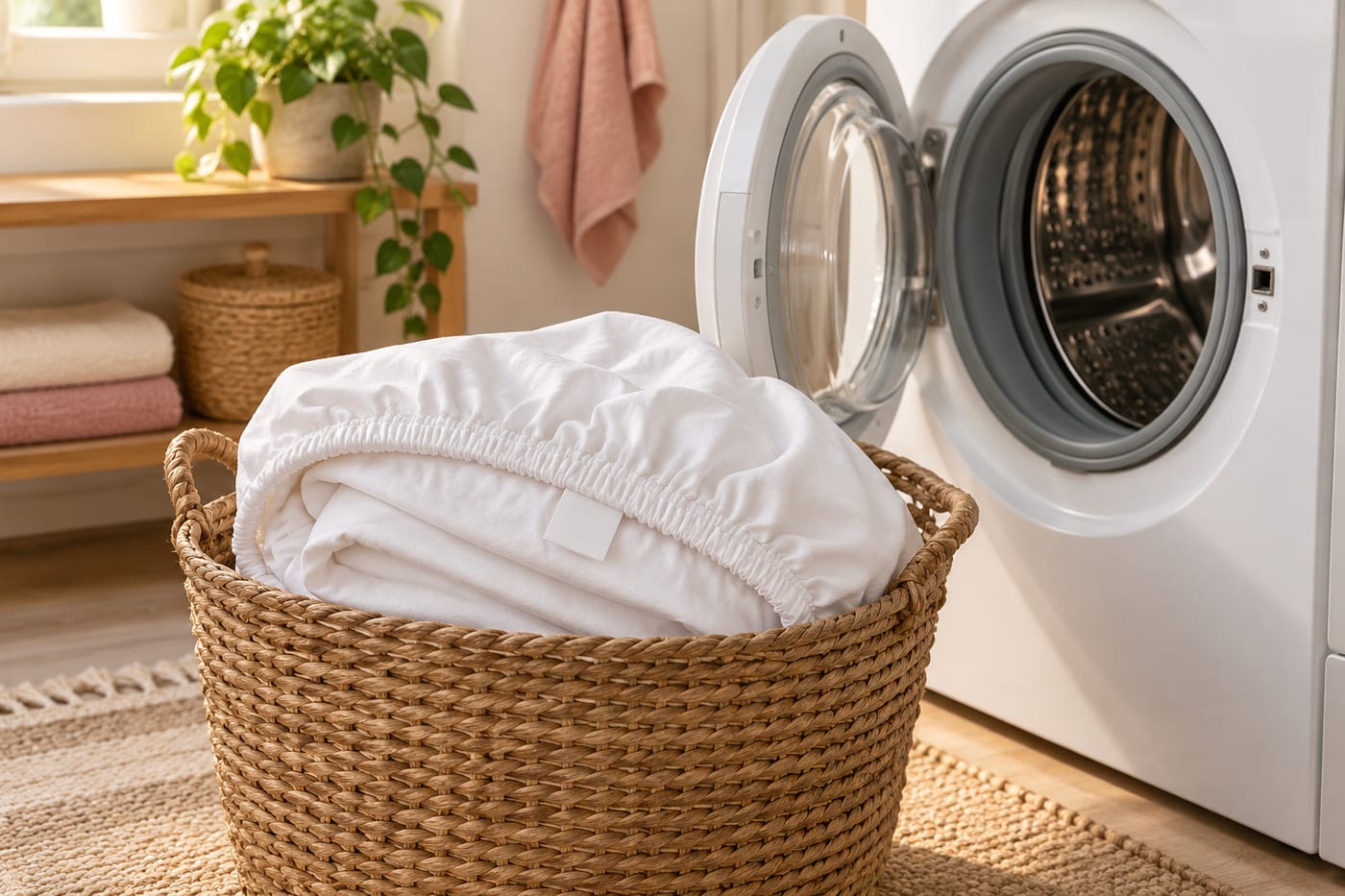
Ease of removal is only one maintenance consideration. A fitted protector generally comes off the sleeping surface, while a full encasement needs underside access at every removal. Afterwards you also need a suitable machine and programme, an approved drying method and enough time to refit a completely dry item. Read care directions before purchasing rather than waiting until the first wash. There is no universal temperature for zippered protectors or fitted protectors, and the presence of a zipper does not determine tumble-drying permission.
Consider a day when the item needs cleaning and the bed must be ready again. A replacement item may be practical, but a suitable quantity depends on household routines and instructions rather than a fixed rule. Keep the label, check whether the manufacturer requires the zipper closed during washing and follow restrictions on other items in the drum. Themattress protector washing guide sets out a care sequence. After drying, inspect the corners, fastener and layers before refitting; a dry exterior still needs checking in folded regions.
Comfort and stability do not depend on the closure alone
Elastic can hold a protector securely when its dimensions and pocket suit the mattress, and a zipper can form a tidy enclosure when the item fits correctly. In either construction, spare fabric or excessive tension can alter the feel. Upper fabric, padding and any waterproof backing matter too, so there is no basis for declaring every zippered cover warmer or every fitted protector quieter. Evaluate the complete item and, where available, a material sample instead of relying on one feature that does not describe all its layers.
After fitting, run a hand across the surface to find folds and check how the sheet sits above it. If a corner rises, establish which layer is pulling it: the protector, fitted sheet or a shifting topper. Do not stretch all the fabrics together to conceal a sizing problem. Evaluate removal as well. A cover that sits well but is difficult to take off whenever cleaning is necessary may be impractical for your household. Base the decision on daily use, maintenance and feel rather than the appearance of a bed arranged for a photograph.
How to decide between elastic and a zipper
Choose a fitted protector when upper coverage meets the aim, the dimensions suit the mattress and convenient removal matters to the routine. Consider a full encasement when side and bottom coverage are required and fitting and removal are practical. In both cases, assess any required liquid barrier separately, alongside layer construction and care directions. A zipper is not an upgrade that replaces compatibility checks, and an open bottom is not a disadvantage when covering the bottom is not part of your requirement.
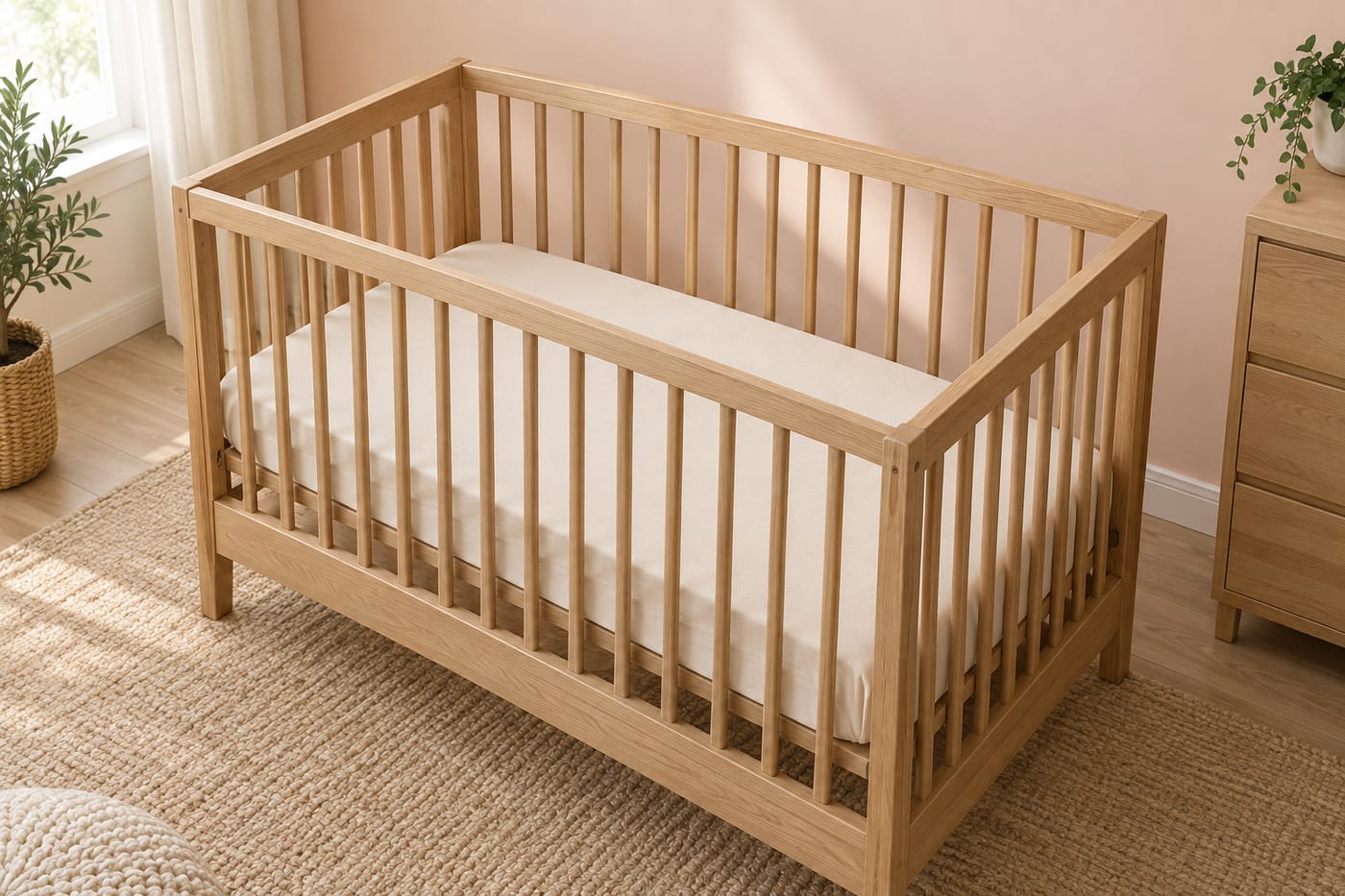
Before buying, prepare a short list: mattress dimensions, height including extra layers, bed construction, areas needing coverage and available cleaning method. Keep a photograph of the specification and label for later reference. For infants, do not select cot layers through a general protector comparison; consult the safe infant sleep guide and requirements for the specific item. If selection concerns allergies, medical management or pests, obtain relevant specialist guidance. The closure describes construction rather than a diagnosis or a treatment guarantee.
Choose by protective construction

- Top: check attachment
- Cover: check all sides
- Follow model care
Video: fitting a zippered mattress encasement
Bedrooms & More demonstrates fitting a mattress encasement. This shows the construction and installation of one model, rather than validating medical or pest-protection claims. Follow the model instructions and get help if moving the mattress is uncomfortable or unsafe for you.
By Bedrooms & More · Video language: English
The player loads only after a click, subject to your external-content preferences. Player privacy information.
The article can be read without watching. Captions depend on the options available on YouTube; the explanation is not a transcript.
Frequently asked questions
Is a zippered protector better than a fitted one?
Only if its construction meets your need and you can maintain it. Elastic can be practical for upper coverage and convenient removal; a full enclosure also covers the sides and bottom.
Does every zippered protector surround the whole mattress?
Do not infer that from the fastener alone. Check images, description and directions for a complete bottom, opening width and separable components.
Does a zipper mean a protector is waterproof?
No. Check the barrier layer, its coverage and use instructions. A full encasement may use fabric without a stated liquid barrier.
Can I wash the original zippered mattress cover?
Only if the mattress manufacturer permits it for that model. An original cover may allow removal for airing but prohibit washing or require a different cleaning method.
What protector height do I need with a topper?
If the protector wraps the topper too, compare it with combined height and dimensions. If the topper remains outside an enclosure, assess its protection separately.
Can one double protector cover two adjustable mattresses?
Only according to bed and protector compatibility and instructions. Independently moving sides need assessment beyond the flat-bed size.
What should I do if the zipper will not close?
Stop and check dimensions, orientation, corners and trapped fabric. Do not force the fastener or bend the mattress to compensate for a small enclosure.
Does a zippered enclosure solve allergies or pests?
Do not infer that outcome from construction or a product name. Medical requirements or a pest problem need relevant specialist guidance and verification of the model and properties.
Sources and scope
Sources checked on 10 October 2026. Manufacturer sources describe their own products and instructions; they do not establish one care rule for all bedding and mattresses.
- IKEA: GRUSNARV with elastic edging
Manufacturer reference for elastic construction and compatibility with mattresses up to 30 cm high; its directions are not universal protector instructions.
- Hollandia: full enclosure with a zipper
Used only to describe an enclosure surrounding the mattress with a zipper and an additional closure. Pest and allergy statements on the page were not verified and are not promises made in this guide.
- TEMPUR: care of original covers and mattresses
Manufacturer guidance distinguishing cover removal from washing permission, including certain removable but non-washable covers; identify the actual mattress model.
By MyViro.
The content explains textile characteristics and is not the result of a product test in a laboratory. How we prepare our guides