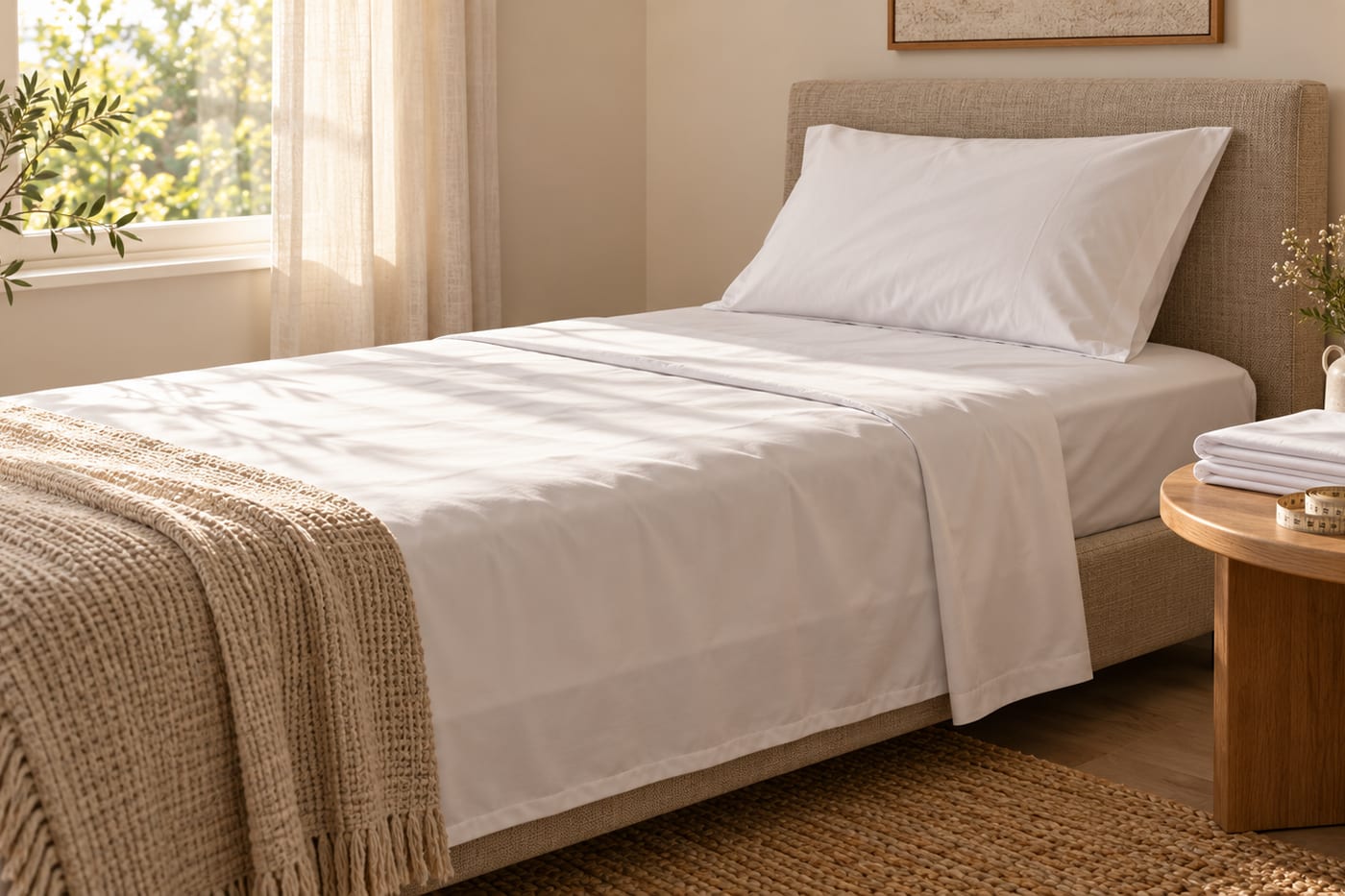
How to choose sheets for a single bed
Wayfair introduces basic questions about choosing sheets and fabric. It does not establish Israeli single-bed set dimensions; measure the mattress, duvet and pillow separately and check package contents.
By Wayfair · Video language: English
On this article, the player loads when the page opens, without autoplay, unless you chose to block external content. Player privacy information
Open the video on YouTube (in a new tab)
The video illustrates this topic. The full article remains available without watching; captions and transcripts depend on the publisher and YouTube.
Single-bed bedding begins with three separate measurements
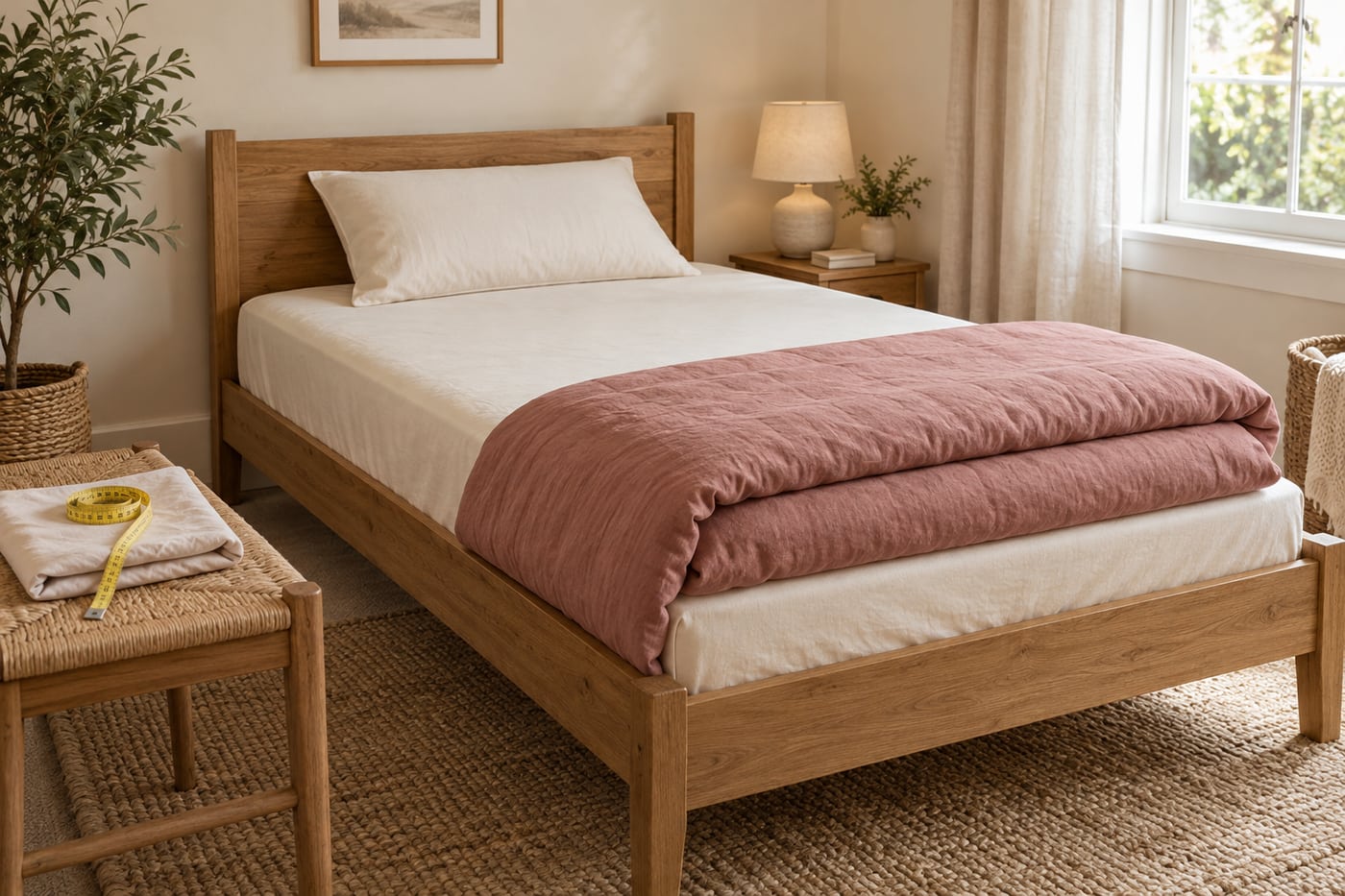
“Single bed” is a useful label, but it is not a complete bedding specification. The mattress determines sheet size, the duvet determines cover size, and the pillow determines pillowcase size. None of those items has to share a dimension or even come from the same shop. Before looking at a set, write down the mattress width, length and depth in centimetres, then the dimensions of the duvet and pillow you already own. This is a better starting point than choosing from a photograph.
For example, IKEA Israel lists a 90 × 200 cm single mattress. That describes a particular model, not every single bed. Another mattress can be shorter, narrower or wider. Our bedding size chart brings common names and dimensions together. This guide focuses on turning those measurements into a purchase that works at home. It also helps you avoid buying a tidy-looking “complete set” that omits the one item you actually need.
How to measure a single mattress with a topper or protector
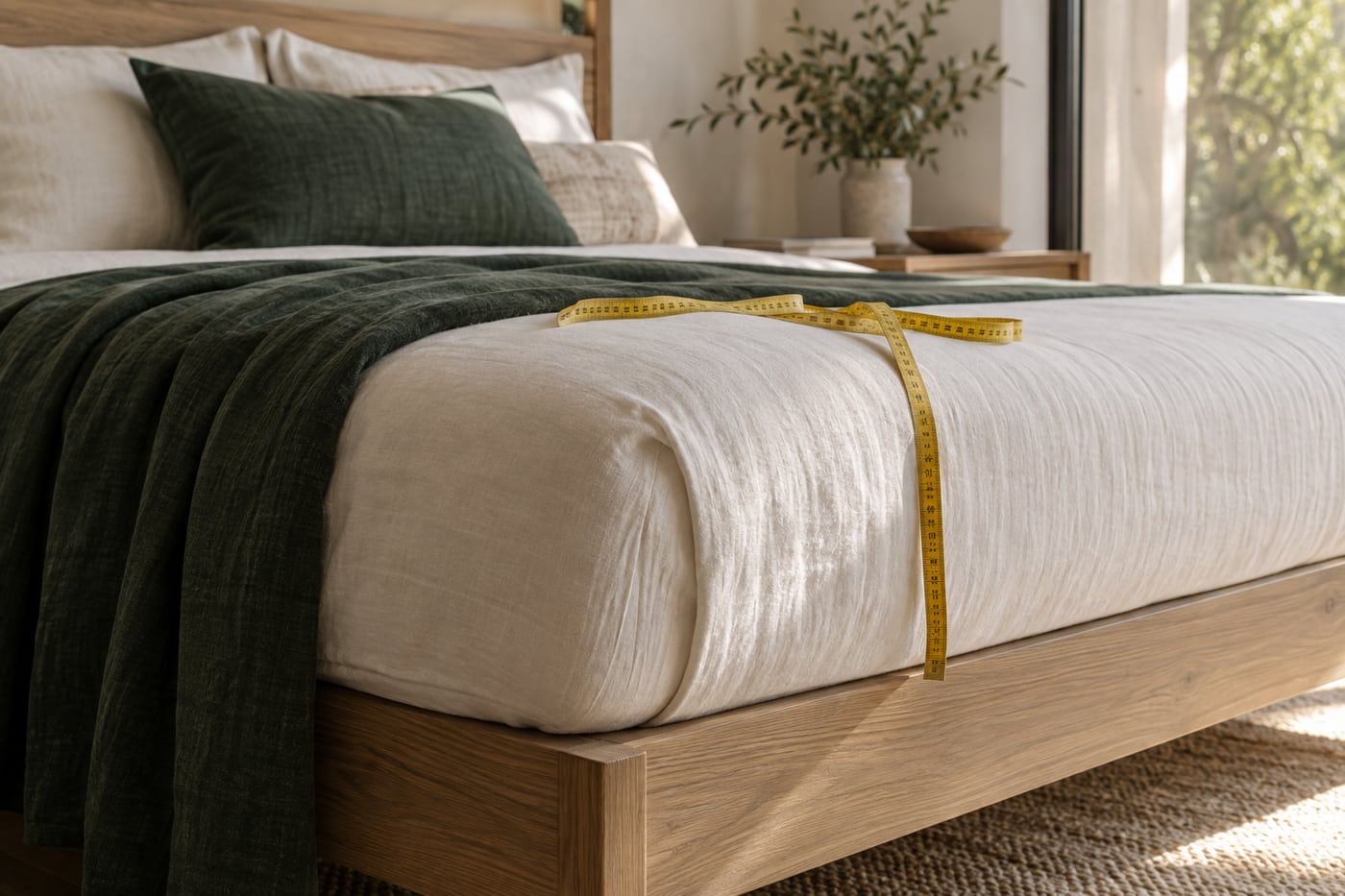
Remove the old bedding. Measure mattress width across the top and length from head to foot. For depth, hold a tape vertically from the top surface to the bottom edge of the mattress. If a permanent topper or thick protector sits under the fitted sheet, include the practical combined height. On a rounded mattress or pillow-top, take more than one measurement and record the largest relevant depth rather than treating an approximate catalogue number as exact.
Measure the mattress rather than the bed frame. A bed with storage drawers or a thick frame may take more floor space, but the sheet has to wrap around the mattress itself. If you are unsure whether yours is 90 × 190 or 90 × 200 cm, check its length instead of trusting the “single” label. For an unusual size, request the maker’s actual fabric measurements and fit range. Our mattress-protector size guide covers the layer below the sheet.
For more information on the subject: Sheets, duvet covers and pillowcases: measuring for a good fit.
Fitted sheets: compare width, length and pocket depth
Fitted-sheet labels often describe the mattress surface they should cover. The height they accept is a separate model-specific question. Read the product description for a stated maximum mattress thickness or corner depth, then compare it with your mattress plus the layers that stay underneath the sheet. A sheet may have the correct width and length but pull up at the corners because its pocket is too shallow. An excessively generous pocket can leave loose fabric on a thin mattress.
Look at how the elastic is fitted too: only at the corners or around the edge. Its arrangement can affect how the sheet sits after laundering, although the stated dimensions still matter most. “Single fitted sheet” alone does not tell you its pocket depth. IKEA’s product pages for 90 × 200 cm fitted sheets illustrate why exact model information is useful; read the thickness limit on the item you choose. If your current sheet shifts despite adequate size, consult our guide to slipping fitted sheets before buying again.
Flat sheets need enough fabric to tuck or turn over
Unlike a fitted sheet, a flat sheet has no elasticated corners. You can lay it over the mattress, tuck it under the sides or use it as a layer beneath the duvet, depending on your habits. Its fabric dimensions therefore need to allow for the mattress width, the drop at both sides and any section you want to tuck underneath. A flat sheet almost as narrow as the mattress will not leave much to work with even if the package calls it “single.”
Compare a candidate with a flat sheet that already works for you. If you turn the top edge down over the duvet, allow for that fold in the length as well. Distinguish “suitable bed size” from the actual size of the fabric; retailers use both kinds of description. A photograph of a fully dressed bed does not prove that the package contains a flat sheet. Read the item list, especially when a bundle appears to be an inexpensive way to replace everything at once.
A single duvet cover fits the duvet, not the mattress
Measure your duvet while it lies flat without stretching it. The cover should be chosen against those width and length figures, irrespective of the mattress size. IKEA Israel’s KÄRRDUNÖRT page, for instance, lists a 150 × 200 cm cover and a 50 × 70 cm pillowcase in a particular package. Those dimensions describe that set; they are not a universal rule for all single-bed bedding. A duvet from another brand may call for a different cover, even when both are marketed as “single.”
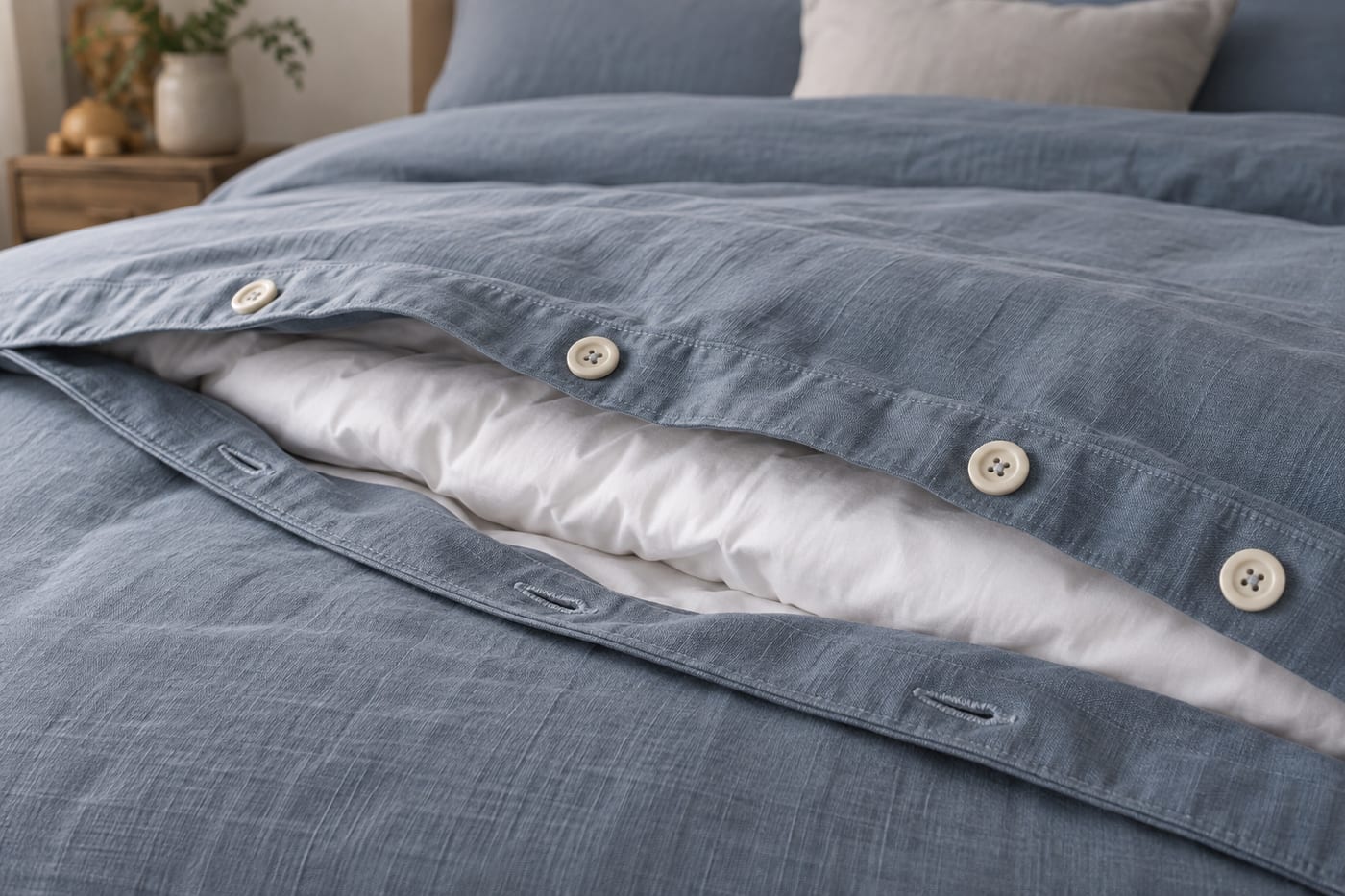
Check the closure as well: a zip, press studs, buttons or an open end. A cover far larger than the duvet can let the filling bunch at one side, while a cover too small makes insertion and an even spread difficult. If you do not yet own a duvet, decide which duvet fits the user and climate first, then choose its cover. Our duvet-cover guide explains closure and care choices in more detail.
What is actually inside a single bedding set?
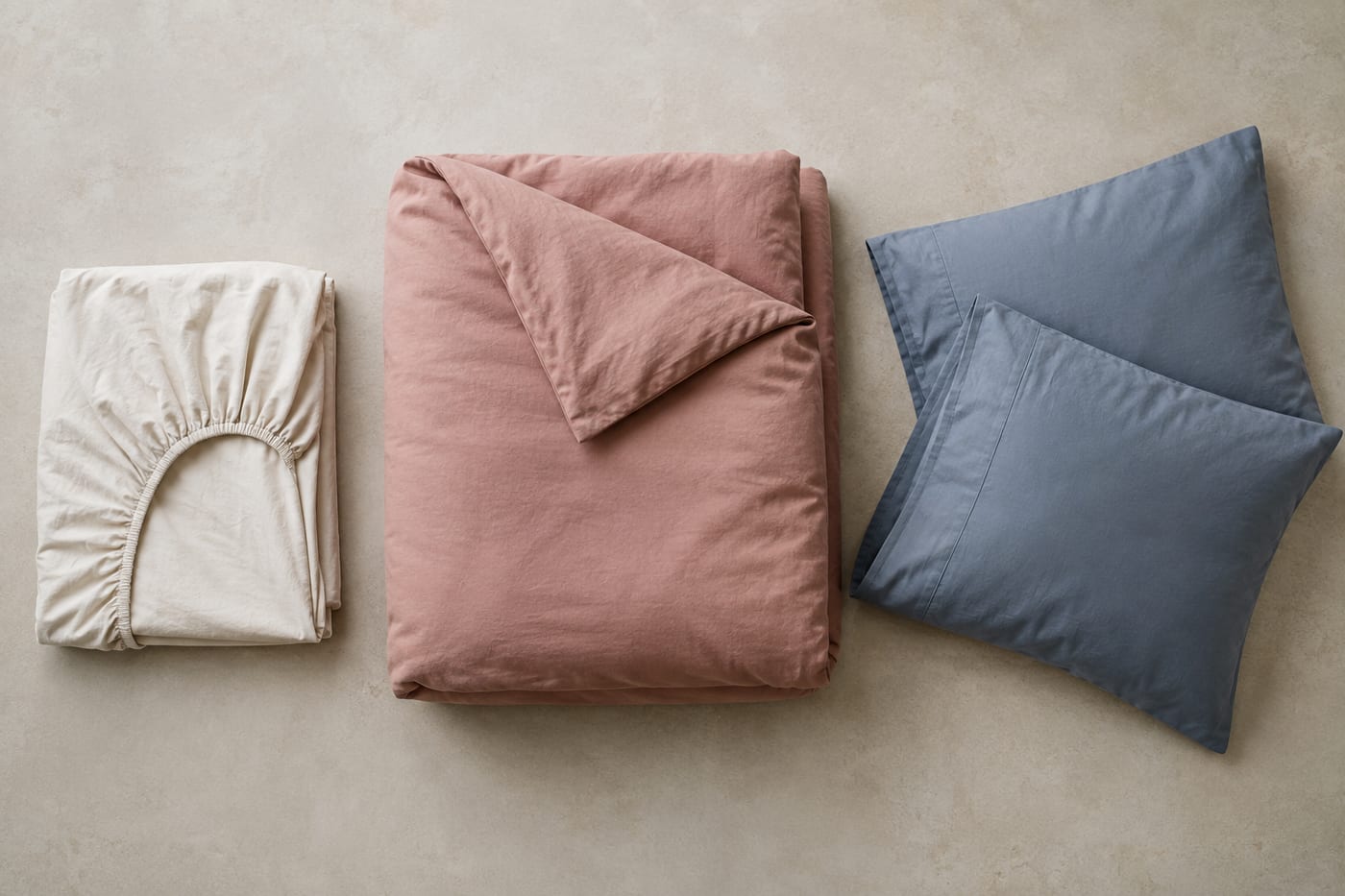
The word “set” does not guarantee a consistent number of pieces. One package may contain a duvet cover and one pillowcase; another may add a fitted sheet, while a third includes a second case or an extra sheet. IKEA’s KÄRRDUNÖRT example contains one duvet cover and one pillowcase but no sheet. If you intend to replace all the bedding, such a package leaves your old sheet in use or requires another purchase. The hero photograph alone is not a reliable contents list.
Before paying, write the piece count and dimension beside each wanted item: fitted or flat sheet, duvet cover and pillowcase. Make sure the stated dimensions refer to the enclosed pieces, not merely the bed category. Two pillows require two cases unless you already have a spare. Mixing separate items is perfectly reasonable when their dimensions, colours and washing instructions work together. Our guide to separate bedding pieces helps compare a ready-made bundle with building your own.
Cotton, percale, sateen and jersey feel different
Cotton names a fibre. Percale and sateen name weave structures that may both be made with cotton, while jersey is a knitted, stretchier construction. Percale usually feels crisp and more structured; sateen often has a smoother, slightly lustrous face. Jersey feels closer to a soft T-shirt. Those are broad descriptions, not a guarantee: fibre blend, weight, finishing and stitching change how a specific item feels and wears. Thread count by itself cannot tell you whether you will like it.
If you enjoy a more structured surface, start by examining percale. If you prefer a smoother glide, compare sateen; if you like the familiar feel of a knit, inspect jersey. IKEA lists cotton and lyocell in the KÄRRDUNÖRT blend and describes SPJUTVIAL as jersey, illustrating why category names do not replace a composition label. Our percale versus sateen guide and cotton guide explain the materials in greater depth.
A child’s room, a teen bed or a guest bed
A single mattress may sit in an adult’s room, a teenager’s room or a room for an older child. In each case, actual mattress dimensions determine the sheet. For an older child, consider a fabric you can wash according to its label, colours that work with a spare set and closures the family can use easily. A high teen mattress makes pocket depth especially relevant. In a guest room, first see what duvet and pillow are already stored there so that a new cover fits the pieces you intend to keep.
A toddler transition bed, infant cot and bassinet need different size and safety considerations. Do not order adult single bedding for them without checking the bed’s instructions and the item specification. Our toddler-bed bedding guide covers that stage; infant fitted sheets are treated separately. This article addresses a regular single bed used by someone for whom a duvet and pillow are appropriate under the household’s guidance.
Washing, shrinkage and drying before storage
Read the care label before purchase, especially if you need to use a tumble dryer. Manufacturers may state wash temperature, drying limits, bleaching restrictions and expected shrinkage. IKEA gives model-specific composition and care details for KÄRRDUNÖRT, including a 60 °C wash and a stated maximum shrinkage. Those figures apply to that product, not every cotton or blended bedding set. The label attached to the item you buy should govern what you do with it at home.
The first wash can alter feel and dimensions within the maker’s stated allowance. Do not deliberately buy a fitted sheet that is too small because you expect it to stretch, or an oversized cover because you assume it will shrink. Remove washed items promptly and dry them completely before storing them. If you combine a sheet, cover and case from different products, compare their care labels before laundering them together. See our bedding washing guide for the broader routine.
Compare two packages without being misled by the headline price
Make the contents comparable before comparing two prices. A duvet-cover-and-case package is not equivalent to a sheet, cover and case, even when both are labelled “single.” Compare each piece’s dimensions, fabric composition, care instructions, ability to replace one worn piece and return terms. Check whether the photograph includes styling props or pillows that are not sold with the set. Do not assume that a generous-looking bed image verifies pocket depth or duvet-cover dimensions.
Avoid using “luxury” or a thread-count number as a shortcut. When comparing fabrics, look for composition, weave and fabric weight alongside the texture you prefer. One figure rarely explains the whole product. For an online order, seek close-up views of seams and closures as well as exact sizes and washing instructions. If the seller does not state pocket depth or cover size, ask before ordering. This article does not rank tested products or claim any current price or stock level.
A short pre-order checklist
Record mattress width × length × combined depth, duvet width × length, pillow width × length, desired number of sheets and cases, and your washing and drying needs. Compare those entries line by line with the product description. When a page says “single-bed bedding” but omits fitted-sheet depth, you still lack information needed to confirm fit. Check the actual piece count and the return terms too, particularly if packaging has been opened.
Once fit is clear, choose the fabric feel you know or want to try and the design that suits the room. If two sets seem equal, the one with clearer specifications and pieces that suit what you already own is easier to evaluate than the prettier photograph alone. A brief measurement at home prevents two common disappointments: a sheet with the right face dimensions but corners that spring off, and a duvet cover that does not match the duvet. Current purchase links on this site, where present, lead to stores in Israel only.
Which single-bed item fits which measurement?
| Single-bed bedding piece | Measure at home | Check on the product page |
|---|---|---|
| Fitted sheet | Mattress width, length and combined depth | Face dimensions and stated pocket depth |
| Flat sheet for a single bed | Mattress size and desired fabric overhang | Actual dimensions of the fabric |
| Duvet cover | Duvet width and length | Cover size and closure |
| Pillowcase | Pillow width and length | Case size and number in pack |
Frequently asked questions
What sheet fits a 90 × 200 cm single bed?
Choose a fitted sheet stated to fit a 90 × 200 cm mattress and its depth including any topper or protector. Check the exact product rather than the word “single.”
Does a 150 × 200 cm duvet cover fit every single bed?
No. Match the cover to the duvet dimensions. Mattress size does not determine duvet-cover size.
Must a single bedding set contain a sheet?
No. Some sets include only a duvet cover and pillowcase. Read the piece list and quantities.
What if there is a topper on my single mattress?
Measure the combined height of the mattress and layers that remain beneath the sheet, then compare it with the maker’s stated pocket depth.
Is percale or sateen better for single-bed sheets?
That depends on feel and care preferences. They are weave structures, not automatic grades of quality; check composition and care.
Can I buy a sheet, cover and case separately?
Yes. Match each piece to its mattress, duvet or pillow and compare care labels if you plan to launder them together.
Sources and scope
Sources checked on 20 October 2026. The dimensions and contents of a particular model are not a standard for every single-bed set; measurement advice is practical guidance, not the result of our own product tests.
- IKEA Israel: VALEVÅG 90 × 200 mattress
A 90 × 200 cm, 24 cm deep model example, not a sizing standard for every single bed.
- IKEA Israel: NÄSSELKLOCKA 90 × 200 fitted sheet
This model states a 90 × 200 cm face and fit for mattresses up to 26 cm deep; this is not a rule for all single sheets.
- IKEA Israel: KÄRRDUNÖRT duvet cover and pillowcase
Example of 150 × 200 cm cover, 50 × 70 cm case, package contents, composition, care and shrinkage.
- IKEA Israel: SPJUTVIAL duvet cover and pillowcase
A jersey bedding example; check each product specification independently.
- JYSK: choosing the right size bed sheets
Distinguishes fitted sheet, flat sheet, duvet cover and case; UK sizes are not an Israeli standard.
- John Lewis: bed linen buying guide
Explains sheet types, fabric and sizes; its UK measurements are market-specific.
By MyViro.
The content explains textile characteristics and is not the result of a product test in a laboratory. How we prepare our guides
Illustrative photos on this page were created with AI.